









- What Does a Global Traffic Ecosystem Service Provider Do? What Are the Differences from a Single Advertising AgencyJul 16, 2026View details
- What should you focus on in the latest enterprise SaaS report? From renewal rates and delivery costs to overseas growth opportunitiesJul 12, 2026View details
- What signals are worth paying attention to in a cross-border marketing trend report? B2B companies should look at these 6 signalsJul 11, 2026View details
- How to Read a Cross-Border Marketing Trends Report? Five Key Dimensions for Evaluating Channel OpportunitiesJul 11, 2026View details
- Which channel has the highest ROI in the global traffic ecosystem? Comparative analysis of search, social media, and advertisingJul 10, 2026View details
- What multilingual website services are available in Sanya? Which model is more suitable for local businesses going global?Jul 08, 2026View details
- How to view the complete list of China SaaS companies in the top 100? Practical methods for screening website-building and marketing service providersJul 08, 2026View details
- How to view pricing in the global traffic ecosystem? Cost comparison of search, social media, and content channel advertisingJul 06, 2026View details
Is AI real-time translation suitable for website customer service
Is AI translation real-time translation suitable for integration into official website customer service? It not only affects response efficiency, but also impacts user experience and conversion results. This article will combine AI translation APIs, website traffic analysis tools, and search engine optimization services to analyze the feasibility of deploying it in corporate official website customer service.
Before integrating AI translation real-time translation into official website customer service, first see whether it is worth it

For corporate official websites with multilingual visitors, customer service response speed often determines whether the first round of inquiries can be retained. Especially in the integrated website + marketing service scenario, the official website is not just a display page, but also undertakes the responsibilities of lead capture, demand identification, and conversion advancement. Whether AI translation real-time translation can be integrated, the key is not “whether it can,” but “whether it suits your business chain.”
From conventional deployment experience, if a company already has an English site, regional landing pages, social media advertising campaigns, or an overseas SEO layout, then adding real-time translation to the customer service process can usually cover 60%–80% of the basic Q&A content in the first round of inquiries, such as product parameters, delivery cycles, after-sales processes, and quotation prerequisites.
But not all websites are suitable for one-step full integration. If the website has relatively few daily multilingual visitors, or if inquiries rely heavily on industry terminology, contract clauses, certification documents, and technical drawings, then real-time translation is more suitable as an auxiliary layer rather than the only communication layer. Decision-makers need to evaluate conversion efficiency, terminology accuracy, risk control requirements, and maintenance costs at the same time.
Easy Business Information Technology (Beijing) Co., Ltd. has been continuously focusing on global digital marketing services since 2013, building a full-chain solution around intelligent website building, SEO optimization, social media marketing, and advertising placement. For enterprises, the value of integrating AI translation into official website customer service should not be judged in isolation, but should be considered together with site structure, traffic sources, user paths, lead grading, and subsequent marketing automation linkage.
Which enterprises are more suitable for priority deployment
- Enterprises that already have pages in 2 or more languages and steadily receive overseas form submissions, online inquiries, or WhatsApp jump inquiries every week.
- Inquiry questions with obvious standardized characteristics, such as MOQ, shipping cycle, customization process, after-sales support hours, etc.
- Enterprises whose customer service working hours have a 6–12 hour time difference from the target market and need to first use automation to handle nighttime traffic.
- Enterprises hoping to upgrade their official website from “brand display” to a “customer acquisition middle platform,” while continuously optimizing conversion paths with traffic analysis tools.
First use one table to understand the decision logic
The table below is suitable for information researchers, technical evaluators, and business decision-makers to quickly judge: whether your official website customer service is suitable for comprehensive AI translation integration, or whether you should first conduct a partial pilot.
The most important thing in the table is not the number of languages, but the degree of inquiry standardization. If an enterprise can first sort out 20–50 high-frequency questions, and then establish terminology and reply templates, the customer service integration effect of AI translation is usually more stable than “going live directly,” and it is also easier to form a sustainably optimized data closed loop.
Which scenarios are suitable, and which scenarios are not recommended to rely on completely

Different roles have different requirements for real-time translation. Technical evaluators pay more attention to terminology accuracy and interface stability, quality control and security management personnel are more concerned about compliant expression and information miscommunication, while project leaders will prioritize whether delivery rhythm is affected. Therefore, breaking scenarios down is more practical than broadly discussing whether it is “easy to use.”
In official website customer service, AI translation is most suitable for handling the “first half of the inquiry process”: visitor identification, language switching, common question answering, intent tag recording, form completion, and transfer to manual distribution. The goal at this stage is to compress the average first response to within 10 seconds–60 seconds, rather than complete deep transactions in one go.
For high-risk scenarios such as after-sales maintenance, engineering projects, quality disputes, and claim explanations, it is not recommended to rely only on real-time translation. The reason is straightforward: even if the semantics are generally correct, certain detail deviations may still lead to misunderstanding of commitments, blurred responsibility boundaries, and thus affect subsequent execution and customer relationships.
If an enterprise serves industrial clients in papermaking, packaging, environmental protection, and similar sectors, the official website needs to balance brand presentation and professional communication. For example, website solutions like papermaking, packaging, environmental protection are suitable for lowering the understanding threshold first through single-column structures, appointment forms, industry solution modules, and diversified interaction modules, and then routing complex inquiries to human staff or ticketing systems.
Typical scenarios suitable for integration
Scenario 1: Immediate inquiries generated by overseas advertising campaigns
If an enterprise is running Google Ads, social media ads, or overseas content distribution, visitors are often most active within 3–5 minutes after clicking. At this time, if official website customer service cannot respond immediately, multilingual traffic is likely to be lost directly. AI translation can first complete the initial reception and information accumulation, and then sales can follow up.
Scenario 2: Channel inquiries from distributors and agents
Channel customers usually first ask about cooperation regions, minimum order conditions, authorization methods, training support, and material delivery. Such questions have a clear structure, making them suitable for configuring multilingual Q&A scripts and synchronizing the results to the CRM for subsequent assignment by region, category, and intent level.
Scenario 3: Basic service Q&A for end consumers
When facing end consumers, customer service is mostly focused on delivery, warranty, installation, return and exchange policies, and appointment methods. If the enterprise has already set up clear FAQ pages, product pages, and ticket entry points, real-time translation can effectively reduce repetitive communication and improve satisfaction.
Scenarios not recommended for complete reliance
- Sensitive clauses involving acceptance standards, fault responsibilities, compensation scope, etc. must retain manual review.
- For highly precise technical content including drawings, chemical indicators, equipment parameters, and tolerance ranges, it is recommended to adopt a dual mechanism of “machine translation + manual confirmation.”
- For project-type inquiries requiring continuous communication for more than 30 minutes, real-time translation can serve as assistance, but should not replace sales engineers or project managers.
How to conduct technical evaluation: don’t just look at translation results, also look at link integrity
When many enterprises evaluate AI translation APIs, they tend to focus on “whether the sentence sounds right.” But integrating it into official website customer service is a systems engineering task, and at least 4 levels should be considered simultaneously: translation accuracy, interface stability, data traceability, and conversion handling. If any one is missing, the final ROI will be affected.
For technical evaluators, it is recommended to conduct a grayscale test for 2–4 weeks first. Samples should not only include welcome messages, but should cover 6 categories of high-frequency content such as product inquiries, after-sales Q&A, payment explanations, appointment processes, regional differences, and complaint expressions. This better reveals the system’s fault tolerance in real scenarios.
For project managers, another key point is the “upgrade to human agent” strategy. No AI customer service should become a closed black box. Instead, clear thresholds should be set, such as automatically transferring to a human seat or submitting a form when it fails to understand twice in a row, sensitive words appear, a high-value inquiry is identified, or an after-sales work order is involved.
If the official website itself is still in the upgrade stage, it is recommended to plan translation customer service together with the website architecture. Website templates for industrial scenarios such as papermaking, packaging, environmental protection are more suitable for arranging high-definition scene images, brand footprint carousels, matrix-style technical commitments, and high-conversion appointment forms in advance, thereby reducing customer service explanation costs.
Joint evaluation table for technology and operations
The table below is suitable for procurement evaluation and cross-department review, and is especially applicable to scenarios where website construction, marketing, customer service, IT, and after-sales make decisions together.
A truly mature solution does not only let visitors “understand,” but also enables the enterprise to “take over, follow up, and review.” This is also the value of integrated website + marketing services: front-end traffic, on-site behavior, customer service interaction, lead stratification, and subsequent remarketing can be connected into a closed loop.
The implementation process is usually divided into several steps
- Step 1: Review inquiry records from the past 30–90 days and extract high-frequency questions and major language sources.
- Step 2: Establish a terminology glossary, a list of sensitive expressions, and rules for transfer to human agents to form a minimum viable version.
- Step 3: Launch in grayscale on core landing pages or customer service entry points and continue observing for 2–4 weeks.
- Step 4: Based on bounce rate, dwell time, form conversion, and conversation quality, decide whether to expand the coverage scope.
Budget, risks, and alternatives: how to spend money more steadily
When budgets are limited, enterprises are most likely to fall into 2 misunderstandings: one is treating AI translation real-time translation as a low-cost万能 customer service solution; the other is purchasing only the translation interface without matching design for the website, content, forms, and data analysis. The result is often fast integration, but no obvious conversion improvement, and even increased after-sales communication pressure.
A more prudent approach is to divide investment into 3 layers: the foundation layer handles multilingual customer service reception and FAQ; the advanced layer connects CRM, lead tags, and automatic assignment; the optimization layer then combines SEO pages, advertising landing pages, remarketing links, and behavioral analysis tools. In this way, trial-and-error costs can be controlled, and phased reviews are also easier.
For quality control, security, and after-sales teams, risk control is equally important. For content involving commitment boundaries, it is recommended to retain original text records, timestamps, and manual intervention nodes. If the enterprise serves multiple countries and regions, differentiated handling should also be carried out according to local communication habits, privacy notices, and lead collection regulations.
If full-scale integration is not suitable for the time being, alternatives are also practical: first create multilingual FAQ pages, localize key pages, make appointment forms multilingual, and add quick buttons for common questions, then gradually layer on real-time translation. For enterprises whose monthly inquiry volume is not yet stable, this path is usually more resource-efficient.
Common misunderstandings and FAQ
Can AI translation customer service directly replace human agents?
It cannot simply replace them. A more reasonable positioning is “first-round handling + basic Q&A + lead screening.” For complex business, technical confirmation, complaint handling, and after-sales disputes, human intervention should still occur at key nodes. Usually, automating around 70% of standard questions can already significantly improve efficiency.
How soon can results be seen after deployment in official website customer service?
If the website itself already has stable traffic, changes in metrics such as first response time, lead capture rate, and conversation volume can generally be seen within 2–4 weeks. If the website traffic itself is insufficient, then SEO optimization, advertising placement, and content building need to be advanced simultaneously. It is difficult for customer service tools alone to independently amplify results.
What should be prioritized during procurement?
It is recommended to focus on 5 items: whether language coverage matches the target market, whether terminology management is maintainable, whether transfer to human agents and lead capture are supported, whether CRM and traffic analysis can be connected, and whether it has continuous iteration capability. Looking only at single-sentence translation effects often underestimates the difficulty of overall implementation.
Will multilingual customer service affect search engine optimization?
If deployed properly, it can actually help improve the quality of on-site interaction. The key is: customer service content cannot replace page content construction. Multilingual page structure, landing page keywords, form paths, and visit behavior analysis still need to be optimized simultaneously. Customer service is responsible for receiving inquiries, while search traffic still depends on content and structure.
Why choose us: not just connecting one plugin, but building customer acquisition and conversion together
For enterprises, whether AI translation real-time translation is suitable for official website customer service is not a simple matter of “suitable” or “not suitable,” but depends on your target market, website foundation, inquiry complexity, and team collaboration capability. A truly efficient solution should simultaneously solve issues of website building, content, localization, customer service handling, and data conversion.
Easy Business Information Technology (Beijing) Co., Ltd. takes artificial intelligence and big data as its core driving force and has long served global growth scenarios. Since its establishment in 2013, the company has formed a complete capability framework covering intelligent website building, SEO optimization, social media marketing, and advertising placement, helping enterprises unify the planning of multilingual traffic acquisition, on-site reception, and subsequent conversion.
If you are evaluating whether to integrate AI translation into official website customer service, we can assist you in completing 4 types of key work: sorting out target languages and inquiry sources, confirming terminology and risk boundaries, formulating integration and grayscale testing processes, and connecting website forms with the data analysis chain. For budget, delivery cycle, customized solutions, and interface adaptation, progress can also be advanced in stages.
You may prioritize consulting these specific questions: which languages need to be covered, which pages should go live in the first batch, whether CRM or advertising leads need to be connected, how the terminology database should be built, how nighttime customer service should be handled, and how to verify results within the expected 2–4 weeks. Once these questions are clarified first, deploying AI translation for official website customer service is much more likely to bring real conversions, rather than simply adding a superficially lively new feature.
Related Articles
 Attention! Builders' must-see: Yibingbao AI components updated, design efficiency directly doubled!
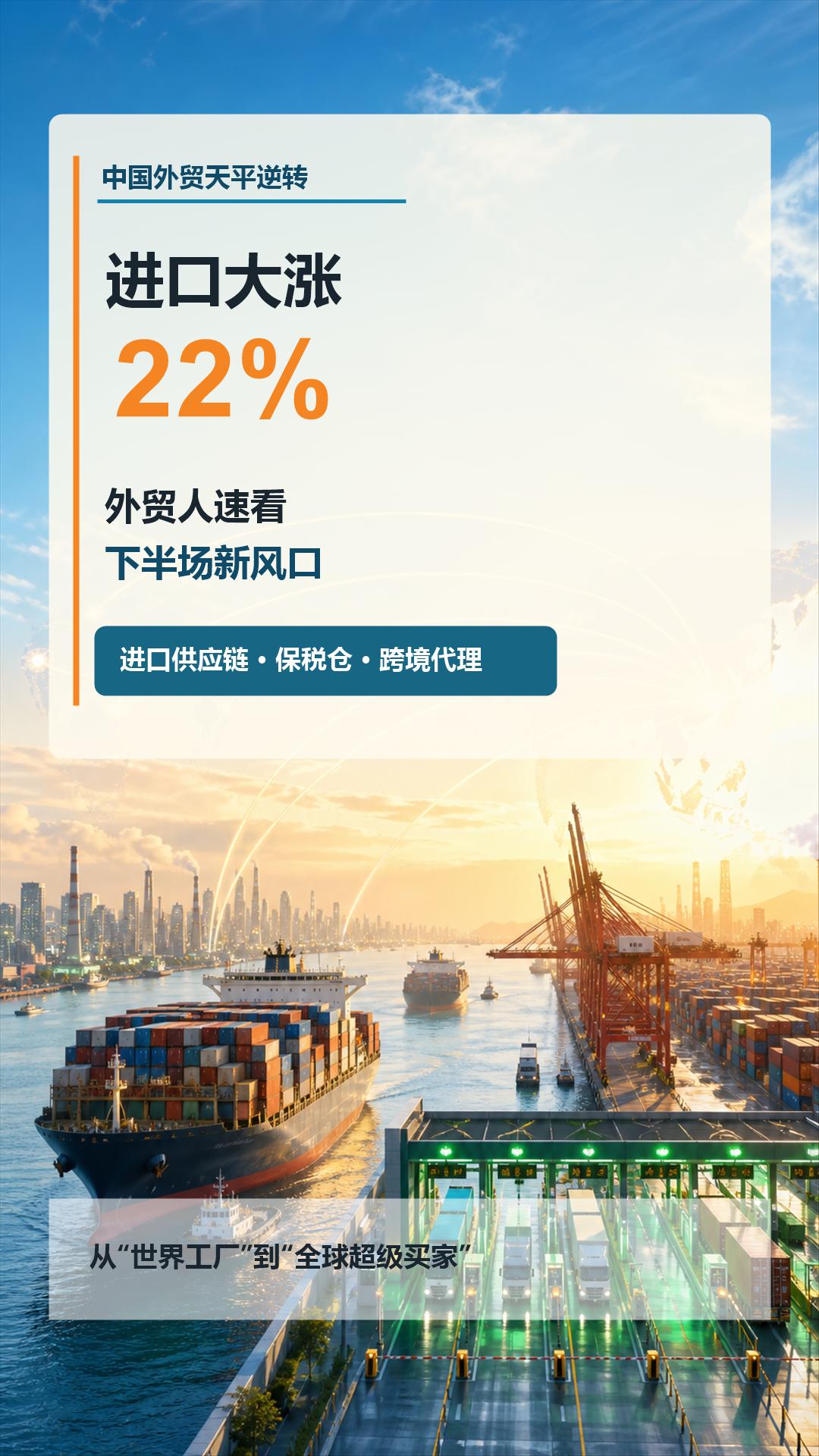
 China's foreign trade sees a turnaround: imports surge by 22%! Foreign trade professionals should quickly take note of the new trends in the second half of the year
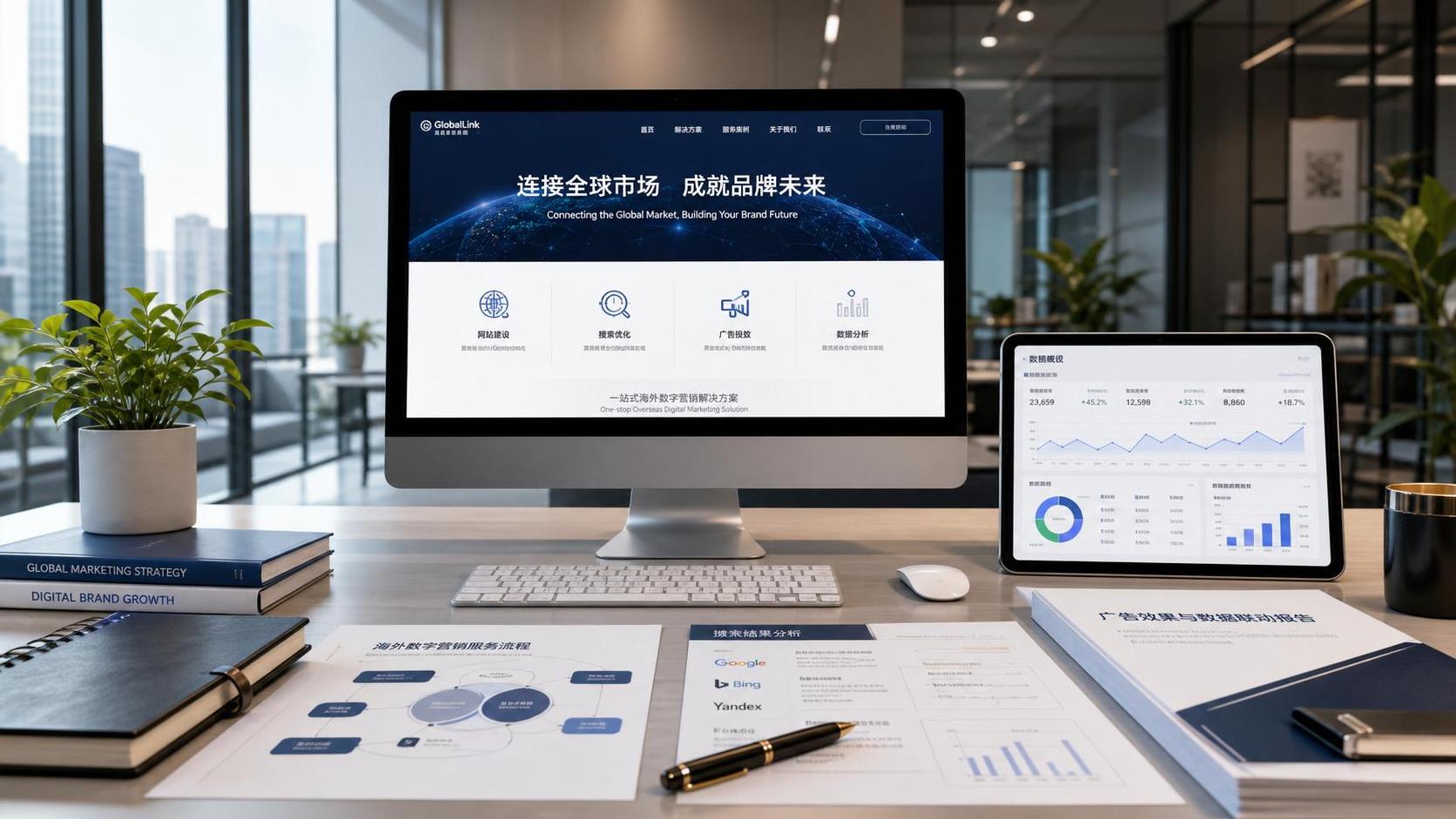
 What Does a Global Traffic Ecosystem Service Provider Do? What Are the Differences from a Single Advertising Agency

Related Products
 EasyCamp SaaS Smart Website Marketing SystemE-Yingbao SaaS Smart Website Marketing System: AI-powered, zero-code website building. Rapidly launch multilingual independent e-commerce sites in just 10 minutes. Global server acceleration and AI-driven SEO optimization empower businesses to efficiently connect with global markets. The seamless integration of technology and user-friendly operation makes building e-commerce sites incredibly simple.
 AI+SEM Intelligent Advertising Marketing SystemAI+SEM drives intelligent ad creation, empowering full-funnel precision advertising marketing. The system automatically generates weekly/monthly reports, AI recommends keywords and target countries, monitors core metrics in real-time with intelligent alerts, and enables one-click high-conversion ad solutions to help quickly acquire customers and improve ROI.
 AI+SEO Dual Engine Optimization ServiceEasyWin AI+SEO Dual Engine Optimization System leverages AI-powered keyword mining, content generation, and comprehensive technical optimization to help foreign trade enterprises acquire high-quality organic traffic, significantly improving search rankings and conversion rates.
 AI+SNS Social Media Marketing SystemYingbao AI+SNS Social Media Marketing System - Precision social capture for the social media era. Supports one-click content synchronization across major platforms like Facebook and LinkedIn. AI intelligently rewrites posts for enhanced relevance. 24/7 AI customer service and user profiling analysis empower businesses to efficiently expand into global markets.
 AI+SEO营销解决方案易营宝AI+SEO营销解决方案,通过AI批量写作、智能生成TDK、精准关键词扩词等功能,全面优化网站SEO效果,提升流量与转化率。助力企业构建高效智能网站新生态。
 AI+SEM Advertising Marketing SolutionsAI+SEM Advertising Marketing Solution leverages AI technology to deeply empower SEM ad campaigns. It automatically generates weekly/monthly reports using AI, presenting account data across multiple dimensions for comprehensive insights into campaign performance and trends. The system precisely recommends keywords and target countries, intelligently generates high-conversion ad copy, and enables one-click activation of efficient campaign plans to help businesses rapidly acquire customers. Simultaneously, it monitors core metrics in real time, intelligently identifies abnormal fluctuations, and issues timely alerts to ensure stable, high-return advertising results.
 Domain Name ServicesEasyWin provides professional domain name services, including intelligent queries, one-stop registration, brand protection, and full lifecycle management, helping businesses build a digital brand image.
 EasyOperate B2C Cross-Border E-Commerce Platform & Independent WebsiteEasyStore B2C Cross-border E-commerce Independent Store is an intelligent website building and cross-border e-commerce integrated solution independently developed by EasyStore Information Technology (Beijing) Co., Ltd. The system is specially designed for small and medium-sized as well as large export enterprises, integrating 'website building, operation, marketing, advertising, and conversion' into one, helping enterprises quickly establish cross-border e-commerce independent stores to achieve brand globalization and global sales growth.
The platform supports multiple languages, multiple currencies, and multi-channel marketing, with built-in AI intelligent translation and SEO optimization systems, suitable for mainstream markets such as Southeast Asia, Europe and America, Latin America, and the Middle East, assisting Chinese manufacturing enterprises in efficiently deploying international e-commerce strategies. SSL证书易营宝提供专业SSL安全证书服务,包括单域名和泛域名证书,确保网站数据传输加密、身份验证和完整性保护,助力企业建立安全可信的在线业务环境。









