









- Is Brand Globalization Marketing Consulting Worth Buying? At What Stage Should Companies Bring It InJul 01, 2026View details
- Cross-Border Marketing Trend Research: Why More and More Companies Are Starting to Deploy AI Search and GEO OptimizationJun 30, 2026View details
- Cross-Border Marketing Trend Research: How Independent Sites, AI Content, and Short-Video Customer Acquisition Are ChangingJun 30, 2026View details
- How Can a Brand Updates Page Be Made More SEO-Friendly? Analysis of Update Frequency, Content Structure, and Internal Linking StrategyJun 28, 2026View details
- What stages does the cross-border services ecosystem include? How do website building, promotion, payment, and compliance work togetherJun 22, 2026View details
- How will email marketing costs change in 2026Jun 22, 2026View details
How to Build a Multilingual Website? A Project Manager's Guide to Handover and Acceptance Procedures
In the era of digital globalization, building a multilingual website has become a crucial step for enterprises to expand into international markets. This article provides project managers with a comprehensive operational guide, from technology selection to final delivery, covering core aspects such as multilingual adaptation and SEO optimization, helping you efficiently complete the international deployment of your website.

1. Core Value and Challenges of Multilingual Websites
In the process of enterprise internationalization, multilingual websites not only break geographical barriers to reach global users but also enhance conversion rates through localized content. According to Common Sense Advisory research, 75% of consumers prefer to purchase products in their native language. However, project managers often face three major challenges: complex technology architecture choices (such as static translation vs. dynamic rendering trade-offs), conflicts in multilingual SEO rules (e.g., hreflang tag configuration), and high maintenance costs (e.g., content synchronization and updates).
1.1 Key Decision Points for Technology Selection
It is recommended to prioritize the following dimensions:
- Translation Solution: AI real-time translation (low cost but limited accuracy) vs. professional human translation (high quality but longer cycles)
- Architecture Design: Subdirectories (/en/), subdomains (en.example.com), or standalone domains (example.fr)
- Performance Optimization: Adopting Internet Protocol Version 6 (IPv6) can improve cross-border access speeds, with its 128-bit address space supporting more efficient routing and built-in IPSec protocol ensuring data transmission security
2. Five-Step Implementation Method for Multilingual Websites
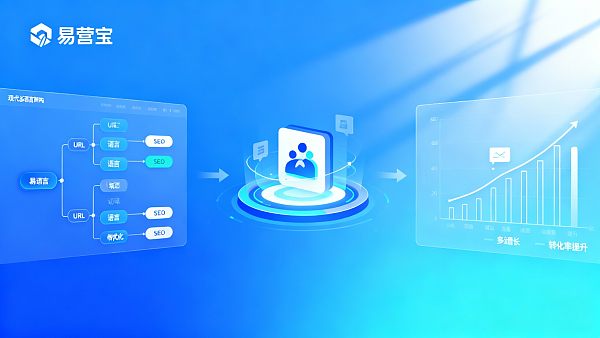
Taking EasyStore's intelligent website system as an example, standardized processes can reduce deployment time by 50%:
2.1 Requirement Analysis and Language Planning
Use Google Analytics to determine target market traffic distribution and prioritize coverage of the top 5 languages. Note distinctions in regional variants (e.g., French versions for France and Canada). It is recommended to use ISO 639-1 standard codes for language identification.
2.2 Technology Architecture Deployment
Recommended hybrid solution:
2.3 Multilingual SEO Optimization
Essential elements to configure:
- hreflang Tags: Declare language and regional relationships (e.g., <link rel="alternate" hreflang="en-gb" href="https://example.com/en/" />)
- Structured Data: Use Schema.org markup for multilingual page relationships
- Content Strategy: Avoid direct machine translation; optimize TDK based on local search habits (e.g., German regions prefer long-tail keywords)
3. Acceptance Testing and Performance Tuning
Three types of tests must be completed before delivery:
3.1 Functional Verification Checklist
- Language toggle buttons display correctly on all terminals
- URL structure complies with SEO norms (e.g., /en/blog/ instead of /blog/?lang=en)
- Form validation supports localized formats (e.g., date input fields adapted for DD/MM/YYYY or MM/DD/YYYY)
3.2 Performance Benchmark Testing
Use WebPageTest to simulate global access, focusing on:
- First-screen load time (<2.5 seconds across regions)
- TCP connection latency (optimizable via Internet Protocol Version 6(IPv6), whose multicast technology reduces network congestion)
- Cache hit rate for multilingual resource files
4. Continuous Operations and Iteration Strategies
Recommended SOP for multilingual content operations:
- Monitoring System: Track indexing status of language versions via Google Search Console
- Update Mechanism: Synchronize changes to other language versions within 72 hours of main site updates
- A/B Testing: Design differentiated CTA buttons for regions (e.g., "Get Started" for North America vs. "Jetzt starten" for Germany)
Conclusion and Actionable Recommendations
Multilingual website construction is a systematic project requiring collaboration across technology, content, and SEO. EasyStore's intelligent website system, powered by AI translation engines and global CDN networks, helps enterprises reduce international deployment costs by 40%. Contact our solution experts now to obtain customized multilingual website solutions and free SEO diagnostic reports.
Related Articles
 What types of websites is an AI-powered site generator with drag and drop suitable for?
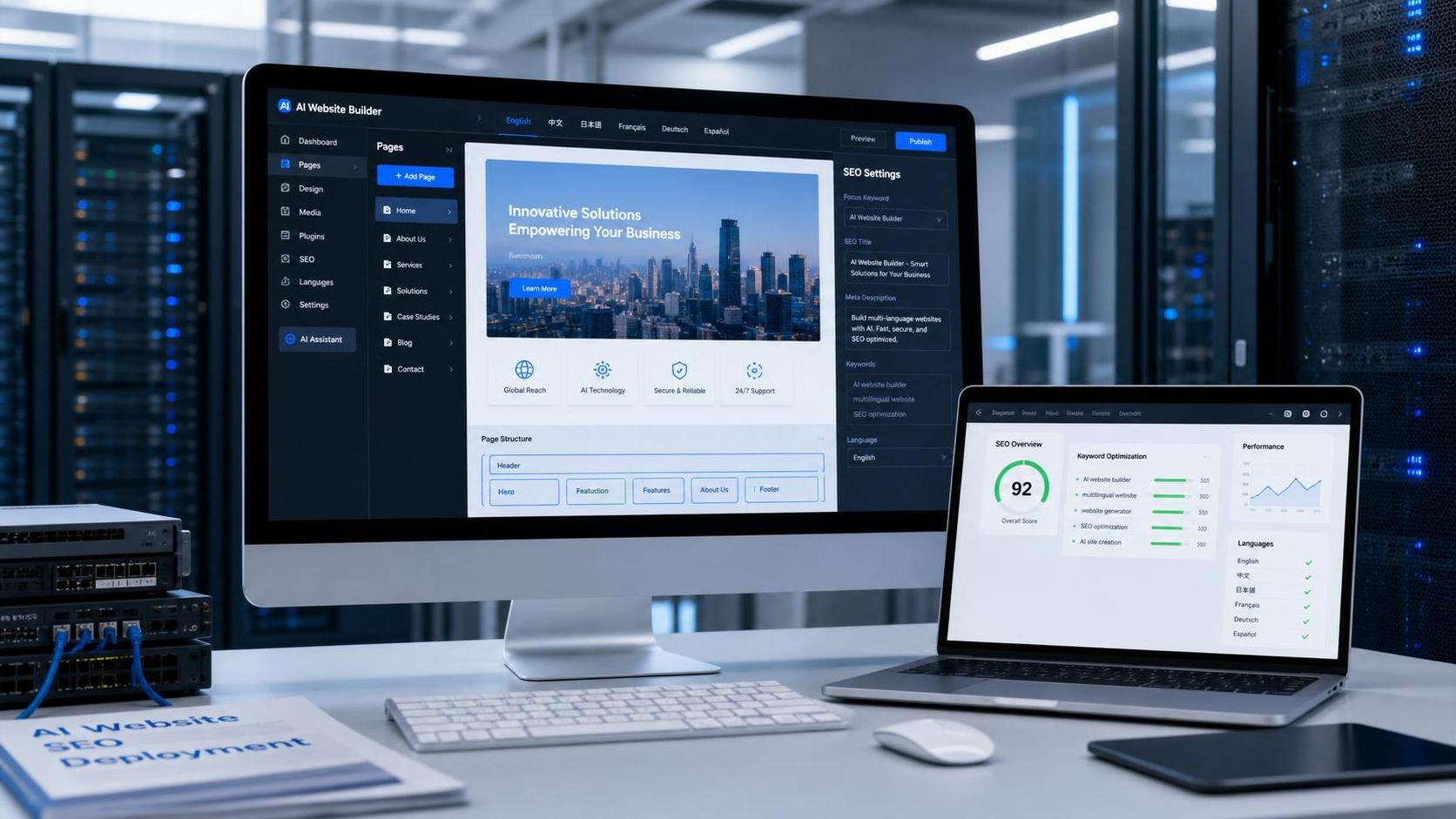
 What Does an AI Website Building Service Include? A Breakdown of the Delivery Scope from Page Generation to SEO Deployment
 What Is the Difference Between Free Websites and Paid Websites? A Comprehensive Comparison of Features, SEO, and Long-Term Costs


Related Products
 EasyCamp SaaS Smart Website Marketing SystemE-Yingbao SaaS Smart Website Marketing System: AI-powered, zero-code website building. Rapidly launch multilingual independent e-commerce sites in just 10 minutes. Global server acceleration and AI-driven SEO optimization empower businesses to efficiently connect with global markets. The seamless integration of technology and user-friendly operation makes building e-commerce sites incredibly simple.
 AI+SEM Intelligent Advertising Marketing SystemAI+SEM drives intelligent ad creation, empowering full-funnel precision advertising marketing. The system automatically generates weekly/monthly reports, AI recommends keywords and target countries, monitors core metrics in real-time with intelligent alerts, and enables one-click high-conversion ad solutions to help quickly acquire customers and improve ROI.
 AI+SEO Dual Engine Optimization ServiceEasyWin AI+SEO Dual Engine Optimization System leverages AI-powered keyword mining, content generation, and comprehensive technical optimization to help foreign trade enterprises acquire high-quality organic traffic, significantly improving search rankings and conversion rates.
 AI+SNS Social Media Marketing SystemYingbao AI+SNS Social Media Marketing System - Precision social capture for the social media era. Supports one-click content synchronization across major platforms like Facebook and LinkedIn. AI intelligently rewrites posts for enhanced relevance. 24/7 AI customer service and user profiling analysis empower businesses to efficiently expand into global markets.
 AI+SEO营销解决方案易营宝AI+SEO营销解决方案,通过AI批量写作、智能生成TDK、精准关键词扩词等功能,全面优化网站SEO效果,提升流量与转化率。助力企业构建高效智能网站新生态。
 AI+SEM Advertising Marketing SolutionsAI+SEM Advertising Marketing Solution leverages AI technology to deeply empower SEM ad campaigns. It automatically generates weekly/monthly reports using AI, presenting account data across multiple dimensions for comprehensive insights into campaign performance and trends. The system precisely recommends keywords and target countries, intelligently generates high-conversion ad copy, and enables one-click activation of efficient campaign plans to help businesses rapidly acquire customers. Simultaneously, it monitors core metrics in real time, intelligently identifies abnormal fluctuations, and issues timely alerts to ensure stable, high-return advertising results.
 Domain Name ServicesEasyWin provides professional domain name services, including intelligent queries, one-stop registration, brand protection, and full lifecycle management, helping businesses build a digital brand image.
 EasyOperate B2C Cross-Border E-Commerce Platform & Independent WebsiteEasyStore B2C Cross-border E-commerce Independent Store is an intelligent website building and cross-border e-commerce integrated solution independently developed by EasyStore Information Technology (Beijing) Co., Ltd. The system is specially designed for small and medium-sized as well as large export enterprises, integrating 'website building, operation, marketing, advertising, and conversion' into one, helping enterprises quickly establish cross-border e-commerce independent stores to achieve brand globalization and global sales growth.
The platform supports multiple languages, multiple currencies, and multi-channel marketing, with built-in AI intelligent translation and SEO optimization systems, suitable for mainstream markets such as Southeast Asia, Europe and America, Latin America, and the Middle East, assisting Chinese manufacturing enterprises in efficiently deploying international e-commerce strategies. SSL证书易营宝提供专业SSL安全证书服务,包括单域名和泛域名证书,确保网站数据传输加密、身份验证和完整性保护,助力企业建立安全可信的在线业务环境。









