









- What stages does the cross-border services ecosystem include? How do website building, promotion, payment, and compliance work togetherJun 22, 2026View details
- How will email marketing costs change in 2026Jun 22, 2026View details
- The China-US tariff arrangement has reached a preliminary consensus, and the trade association will be establishedJun 15, 2026View details
- Should overseas brand marketing start with ads or contentJun 21, 2026View details
- What determines B2C cross-border e-commerce website development costs? A breakdown of features, interfaces, and deployment methodsJun 17, 2026View details
- China-Morocco zero-tariff access, a breakthrough in the cost of Moroccan goods exports to ChinaJun 11, 2026View details
- What signal should be released for the suspension of exports to JapanJun 10, 2026View details
- China's May LNG imports rebounded, with increased volumes from Russia and Canada filling the Middle East supply gapJun 10, 2026View details
Will enterprise self-service website builder customization become increasingly complex
Will custom enterprise-level self-service website building systems become increasingly complex? For project managers, the key is not piling up functions, but having clear processes, orderly scalability, and marketing coordination. Choose the right approach, and website building can instead support business growth more efficiently.
What is custom enterprise-level self-service website building system
On the surface, custom enterprise-level self-service website building systems may seem like “building a website,” but for the website + integrated marketing services industry, it is closer to a digital business infrastructure. So-called custom enterprise-level self-service website building systems are not just about page design, section configuration, and content publishing, but about integrated capabilities formed around corporate brand presentation, lead acquisition, data accumulation, permission coordination, content operations, and subsequent promotion.
For project managers and engineering project leaders, whether such a system is complex often does not depend on “whether it has many functions,” but on whether the functions are built around real business scenarios. If the system defines objectives, roles, and processes clearly from the very beginning, then custom enterprise-level self-service website building systems will not only avoid getting out of control, but can also integrate scattered website building, SEO, content updates, and marketing conversion, reducing repeated communication and rework.
Why the industry is paying increasing attention to this capability
Today, corporate websites are no longer static “business cards,” but brand touchpoints, traffic entry points, and sales collaboration tools. Especially in the context of global promotion, rising customer acquisition costs, and fragmented channels, the website systems enterprises need must balance launch efficiency, content management, search optimization, and subsequent expansion. Precisely for this reason, custom enterprise-level self-service website building systems have become foundational projects in the digital development of many enterprises.
Service providers represented by EasyBiz Information Technology (Beijing) Co., Ltd., which have long provided full-chain solutions around artificial intelligence, big data, intelligent website building, SEO optimization, social media marketing, and advertising placement, indicate that the industry has already shifted from isolated website building to the mindset of “website building as marketing infrastructure.” From a project management perspective, this shift means project goals can no longer simply be written as “website launch,” but must further define content production efficiency, search visibility, lead conversion capability, and multi-team collaboration efficiency.
Where the sense of complexity usually comes from
Many people worry that custom enterprise-level self-service website building systems will become increasingly complex, but the root cause is usually not the technology itself, but unclear project boundaries. The first type of problem is mixed objectives: wanting to create a brand website while also covering recruitment,招商, after-sales service, a knowledge base, and event pages, without distinguishing priorities; the second type of problem is that departmental demands are pushed in simultaneously, with marketing, sales, operations, and IT all raising requirements, but lacking unified prioritization; the third type of problem is the absence of information architecture planning in the early stage, so every new requirement added later forces the original structure to be overturned.
Therefore, what custom enterprise-level self-service website building systems truly need to control is not the “number of functions,” but the way requirements evolve. Standardize the underlying capabilities, modularize business differences, and reserve interfaces for future changes, and the complexity will be kept within a manageable range.
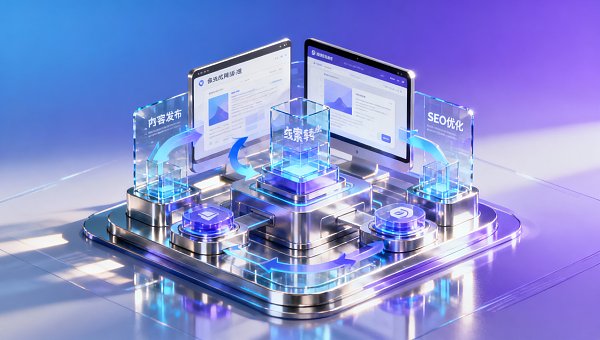
Industry overview: the focus of enterprise website building is changing
For engineering project leaders, understanding changes in industry focus helps determine the extent to which a system should be built and which capabilities must be planned in advance. The overview below can serve as an evaluation reference:
As can be seen from this table, the reason custom enterprise-level self-service website building systems are receiving attention is not because enterprises want to make websites increasingly “larger,” but because they hope websites can more stably support content operations and marketing growth.
Practical value for project managers
First, it helps reduce cross-department collaboration costs. A self-service website building system places pages, sections, forms, articles, materials, and permissions into a unified backend, so project leaders do not need to repeatedly translate requirements among design, development, and operations. Second, it can improve iteration efficiency. Compared with a model that relies entirely on custom development, daily updates, special-topic creation, and landing page adjustments can be completed directly by the business team.
More importantly, custom enterprise-level self-service website building systems can connect project construction goals with marketing results. A truly valuable website system should not only “look good,” but also “be searchable, be convertible, and be optimizable.” This is also why many enterprises, when planning their official websites, are already simultaneously paying attention to SEO structure, page loading speed, lead forms, content tags, and data analysis rules.
Application priorities in different enterprise scenarios
Although the keywords are the same, enterprises at different stages of development do not focus on the same priorities in custom enterprise-level self-service website building systems. When initiating a project, project leaders should make differentiated judgments based on specific scenarios.
If project leaders do not distinguish these scenarios first, it is easy to load all requirements into the system at one time, resulting in extended timelines and budgets getting out of control, which ultimately weakens the usability of the system instead.
How to avoid “the more customization, the more complexity”
In practice, it is recommended to break custom enterprise-level self-service website building systems into four levels. The first level is basic capabilities, including page management, section configuration, content publishing, form collection, and permission control; the second level is marketing capabilities, including SEO fields, URL rules, tag systems, conversion components, and data tracking points; the third level is collaboration capabilities, such as multi-department approval, asset libraries, and version management; the fourth level is personalized expansion, such as special business processes, exclusive interactive modules, or third-party system integration.
This layered approach is most valuable for project management because it helps teams distinguish between “must-have for launch” and “subsequent enhancements.” First build a stable common foundation, then decide the next investment based on real operational data, which is more rational than pursuing something large and all-encompassing from the outset.
In terms of management methods, three principles should also be upheld: first, unify the requirement intake, with one core person defining priorities; second, establish modular thinking and avoid, as much as possible, changing one page in a way that affects the structure of the entire site; third, work backward from the marketing closed loop to determine construction priorities, giving priority to key capabilities that affect exposure, inquiries, and conversion.
Details to pay attention to when evaluating system solutions
When evaluating solutions, project managers may want to ask less often “how many more functions can still be added” and more often “whether the most frequently used actions in the next year will be smooth enough.” For example, can marketers independently publish special-topic pages, can operations staff quickly adjust SEO information, can the sales team clearly track lead sources, and can management see core data—these are all more important than superficial function lists.
In addition, whether the solution has a certain degree of knowledge and management extensibility is also worth attention. When planning website systems, some enterprises will simultaneously refer to other digital management cases, such as Practical Exploration of Enterprise Financial Shared Services Models Under the New Situation, which reflects the thinking of “process standardization, clear permissions, and equal emphasis on sharing and collaboration.” Although the application fields differ, for enterprise-level platform construction, this methodology has common value.
From website building to growth, the key lies in integrated thinking
For the website + integrated marketing services industry, the real advantage of custom enterprise-level self-service website building systems is not “more complex,” but “more controllable.” When the website building system is linked with SEO optimization, content operations, social media integration, and advertising placement, the corporate website is no longer an isolated asset, but becomes infrastructure for sustained growth. Especially in an environment where traffic acquisition costs continue to rise, a website that can independently manage content, respond quickly to the market, and continuously optimize conversion paths will show increasingly obvious value.
Therefore, when promoting such projects, project leaders should focus on consolidating objectives, structural planning, module design, and subsequent operational collaboration. As long as the method is correct, custom enterprise-level self-service website building systems will not become increasingly complex, but will instead become more orderly, more flexible, and better able to support corporate brand building and global growth as the business develops.
Conclusion and practical recommendations
If an enterprise is currently preparing to launch an official website upgrade or build digital marketing infrastructure, it is recommended to first complete three things: clarify the business objectives the website is expected to undertake, sort out departmental roles and permission boundaries, and determine a phased launch plan. On this basis, then choose a team with technical capabilities, marketing understanding, and localization service experience to collaborate and advance the project, which will lead to a higher project success rate. For most enterprises, what is truly needed is not the “most complex” system, but the system “most suitable for sustained growth.”
Related Articles



Related Products
 EasyCamp SaaS Smart Website Marketing SystemE-Yingbao SaaS Smart Website Marketing System: AI-powered, zero-code website building. Rapidly launch multilingual independent e-commerce sites in just 10 minutes. Global server acceleration and AI-driven SEO optimization empower businesses to efficiently connect with global markets. The seamless integration of technology and user-friendly operation makes building e-commerce sites incredibly simple.
 AI+SEM Intelligent Advertising Marketing SystemAI+SEM drives intelligent ad creation, empowering full-funnel precision advertising marketing. The system automatically generates weekly/monthly reports, AI recommends keywords and target countries, monitors core metrics in real-time with intelligent alerts, and enables one-click high-conversion ad solutions to help quickly acquire customers and improve ROI.
 AI+SEO Dual Engine Optimization ServiceEasyWin AI+SEO Dual Engine Optimization System leverages AI-powered keyword mining, content generation, and comprehensive technical optimization to help foreign trade enterprises acquire high-quality organic traffic, significantly improving search rankings and conversion rates.
 AI+SNS Social Media Marketing SystemYingbao AI+SNS Social Media Marketing System - Precision social capture for the social media era. Supports one-click content synchronization across major platforms like Facebook and LinkedIn. AI intelligently rewrites posts for enhanced relevance. 24/7 AI customer service and user profiling analysis empower businesses to efficiently expand into global markets.
 AI+SEO营销解决方案易营宝AI+SEO营销解决方案,通过AI批量写作、智能生成TDK、精准关键词扩词等功能,全面优化网站SEO效果,提升流量与转化率。助力企业构建高效智能网站新生态。
 AI+SEM Advertising Marketing SolutionsAI+SEM Advertising Marketing Solution leverages AI technology to deeply empower SEM ad campaigns. It automatically generates weekly/monthly reports using AI, presenting account data across multiple dimensions for comprehensive insights into campaign performance and trends. The system precisely recommends keywords and target countries, intelligently generates high-conversion ad copy, and enables one-click activation of efficient campaign plans to help businesses rapidly acquire customers. Simultaneously, it monitors core metrics in real time, intelligently identifies abnormal fluctuations, and issues timely alerts to ensure stable, high-return advertising results.
 Domain Name ServicesEasyWin provides professional domain name services, including intelligent queries, one-stop registration, brand protection, and full lifecycle management, helping businesses build a digital brand image.
 EasyOperate B2C Cross-Border E-Commerce Platform & Independent WebsiteEasyStore B2C Cross-border E-commerce Independent Store is an intelligent website building and cross-border e-commerce integrated solution independently developed by EasyStore Information Technology (Beijing) Co., Ltd. The system is specially designed for small and medium-sized as well as large export enterprises, integrating 'website building, operation, marketing, advertising, and conversion' into one, helping enterprises quickly establish cross-border e-commerce independent stores to achieve brand globalization and global sales growth.
The platform supports multiple languages, multiple currencies, and multi-channel marketing, with built-in AI intelligent translation and SEO optimization systems, suitable for mainstream markets such as Southeast Asia, Europe and America, Latin America, and the Middle East, assisting Chinese manufacturing enterprises in efficiently deploying international e-commerce strategies. SSL证书易营宝提供专业SSL安全证书服务,包括单域名和泛域名证书,确保网站数据传输加密、身份验证和完整性保护,助力企业建立安全可信的在线业务环境。









