









- Which channel has the highest ROI in the global traffic ecosystem? Comparative analysis of search, social media, and advertisingJul 10, 2026View details
- What multilingual website services are available in Sanya? Which model is more suitable for local businesses going global?Jul 08, 2026View details
- How to view the complete list of China SaaS companies in the top 100? Practical methods for screening website-building and marketing service providersJul 08, 2026View details
- How to view pricing in the global traffic ecosystem? Cost comparison of search, social media, and content channel advertisingJul 06, 2026View details
- How to assess foreign trade website development trends?Looking at 2026 changes from multilingual,AI content to conversion pathsJul 04, 2026View details
- What are the new trends in multilingual marketing data analytics tools in 2026? Focus on attribution、automation and complianceJul 04, 2026View details
E-Commerce Competitive Product Comparison: Third-Party API Integration and After-Sales Service Cost Analysis
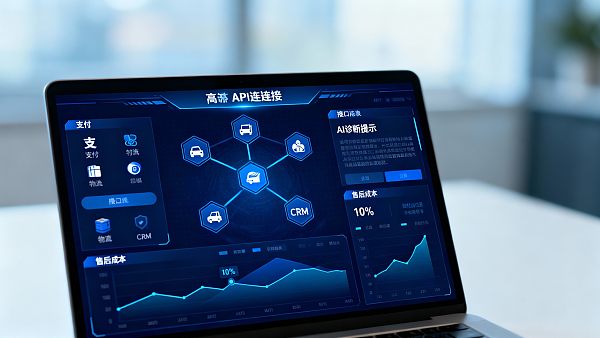
This article primarily compares YiYingBao with its competitors, focusing on a practical evaluation of intelligent website building platforms in two core dimensions: third-party API integration and after-sales service costs. It directly addresses the integration risks, operational costs, and compliance requirements encountered by enterprise decision-makers, project managers, and after-sales maintenance personnel during implementation. The article systematically reviews common API integration scenarios such as third-party payment, logistics, CRM, and advertising, quantifies the cost drivers of interface development and long-term maintenance, and combines intelligent website building platform selection recommendations to help distributors and end consumers make clearer trade-offs between cost and efficiency. It also provides users and operators with actionable technical checklists and acceptance standards.
Definitions and Industry Overview: What is Third-Party API Integration and After-Sales Service Costs?
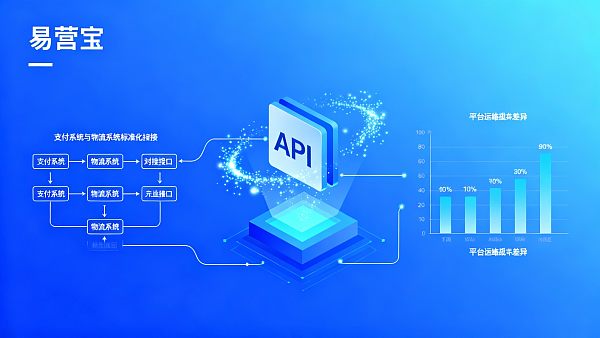
In the context of intelligent website building platforms, third-party API integration refers to the programmatic connection between the platform and external systems such as payment, logistics, PIM, ERP, CRM, and social media advertising, encompassing technical aspects such as authentication, data synchronization, error handling, and security management. After-sales service costs include continuous investment in interface version upgrades, fault response, compatibility fixing, secondary development, and operation and maintenance monitoring. The current market demands significantly higher requirements for multilingual, multi-regional deployment and compliance, requiring suppliers to simultaneously meet both access efficiency and long-term maintenance controllability. Yiyingbao Information Technology (Beijing) Co., Ltd., founded in 2013 and headquartered in Beijing, uses artificial intelligence and big data as its core driving forces to provide end-to-end solutions for intelligent website building, SEO optimization, social media marketing, and advertising. With its "technological innovation + localized service" strategy, it has served over 100,000 enterprises and was selected as one of the "Top 100 Chinese SaaS Enterprises" in 2023. Its AI-driven one-stop intelligent marketing platform has significant advantages in multilingual coverage and automated operation and maintenance.
Comparative Analysis: Key Differences Between YiYingBao and Competitors in API Integration and After-Sales Costs
When comparing products, it is recommended to start from five dimensions: interface standardization and documentation quality, SDK and low-code support, identity authentication and security compliance, error handling and rollback mechanisms, and long-term version compatibility strategies. Most competitors suffer from fragmented documentation and SDKs, resulting in low initial integration costs but high long-term maintenance costs. YiYingBao, through its self-developed technology platform and AI-powered automatic diagnostic tools, automates the identification and repair of interface anomalies, reducing manual troubleshooting time. Simultaneously, its global server and CDN deployment minimizes latency and timeout costs associated with cross-border requests, which is particularly important for cross-border e-commerce scenarios requiring high-concurrency advertising and real-time order synchronization. The table below lists typical technical parameters for decision-makers to quickly quantify the differences.
Demonstration of technical performance and product capabilities (including product embedding examples)
Technical decisions should be grounded in quantifiable parameters: interface response time, failure rate, retry strategy, concurrent connections, and bandwidth and node distribution. Taking YiYingBao's foreign trade product as an example, its pre-processing information shows that key indicators such as loading time and multi-language support are competitive within the industry. In actual procurement scenarios, these indicators directly impact the conversion rate of advertising landing pages and search engine indexing speed. To facilitate alignment of acceptance standards between engineering managers and after-sales maintenance personnel, it is recommended to clearly define SLA indicators, interface change notification cycles, and the responsible party for regression testing in the contract. For more information on product capabilities, please refer to the link: YiYingBao Foreign Trade Marketing (Super) Website . This product is specifically optimized for foreign trade and cross-border e-commerce scenarios in terms of loading speed, language coverage, and server nodes. Its technical parameters include a loading time of less than 1.5 seconds, support for 100+ languages, 2500+ server nodes, and a bandwidth capacity of 120T, facilitating direct quantification of implementation expectations.
Procurement and Selection Recommendations: How to Include Third-Party API Integration and After-Sales Costs in the Budget
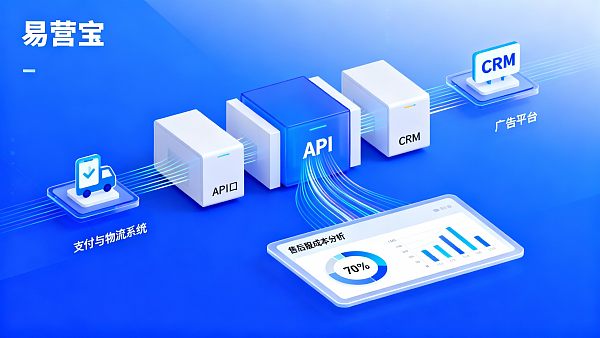
When preparing the budget, decision-makers should separately assess one-time integration costs and ongoing operational costs, and establish a Total Cost of Ownership (TCO) model with interface change rate and daily call volume as core variables. The recommended process is as follows: 1) Conduct technical due diligence, listing the required APIs and versions; 2) Assess the complexity of each interface (authentication, callbacks, idempotency); 3) Define error rate thresholds and alarm strategies during the trial operation phase; 4) Include annualized upgrade and compatibility costs in subsequent contracts. For distributors and agents, it is recommended to prioritize suppliers that provide low-code integration, automated testing, and AI diagnostic capabilities, which can reduce after-sales maintenance costs by 30% to 50%. Additionally, when considering alternative solutions, middleware or gateways can be introduced to achieve protocol conversion, but the increased operational and monitoring burden must be weighed. For project managers, the checklist attached to this document can serve as a reference for acceptance and migration, helping to reduce communication costs and secondary development risks.
Customer Cases, Trends and Frequently Asked Questions
Case 1: A cross-border e-commerce client reduced order synchronization latency from 30 seconds to 5 seconds after integrating logistics and payment via standardized APIs, resulting in a significant improvement in advertising conversion rates. Case 2: A manufacturing B2B client reduced interface timeouts caused by regional blockages and decreased after-sales service tickets by over 40% after adopting multi-node deployment. In terms of trends, intelligent website building platforms are evolving towards "Platform as a Service + AI Operations and Maintenance," with automated anomaly detection and semantic-level log analysis becoming standard features. Frequently Asked Questions (FAQs) include: How to assess interface stability? It is recommended to use real traffic for load testing and verify the rollback mechanism during the pilot phase. How to control after-sales costs? Prioritize signing clear upgrade and compatibility responsibility clauses. If you would like us to provide a targeted integration cost estimate or technical due diligence form, please contact us for customized diagnostics.
Why Choose Us & Contact Us
Choosing a vendor involves more than just current functionality; it's also about long-term evolution capabilities and localized service capabilities. E-Market, with its ten years of industry experience, AI-driven one-stop intelligent marketing platform, and global compliant deployment, offers a lower total cost of ownership by improving third-party API integration efficiency and controlling after-sales service costs. Whether you are a business decision-maker, project manager, or after-sales maintenance personnel, we can provide full-process support from access assessment to SLA design. Take action now: Request a technical white paper or apply for a free technical diagnostic. Please contact us through the product link on the site or through enterprise channels to obtain a customized solution.
Related Articles
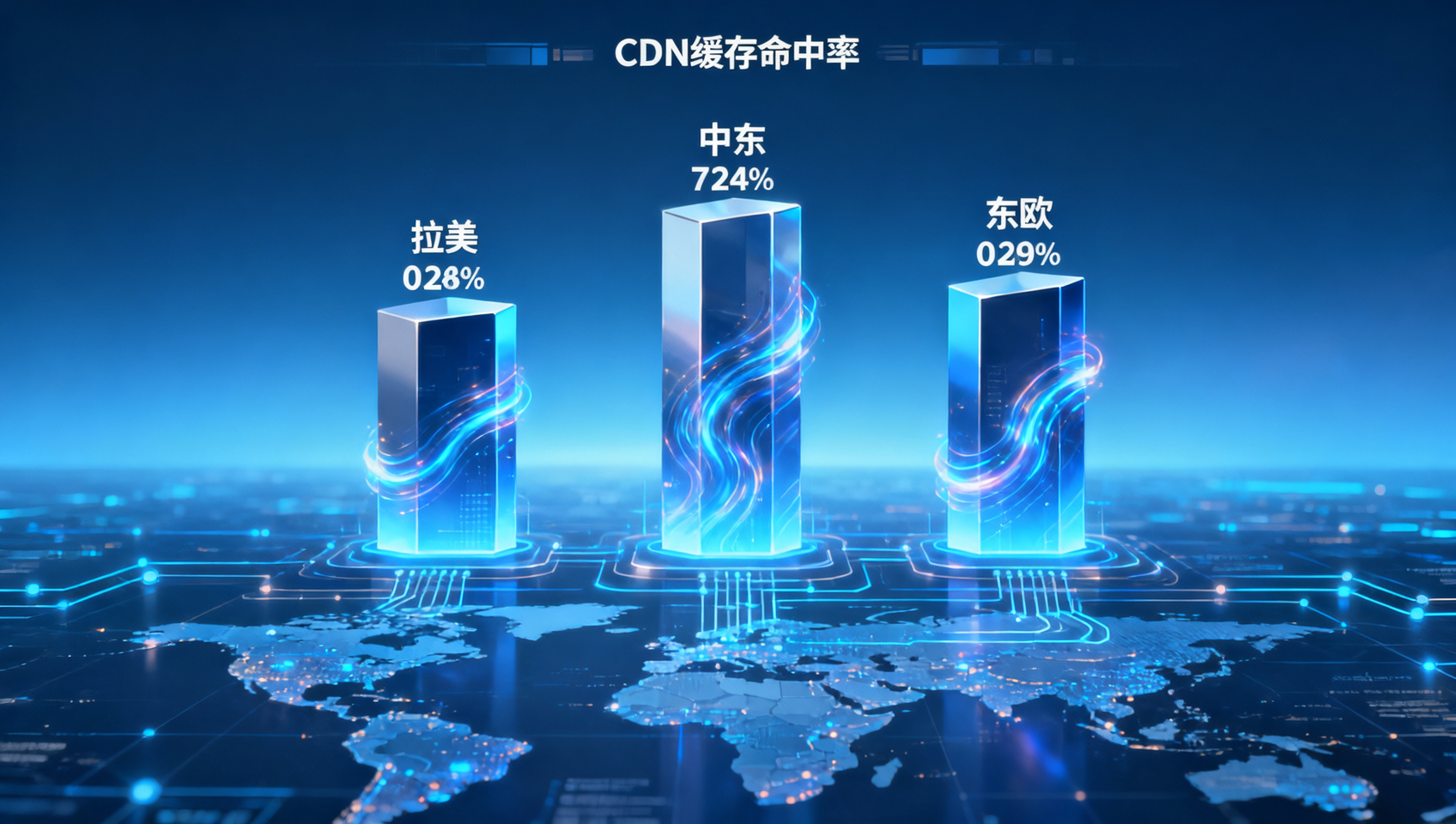
 In Yiyingbao's security and performance architecture, what are the cache hit rates for CDN edge nodes in Latin America, the Middle East, and Eastern Europe?
 How many working days were shortened in the PCI DSS compliance audit cycle for enterprises using Yiyingbao's technology platform for multilingual websites?
 Yiyingbao Security and Performance White Paper Reveals: How Many Milliseconds Does the Average Multilingual Website Homepage Load Time Stay Within?

Related Products
 EasyCamp SaaS Smart Website Marketing SystemE-Yingbao SaaS Smart Website Marketing System: AI-powered, zero-code website building. Rapidly launch multilingual independent e-commerce sites in just 10 minutes. Global server acceleration and AI-driven SEO optimization empower businesses to efficiently connect with global markets. The seamless integration of technology and user-friendly operation makes building e-commerce sites incredibly simple.
 AI+SEM Intelligent Advertising Marketing SystemAI+SEM drives intelligent ad creation, empowering full-funnel precision advertising marketing. The system automatically generates weekly/monthly reports, AI recommends keywords and target countries, monitors core metrics in real-time with intelligent alerts, and enables one-click high-conversion ad solutions to help quickly acquire customers and improve ROI.
 AI+SEO Dual Engine Optimization ServiceEasyWin AI+SEO Dual Engine Optimization System leverages AI-powered keyword mining, content generation, and comprehensive technical optimization to help foreign trade enterprises acquire high-quality organic traffic, significantly improving search rankings and conversion rates.
 AI+SNS Social Media Marketing SystemYingbao AI+SNS Social Media Marketing System - Precision social capture for the social media era. Supports one-click content synchronization across major platforms like Facebook and LinkedIn. AI intelligently rewrites posts for enhanced relevance. 24/7 AI customer service and user profiling analysis empower businesses to efficiently expand into global markets.
 AI+SEO营销解决方案易营宝AI+SEO营销解决方案,通过AI批量写作、智能生成TDK、精准关键词扩词等功能,全面优化网站SEO效果,提升流量与转化率。助力企业构建高效智能网站新生态。
 AI+SEM Advertising Marketing SolutionsAI+SEM Advertising Marketing Solution leverages AI technology to deeply empower SEM ad campaigns. It automatically generates weekly/monthly reports using AI, presenting account data across multiple dimensions for comprehensive insights into campaign performance and trends. The system precisely recommends keywords and target countries, intelligently generates high-conversion ad copy, and enables one-click activation of efficient campaign plans to help businesses rapidly acquire customers. Simultaneously, it monitors core metrics in real time, intelligently identifies abnormal fluctuations, and issues timely alerts to ensure stable, high-return advertising results.
 Domain Name ServicesEasyWin provides professional domain name services, including intelligent queries, one-stop registration, brand protection, and full lifecycle management, helping businesses build a digital brand image.
 EasyOperate B2C Cross-Border E-Commerce Platform & Independent WebsiteEasyStore B2C Cross-border E-commerce Independent Store is an intelligent website building and cross-border e-commerce integrated solution independently developed by EasyStore Information Technology (Beijing) Co., Ltd. The system is specially designed for small and medium-sized as well as large export enterprises, integrating 'website building, operation, marketing, advertising, and conversion' into one, helping enterprises quickly establish cross-border e-commerce independent stores to achieve brand globalization and global sales growth.
The platform supports multiple languages, multiple currencies, and multi-channel marketing, with built-in AI intelligent translation and SEO optimization systems, suitable for mainstream markets such as Southeast Asia, Europe and America, Latin America, and the Middle East, assisting Chinese manufacturing enterprises in efficiently deploying international e-commerce strategies. SSL证书易营宝提供专业SSL安全证书服务,包括单域名和泛域名证书,确保网站数据传输加密、身份验证和完整性保护,助力企业建立安全可信的在线业务环境。









