









- What should you focus on in the latest enterprise SaaS report? From renewal rates and delivery costs to overseas growth opportunitiesJul 12, 2026View details
- What signals are worth paying attention to in a cross-border marketing trend report? B2B companies should look at these 6 signalsJul 11, 2026View details
- How to Read a Cross-Border Marketing Trends Report? Five Key Dimensions for Evaluating Channel OpportunitiesJul 11, 2026View details
- Which channel has the highest ROI in the global traffic ecosystem? Comparative analysis of search, social media, and advertisingJul 10, 2026View details
- What multilingual website services are available in Sanya? Which model is more suitable for local businesses going global?Jul 08, 2026View details
- How to view the complete list of China SaaS companies in the top 100? Practical methods for screening website-building and marketing service providersJul 08, 2026View details
Does website security affect SEO? Key compliance and remediation points from a quality control perspective
From a quality control perspective, does website security impact SEO? The answer is unequivocally yes: compliance, performance, and user experience are mutually reinforcing factors that directly determine user trust and conversion rates. Risks such as unpatched components, lack of HTTPS, injection of malicious code, or being blacklisted not only lead to search engine ranking penalties but also trigger security warnings for users during visits, significantly reducing click-through rates and dwell time for organic traffic.

Quality control teams and security managers must prioritize "compliance fixes" and "performance optimization" for SEO, integrating issue troubleshooting, certificate management, WAF, and CDN strategies into routine inspections. This ensures corporate websites meet technical compliance requirements while maintaining high-conversion user experiences. When addressing the critical question, "What kind of websites gain customer trust more easily?" the answer typically includes: stable loading, complete compliance certifications, responsive customer service channels, and transparent privacy policies—all of which are indispensable.
Definition and Industry Context: The Correlation Between Website Security, Compliance, and Search Rankings
Technically, website security encompasses authentication, data encryption, vulnerability patching, intrusion detection, and emergency response. Compliance-wise, it involves privacy protection, cross-border data transfer regulations (e.g., GDPR, Personal Information Protection Law). From a market perspective, search engines now incorporate user trust signals into ranking factors, such as HTTPS, absence of malware, clean content, and fast mobile experiences. Common industry benchmarks include OWASP Top 10, ISO/IEC 27001, and browser security alert mechanisms. For decision-makers and project managers, understanding these standards helps translate "What foundational technical safeguards does our corporate website need?" into actionable steps: automated SSL/TLS updates, Content Security Policy (CSP), HTTP Strict Transport Security (HSTS), and regular vulnerability scans. Quality teams should integrate these compliance items into release workflows to prevent security or experience regressions during iterations, ensuring long-term SEO stability.
Technical Performance and Operational Highlights: Performance Optimization, CDN, and Mobile-First Strategies

Does website performance affect query volume? Absolutely. Page load speed, first-contentful paint, and interaction responsiveness directly impact bounce and conversion rates, which search engines factor into rankings. To mitigate slow overseas access, adopt global CDNs, intelligent routing, and edge caching while controlling resource requests and image sizes. For mobile, implementing Google AMP or Baidu MIP standards significantly improves loading speed and mobile ranking advantages. Practical recommendations: 1) Enable auto-SSL and HTTP/2; 2) Implement image compression and lazy loading; 3) Integrate automated performance regression testing into CI/CD; 4) Use WAF and intrusion detection to prevent injected spam content from affecting indexing. The table below illustrates typical mobile acceleration improvements in key metrics, serving as quality control evaluation references.
Product Integration Examples
For mobile-first and compliance-prioritized implementations, specialized products can achieve "speed + compliance + management" integration. For instance, EasyYingBao's AMP/MIP Mobile Smart Site Builder generates multilingual mobile sites compliant with AMP and MIP standards, featuring built-in CDN, auto-image compression, lazy loading, and standards-compliant HTML5 code. This helps cross-border e-commerce and local service scenarios achieve prioritized display in Google and Baidu ecosystems while significantly reducing operational costs and compliance risks.
Application Scenarios and Client Practices: Divergent Focus Areas for Global Lead Generation vs. Local Services
Different scenarios prioritize security and SEO differently. Cross-border e-commerce emphasizes global CDN coverage, payment compliance, and multilingual SEO; local services focus more on LBS positioning, WeChat browser compatibility, and offline-to-online conversions. EasyYingBao Information Technology (Beijing), founded in 2013 and headquartered in Beijing, leverages AI and big data to provide smart site building, SEO optimization, social media marketing, and full-funnel advertising solutions, serving over 100,000 enterprises and ranking among "China's Top 100 SaaS Companies." Case studies show that with quality control teams implementing technical backends and automated detection, websites experience fewer security incidents and ranking fluctuations, with stable increases in query volume and conversion rates. Typical clients see longer page dwell times and higher mobile conversion rates after enabling mobile acceleration, forming sustainable long-term traffic pools—directly answering "How does website experience impact conversion rates?"
Common Pitfalls, Compliance Repair Paths, and Quality Control Checklists
Common mistakes include assuming SSL installation equals full security, ignoring crawler security logs, and treating performance optimization as one-time work. Compliance repairs should follow prioritized steps: 1) Quick blocking (WAF, reverting tampered pages, enforcing HTTPS); 2) Technical fixes (patching, dependency upgrades, CSP configuration); 3) Recovery and monitoring (rollback validation, intrusion detection, log retention); 4) Optimization loops (CDN tuning, AMP/MIP deployment, compression and caching). A concise checklist for quality control and project owners: 1) Weekly scans and monthly penetration tests; 2) Automated certificate and key management; 3) Mobile and desktop performance regression; 4) SEO indexing and security alert monitoring; 5) Emergency response and communication protocols. For "How to make website content recommended by AI search?", the answer lies in structured content, clear metadata, semantic annotations, and high-quality multilingual content—all requiring productized tools and ongoing operational support.

Trends and Why Choose Us / Contact Us
In the next two years, search engines and browsers will further hardcode security and experience signals into rankings; AI-driven content recommendations and multimodal indexing will prioritize structured, compliant content. For enterprises, establishing a "security-performance-compliance-content" closed loop is the core strategy for sustained lead generation. Why choose us? EasyYingBao leverages its proprietary AI algorithm platform, multilingual site-building capabilities, and global CDN nodes to provide end-to-end compliance repairs, performance acceleration, and continuous monitoring for executives, quality control teams, project managers, and operations. Our "AI keyword expansion + automated TDK generation + AI image creation" system daily produces compliant, high-quality content, reducing labor costs while improving conversions. For free security and performance diagnostics or mobile-first site construction, contact us or visit our product page for details and trials.
- Corporate website
- Website Security
- Social Media Marketing
- Yiyingbao
- SEO
- Smart Website Building
- cross-border e-commerce
- Multilingual Website Building
- How can website content be recommended by AI search?
- Does website security affect SEO?
- How does website experience affect conversion rates?
- Does website performance affect the number of inquiries?
- What basic technical safeguards are required for a corporate website?
- What kind of website is more likely to gain customer trust?
Related Articles
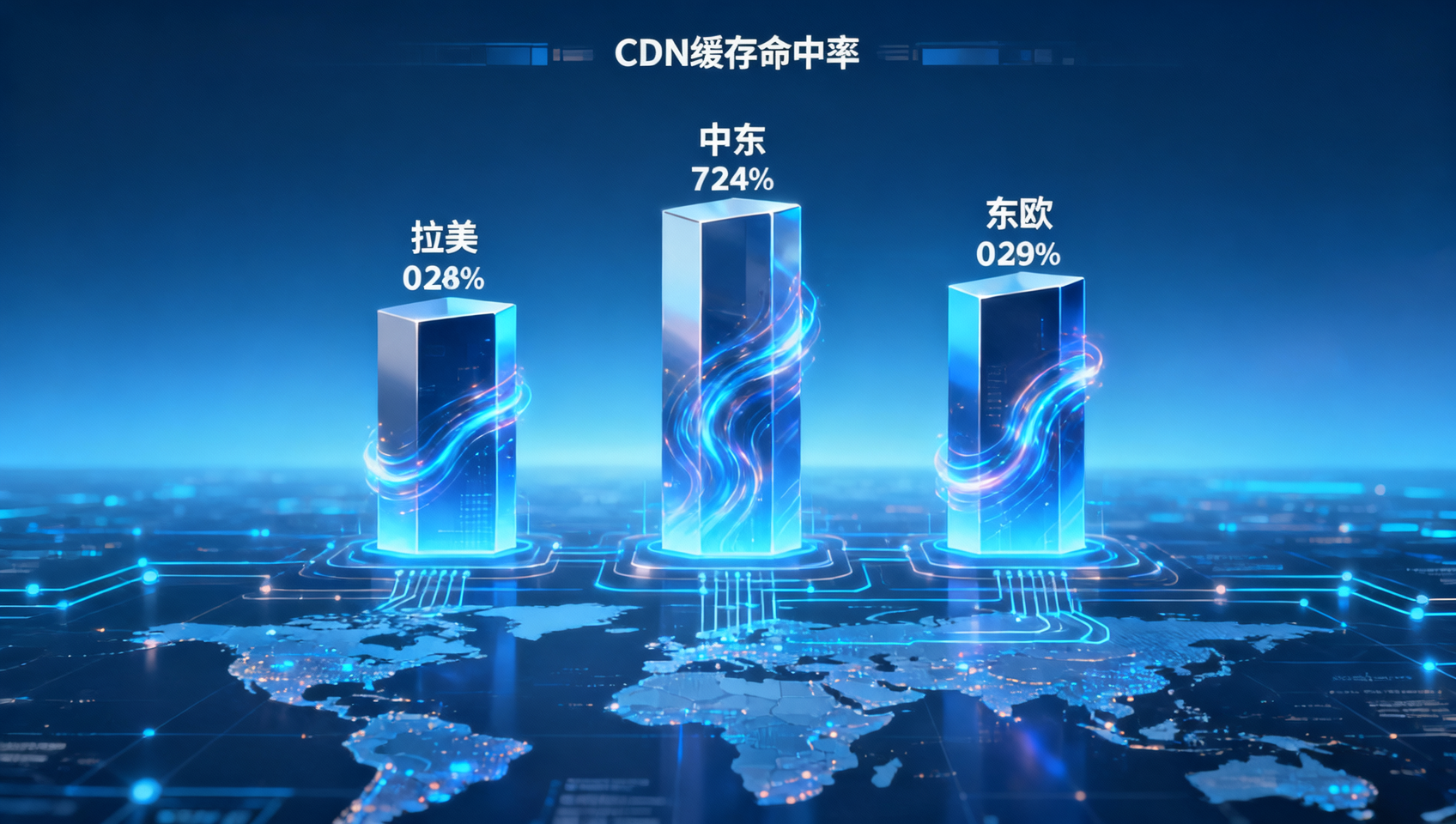
 In Yiyingbao's security and performance architecture, what are the cache hit rates for CDN edge nodes in Latin America, the Middle East, and Eastern Europe?
 How many working days were shortened in the PCI DSS compliance audit cycle for enterprises using Yiyingbao's technology platform for multilingual websites?
 Yiyingbao Security and Performance White Paper Reveals: How Many Milliseconds Does the Average Multilingual Website Homepage Load Time Stay Within?

Related Products
 EasyCamp SaaS Smart Website Marketing SystemE-Yingbao SaaS Smart Website Marketing System: AI-powered, zero-code website building. Rapidly launch multilingual independent e-commerce sites in just 10 minutes. Global server acceleration and AI-driven SEO optimization empower businesses to efficiently connect with global markets. The seamless integration of technology and user-friendly operation makes building e-commerce sites incredibly simple.
 AI+SEM Intelligent Advertising Marketing SystemAI+SEM drives intelligent ad creation, empowering full-funnel precision advertising marketing. The system automatically generates weekly/monthly reports, AI recommends keywords and target countries, monitors core metrics in real-time with intelligent alerts, and enables one-click high-conversion ad solutions to help quickly acquire customers and improve ROI.
 AI+SEO Dual Engine Optimization ServiceEasyWin AI+SEO Dual Engine Optimization System leverages AI-powered keyword mining, content generation, and comprehensive technical optimization to help foreign trade enterprises acquire high-quality organic traffic, significantly improving search rankings and conversion rates.
 AI+SNS Social Media Marketing SystemYingbao AI+SNS Social Media Marketing System - Precision social capture for the social media era. Supports one-click content synchronization across major platforms like Facebook and LinkedIn. AI intelligently rewrites posts for enhanced relevance. 24/7 AI customer service and user profiling analysis empower businesses to efficiently expand into global markets.
 AI+SEO营销解决方案易营宝AI+SEO营销解决方案,通过AI批量写作、智能生成TDK、精准关键词扩词等功能,全面优化网站SEO效果,提升流量与转化率。助力企业构建高效智能网站新生态。
 AI+SEM Advertising Marketing SolutionsAI+SEM Advertising Marketing Solution leverages AI technology to deeply empower SEM ad campaigns. It automatically generates weekly/monthly reports using AI, presenting account data across multiple dimensions for comprehensive insights into campaign performance and trends. The system precisely recommends keywords and target countries, intelligently generates high-conversion ad copy, and enables one-click activation of efficient campaign plans to help businesses rapidly acquire customers. Simultaneously, it monitors core metrics in real time, intelligently identifies abnormal fluctuations, and issues timely alerts to ensure stable, high-return advertising results.
 Domain Name ServicesEasyWin provides professional domain name services, including intelligent queries, one-stop registration, brand protection, and full lifecycle management, helping businesses build a digital brand image.
 EasyOperate B2C Cross-Border E-Commerce Platform & Independent WebsiteEasyStore B2C Cross-border E-commerce Independent Store is an intelligent website building and cross-border e-commerce integrated solution independently developed by EasyStore Information Technology (Beijing) Co., Ltd. The system is specially designed for small and medium-sized as well as large export enterprises, integrating 'website building, operation, marketing, advertising, and conversion' into one, helping enterprises quickly establish cross-border e-commerce independent stores to achieve brand globalization and global sales growth.
The platform supports multiple languages, multiple currencies, and multi-channel marketing, with built-in AI intelligent translation and SEO optimization systems, suitable for mainstream markets such as Southeast Asia, Europe and America, Latin America, and the Middle East, assisting Chinese manufacturing enterprises in efficiently deploying international e-commerce strategies. SSL证书易营宝提供专业SSL安全证书服务,包括单域名和泛域名证书,确保网站数据传输加密、身份验证和完整性保护,助力企业建立安全可信的在线业务环境。









