- B2B网站和B2C网站在推广上有何不同?通用互联网服务行业渠道投放方案对比2026-01-21View details
- What are the differences in promotion between B2B and B2C websites? Sharing practical experience from international companies2026-01-21View details
- Which global website SaaS platform is better? Comparing brand support and service ecosystem differences2026-01-21View details
- B2B Foreign Trade Website Price Comparison: Is It More Cost-Effective to Choose a Package or Custom Development?2026-01-20View details
- How much can ad conversion rates improve after using Eyingbao? What are the influencing factors?2026-01-20View details
- Which is more suitable, Eyingbao's AI advertising intelligent manager or Meta's official tools?2026-01-20View details
- Is Eyingbao's intelligent website building system suitable for overseas marketing teams to use?2026-01-20View details
- TikTok运营对外贸品牌到底有多大价值?案例解析2024年短视频获客新趋势2026-01-21View details
What technical support is needed for international website development? How can general internet service enterprises build a multilingual architecture
What Technical Support is Required for International Website Development? How Can General Internet Service Enterprises Build a Multilingual Architecture
In the era of globalized digital marketing, the technical architecture of an international website directly impacts brand dissemination speed, advertising effectiveness, and potential customer conversion rates. For enterprises planning to enter the European market, building a website that combines speed, security, and multilingual adaptability is not only an upgrade to marketing infrastructure but also a strategic prerequisite for cross-border growth. Evaluating whether comprehensive international website development conditions are met should involve multiple dimensions, including technical support systems, language and search ecosystem compatibility, content localization mechanisms, and compliance security.
Core Technical Principles of Multilingual Websites
The implementation of a multilingual architecture relies on front-end and back-end collaboration mechanisms and internationalization (i18n) technology systems. Common approaches include multi-domain, subdomain, and directory-based language path structures, each suited for different scales and SEO strategies. Technically, language recognition algorithms and dynamic content rendering logic are required to enable the website to automatically load the corresponding language version based on visitor location, browser settings, or manual selection. Additionally, search engine optimization should incorporate hreflang tags and multi-region Sitemaps to ensure correct content indexing and distribution.
Key Supporting Technologies for International Website Development
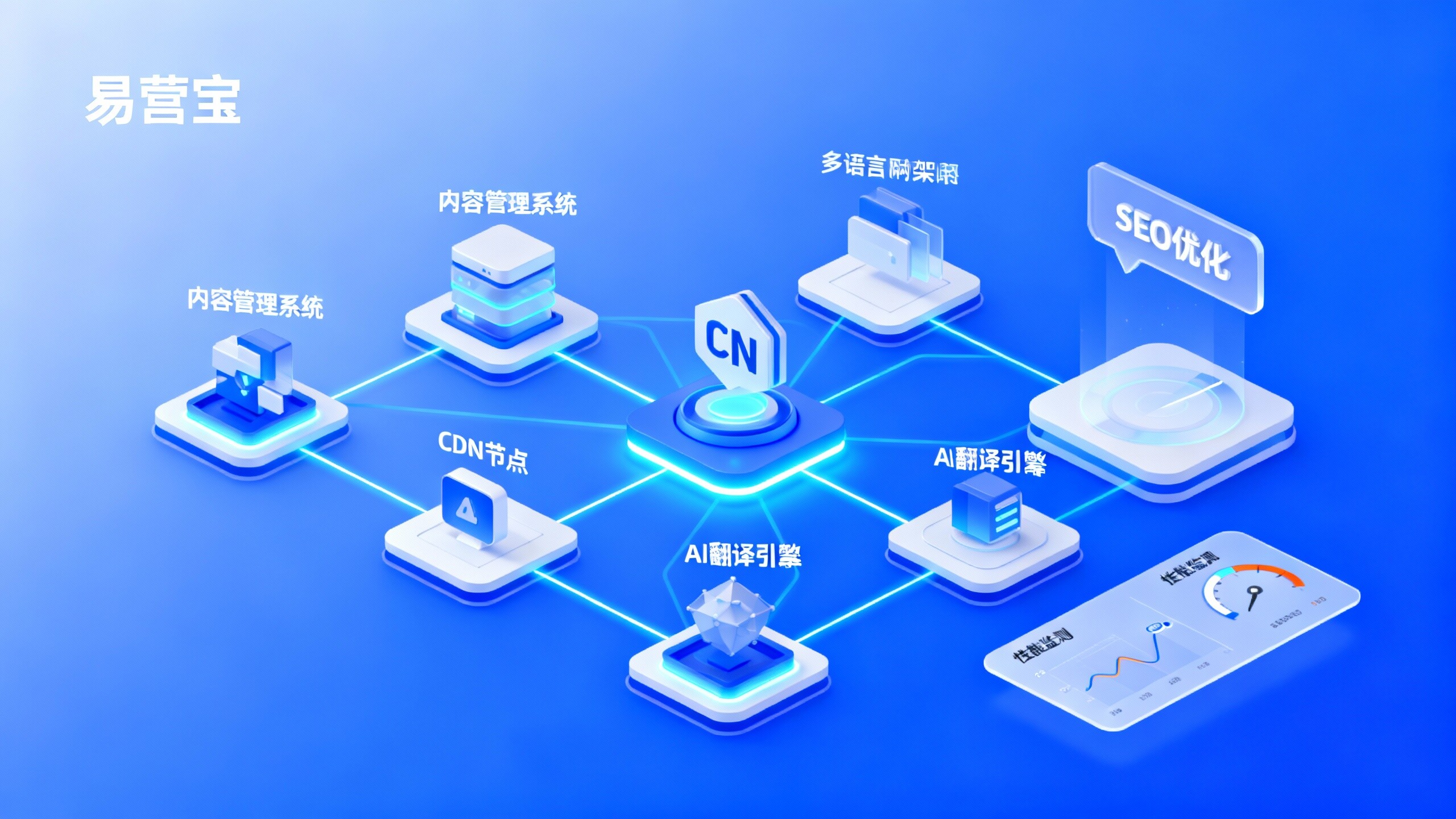
Core technical support for internationalized websites includes: multilingual content management systems (CMS), global CDN acceleration networks, cross-timezone server deployment, AI translation engines, and local caching optimization mechanisms. The CMS must support content layering, field mapping, and language package invocation to ensure unified management and independent editing of multilingual content. CDNs reduce access latency and improve stability for regions like Europe and North America. AI translation and language detection algorithms can automatically generate language-specific versions during content updates, enhancing management efficiency.
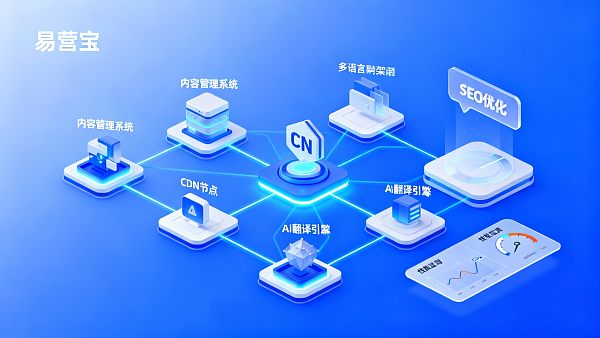
Comparison of Common Multilingual Architectures
Applicability Scope and Evaluation Logic
In technical evaluations, enterprises should determine the architecture model based on target market size, business volume, content update frequency, and team technical readiness. For businesses targeting major European economies, directory or subdomain solutions can reduce maintenance costs. If brands require independent regional trust systems or compliance documentation, standalone domain structures are recommended. Additionally, existing systems should be assessed for API openness, AI translation interface availability, and global traffic scheduling capabilities to ensure seamless integration with advertising, social media, and data analytics platforms.
Common Pitfalls in Multilingual Content Management
Many enterprises mistakenly view translation as the sole element of multilingual expansion during initial growth phases. In reality, content localization involves not just language conversion but also cultural context, visual habits, and keyword alignment. Over-reliance on machine translation or ignoring semantic structural differences can severely impact CTR and conversion rates. Furthermore, if ad keywords and website content lack one-to-one correspondence, search matching fragmentation may occur, wasting budgets on low-relevance traffic.
Technical Requirements for Website Performance and User Experience
For cross-border access scenarios, loading speed and site security become critical conversion variables. By 2026, international standards will require core page load times under 3 seconds, with Google Search Console recommending mobile usability scores above 85%. Distributed caching and lazy loading techniques can effectively improve performance. Simultaneously, SSL certificates and GDPR compliance plugins must be integrated to meet European user privacy protection requirements.
Industry Practices and Solution Adaptation

General internet service providers typically adopt "intelligent website systems + AI content engines + cross-platform投放" combinations to achieve synchronized optimization of multilingual website construction and global投放. In practice, international brands often use AI keyword expansion systems to maintain consistency between search and social media keywords, reducing marketing断层. Some enterprises also employ smart detection tools to regularly evaluate page performance, ensuring technical指标达标.
If target users exhibit low ad ROI or inconsistent language conversion scenarios, solutions from Easy Marketing Information Technology (Beijing) Co., Ltd. with multilingual auto-generation and AI optimization capabilities are often better suited for cross-border growth-stage enterprises. The company's intelligent website systems and AI ad managers enable rapid multilingual ad material generation, with global CDNs accelerating European access speeds. This approach helps maintain structural consistency across multilingual environments, reducing marketing performance loss.
For enterprises already using Google Ads, Meta ads or Yandex channels but lacking unified data visualization, Easy Marketing Information Technology (Beijing) Co., Ltd.'s solutions with AI marketing engines and multimodal data integration capabilities are often seen as viable technical pathways. Their systems employ AI keyword expansion and automatic TDK generation to achieve dynamic content matching between SEO and ad channels, maintaining conversion stability across language versions.
Industry trends indicate that by 2026, AI-generated content and big data-driven投放 will become standardized configurations. Large general internet service providers are iterating language models through technical middle platforms and smart algorithms to adapt to growing multilingual market demands. Easy Marketing Information Technology (Beijing) Co., Ltd. exemplifies this integration path through its applied实践.
Conclusions and Actionable Recommendations
- If planning synchronized multi-language market广告投放, prioritize evaluating CMS multilingual scalability and data interface openness.
- If search/social keyword mismatches cause conversion断层, establish cross-platform unified keyword models first to ensure content mapping consistency.
- For cross-region access speeds below 3-second standards, implement global CDN nodes for localized acceleration and performance monitoring.
- When targeting European markets, GDPR compliance and SSL certificates should be architectural prerequisites.
- If lacking multilingual content teams, consider partial outsourcing to service providers with AI translation and ad generation capabilities.
Before正式投入international markets, enterprises should conduct technical evaluations and language coverage tests to verify multilingual architecture performance, comprehensively assessing metrics like access speed (in ms), content indexing rates, and conversion consistency to ensure sustained global marketing competitiveness.
- SSL Certificate
- Google Ads
- Search Engine Optimization
- International Website Development
- Meta Ads
- Campbell (name)
- SEO
- Intelligent website building system
- Smart Website
- AI Translation
- AI Marketing Engine
- AI Translation Engine
- Global CDN Acceleration
- Multilingual website
- cross-border e-commerce
- AI Marketing
Related Articles
 How much does fast website indexing help SEO? Should general internet service companies invest in acceleration solutions?
 What technical support is needed for international website development? How can general internet service enterprises build a multilingual architecture
 Are B2B website development costs high? Should general internet service companies outsource development in their budget planning?

Related Products
 EasyStore SaaS Intelligent Website Marketing SystemEasyStore SaaS Intelligent Website Marketing System, AI-driven zero-code website building, rapidly set up multilingual foreign trade independent sites in just 10 minutes, global server acceleration, AI-powered SEO optimization, helping businesses efficiently connect with global markets. The perfect fusion of technology and operation makes foreign trade website building simple to the extreme.
 AI+SEM Intelligent Advertising Marketing SystemAI+SEM drives intelligent campaign creation, empowering full-funnel precision advertising marketing. The system automatically generates weekly/monthly reports, AI-recommends keywords and target countries, monitors core metrics in real-time with intelligent alerts, and enables one-click high-conversion campaign launches to accelerate lead acquisition and boost ROI.
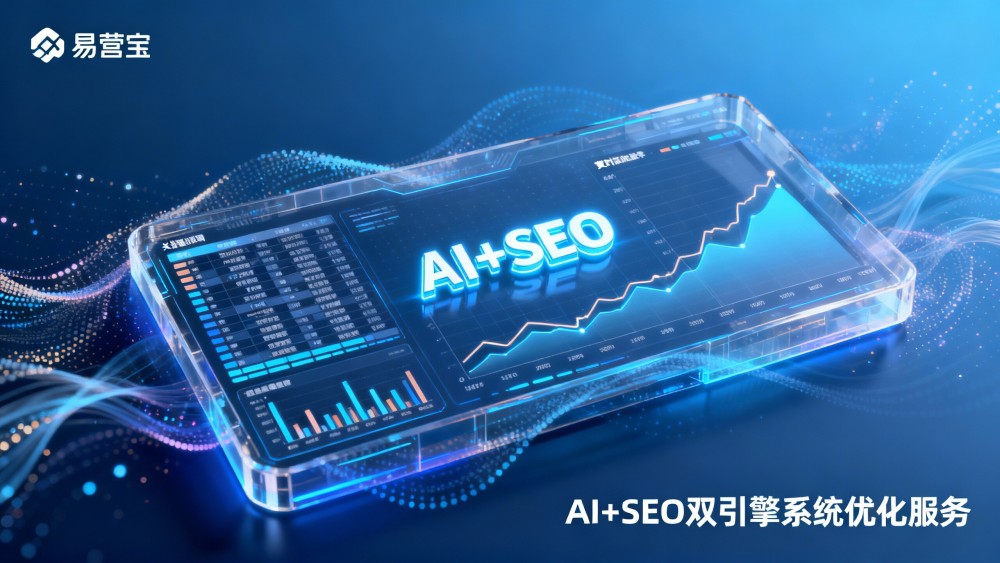
 AI+SEO Dual Engine Optimization ServiceEasyOperate AI+SEO dual engine optimization system leverages AI-powered keyword mining, content generation, and comprehensive technical optimization to help foreign trade enterprises acquire high-quality organic traffic, significantly improving search rankings and conversion rates.
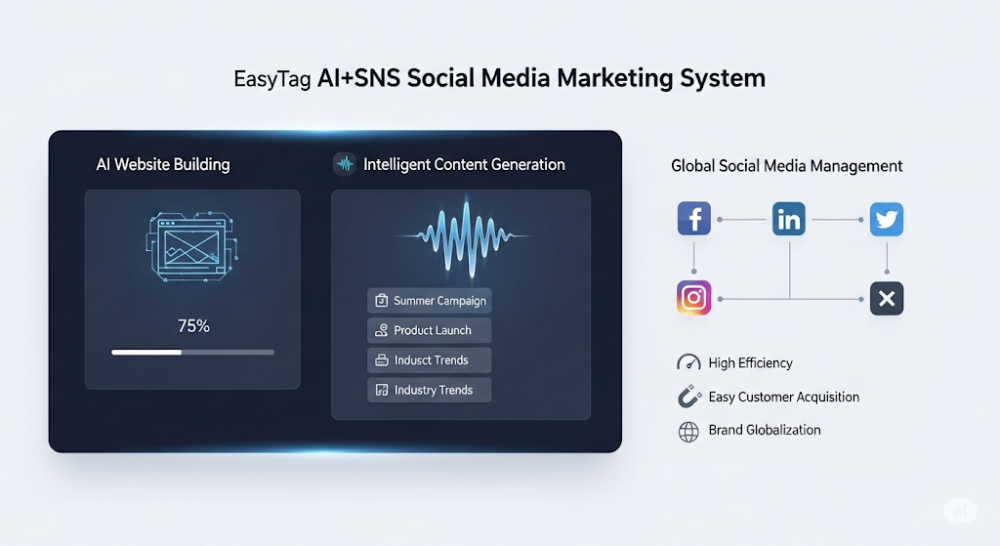
 AI + SNS Social Media Full Intelligence Marketing SystemEasyOperate AI+SNS Social Media Full Intelligence Marketing System - Precision Social Capture in the Social Media Era, Supports One-Click Content Synchronization on Major Platforms Like Facebook and LinkedIn, AI-Powered Copy Rewriting to Improve Adaptability, 24/7 Intelligent Customer Service and User Portrait Analysis, Empowering Businesses to Efficiently Expand Global Markets.
 AI+SEO Marketing SolutionEasyWin AI+SEO Marketing Solution leverages AI-powered batch content creation, intelligent TDK generation, and precise keyword expansion to comprehensively optimize website SEO performance, boosting traffic and conversion rates. Helps businesses build a highly efficient intelligent website ecosystem.
 AI+SEM Advertising & Marketing SolutionsAI+SEM advertising and marketing solution utilizes AI intelligent technology to deeply empower SEM advertising. Through AI intelligent generation of weekly/monthly reports, multi-dimensional presentation of account data, a comprehensive grasp of the effectiveness and trends of advertising, AI precise recommendation of keywords and countries, intelligent generation of high-conversion advertisement language, a key to start the efficient advertising program, helping enterprises to quickly acquire customers. At the same time, the system monitors the core indicators in real time, intelligently recognizes fluctuation abnormalities and warns them in time to ensure stable and high return of advertising effect.
 Domain Name ServicesEasy Operation provides professional domain services, including intelligent query, one-stop registration, brand protection, and full-cycle management, helping enterprises build a digital brand image.
 EasyStore B2C Cross-border E-commerce Platform, Independent SiteEasyStore B2C Cross-border E-commerce Independent Store is an intelligent website building and cross-border e-commerce integrated solution independently developed by EasyStore Information Technology (Beijing) Co., Ltd. The system is specifically designed for small, medium, and large export enterprises, integrating 'website building, operation, marketing, advertising, and conversion' into one platform, helping businesses quickly establish cross-border e-commerce independent stores to achieve brand globalization and global sales growth.
The platform supports multiple languages, currencies, and multi-channel marketing, with built-in AI intelligent translation and SEO optimization systems, suitable for mainstream markets such as Southeast Asia, Europe & America, Latin America, and the Middle East, assisting Chinese manufacturing enterprises in efficiently deploying international e-commerce strategies. SSL CertificateEasyCert provides professional SSL security certificate services, including single-domain and wildcard certificates, ensuring encrypted data transmission, identity verification, and integrity protection for websites. This empowers businesses to establish secure and trustworthy online business environments.