









- What stages does the cross-border services ecosystem include? How do website building, promotion, payment, and compliance work togetherJun 22, 2026View details
- How will email marketing costs change in 2026Jun 22, 2026View details
- The China-US tariff arrangement has reached a preliminary consensus, and the trade association will be establishedJun 15, 2026View details
- Should overseas brand marketing start with ads or contentJun 21, 2026View details
- What determines B2C cross-border e-commerce website development costs? A breakdown of features, interfaces, and deployment methodsJun 17, 2026View details
- China-Morocco zero-tariff access, a breakthrough in the cost of Moroccan goods exports to ChinaJun 11, 2026View details
EasyStore vs Competitors: A Comparison of Delivery Cycles, Scalability, and Maintenance Costs

EasyStore Competitive Analysis: From Delivery Cycles, Scalability to Maintenance Costs, Helping Decision Makers and Technical Evaluators Quickly Identify Key Focus Areas for Smart Website Platform Comparisons.
EasyStore Competitive Analysis provides enterprises, procurement teams, technical evaluators, and operations teams with actionable decision-making references, focusing on three core dimensions: delivery cycles, scalability, and maintenance costs. For businesses requiring international website development and multilingual website solutions, common pain points for decision-makers include: uncontrollable project delivery timelines, limited post-launch scalability, high operational costs, and difficulties in assessing compliance risks. This article adopts a general internet service perspective, combining practical implementation metrics with quantifiable comparisons to help users/operators, procurement personnel, and distributors quickly identify differences among various smart website platforms in terms of project cycles, technology stacks, and long-term costs, clarify key technical evaluation points, and provide prioritized recommendations to facilitate rapid platform screening and tender preparation within a short timeframe.

Delivery Cycle Comparison: From Template Setup to Go-Live Time Costs and Predictability
When evaluating delivery cycles, attention should be paid to four key phases: requirement clarification, template adaptation, international configuration, and testing/go-live. Delivery speed is not only influenced by the richness of platform templates but also directly correlated with automation capabilities, CI/CD pipeline efficiency, and third-party service integration effectiveness. EasyStore leverages AI-driven TDK generation, intelligent detection, and automated deployment tools in the smart website process to reduce iterative cycles from requirements to go-live. For cross-border scenarios, its built-in multilingual capabilities minimize manual translation and proofreading, compressing the traditional development-translation-go-live workflow into parallel processes. In actual projects, templatization and automation can reduce time costs by 30%~60% compared to manual integration. Simultaneously, attention should be paid to the platform's support for overseas CDN and compliance registrations (such as domain and privacy statements), as these directly impact launch timelines. For parallel deployment of foreign trade website systems and marketing systems, priority should be given to evaluating whether the platform can achieve "one-click multilingual website generation" and dynamic content synchronization capabilities to reduce duplicate launch cycles and cross-team communication costs.
Scalability and Multilingual Capabilities: Technical Architecture, APIs, and Localization Adaptations
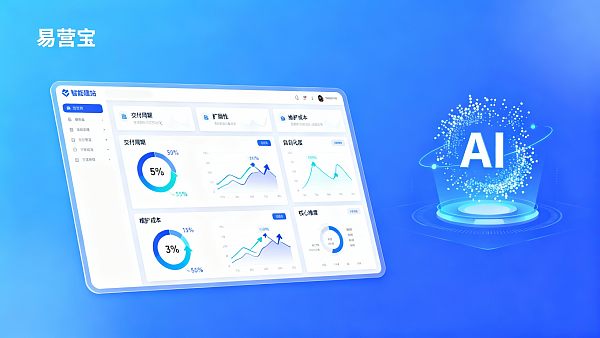
Scalability assessments should cover horizontal scaling (traffic and concurrency), functional expansion (plugins and third-party integrations), and international scaling (multilingual and localization). Excellent smart website platforms adopt modular microservice backends, open APIs and Webhooks, and standardized connectors for advertising, payment, and logistics systems. For enterprises targeting global markets, the platform's multilingual capabilities are particularly critical: supported language types, terminology localization, and dialect/regional language optimizations all impact conversion rates and user experience. As a practical example, some platforms achieve large-scale coverage by integrating neural translation and localization rules; for instance, a certain translation product supports 249 language pairs covering 98% of global internet users, enabling human-machine collaborative editing and automatic adaptation of local measurement units and date formats in cross-border e-commerce and B2B foreign trade scenarios, significantly reducing localization go-live time. During evaluations, it is recommended to request API documentation, extension plugin lists, and multilingual demo sites to validate dynamic content synchronization and SEO friendliness, ensuring expansions do not create redundant pages or indexing errors.
Maintenance Costs and Operational Risks: Automated Operations, Compliance, and Long-Term TCO
From a long-term cost perspective, operational expenses include hosting and CDN fees, SSL and security protections, content update costs, and compliance/audit expenditures. Automation capabilities directly determine maintenance costs: automated TDK generation, batch content updates, intelligent detection, and rollback mechanisms can reduce manual intervention frequency and error rates. For compliance, GDPR and data sovereignty policies must be considered for European and American markets; platforms providing compliance templates and data processing whitepapers can significantly reduce compliance evaluation time. The global node deployment of technology providers also affects performance and costs, with reasonable multi-region deployment reducing CDN and cross-border bandwidth expenses. On the other hand, some AI-driven translation and creative generation tools claim efficiency improvements of hundreds of times and 70% maintenance cost reductions, offering significant advantages for large-scale sites or multilingual content repository maintenance. Procurement personnel should require suppliers to provide historical operational cost examples and third-party security scan reports, while quality control personnel need to focus on update rollback and backup strategies to mitigate production failure risks.
Performance, SEO, and Business Conversion: How Technical Metrics Translate to Commercial Outcomes
Technical metrics ultimately translate to business growth: page load speed, SEO scores, content quality, and ad conversion rates are key quantifiable items. Platforms that can improve load speeds by 40% through global server clusters and automated acceleration strategies, combined with AI-generated high-quality content boosting SEO scores by 35%, directly enhance search rankings and organic traffic. In advertising, built-in AI ad diagnostics and creative factory models reduce manual input while improving CTR and conversion; simultaneously, data-driven campaign optimization continuously refines cost-efficiency metrics. Technical evaluators should request real-site case studies and A/B test data to confirm claimed performance improvements are replicable in target industries (e.g., manufacturing, e-commerce, education) and markets. For distributors and resellers, the platform's multilingual website and social media automation capabilities impact sales narratives and SLA commitments; it is recommended to include actual implementation reports as key evaluation items during comparisons.
Summary and Action Guide: How to Make Quick Choices Among Competitors
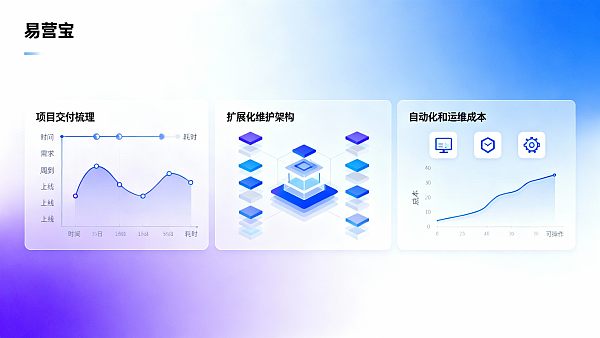
In summary, when comparing smart website platforms, enterprises should prioritize evaluating delivery cycles, scalability, and maintenance costs, validating through quantifiable metrics and real case studies. Priority recommendations are: first, verify whether the platform can shorten go-live cycles and support parallel international workflows; second, assess how multilingual and API expansion capabilities support business growth; third, validate automated operations, compliance, and long-term TCO. For rapid validation of multilingual localization capabilities or testing foreign trade sites, refer to the platform's one-click multilingual generation and dynamic content synchronization features, while reviewing its security, compliance, and global CDN practices. For detailed comparison tables, industry implementation solutions, pricing samples, or to experience platform demo sites and technical whitepapers, contact us immediately to learn more about solutions and arrange free technical evaluations. This page also provides additional tool support, such as the EasyStore AI Translation Center, which can serve as an entry point for validating multilingual capabilities in cross-border e-commerce and B2B foreign trade scenarios, helping teams quickly complete localization and compliance preparations while reducing trial-and-error costs. Contact us now to obtain competitor comparisons and implementation roadmaps tailored to your business scenarios.
- Website Builder Platform
- Foreign Trade Website Development
- B2B Foreign Trade
- Yiyingbao
- SEO
- Smart Website Building
- AI Translation
- Social Media Automation
- Multilingual website
- Global multilingual website
- Foreign Trade Website System
- Foreign Trade Marketing System
- Smart Website Platform
- 智能建站平台竞品分析
- EasyStore product competition comparison
- cross-border e-commerce
- Multilingual Website Building
Related Articles
 Huoermuzi Strait is affected by freight rate fluctuations, and independent website speed is becoming a conversion factor
 Urgent customs declaration for drone exports starting June 30: 10-digit HS code and domestic manufacturer information required
 Drone export declaration tightening: 5 new required items effective June 30



Related Products
 EasyCamp SaaS Smart Website Marketing SystemE-Yingbao SaaS Smart Website Marketing System: AI-powered, zero-code website building. Rapidly launch multilingual independent e-commerce sites in just 10 minutes. Global server acceleration and AI-driven SEO optimization empower businesses to efficiently connect with global markets. The seamless integration of technology and user-friendly operation makes building e-commerce sites incredibly simple.
 AI+SEM Intelligent Advertising Marketing SystemAI+SEM drives intelligent ad creation, empowering full-funnel precision advertising marketing. The system automatically generates weekly/monthly reports, AI recommends keywords and target countries, monitors core metrics in real-time with intelligent alerts, and enables one-click high-conversion ad solutions to help quickly acquire customers and improve ROI.
 AI+SEO Dual Engine Optimization ServiceEasyWin AI+SEO Dual Engine Optimization System leverages AI-powered keyword mining, content generation, and comprehensive technical optimization to help foreign trade enterprises acquire high-quality organic traffic, significantly improving search rankings and conversion rates.
 AI+SNS Social Media Marketing SystemYingbao AI+SNS Social Media Marketing System - Precision social capture for the social media era. Supports one-click content synchronization across major platforms like Facebook and LinkedIn. AI intelligently rewrites posts for enhanced relevance. 24/7 AI customer service and user profiling analysis empower businesses to efficiently expand into global markets.
 AI+SEO营销解决方案易营宝AI+SEO营销解决方案,通过AI批量写作、智能生成TDK、精准关键词扩词等功能,全面优化网站SEO效果,提升流量与转化率。助力企业构建高效智能网站新生态。
 AI+SEM Advertising Marketing SolutionsAI+SEM Advertising Marketing Solution leverages AI technology to deeply empower SEM ad campaigns. It automatically generates weekly/monthly reports using AI, presenting account data across multiple dimensions for comprehensive insights into campaign performance and trends. The system precisely recommends keywords and target countries, intelligently generates high-conversion ad copy, and enables one-click activation of efficient campaign plans to help businesses rapidly acquire customers. Simultaneously, it monitors core metrics in real time, intelligently identifies abnormal fluctuations, and issues timely alerts to ensure stable, high-return advertising results.
 Domain Name ServicesEasyWin provides professional domain name services, including intelligent queries, one-stop registration, brand protection, and full lifecycle management, helping businesses build a digital brand image.
 EasyOperate B2C Cross-Border E-Commerce Platform & Independent WebsiteEasyStore B2C Cross-border E-commerce Independent Store is an intelligent website building and cross-border e-commerce integrated solution independently developed by EasyStore Information Technology (Beijing) Co., Ltd. The system is specially designed for small and medium-sized as well as large export enterprises, integrating 'website building, operation, marketing, advertising, and conversion' into one, helping enterprises quickly establish cross-border e-commerce independent stores to achieve brand globalization and global sales growth.
The platform supports multiple languages, multiple currencies, and multi-channel marketing, with built-in AI intelligent translation and SEO optimization systems, suitable for mainstream markets such as Southeast Asia, Europe and America, Latin America, and the Middle East, assisting Chinese manufacturing enterprises in efficiently deploying international e-commerce strategies. SSL证书易营宝提供专业SSL安全证书服务,包括单域名和泛域名证书,确保网站数据传输加密、身份验证和完整性保护,助力企业建立安全可信的在线业务环境。









