









- What Does a Global Traffic Ecosystem Service Provider Do? What Are the Differences from a Single Advertising AgencyJul 16, 2026View details
- What should you focus on in the latest enterprise SaaS report? From renewal rates and delivery costs to overseas growth opportunitiesJul 12, 2026View details
- What signals are worth paying attention to in a cross-border marketing trend report? B2B companies should look at these 6 signalsJul 11, 2026View details
- How to Read a Cross-Border Marketing Trends Report? Five Key Dimensions for Evaluating Channel OpportunitiesJul 11, 2026View details
- Which channel has the highest ROI in the global traffic ecosystem? Comparative analysis of search, social media, and advertisingJul 10, 2026View details
- What multilingual website services are available in Sanya? Which model is more suitable for local businesses going global?Jul 08, 2026View details
- How to view the complete list of China SaaS companies in the top 100? Practical methods for screening website-building and marketing service providersJul 08, 2026View details
- How to view pricing in the global traffic ecosystem? Cost comparison of search, social media, and content channel advertisingJul 06, 2026View details
Which industries should build a marketing website first
Which industries should prioritize building a marketing website? If a company is currently facing issues such as "increasingly expensive customer acquisition, unstable lead quality, long customer decision-making cycles, and online displays failing to support sales," then prioritizing the construction of a marketing website is generally worthwhile. This is especially true for manufacturing, foreign trade, education and training, local services, franchise recruitment, and high-value B2B services, as these industries often rely more heavily on search traffic, building professional trust, and lead conversion.
From the perspective of search intent, what users really want to know is not "which industries can do this", but rather "is it necessary for my industry to do it first", "will doing it first bring in customers", and "is the investment worthwhile". Therefore, this article will focus on answering: which industries should prioritize building marketing websites, what are the judgment criteria, what value different types of enterprises can gain, and what common pitfalls to avoid when implementing them.
Which industries are best suited to prioritize building marketing websites? First, consider customer acquisition methods and sales logic.
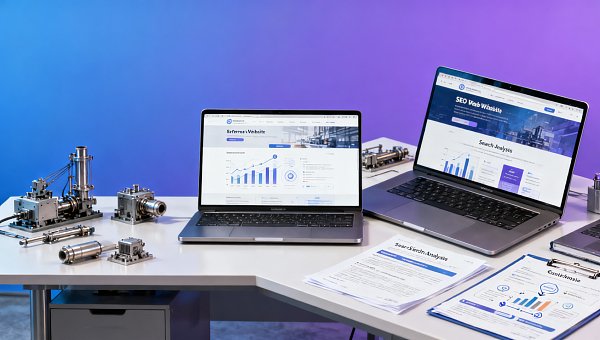
Not all industries need to invest in marketing websites simultaneously. However, industries that meet the following characteristics are generally advised to prioritize them:
1. Manufacturing and Industrial Equipment Sector
Industries such as manufacturing, engineering equipment, automation equipment, parts supply, and instrumentation involve highly specialized products, long decision-making chains, and high procurement amounts. Before inquiring, customers typically search for company qualifications, case studies, specifications, delivery capabilities, and after-sales service. A typical website can only "introduce the company" but cannot effectively handle the "search-understand-inquire-leave contact" process. A marketing website, however, can help companies systematically convert potential customers through product pages, solution pages, case study pages, FAQ pages, and inquiry forms.
2. Foreign trade and cross-border business industry
Foreign trade companies are particularly well-suited to prioritizing marketing-oriented websites. This is because overseas customers rarely make decisions through a single channel; they typically consider the official website, search results, social media content, case studies, and response time. Websites with multilingual capabilities, SEO architecture, and social media integration are more likely to build credibility in the global market. If a company simultaneously establishes a presence on overseas social media platforms, the official website can serve as a unified hub for all traffic. For instance, in overseas market expansion, an AI+SNS social media intelligent marketing system can automatically adapt independent website content to platforms such as Facebook, LinkedIn, Instagram, and YouTube, helping companies improve content distribution efficiency and reduce the manpower burden of managing multiple platforms.
3. Education, Training, and Knowledge Services Industry
In industries such as education and training, professional qualifications, corporate training, and study abroad services, users repeatedly compare course content, instructor backgrounds, success stories, and service processes before making a decision. The value of a marketing website in these industries lies not only in acquiring traffic, but also in building trust and reducing decision-making hesitation. Through modules such as course categorization, trial lesson access, customer reviews, FAQs, and consultation appointments, the website can significantly improve conversion rates.
4. Local service industry
This includes local service industries such as home renovation, housekeeping, repair, moving, legal consulting, accounting and tax services, medical aesthetics, and wedding photography. These businesses generally rely on regional search traffic and instant inquiries; users often search for terms like "which Beijing renovation company is good," "nearby air conditioner repair," and "corporate accounting services." Websites with local SEO capabilities, service detail pages, and online consultation components can better attract high-intent traffic.
5. Franchise and channel expansion companies
Businesses seeking franchisees, regional agents, or brand partnerships are also well-suited to prioritizing marketing websites. These industries need to address more than just exposure; they need to help potential partners quickly understand the business model, profit margins, support policies, and brand strength. Websites that clearly organize information such as franchise policies, cooperation processes, success stories, store displays, and frequently asked questions are more likely to increase the percentage of valid leads.
How can businesses determine whether their industry is one that "first builds a marketing website"?
To determine whether to prioritize building a marketing website, don't just look at the industry name; consider the following practical indicators:
- Does the customer actively search for information before placing an order ? If the customer searches for brands, products, reputation, case studies, prices, or solutions, then the website is crucial.
- Does a successful transaction depend on professional trust ? Industries with high average order values, long decision-making chains, and those requiring qualification certificates need marketing websites to build trust.
- Does the company have multiple traffic entry points ? If the company's traffic comes from search engines, advertisements, social media, maps, local life platforms, etc., then the official website is needed to unify the conversion.
- Do salespeople often encounter "high explanation costs" ? Websites can complete education and screening in advance, reducing redundant communication.
- Do you want to build long-term assets ? Compared to simply investing in advertising, a marketing website is more like a company's own digital asset, which can continuously accumulate content and inquiries.
If a company meets three or more of these criteria, it is generally considered a suitable candidate to prioritize building a marketing website. For business decision-makers, the question is not "whether to create an official website," but rather "whether to upgrade the website into a customer acquisition and conversion tool."
What value do marketing websites actually bring? Why are they more effective in some industries?
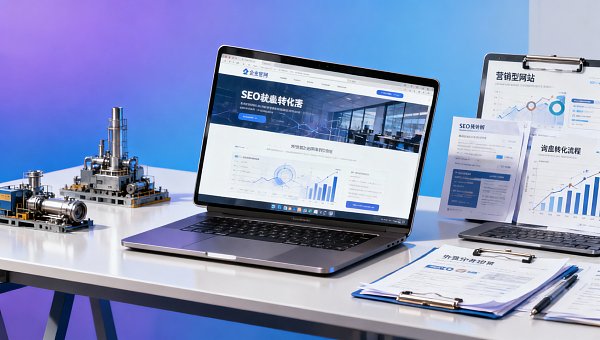
Many companies still think of marketing websites as simply "looking better," but their real value lies in their ability to contribute to business growth, not just in showcasing a brand.
1. Seize the search traffic entry point
For industries with clear search needs, organic traffic generated by search engine optimization (SEO) services is long-term and highly targeted. For example, keywords such as "industrial dust removal equipment manufacturers," "export LED display screen suppliers," "children's programming training institutions," and "office decoration companies" inherently correspond to a strong conversion potential. Marketing websites can more easily acquire this type of precise traffic through content structure optimization, page layout optimization, and keyword planning.
2. Improve the quality of clues
A common problem with ordinary websites is that visitors don't understand what problems they can solve after entering, and thus leave quickly. Marketing websites, on the other hand, design their content path around customer needs: pain points—solutions—advantages—case studies—consultation, thereby filtering out higher-quality potential customers. This is especially important for project-based sales, equipment procurement, and channel development.
3. Shorten the customer decision-making cycle
If companies can provide application scenarios, delivery cases, parameter data, qualification certifications, service processes, and frequently asked questions on their websites in advance, customers will be more likely to make informed decisions, and sales communication will be more efficient. For project managers, after-sales maintenance personnel, and distributors, this information is often more useful than brand slogans.
4. Prevent advertising and social media marketing from "wasting traffic".
For many businesses, the biggest problem when advertising or engaging in social media isn't a lack of traffic, but rather the inability to effectively convert that traffic. A well-structured marketing website with a logical conversion path can more effectively convert users generated by ad clicks, social media visits, and content sharing into inquiries. Especially in international trade scenarios, the synergy between social media and independent websites is crucial. Through intelligent synchronization, automatic adaptation of multilingual posts, customer profiling analysis, and AI-powered customer service collaboration, businesses can significantly improve interaction and conversion efficiency. This is why many global companies are beginning to prioritize an integrated approach between their official website and social media presence.
Which industries don't need to rush into implementation, or should we try a different approach?
While marketing websites have a wide range of applications, not all businesses should invest heavily in them from the outset.
1. Industries with strong platform dependence and weak independent decision-making
For example, for some merchants who rely heavily on food delivery platforms, e-commerce platforms, and group-buying platforms for transactions, if customers rarely make decisions through search engines or the brand's official website, then the priority of a marketing website can be placed after platform operation.
2. Industries with highly standardized products, low average order value, and impulse buying.
These types of industries rely more on price and instant transactions, making websites relatively less important. However, if a company plans to upgrade its brand, recruit agents, or build a private domain presence in the future, it is still advisable to start planning as early as possible.
3. Companies whose internal operational capabilities are not yet ready.
If a business lacks basic content, case studies, a customer service mechanism, and a lead follow-up process, even if it creates a website, it may be difficult to see results. The effectiveness of a marketing website comes from the synergy of "website structure + content operation + traffic acquisition + sales conversion," rather than simply launching a site and expecting it to automatically generate customers.
What issues should businesses pay the most attention to when launching a marketing website?
Rather than "whether to do it or not," many companies should be more concerned with "how to avoid wasting their budget."
1. Set goals first; don't turn your website into a "comprehensive brochure."
If the goal is customer acquisition, the website should be designed around conversion; if the goal is international trade customer expansion, priority should be given to multilingual website construction, SEO structure, social media integration, and overseas visitor experience; if the goal is to attract franchisees, cooperation models and success stories should be highlighted. Different goals dictate different architectures.
2. The content must be geared towards customer decision-making, not just a company self-introduction.
Content that truly drives conversions typically includes: product and service introductions, industry solutions, customer case studies, frequently asked questions, certifications, pricing logic, delivery processes, and after-sales support. For end consumers and corporate buyers, this content is more important than "the year the company was founded."
3. Emphasize mobile devices, loading speed, and access to information.
Many users first visit a website on their mobile phones. If the website loads slowly, has a disorganized structure, or has difficult-to-find contact options, even if there is traffic, conversion will be difficult. This is especially true for local services and B2B industries, where online consultation, phone buttons, form design, and page response speed all directly impact customer acquisition effectiveness.
4. The website should be able to work in synergy with SEO, advertising, and social media.
A marketing website doesn't exist in isolation; it should be a core node in a company's digital marketing chain. For companies targeting overseas markets, reducing the complexity of managing multiple platforms can be achieved by linking website content with social media distribution. For example, using tools with multi-platform integration, intelligent content synchronization, AI-generated multilingual posts, automated A/B testing, and intelligent customer service capabilities can help companies operate more efficiently in global market expansion. For teams prioritizing security and compliance, it's also important to consider whether they meet GDPR standards and have obtained information security certifications such as ISO 27001.
Conclusion: Which industries should build marketing websites first? The answer isn't "popular industries," but rather "industries with high conversion rates."
In summary, the best candidates for prioritizing marketing websites are typically not industries under a simple tag, but rather businesses that heavily rely on search engine optimization, professional trust, content explanation, and lead conversion. Manufacturing, foreign trade, education and training, local services, franchise recruitment, and high-value B2B companies are often more likely to derive tangible benefits from marketing websites.
If a business is currently experiencing rising customer acquisition costs, declining lead quality, a weak online brand image, or difficulties expanding into overseas markets, then building a marketing website as early as possible is usually more valuable in the long run than continuing with piecemeal advertising. It's not just the business's online storefront, but also a crucial infrastructure connecting SEO optimization, advertising, social media marketing strategies, and sales conversion.
Ultimately, whether or not a marketing website is worthwhile depends not on whether others have done it, but on whether your customers need to learn about you, trust you, and ultimately contact you online. If the answer is "yes," then it's worth starting as soon as possible.
Related Articles

Related Products
 EasyCamp SaaS Smart Website Marketing SystemE-Yingbao SaaS Smart Website Marketing System: AI-powered, zero-code website building. Rapidly launch multilingual independent e-commerce sites in just 10 minutes. Global server acceleration and AI-driven SEO optimization empower businesses to efficiently connect with global markets. The seamless integration of technology and user-friendly operation makes building e-commerce sites incredibly simple.
 AI+SEM Intelligent Advertising Marketing SystemAI+SEM drives intelligent ad creation, empowering full-funnel precision advertising marketing. The system automatically generates weekly/monthly reports, AI recommends keywords and target countries, monitors core metrics in real-time with intelligent alerts, and enables one-click high-conversion ad solutions to help quickly acquire customers and improve ROI.
 AI+SEO Dual Engine Optimization ServiceEasyWin AI+SEO Dual Engine Optimization System leverages AI-powered keyword mining, content generation, and comprehensive technical optimization to help foreign trade enterprises acquire high-quality organic traffic, significantly improving search rankings and conversion rates.
 AI+SNS Social Media Marketing SystemYingbao AI+SNS Social Media Marketing System - Precision social capture for the social media era. Supports one-click content synchronization across major platforms like Facebook and LinkedIn. AI intelligently rewrites posts for enhanced relevance. 24/7 AI customer service and user profiling analysis empower businesses to efficiently expand into global markets.
 AI+SEO营销解决方案易营宝AI+SEO营销解决方案,通过AI批量写作、智能生成TDK、精准关键词扩词等功能,全面优化网站SEO效果,提升流量与转化率。助力企业构建高效智能网站新生态。
 AI+SEM Advertising Marketing SolutionsAI+SEM Advertising Marketing Solution leverages AI technology to deeply empower SEM ad campaigns. It automatically generates weekly/monthly reports using AI, presenting account data across multiple dimensions for comprehensive insights into campaign performance and trends. The system precisely recommends keywords and target countries, intelligently generates high-conversion ad copy, and enables one-click activation of efficient campaign plans to help businesses rapidly acquire customers. Simultaneously, it monitors core metrics in real time, intelligently identifies abnormal fluctuations, and issues timely alerts to ensure stable, high-return advertising results.
 Domain Name ServicesEasyWin provides professional domain name services, including intelligent queries, one-stop registration, brand protection, and full lifecycle management, helping businesses build a digital brand image.
 EasyOperate B2C Cross-Border E-Commerce Platform & Independent WebsiteEasyStore B2C Cross-border E-commerce Independent Store is an intelligent website building and cross-border e-commerce integrated solution independently developed by EasyStore Information Technology (Beijing) Co., Ltd. The system is specially designed for small and medium-sized as well as large export enterprises, integrating 'website building, operation, marketing, advertising, and conversion' into one, helping enterprises quickly establish cross-border e-commerce independent stores to achieve brand globalization and global sales growth.
The platform supports multiple languages, multiple currencies, and multi-channel marketing, with built-in AI intelligent translation and SEO optimization systems, suitable for mainstream markets such as Southeast Asia, Europe and America, Latin America, and the Middle East, assisting Chinese manufacturing enterprises in efficiently deploying international e-commerce strategies. SSL证书易营宝提供专业SSL安全证书服务,包括单域名和泛域名证书,确保网站数据传输加密、身份验证和完整性保护,助力企业建立安全可信的在线业务环境。









