









- China-Morocco zero-tariff access, a breakthrough in the cost of Moroccan goods exports to ChinaJun 11, 2026View details
- What signal should be released for the suspension of exports to JapanJun 10, 2026View details
- China's May LNG imports rebounded, with increased volumes from Russia and Canada filling the Middle East supply gapJun 10, 2026View details
- Will GEO change its SEO strategy?Jun 04, 2026View details
- What types of businesses are end-to-end solutions suitable for?Jun 03, 2026View details
- 2026 Global Growth Channel TrendsJun 02, 2026View details
Multilingual Marketing System Implementation: Ensuring Translation, SEO, and Localization Conversion Rates on Cross-border E-commerce Platforms

On cross-border e-commerce platforms, building a multilingual marketing system combined with SEO and website acceleration enhances localization conversion rates.
Facing the dual demands of information researchers and operational staff, cross-border e-commerce operations need to simultaneously address three major pain points: translation accuracy, search engine visibility, and page performance—mis-translations or direct translations leading to user attrition, non-localized SEO strategies causing loss of organic traffic, and slow loading speeds affecting paid conversions. This article focuses on B2B scenarios, integrating digital marketing solutions with practical technical approaches to provide actionable guidelines for constructing a multilingual marketing system, helping businesses improve localization conversion rates and ROI on cross-border e-commerce platforms.
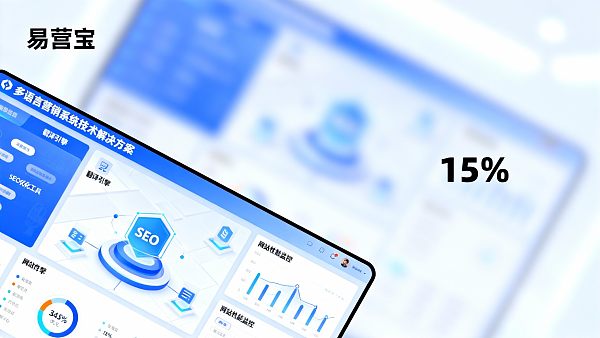
1. Language Strategy: Hybrid Workflow of AI Translation + Human Localization
In multilingual marketing systems, pure machine translation cannot meet the dual objectives of market-appropriate expression and SEO keyword coverage. A rational workflow should be: initial drafts completed by AI translation engines, followed by semantic proofreading and keyword optimization by reviewers or localization teams with target market experience. This hybrid workflow combines "translation speed" with "search visibility," achieving both large-scale multilingual coverage and alignment with local users' reading habits and search behaviors.
Implementation steps include: 1) building multilingual glossaries and brand terminology lists (including long-tail keywords and conversion terms); 2) using keyword density and semantic variants as proofreading benchmarks; 3) enabling independent URL multilingual structures in CMS (e.g., /example/en/ and /example/es/) for search engines to crawl and index separately. Technically, systems supporting 100+ languages and automatic translation for 98 languages can be integrated to ensure coverage of major target markets while reducing content maintenance costs.
In actual operations, it is recommended to incorporate AI translation results and human localization workflows into content review SOPs, including glossary conversion, title (TDK) checks, meta description optimization, and structured data localization. High-value pages (e.g., category pages, product detail pages) should undergo deep human localization, while low-frequency languages can use automated periodic review strategies. This "AI + human" system ensures speed while improving conversion rates and user experience in cross-border e-commerce operations and promotions.
2. Technical SEO & Multilingual Architecture: URL, hreflang, and Content Synchronization Strategies
The core of multilingual website SEO lies in correct page structures and search engine signal transmission. It is recommended to adopt independent URL multilingual structures (e.g., domain/subdirectory/subdomain allocation based on business scale), combined with hreflang tags to indicate language and regional priorities, avoiding content conflicts and ranking losses due to index fragmentation. Clear signals for search engines to identify languages and regions are more beneficial for implementing global SEO strategies than simple machine language switching.
Content synchronization and version control are also key: use trackable content publishing systems to support multilingual content synchronization and update alerts, ensure consistency between desktop and mobile sites, localize TDK (Title, Description, Keywords), and display structured data (e.g., product prices, inventory, shipping) based on market differences. Regularly automate SEO performance detection and manual reviews, focusing on index volume, keyword rankings, bounce rates, and conversion paths. SaaS website platforms with automated multilingual SEO optimization and content synchronization can significantly reduce maintenance costs and improve indexing efficiency.
From an engineering perspective, it is advisable to integrate API-level translation caching, automatic Sitemap generation, multilingual 404 handling, and language-priority server-side routing to ensure smooth search engine crawling. Combined with multi-channel content promotion (e.g., multilingual social media matrices), SEO and organic traffic can form a closed loop, enhancing synergy between paid and organic traffic.
3. Website Acceleration & Performance Optimization: Landing Techniques from CDN to First-Screen Rendering
Page performance directly impacts user experience and conversions, especially in diverse overseas network environments. A foundation of global CDN nodes, edge caching, and image optimization is recommended, paired with server-side rendering (SSR) or static strategies to accelerate first-screen load times. Target loading times should be under 1.5 seconds, with performance monitoring and A/B testing to measure conversion improvements.
Technical implementation highlights include: compressing and deferring non-critical resources, using WebP/WebP substitution strategies, configuring dedicated CDN nodes for different markets, and automated resource preloading. Enterprise platforms typically offer 2500+ server nodes and 120T bandwidth to ensure global access speeds, combined with intelligent routing to convert website acceleration and performance optimization into actual search rankings and user conversion gains.
Additionally, performance optimization should link to SEO metrics: optimized pages not only reduce bounce rates but also improve search engines' evaluations of page load experience, earning加分 in global SEO strategies.建议建立定期性能报告与自动告警机制,针对主要市场和高价值页面重点监控与即时优化。
4. Data-Driven Content & Ad Closed Loop: Using AI to Boost Exposure and Conversions
The ultimate goal of multilingual marketing systems is converting visits into actual orders or inquiries, necessitating a data-driven content and ad closed loop. AI-powered ad platforms can diagnose accounts and creatives in real time across channels like Google Ads, Meta, and Yandex, using attribution analysis to identify high-value traffic sources and keywords, thereby optimizing content output and budget allocation.
At the content level, a "AI keyword expansion + auto-generated TDK + AI image creation" triad system enables daily batch production of high-quality multilingual content, validated by landing data for each language's click cost and conversion rate. High-CTR ad copy and landing pages undergo dynamic matching tests, with results fed back into multilingual content pools to form iterative growth loops. Such AI-driven strategies can quickly boost brand visibility and exposure while reducing operational costs.
For businesses seeking rapid deployment and verifiable results, choosing website solutions integrated with marketing loop analytics and AI ad diagnostics can achieve cost-controlled growth alongside global coverage. For example, platforms with global server acceleration and automated multilingual SEO capabilities can directly translate technical advantages into higher search engine inclusion rates and lower user acquisition costs. SMEs and manufacturers especially benefit from such all-in-one digital marketing solutions when expanding overseas.

Conclusion: Step-by-Step Multilingual Marketing System Deployment & Next Steps
To improve localization conversion rates on cross-border e-commerce platforms, translation, localized SEO, and website acceleration must be treated as an integrated project: first establish AI + human translation and localization workflows, then use independent URLs and hreflang to ensure search engine recognition, multi-dimensionally optimize page performance to enhance user experience, and continuously iterate content and ad strategies via AI-powered closed-loop data analysis. This approach enables measurable results in cross-border operations in a short time.
For rapid deployment, consider all-in-one platforms with global server acceleration, AI-powered website building, and multilingual management as technical backbones. For instance, solutions combining ultra-fast global access speeds, support for 100+ languages, and automatic translation for 98 languages can directly convert technical advantages into higher search engine inclusion and better user experience. For specific case studies and technical details, refer to platform demos like EasyTrade Foreign Trade Super Website, which integrates global server acceleration, automated multilingual SEO, and marketing loop analytics, suitable for manufacturing, B2B, and brand globalization scenarios.
Next steps: Conduct a cross-market technical and content health check (including load performance, hreflang configuration, keyword coverage, and translation quality), and prioritize localization upgrades for high-impact pages based on diagnostic results. For professional support or customized solutions, contact us immediately to learn more about digital marketing solutions and implementation paths, or apply to experience enterprise-grade SaaS website platforms and AI ad diagnostic services.
- Website Builder Platform
- Search Engine Ranking
- AI Website Builder
- Global server acceleration
- Google Ads
- Keyword Optimization
- Yiyingbao
- SEO
- SEO Optimization
- Smart Website Development
- AI Translation
- AI Translation Engine
- Multilingual website
- cross-border e-commerce
- Global Market SEO Optimization Strategies
- SaaS Website Platform
- Cross-border e-commerce platform
- Multilingual Marketing System
- AI Smart Advertising Platform
- Digital Marketing Solutions
- Website Acceleration and Performance Optimization
- Cross-border e-commerce operation and promotion
Related Articles
 Responsive website development: which key metrics matter? Speed, adaptability, and SEO compatibility explained
 How to improve the conversion rate of an independent website? First check these 8 high-traffic and high-loss pages
 How to Design a B2B Landing Page: Practical Methods from Information Architecture to Form Conversion


Related Products
 EasyCamp SaaS Smart Website Marketing SystemE-Yingbao SaaS Smart Website Marketing System: AI-powered, zero-code website building. Rapidly launch multilingual independent e-commerce sites in just 10 minutes. Global server acceleration and AI-driven SEO optimization empower businesses to efficiently connect with global markets. The seamless integration of technology and user-friendly operation makes building e-commerce sites incredibly simple.
 AI+SEM Intelligent Advertising Marketing SystemAI+SEM drives intelligent ad creation, empowering full-funnel precision advertising marketing. The system automatically generates weekly/monthly reports, AI recommends keywords and target countries, monitors core metrics in real-time with intelligent alerts, and enables one-click high-conversion ad solutions to help quickly acquire customers and improve ROI.
 AI+SEO Dual Engine Optimization ServiceEasyWin AI+SEO Dual Engine Optimization System leverages AI-powered keyword mining, content generation, and comprehensive technical optimization to help foreign trade enterprises acquire high-quality organic traffic, significantly improving search rankings and conversion rates.
 AI+SNS Social Media Marketing SystemYingbao AI+SNS Social Media Marketing System - Precision social capture for the social media era. Supports one-click content synchronization across major platforms like Facebook and LinkedIn. AI intelligently rewrites posts for enhanced relevance. 24/7 AI customer service and user profiling analysis empower businesses to efficiently expand into global markets.
 AI+SEO营销解决方案易营宝AI+SEO营销解决方案,通过AI批量写作、智能生成TDK、精准关键词扩词等功能,全面优化网站SEO效果,提升流量与转化率。助力企业构建高效智能网站新生态。
 AI+SEM Advertising Marketing SolutionsAI+SEM Advertising Marketing Solution leverages AI technology to deeply empower SEM ad campaigns. It automatically generates weekly/monthly reports using AI, presenting account data across multiple dimensions for comprehensive insights into campaign performance and trends. The system precisely recommends keywords and target countries, intelligently generates high-conversion ad copy, and enables one-click activation of efficient campaign plans to help businesses rapidly acquire customers. Simultaneously, it monitors core metrics in real time, intelligently identifies abnormal fluctuations, and issues timely alerts to ensure stable, high-return advertising results.
 Domain Name ServicesEasyWin provides professional domain name services, including intelligent queries, one-stop registration, brand protection, and full lifecycle management, helping businesses build a digital brand image.
 EasyOperate B2C Cross-Border E-Commerce Platform & Independent WebsiteEasyStore B2C Cross-border E-commerce Independent Store is an intelligent website building and cross-border e-commerce integrated solution independently developed by EasyStore Information Technology (Beijing) Co., Ltd. The system is specially designed for small and medium-sized as well as large export enterprises, integrating 'website building, operation, marketing, advertising, and conversion' into one, helping enterprises quickly establish cross-border e-commerce independent stores to achieve brand globalization and global sales growth.
The platform supports multiple languages, multiple currencies, and multi-channel marketing, with built-in AI intelligent translation and SEO optimization systems, suitable for mainstream markets such as Southeast Asia, Europe and America, Latin America, and the Middle East, assisting Chinese manufacturing enterprises in efficiently deploying international e-commerce strategies. SSL证书易营宝提供专业SSL安全证书服务,包括单域名和泛域名证书,确保网站数据传输加密、身份验证和完整性保护,助力企业建立安全可信的在线业务环境。









