









- What should you focus on in the latest enterprise SaaS report? From renewal rates and delivery costs to overseas growth opportunitiesJul 12, 2026View details
- What signals are worth paying attention to in a cross-border marketing trend report? B2B companies should look at these 6 signalsJul 11, 2026View details
- How to Read a Cross-Border Marketing Trends Report? Five Key Dimensions for Evaluating Channel OpportunitiesJul 11, 2026View details
- Which channel has the highest ROI in the global traffic ecosystem? Comparative analysis of search, social media, and advertisingJul 10, 2026View details
- What multilingual website services are available in Sanya? Which model is more suitable for local businesses going global?Jul 08, 2026View details
- How to view the complete list of China SaaS companies in the top 100? Practical methods for screening website-building and marketing service providersJul 08, 2026View details
How to Achieve SEO-Friendly Multilingual Website Building Platform? 7 Key Settings
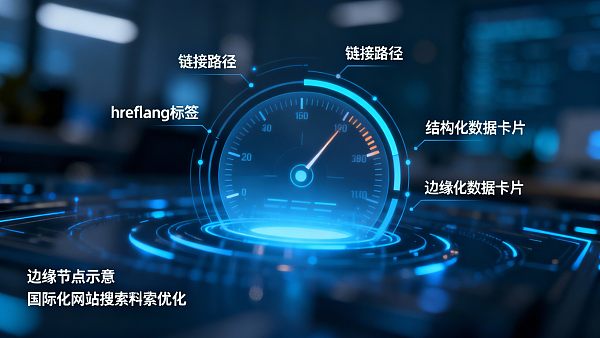
How can a multilingual website construction platform achieve search engine friendliness? SEO optimization experts list seven key settings to help global website cloud platforms improve international search visibility and conversion.
Common pain points for information researchers and users/operators of multilingual sites include: confusion in language version indexing, duplicate content penalties, insufficient local search visibility, mobile and responsiveness speed not meeting standards, and complex international traffic conversion paths. As a provider of universal internet service solutions, the platform must meet technical scalability (such as global website SaaS systems and responsive enterprise website systems) while ensuring operational executability (template websites, digital marketing SaaS, and city partner landing). The following is divided into four core modules, providing actionable technical and process recommendations around the seven key settings for direct application by product managers, SEO experts, and website operators during deployment.
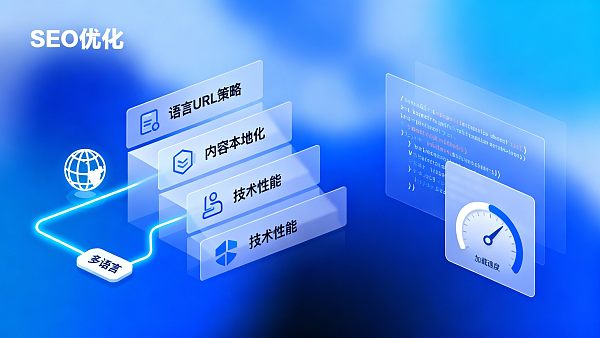
1. Language and URL Strategy: Independent URLs, hreflang, and Language Priority Management
The first setting involves the language and URL architecture, determining how search engines discover and index different market versions. It is recommended to use independent domains or subdirectories (e.g., example.com/en/ or en.example.com) rather than relying solely on JavaScript switching or cookies, ensuring crawlability and regional weight transmission. The platform should support batch generation and maintenance of hreflang tags, clearly mapping languages and regions to avoid misclassification of multilingual content as duplicates. For pages containing Chinese and English, list each language version separately in the sitemap, ensuring XML Sitemap submission for all language versions. Simultaneously, setting language priority (canonical) strategies is crucial: for pages with the same semantic content, use rel=canonical to point to the primary language page, avoiding ranking penalties due to auto-translated content. For intelligent website systems using AI translation engines, it is advised to include manual verification post-translation, document version notes, and retain original text backups for traceability and correction in case of search quality issues.
2. Content Localization and Quality Control: Semantic Optimization, Keyword Expansion, and AI+Human Hybrid Review
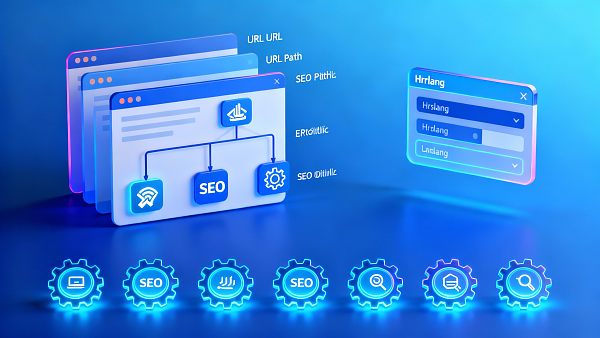
The second and third key settings focus on content: not just translation but localization. High-quality multilingual content should include localized keywords, culturally adapted expressions, and structured information (e.g., pricing, local contact methods, compliance statements). The platform should embed AI keyword expansion tools (AI keyword + TDK auto-generation) to generate candidate keyword sets for each market, allowing SEO experts or local editors to refine and supplement with long-tail variants, forming regionally competitive semantic clusters. The content generation process should adopt a three-step approach: "AI draft + local review + SEO rule-based optimization"—AI-generated images and text improve efficiency, manual verification ensures terminology consistency and readability, and SEO tools insert meta descriptions, structured data, and internal linking suggestions. For China's foreign trade websites and cross-border e-commerce, additional localized landing pages and FAQs tailored to target markets are essential, combined with schema.org structured markup to enhance search result display rates (e.g., rich snippets and local merchant information). For content update frequency, periodic system-generated diagnostic reports (weekly or monthly) should identify weak pages and trigger revision tasks, a critical loop in digital marketing SaaS operations.
3. Technical Performance and Accessibility: Loading Speed, Mobile Priority, and Structured Data
The fourth and fifth settings address technical foundations: multilingual sites must ensure fast response and stable availability across global nodes. Using multi-continent CDN nodes, auto-SSL, and DDoS protection are basic requirements; delayed loading of images and scripts, resource merging, and caching strategies significantly boost page speed. For responsive enterprise website systems, strict adherence to mobile-first design and常态化 monitoring via Lighthouse or PageSpeed metrics is necessary. Another often-overlooked aspect is structured data and site navigation: adding appropriate schema markup to product, case study, and article pages can improve click-through and search appearance rates. In multilingual contexts, ensure each language version includes localized schema fields (e.g., currency, language, address formats) and outputs complete meta information during Server Side Rendering (SSR) or static rendering, avoiding incomplete crawler captures due to client-side rendering. Additionally, configure crawler-friendly settings (robots.txt and meta robots) and set合理的 priority levels for key pages to集中抓取 and indexing.
4. Global Traffic Acquisition and Conversion Loop: Paid Ads, Social Media Synergy, and Data-Driven Optimization
The sixth and seventh settings emphasize traffic and conversion: SEO and paid channels should协同. For外贸企业, targeted ad campaigns can quickly validate page performance and keyword hypotheses. For example, integrating mature paid products like Google Ads enables precise multilingual投放 across countries, with performance tracking and audience profiling for iterative optimization. The platform’s social media automation运营 builds brand触达 frequency in target markets, supporting scheduled posts and conversion漏斗侧测. Channel data (clicks, conversions, search terms, and page behavior) should feed into a unified dashboard, employing A/B testing and smart bidding or ROI maximization strategies for dynamic daily ad optimization. For SaaS代理, AI website代理扶持 policies, or city partner channels, standardized login page packages and conversion templates facilitate rapid local deployment while inheriting the主站’s SEO and paid experience.
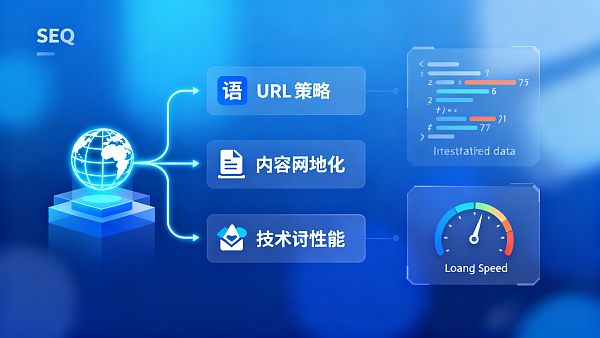
Conclusion: Truly search-engine-friendly multilingual website platforms require parallel advancement in technology, content, and marketing. From独立URLs and hreflang规范, AI+human hybrid localization workflows, to global performance optimization and structured data, and finally paid-social traffic loops, these seven key settings form a replicable implementation framework. As a service provider with global reach and technical壁垒, Easy营宝’s capabilities can offer闭环 support from intelligent website building to ad投放, while partnerships and certifications with platforms like Google help外贸企业 achieve sustained growth in inquiry volume and conversion in target markets.
To operationalize multilingual website and SEO effectiveness, or explore collaboration models in global website SaaS systems, template websites, and digital marketing SaaS (including SaaS代理 and city partner programs, AI website代理扶持 policies), contact us immediately to learn more about solutions and apply for product trials and industry assessments.
- Website Development
- Foreign Trade Website Development
- AI Writing
- Search Engine Optimization
- Multilingual website development
- Digital Marketing SaaS
- Template website
- SEO Optimization Expert
- Yiyingbao
- SEO
- Smart website builder system
- SEO Optimization
- Smart Website Building
- AI Translation
- City Partners
- Social Media Automation
- AI Translation Engine
- Multilingual website
- Responsive Enterprise Website Building System
- Multilingual Website Construction Platform
- Global Website Building SaaS System
- China Foreign Trade Website
Related Articles
 How much is the development cost of a Jiangsu foreign trade website? Judge the quotation from the feature list
 How to plan B2C independent site cross-border e-commerce store development? An analysis of payment, logistics, and multi-site architecture
 How is the cost of integrated website marketing calculated? A breakdown of website, SEO, advertising, and content services



Related Products
 EasyCamp SaaS Smart Website Marketing SystemE-Yingbao SaaS Smart Website Marketing System: AI-powered, zero-code website building. Rapidly launch multilingual independent e-commerce sites in just 10 minutes. Global server acceleration and AI-driven SEO optimization empower businesses to efficiently connect with global markets. The seamless integration of technology and user-friendly operation makes building e-commerce sites incredibly simple.
 AI+SEM Intelligent Advertising Marketing SystemAI+SEM drives intelligent ad creation, empowering full-funnel precision advertising marketing. The system automatically generates weekly/monthly reports, AI recommends keywords and target countries, monitors core metrics in real-time with intelligent alerts, and enables one-click high-conversion ad solutions to help quickly acquire customers and improve ROI.
 AI+SEO Dual Engine Optimization ServiceEasyWin AI+SEO Dual Engine Optimization System leverages AI-powered keyword mining, content generation, and comprehensive technical optimization to help foreign trade enterprises acquire high-quality organic traffic, significantly improving search rankings and conversion rates.
 AI+SNS Social Media Marketing SystemYingbao AI+SNS Social Media Marketing System - Precision social capture for the social media era. Supports one-click content synchronization across major platforms like Facebook and LinkedIn. AI intelligently rewrites posts for enhanced relevance. 24/7 AI customer service and user profiling analysis empower businesses to efficiently expand into global markets.
 AI+SEO营销解决方案易营宝AI+SEO营销解决方案,通过AI批量写作、智能生成TDK、精准关键词扩词等功能,全面优化网站SEO效果,提升流量与转化率。助力企业构建高效智能网站新生态。
 AI+SEM Advertising Marketing SolutionsAI+SEM Advertising Marketing Solution leverages AI technology to deeply empower SEM ad campaigns. It automatically generates weekly/monthly reports using AI, presenting account data across multiple dimensions for comprehensive insights into campaign performance and trends. The system precisely recommends keywords and target countries, intelligently generates high-conversion ad copy, and enables one-click activation of efficient campaign plans to help businesses rapidly acquire customers. Simultaneously, it monitors core metrics in real time, intelligently identifies abnormal fluctuations, and issues timely alerts to ensure stable, high-return advertising results.
 Domain Name ServicesEasyWin provides professional domain name services, including intelligent queries, one-stop registration, brand protection, and full lifecycle management, helping businesses build a digital brand image.
 EasyOperate B2C Cross-Border E-Commerce Platform & Independent WebsiteEasyStore B2C Cross-border E-commerce Independent Store is an intelligent website building and cross-border e-commerce integrated solution independently developed by EasyStore Information Technology (Beijing) Co., Ltd. The system is specially designed for small and medium-sized as well as large export enterprises, integrating 'website building, operation, marketing, advertising, and conversion' into one, helping enterprises quickly establish cross-border e-commerce independent stores to achieve brand globalization and global sales growth.
The platform supports multiple languages, multiple currencies, and multi-channel marketing, with built-in AI intelligent translation and SEO optimization systems, suitable for mainstream markets such as Southeast Asia, Europe and America, Latin America, and the Middle East, assisting Chinese manufacturing enterprises in efficiently deploying international e-commerce strategies. SSL证书易营宝提供专业SSL安全证书服务,包括单域名和泛域名证书,确保网站数据传输加密、身份验证和完整性保护,助力企业建立安全可信的在线业务环境。









