









- What should you focus on in the latest enterprise SaaS report? From renewal rates and delivery costs to overseas growth opportunitiesJul 12, 2026View details
- What signals are worth paying attention to in a cross-border marketing trend report? B2B companies should look at these 6 signalsJul 11, 2026View details
- How to Read a Cross-Border Marketing Trends Report? Five Key Dimensions for Evaluating Channel OpportunitiesJul 11, 2026View details
- Which channel has the highest ROI in the global traffic ecosystem? Comparative analysis of search, social media, and advertisingJul 10, 2026View details
- What multilingual website services are available in Sanya? Which model is more suitable for local businesses going global?Jul 08, 2026View details
- How to view the complete list of China SaaS companies in the top 100? Practical methods for screening website-building and marketing service providersJul 08, 2026View details
Global Build SaaS System: Cross-border Scaling Costs, Latency and Service Comparison

Deciphering the cost, latency, and service disparities of global website SaaS systems in cross-border operations, and how multilingual website construction platforms and AI website agency support policies can facilitate local expansion. This article targets researchers and users/operators, focusing on key decision-making factors for enterprises when selecting global website SaaS systems, deploying multilingual website construction platforms, and evaluating AI website agency support policies. It analyzes practical considerations for cross-border website construction in cost control, network latency, and localized service systems, while providing actionable digital marketing SaaS strategy recommendations to help SaaS agents, city partners, and SEO experts quickly develop implementation paths.
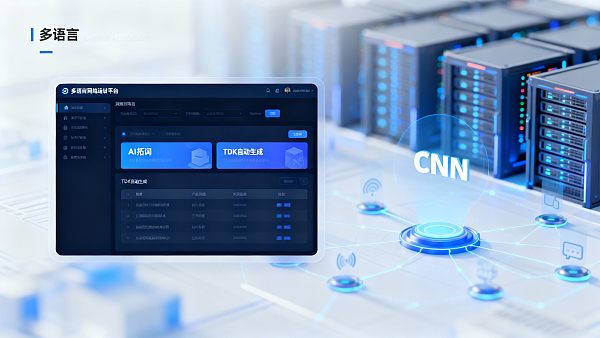
Cost Structure and Quantifiable Optimization Paths for Cross-Border Websites
Cross-border website costs are not a single expenditure but a multidimensional overlay including servers and bandwidth, domains and compliance, translation and content localization, payment and logistics integration, as well as operations and ad placements. For enterprises pursuing high conversion rates, choosing suitable multilingual website construction platforms and responsive enterprise website systems can significantly reduce long-term operational costs. Taking AI-powered website construction and AI content generation as examples, AI keyword expansion and automatic TDK generation can reduce manual content production costs by over 50%, while combining template websites with automated SEO optimization tools can compress repetitive initial investments by 30%~40%.
From a budgeting perspective, it is recommended to categorize costs into one-time construction costs (template customization, domain registration, automatic SSL certificate applications, etc.), fixed operational costs (CDN nodes, hosting, bandwidth), and variable marketing costs (ads, social media, SEO services). For Chinese foreign trade website enterprises, adopting digital marketing SaaS with global traffic ecosystems and localized services can reduce customer acquisition costs and improve ad conversion rates through built-in AI ad managers and creative factory models. For enterprises targeting the Russian market, specialized industry solutions such as Russian industry website construction and marketing solutions, which integrate .ru domain registration, Yandex optimization tools, and AI translation, offer one-stop services to minimize localization trial-and-error costs.
Network Latency, CDN Deployment, and Performance Metrics: Differentiated Technical Choices
The most direct technical pain points in cross-border expansion are latency and stability. Enterprises relying on single-region data centers will see overseas user experience significantly decline due to high latency and packet loss, affecting SEO and conversion rates. The differentiation of global website SaaS systems lies in whether they provide globally distributed server clusters, worldwide CDN acceleration nodes, and support for automatic SSL certificate issuance and DDoS protection. Key KPI recommendations include: first-screen load time ≤2.5s, First Contentful Paint (FCP) better than 3s, and SEO scores at least 30% higher than comparable sites.
Technologically, responsive enterprise website systems and template websites each have advantages. Template websites enable rapid deployment at low costs, while responsive systems excel in mobile prioritization, SEO optimization, and user path design for long-term growth. Enterprises seeking lower latency should prioritize vendors with CDN nodes jointly deployed with cloud providers like AWS and Alibaba Cloud, requiring platforms to support edge rendering and static resource separation strategies. Combined with AI-driven detection tools, regular performance scans and automated optimization recommendations are crucial for steadily improving site performance. For SaaS agents and city partners, demonstrating these technical metrics and optimization paths to clients can enhance trust and reduce pre-sales communication costs.
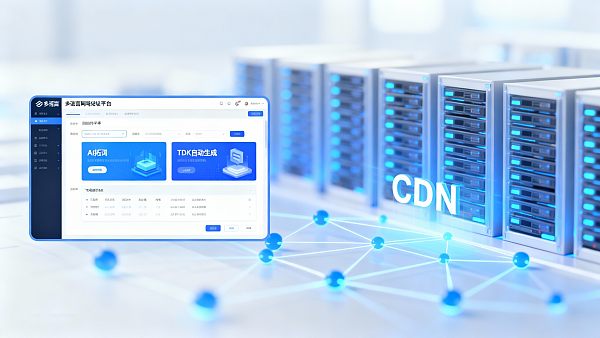
Service Differentiation and Collaboration Models: From SaaS Agents to City Partner Systems
Service capability is another critical factor for cross-border website success. Vendors vary significantly in after-sales response, localized support, compliance consultation, and payment integration. Digital marketing SaaS platforms with robust agent and city partner networks can provide localized customer service, compliance, and commercial channel support in target markets, significantly lowering entry barriers. For agents, AI website agency support policies (including technical training, revenue sharing, and marketing material support) are key dimensions for evaluating partnership value. Excellent agent systems offer standardized training courses, practical case libraries, and regionalized marketing plans to help agents quickly nurture clients and achieve sustainable growth.
In terms of service content, platforms integrating SEO expert resources, social media automation, and AI ad managers can provide enterprises with a "construction-acquisition-conversion" closed loop. Agents and partners should prioritize platforms supporting local search (e.g., Yandex) keyword expansion tools, industry templates (e.g., cross-border e-commerce-compatible template websites), and multilingual SEO strategies with localized implementation capabilities. The city partner model has clear advantages in localized execution, combining industry demands to provide customized responsive enterprise website systems and follow-up marketing services.
Practical Recommendations and Implementation Solutions: Phased Strategies for the Russian Market and Other Regions
Implementation strategies should advance in parallel from market prioritization, technical preparation, and localization capabilities. Phase 1 (Preparation): Select a multilingual website construction platform, complete domain and basic SEO setup (e.g., .ru domain registration, automatic SSL certificate applications), and evaluate whether the platform has Yandex optimization tools and AI translation capabilities. Phase 2 (Launch): Use responsive templates, configure CDN and performance monitoring, employ AI keyword and TDK auto-generation tools to complete initial pages and ad creatives, ensuring site compliance with target search engine indexing rules. Phase 3 (Growth): Expand traffic through AI ad managers and social media automation, combined with iterative SEO expert strategies to improve conversion rates and average order values.
Taking cross-border e-commerce entering the Russian market as an example, prioritize industry solutions integrating .ru domains and Yandex optimization to save substantial compliance and technical debugging time; automated AI drafting and creative factory models can quickly generate localized ad creatives and high-CTR ad copy, capturing market share during the红利期. For SaaS agents and city partners, it is recommended to package services into "construction + marketing + compliance" triple bundles, marketed as standardized delivery capabilities for Chinese foreign trade websites.
Summary and Call to Action
Cross-border expansion is not just a technical selection issue but a comprehensive balance of cost control, network performance, and localized service capabilities. Choosing global website SaaS systems with worldwide CDN and multilingual capabilities, combined with AI website agency support policies and city partner models, can reduce initial investments while enhancing long-term competitiveness. Easy-Promotion, as an AI-driven one-stop intelligent marketing platform example, leverages global server clusters, AI keyword expansion, and automatic TDK generation to provide Chinese foreign trade website enterprises with replicable growth loops, ensuring end-to-end execution from construction to customer acquisition.
To learn how digital marketing SaaS and professional SEO optimization teams can achieve low-latency, high-conversion cross-border site deployment, or to evaluate suitability as a SaaS agent or city partner, feel free to contact us. Contact us now to learn more solutions and obtain targeted evaluations and trial plans.
- Website Development
- Foreign Trade Website Development
- SSL Certificate
- Domain Registration
- SEO Optimization Tools
- Multilingual website development
- Digital Marketing SaaS
- Template website
- SEO Optimization Expert
- Yiyingbao
- SEO
- SEO Optimization
- Smart Website Building
- AI Translation
- City Partners
- Social Media Automation
- Multilingual SEO
- Global CDN Acceleration
- Multilingual website
- Global Traffic Ecosystem
- Responsive Enterprise Website Building System
- Multilingual Website Construction Platform
- Global Website Building SaaS System
- China Foreign Trade Website
Related Articles
 What should you focus on in the latest enterprise SaaS report? From renewal rates and delivery costs to overseas growth opportunities
 What signals are worth paying attention to in a cross-border marketing trend report? B2B companies should look at these 6 signals
 How to Read a Cross-Border Marketing Trends Report? Five Key Dimensions for Evaluating Channel Opportunities



Related Products
 EasyCamp SaaS Smart Website Marketing SystemE-Yingbao SaaS Smart Website Marketing System: AI-powered, zero-code website building. Rapidly launch multilingual independent e-commerce sites in just 10 minutes. Global server acceleration and AI-driven SEO optimization empower businesses to efficiently connect with global markets. The seamless integration of technology and user-friendly operation makes building e-commerce sites incredibly simple.
 AI+SEM Intelligent Advertising Marketing SystemAI+SEM drives intelligent ad creation, empowering full-funnel precision advertising marketing. The system automatically generates weekly/monthly reports, AI recommends keywords and target countries, monitors core metrics in real-time with intelligent alerts, and enables one-click high-conversion ad solutions to help quickly acquire customers and improve ROI.
 AI+SEO Dual Engine Optimization ServiceEasyWin AI+SEO Dual Engine Optimization System leverages AI-powered keyword mining, content generation, and comprehensive technical optimization to help foreign trade enterprises acquire high-quality organic traffic, significantly improving search rankings and conversion rates.
 AI+SNS Social Media Marketing SystemYingbao AI+SNS Social Media Marketing System - Precision social capture for the social media era. Supports one-click content synchronization across major platforms like Facebook and LinkedIn. AI intelligently rewrites posts for enhanced relevance. 24/7 AI customer service and user profiling analysis empower businesses to efficiently expand into global markets.
 AI+SEO营销解决方案易营宝AI+SEO营销解决方案,通过AI批量写作、智能生成TDK、精准关键词扩词等功能,全面优化网站SEO效果,提升流量与转化率。助力企业构建高效智能网站新生态。
 AI+SEM Advertising Marketing SolutionsAI+SEM Advertising Marketing Solution leverages AI technology to deeply empower SEM ad campaigns. It automatically generates weekly/monthly reports using AI, presenting account data across multiple dimensions for comprehensive insights into campaign performance and trends. The system precisely recommends keywords and target countries, intelligently generates high-conversion ad copy, and enables one-click activation of efficient campaign plans to help businesses rapidly acquire customers. Simultaneously, it monitors core metrics in real time, intelligently identifies abnormal fluctuations, and issues timely alerts to ensure stable, high-return advertising results.
 Domain Name ServicesEasyWin provides professional domain name services, including intelligent queries, one-stop registration, brand protection, and full lifecycle management, helping businesses build a digital brand image.
 EasyOperate B2C Cross-Border E-Commerce Platform & Independent WebsiteEasyStore B2C Cross-border E-commerce Independent Store is an intelligent website building and cross-border e-commerce integrated solution independently developed by EasyStore Information Technology (Beijing) Co., Ltd. The system is specially designed for small and medium-sized as well as large export enterprises, integrating 'website building, operation, marketing, advertising, and conversion' into one, helping enterprises quickly establish cross-border e-commerce independent stores to achieve brand globalization and global sales growth.
The platform supports multiple languages, multiple currencies, and multi-channel marketing, with built-in AI intelligent translation and SEO optimization systems, suitable for mainstream markets such as Southeast Asia, Europe and America, Latin America, and the Middle East, assisting Chinese manufacturing enterprises in efficiently deploying international e-commerce strategies. SSL证书易营宝提供专业SSL安全证书服务,包括单域名和泛域名证书,确保网站数据传输加密、身份验证和完整性保护,助力企业建立安全可信的在线业务环境。









