









- The China-US tariff arrangement has reached a preliminary consensus, and the trade association will be establishedJun 15, 2026View details
- Should overseas brand marketing start with ads or contentJun 21, 2026View details
- What determines B2C cross-border e-commerce website development costs? A breakdown of features, interfaces, and deployment methodsJun 17, 2026View details
- China-Morocco zero-tariff access, a breakthrough in the cost of Moroccan goods exports to ChinaJun 11, 2026View details
- What signal should be released for the suspension of exports to JapanJun 10, 2026View details
- China's May LNG imports rebounded, with increased volumes from Russia and Canada filling the Middle East supply gapJun 10, 2026View details
Multi-language foreign trade station building system selection: 10 key points of comparison, which is more suitable for small and medium-sized foreign trade team?

How should small and medium-sized foreign trade teams choose an AI-powered multilingual website building system? This article compares global website building SaaS platforms based on 10 key points to help you make a quick decision.
I. Core Capability Comparison: Multilingual Support and Translation Quality
When choosing a multilingual website building system for foreign trade, language coverage and translation quality are primary considerations. An excellent global website building SaaS platform should support multilingual independent site management, subdirectory/subdomain strategy switching, and SEO mapping between languages (hreflang, sitemap multilingual processing).

For small and medium-sized foreign trade teams, an AI-powered multilingual website building system should provide a real-time AI translation engine and allow for manual proofreading and import of terminology memory to ensure consistency in industry terminology and brand expression. Evaluation points include: preservation of the original semantics after translation, terminology database support, time and cost of batch content translation, and support for content version control. You should also pay attention to whether the system provides region-targeted website building solutions, such as automatically generating localized TDK (title, description, keywords) based on the target market, thereby achieving natural ranking optimization for cross-border foreign trade websites. Overall, a technology-driven AI translation + manual review workflow most effectively balances speed and quality, making it suitable for small and medium-sized teams to quickly expand into multilingual markets.
II. Global Performance and SEO Implementation Capabilities
Multilingual websites have higher SEO complexity than monolingual websites. When choosing a global SEO website building system, key considerations include server distribution, CDN strategy, page load speed, and support for structured data. Responsive self-service website building systems should not only consider mobile experience but also support semantic HTML, schema annotation, multilingual URL standardization, and automatic generation of multilingual sitemaps. Technically, they should reduce the negative impact of duplicate content, automatically handle canonical and hreflang, and generate search engine-friendly navigation and breadcrumb paths. Small and medium-sized foreign trade teams, when searching different markets, focus on: website loading latency in target countries, whether local IP testing is provided, and whether SEO scores can be monitored and optimized in real time. In practice, platforms that combine AI-driven keyword expansion and automatic TDK generation, along with keyword expansion suggestions, will significantly improve the indexing rate and organic traffic growth of cross-border trade websites.
III. Content and Marketing Automation: Integrated Capabilities from Website Building to Customer Acquisition
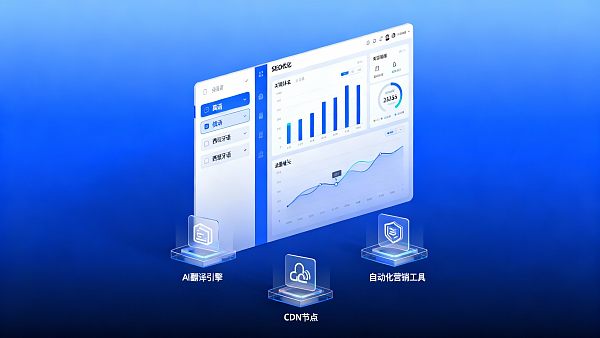
Modern global website building SaaS platforms should not only be content publishing tools, but also possess AI marketing engines and social media automation capabilities. For small and medium-sized foreign trade teams, the ability to implement content calendars, batch generate localized landing pages, and automate social media pushes within the website building platform will significantly reduce operating costs and improve conversion efficiency. Key evaluation criteria include: whether the AI supports generating high CTR ad copy, whether it has built-in multilingual content quality checks, and whether it achieves data interoperability and campaign diagnostics with major advertising platforms (such as Google Ads, Yandex, and Meta). A complete closed-loop system can also intelligently recommend A/B testing materials based on traffic sources, automatically expand the keyword library, and dynamically adjust landing page content, thereby achieving integrated "website building-customer acquisition-conversion". For teams driven by data growth, choosing a platform with a creative factory model and AI-powered ad management will significantly improve advertising ROI and reduce manual labor.
IV. Localization Compliance and Geographic Targeting: Detailed Control of Market Access
Entering a new market involves more than just language; it also encompasses domain strategy, compliance, payment, and local search engine optimization. Geographically targeted website solutions should include local domain registration, automatic SSL certificate application, and optimization support for the target market's mainstream search engines. For example, in the Russian-speaking market, in addition to Russian website construction, the local trustworthiness of Yandex optimization tools and the .ru domain must be considered. For projects focused on the Russian market, it is recommended to assess whether a one-stop Russian website construction and marketing service is available to reduce the complexity of integration with third parties. As an example, if you need to precisely target the Russian market, consider Russian industry website construction and marketing solutions . These products typically include Russian website construction, Yandex optimization, AI-powered translation, .ru domain registration, and automatic SSL certificate application, enabling one-stop implementation and a closed-loop marketing strategy in cross-border e-commerce scenarios. Furthermore, compliance reviews (data privacy, local advertising rules, tax and import regulations) must be included in the assessment early in the website construction process to avoid subsequent operational risks.
V. Operation and Maintenance Costs, Scalability, and Support System
When selecting a platform, small and medium-sized foreign trade teams should consider not only functional compatibility but also TCO (Total Cost of Ownership), platform scalability, and technical support efficiency. Enterprise-grade multilingual CMS should support modular expansion, an API-first strategy, and seamless integration with third-party systems (ERP, CRM, PIM, etc.) to facilitate future business expansion and complex process integration. SaaS pricing models should be transparent, including billing items for traffic, storage, concurrency, and advanced features (such as AI-generated content and ad diagnostics). Simultaneously, customer service and localization capabilities should be evaluated: the availability of regional partners, localization deployment experience, and rapid-response technical support. Furthermore, the platform's security commitments are crucial, including DDoS protection, automatic SSL, backup, and disaster recovery strategies. For small and medium-sized teams, prioritizing a global website building SaaS system with CDN nodes worldwide, on-demand elastic scaling, and localization services can achieve a better balance between cost and performance.

Summary and Action Recommendations
In summary, when choosing a multilingual website building system suitable for small and medium-sized foreign trade teams, the core evaluation criteria should be based on five dimensions: language quality, global SEO capabilities, marketing automation, localization compliance, and scalability. AI-powered multilingual website building systems offer significant advantages in speed and scale, but sustainable growth requires manual verification, localization strategies, and compliance checks. Our experience shows that a platform integrating AI translation, automatic TDK generation, global CDN, and advertising diagnostics capabilities is best suited for teams looking to quickly test the multilingual market and optimize customer acquisition costs.
For detailed selection advice or customized demonstrations tailored to your industry and target country, please contact us to learn more about our solutions. We offer one-on-one needs assessments, pilot deployments, and localization optimization strategies to help small and medium-sized foreign trade teams achieve rapid establishment and growth in the global market. Contact us now for professional consultation and a free diagnostic.
- Website Development
- Website Builder Platform
- Foreign Trade Website Development
- Google Ads
- Search Engine Optimization
- Domain Registration
- SEO
- Independent Website
- AI Translation
- AI Marketing Engine
- Social Media Automation
- AI Translation Engine
- Multilingual Foreign Trade Website System
- Global Website Building SaaS Platform
- Cross-border E-commerce Website
- Responsive self-service website system
- AI multilingual website system
- Global SEO Website System
- Geo-targeted Website Solution
- Enterprise-Grade Multilingual CMS
- Global Website Building SaaS System
- Foreign Trade Website System
- Multilingual Website System
Related Articles
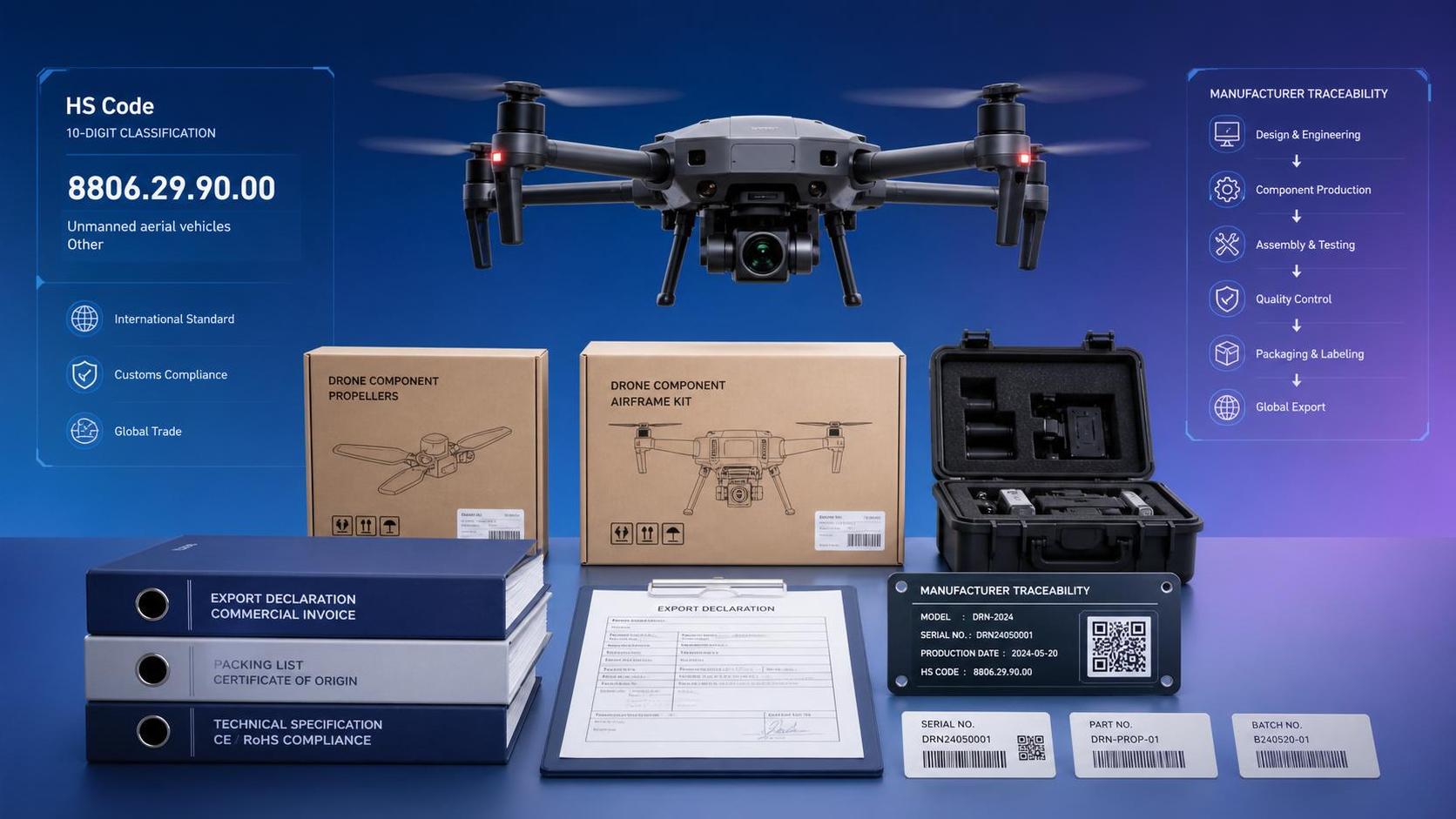
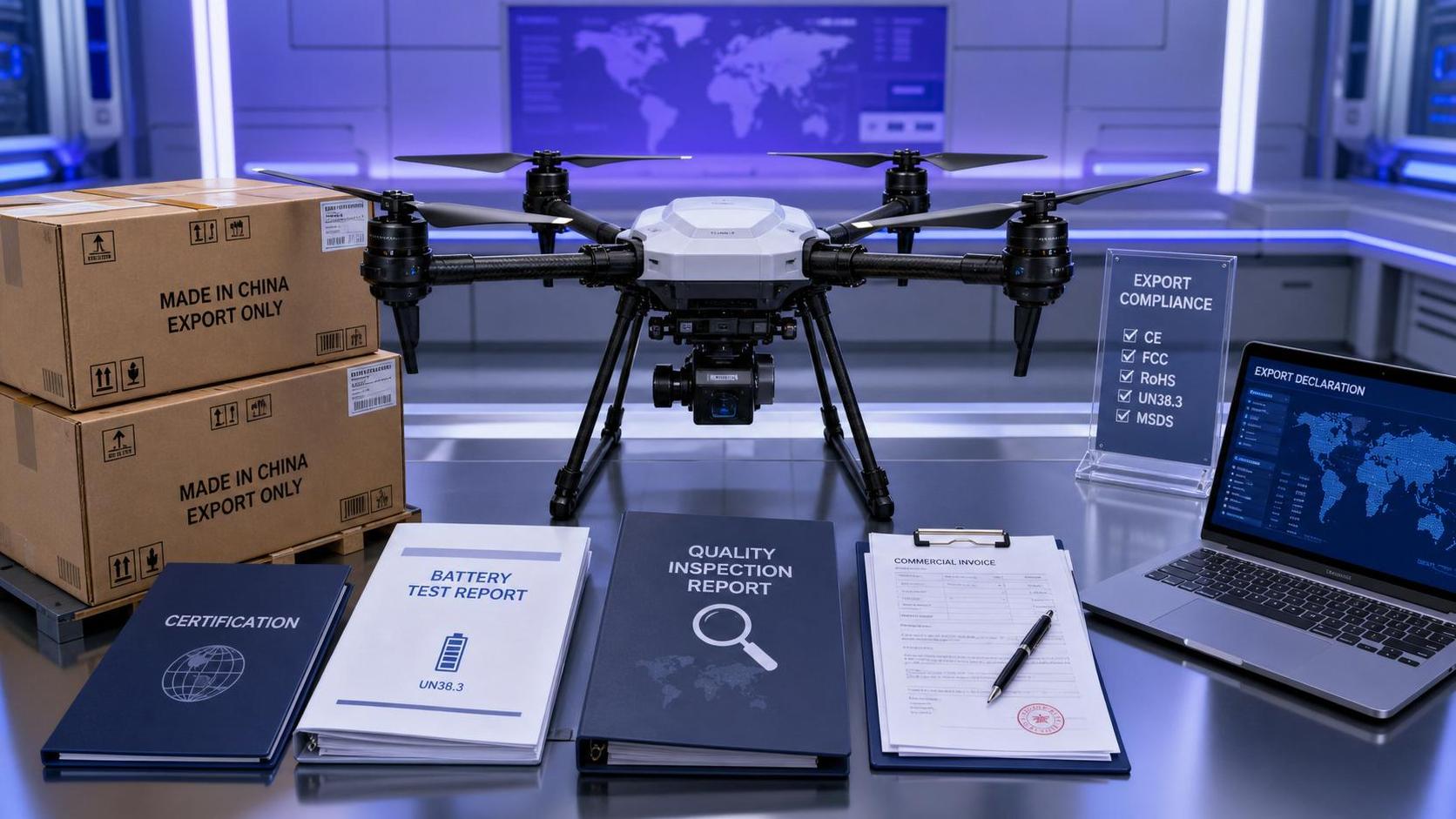
 Urgent customs declaration for drone exports starting June 30: 10-digit HS code and domestic manufacturer information required
 Drone export declaration tightening: 5 new required items effective June 30
 What Should You Pay Attention to in SaaS Website Security? A Complete Guide to Permissions, Backups, WAF, and Plugin Risks

Related Products
 EasyCamp SaaS Smart Website Marketing SystemE-Yingbao SaaS Smart Website Marketing System: AI-powered, zero-code website building. Rapidly launch multilingual independent e-commerce sites in just 10 minutes. Global server acceleration and AI-driven SEO optimization empower businesses to efficiently connect with global markets. The seamless integration of technology and user-friendly operation makes building e-commerce sites incredibly simple.
 AI+SEM Intelligent Advertising Marketing SystemAI+SEM drives intelligent ad creation, empowering full-funnel precision advertising marketing. The system automatically generates weekly/monthly reports, AI recommends keywords and target countries, monitors core metrics in real-time with intelligent alerts, and enables one-click high-conversion ad solutions to help quickly acquire customers and improve ROI.
 AI+SEO Dual Engine Optimization ServiceEasyWin AI+SEO Dual Engine Optimization System leverages AI-powered keyword mining, content generation, and comprehensive technical optimization to help foreign trade enterprises acquire high-quality organic traffic, significantly improving search rankings and conversion rates.
 AI+SNS Social Media Marketing SystemYingbao AI+SNS Social Media Marketing System - Precision social capture for the social media era. Supports one-click content synchronization across major platforms like Facebook and LinkedIn. AI intelligently rewrites posts for enhanced relevance. 24/7 AI customer service and user profiling analysis empower businesses to efficiently expand into global markets.
 AI+SEO营销解决方案易营宝AI+SEO营销解决方案,通过AI批量写作、智能生成TDK、精准关键词扩词等功能,全面优化网站SEO效果,提升流量与转化率。助力企业构建高效智能网站新生态。
 AI+SEM Advertising Marketing SolutionsAI+SEM Advertising Marketing Solution leverages AI technology to deeply empower SEM ad campaigns. It automatically generates weekly/monthly reports using AI, presenting account data across multiple dimensions for comprehensive insights into campaign performance and trends. The system precisely recommends keywords and target countries, intelligently generates high-conversion ad copy, and enables one-click activation of efficient campaign plans to help businesses rapidly acquire customers. Simultaneously, it monitors core metrics in real time, intelligently identifies abnormal fluctuations, and issues timely alerts to ensure stable, high-return advertising results.
 Domain Name ServicesEasyWin provides professional domain name services, including intelligent queries, one-stop registration, brand protection, and full lifecycle management, helping businesses build a digital brand image.
 EasyOperate B2C Cross-Border E-Commerce Platform & Independent WebsiteEasyStore B2C Cross-border E-commerce Independent Store is an intelligent website building and cross-border e-commerce integrated solution independently developed by EasyStore Information Technology (Beijing) Co., Ltd. The system is specially designed for small and medium-sized as well as large export enterprises, integrating 'website building, operation, marketing, advertising, and conversion' into one, helping enterprises quickly establish cross-border e-commerce independent stores to achieve brand globalization and global sales growth.
The platform supports multiple languages, multiple currencies, and multi-channel marketing, with built-in AI intelligent translation and SEO optimization systems, suitable for mainstream markets such as Southeast Asia, Europe and America, Latin America, and the Middle East, assisting Chinese manufacturing enterprises in efficiently deploying international e-commerce strategies. SSL证书易营宝提供专业SSL安全证书服务,包括单域名和泛域名证书,确保网站数据传输加密、身份验证和完整性保护,助力企业建立安全可信的在线业务环境。









