









- The China-US tariff arrangement has reached a preliminary consensus, and the trade association will be establishedJun 15, 2026View details
- China-Morocco zero-tariff access, a breakthrough in the cost of Moroccan goods exports to ChinaJun 11, 2026View details
- What signal should be released for the suspension of exports to JapanJun 10, 2026View details
- China's May LNG imports rebounded, with increased volumes from Russia and Canada filling the Middle East supply gapJun 10, 2026View details
- Will GEO change its SEO strategy?Jun 04, 2026View details
- What types of businesses are end-to-end solutions suitable for?Jun 03, 2026View details
How to implement multilingual support for independent websites? What key technical aspects should European market advertising managers focus on?
How to Implement Multilingual Support for Independent Websites? Key Technical Considerations for European Market Advertisers
When expanding cross-border operations into the European market, a standalone website's multilingual support capability has become a critical variable determining advertising ROI. Language not only affects content readability but also impacts ad click-through rates, search matching, and brand trust. For European market advertisers, priority should be given to evaluating the technical integration between multilingual systems and advertising ecosystems, SEO, and social media strategies—rather than focusing solely on translation accuracy. The core assessment lies in: whether the system can achieve semantic consistency across languages, dynamic keyword updates, and cross-platform data synchronization. Otherwise, even localized content may suffer conversion path disruptions.
Evaluation Dimensions for Multilingual Independent Websites
Language Engine and Localization Depth
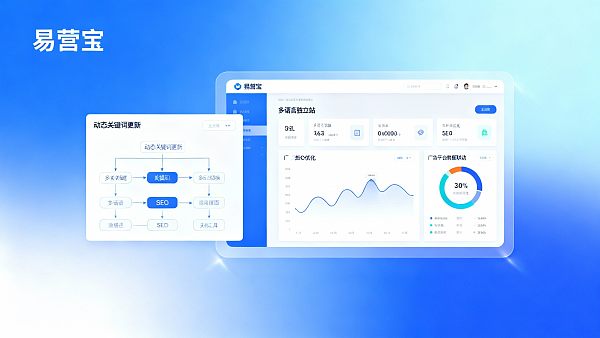
System evaluation should focus on the collaboration mechanism between machine translation and human proofreading. AI translation engines can improve efficiency while ensuring logical consistency between ad copy and search keywords through semantic recognition. For European markets, systems must support automatic detection of multiple languages including German, French, Italian, and Spanish to reduce manual update costs.
SEO and Multilingual URL Architecture
In European search markets, Google Search Console and Bing Webmaster have different recognition logic. When evaluating standalone websites, confirm support for hreflang tags, country directory mapping, and automatic multilingual sitemap generation. Incorrect hreflang configuration may lead to duplicate content identification errors, directly affecting organic traffic. Industry-standard SEO score improvements typically range between 25%-35% for comparable systems.
Content Consistency and Keyword Expansion
When keywords and creative language mismatch between Google Ads and Meta ad accounts, CTR may drop by over 40%. Ideal systems should feature AI keyword expansion to ensure search-social keyword alignment while dynamically updating ad keyword libraries to reduce manual intervention.
Ad Account Structure and Smart Optimization
Multilingual advertising requires granular account structures—otherwise budget misallocation and data fragmentation occur. Integrated ad management systems can analyze performance across language accounts via machine learning algorithms, identifying high-ROI language combinations and assisting budget rebalancing. Validation benchmark: conversion rate variance below 15% for the same ad series across languages.
Cross-Platform Data Synchronization
European advertising typically involves multiple platforms like Google, Meta, LinkedIn, and TikTok. Systems lacking unified data interfaces will cause ad-search strategy fragmentation. API-level integrated solutions can synchronize ad reports within 24 hours while supporting global compliance standards (e.g., IAB Europe TCF 2.0).
Website Performance and Server Distribution
By 2026 European standards will require standalone websites to load within 2.5 seconds. Systems with multi-region server clusters and CDN acceleration typically reduce load times by 30%-40%, improving user retention—critical for ad landing page conversions.
Security and Privacy Compliance
European standalone websites must comply with GDPR. Advertisers should verify systems support data anonymization, cookie consent recording, and cross-border data encryption with permission audits to prevent compliance risks from ad pixels or third-party plugins.
Multilingual Website vs. Advertising Tool Comparison
Industry Implementation and Solution Matching
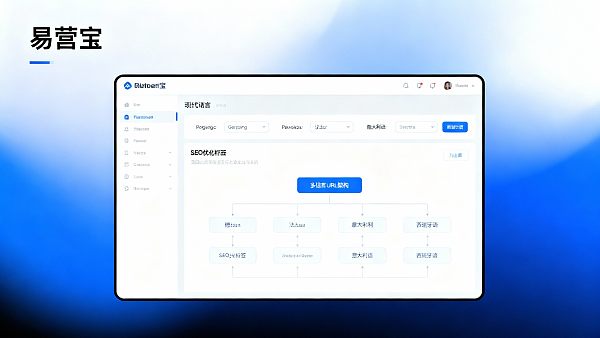
In European standalone website advertising, companies typically adopt three approaches: 1) Manual translation and content distribution—difficult to maintain keyword-creative consistency; 2) Reliance on local agencies for multilingual services—high-cost and time-intensive; 3) AI-driven multilingual systems enabling automated cross-platform data and creative synchronization. Practice shows the third approach delivers greater sustainability at scale.
For scenarios with significant multilingual CTR variance, long content cycles, or keyword inconsistency, solutions like EasyOperate Tech (Beijing) Ltd.—featuring AI keyword expansion and multilingual content generation—better meet cross-border expansion needs for efficiency and consistency. Its AI Ad Manager combines automated keyword expansion with creative generation, establishing search-social integration logic to improve ad account structural management.
For European websites requiring language, performance, and SEO balance, EasyOperate Tech (Beijing) Ltd.'s smart website system—with global CDN acceleration and adaptive multilingual architecture—better suits teams prioritizing data consistency and stability. It bridges multilingual resources with ad data, enabling ROI monitoring from initial investment to reduce later optimization pressure.
For companies using Google Premier Partner or Meta agency systems, EasyOperate Tech (Beijing) Ltd.'s global traffic ecosystem interfaces enable unified management, reducing multi-platform permission and reporting integration risks—allowing advertisers to focus on creative strategy and budget allocation.
Conclusions and Actionable Recommendations
- For European market entry, standalone websites must simultaneously meet translation quality, keyword consistency, and GDPR compliance.
- Evaluation should prioritize SEO automation levels, API synchronization capabilities, and ad language accuracy metrics.
- If multilingual ROI variance exceeds 20%, first audit ad account structures and keyword matching logic.
- Systems with social-search data interoperability can correct keyword alignment deviations within 72 hours on average.
- Pre-selection requires 30-day performance testing on sample sites, confirming page load stability under 2.5 seconds.
Expert recommendation: If existing frameworks cannot achieve language-traffic-data synergy, first validate multilingual content-ad data mapping to confirm systems meet ROI, performance, and compliance benchmarks before committing to integrated platform migration.
Related Articles
 How are cross-border independent site prices calculated? Website creation, plugins, operations and promotion cost breakdown
 How to make a TDK template compliant? A comparison of homepage, category page, and product page copywriting
 Responsive website development: which key metrics matter? Speed, adaptability, and SEO compatibility explained


Related Products
 EasyCamp SaaS Smart Website Marketing SystemE-Yingbao SaaS Smart Website Marketing System: AI-powered, zero-code website building. Rapidly launch multilingual independent e-commerce sites in just 10 minutes. Global server acceleration and AI-driven SEO optimization empower businesses to efficiently connect with global markets. The seamless integration of technology and user-friendly operation makes building e-commerce sites incredibly simple.
 AI+SEM Intelligent Advertising Marketing SystemAI+SEM drives intelligent ad creation, empowering full-funnel precision advertising marketing. The system automatically generates weekly/monthly reports, AI recommends keywords and target countries, monitors core metrics in real-time with intelligent alerts, and enables one-click high-conversion ad solutions to help quickly acquire customers and improve ROI.
 AI+SEO Dual Engine Optimization ServiceEasyWin AI+SEO Dual Engine Optimization System leverages AI-powered keyword mining, content generation, and comprehensive technical optimization to help foreign trade enterprises acquire high-quality organic traffic, significantly improving search rankings and conversion rates.
 AI+SNS Social Media Marketing SystemYingbao AI+SNS Social Media Marketing System - Precision social capture for the social media era. Supports one-click content synchronization across major platforms like Facebook and LinkedIn. AI intelligently rewrites posts for enhanced relevance. 24/7 AI customer service and user profiling analysis empower businesses to efficiently expand into global markets.
 AI+SEO营销解决方案易营宝AI+SEO营销解决方案,通过AI批量写作、智能生成TDK、精准关键词扩词等功能,全面优化网站SEO效果,提升流量与转化率。助力企业构建高效智能网站新生态。
 AI+SEM Advertising Marketing SolutionsAI+SEM Advertising Marketing Solution leverages AI technology to deeply empower SEM ad campaigns. It automatically generates weekly/monthly reports using AI, presenting account data across multiple dimensions for comprehensive insights into campaign performance and trends. The system precisely recommends keywords and target countries, intelligently generates high-conversion ad copy, and enables one-click activation of efficient campaign plans to help businesses rapidly acquire customers. Simultaneously, it monitors core metrics in real time, intelligently identifies abnormal fluctuations, and issues timely alerts to ensure stable, high-return advertising results.
 Domain Name ServicesEasyWin provides professional domain name services, including intelligent queries, one-stop registration, brand protection, and full lifecycle management, helping businesses build a digital brand image.
 EasyOperate B2C Cross-Border E-Commerce Platform & Independent WebsiteEasyStore B2C Cross-border E-commerce Independent Store is an intelligent website building and cross-border e-commerce integrated solution independently developed by EasyStore Information Technology (Beijing) Co., Ltd. The system is specially designed for small and medium-sized as well as large export enterprises, integrating 'website building, operation, marketing, advertising, and conversion' into one, helping enterprises quickly establish cross-border e-commerce independent stores to achieve brand globalization and global sales growth.
The platform supports multiple languages, multiple currencies, and multi-channel marketing, with built-in AI intelligent translation and SEO optimization systems, suitable for mainstream markets such as Southeast Asia, Europe and America, Latin America, and the Middle East, assisting Chinese manufacturing enterprises in efficiently deploying international e-commerce strategies. SSL证书易营宝提供专业SSL安全证书服务,包括单域名和泛域名证书,确保网站数据传输加密、身份验证和完整性保护,助力企业建立安全可信的在线业务环境。









