









- The China-US tariff arrangement has reached a preliminary consensus, and the trade association will be establishedJun 15, 2026View details
- What determines B2C cross-border e-commerce website development costs? A breakdown of features, interfaces, and deployment methodsJun 17, 2026View details
- China-Morocco zero-tariff access, a breakthrough in the cost of Moroccan goods exports to ChinaJun 11, 2026View details
- What signal should be released for the suspension of exports to JapanJun 10, 2026View details
- China's May LNG imports rebounded, with increased volumes from Russia and Canada filling the Middle East supply gapJun 10, 2026View details
- Will GEO change its SEO strategy?Jun 04, 2026View details
- What types of businesses are end-to-end solutions suitable for?Jun 03, 2026View details
- 2026 Global Growth Channel TrendsJun 02, 2026View details
How to Balance Indexing and Conversion in SEO Content Optimization
When many companies work on SEO content optimization, they tend to fall into two extremes: either they focus only on indexing and rankings, bringing in a lot of traffic that “looks busy but does not actually convert”; or they overemphasize conversion, making the content too “sales-heavy,” with the result that even basic indexing fails to gain traction. The truly effective approach is not choosing one over the other, but coordinating SEO keyword research, search engine optimization methods, and conversion path design within one unified content strategy. For integrated website + marketing service businesses, the goal of content is never just to “be seen,” but to “be seen by the right people and motivate them to take the next step in consulting, comparing, and purchasing.”
From a practical business perspective, business decision-makers care more about input-output efficiency, lead quality, and scalable growth; executors care more about how pages should be written, how keywords should be placed, and how the structure should be built; distributors, agents, and end users care more about whether the information is trustworthy and whether they can quickly judge whether the product and service are right for them. Therefore, the core of SEO content that can balance indexing and conversion is not about writing more, but about whether it covers real search intent, reduces decision-making costs, and naturally guides users from “search” to “action.”
Conclusion first: content that balances indexing and conversion is definitely not simply “writing keyword articles”

When users search for “how SEO content optimization can balance indexing and conversion,” the core search intent usually has three layers: first, they want to know why so much content gets indexed but fails to generate deals; second, they want actionable methods that allow SEO traffic to truly generate inquiries and orders; third, they want to judge exactly where the current enterprise content strategy is going wrong and what should be prioritized for improvement next.
So, the main body should not focus on broadly explaining what SEO is or what original content is. Instead, it should revolve around several more practical questions: how to tier keywords, how content should match search intent, which page elements directly affect conversion, how to measure “effective indexing” rather than just “a lot of indexing,” and how users in different roles can be naturally guided to the next step after entering the page.
Simply put, indexing solves “whether there is a chance to be seen,” while conversion solves “whether action will be taken after being seen.” If content only satisfies search engines but not users’ judgment needs, even good rankings will struggle to produce results; if content only focuses on persuasion but ignores search engine crawling and understanding, it will be difficult to gain stable exposure. These two things are never opposites, but two tasks that the same piece of content must accomplish at the same time.
Why many SEO content pieces have traffic but no inquiries
This is usually not because the content is “not professional,” but because the content is misaligned with search intent. For example, when a user searches for “how to do SEO keyword research,” their real need may be to find a practical, implementable method; but the article may spend the entire time introducing the definition of SEO, industry trends, and platform advantages. The reader gets no actionable answer and naturally leaves.
Common problems mainly include the following:
- Keywords are chosen too broadly: they bring large amounts of generic traffic, but not high-intent users.
- The content structure only helps indexing, not decision-making: there are titles and paragraphs, but no comparison dimensions, implementation paths, risk reminders, or action recommendations.
- The page lacks conversion touchpoints: after reading, users do not know what to do next and have no reason to inquire immediately.
- The content is overly templated: it may seem to follow search engine optimization methods, but actually lacks industry scenarios and experiential judgment, making it difficult to build trust.
- The conversion path is disconnected: the article discusses one issue, while the landing page sells another service, so the user’s cognition cannot connect the two.
For companies, what is truly worth paying attention to is not “whether this article is indexed,” but “whether the users attracted after indexing are relevant to the business, whether they can enter the inquiry pool, and whether they have the potential for subsequent conversion.” Without these follow-up indicators, simply pursuing the number of indexed pages has limited significance.
Only by doing keyword research right can you serve both search engines and user decision-making at the same time
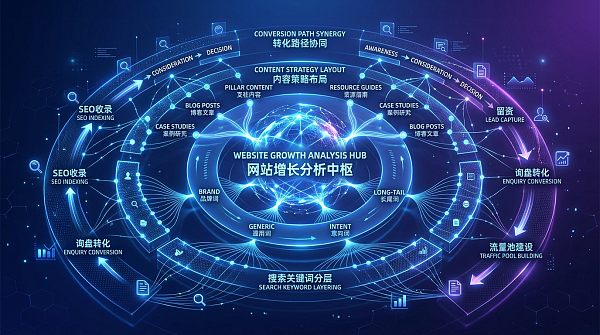
SEO keyword research is not about finding a few high-search-volume words and stuffing them into an article, but about breaking down users’ search needs at different decision-making stages. Usually, they can be divided into three categories:
- Informational keywords: such as “SEO content optimization methods” and “how to do search engine optimization.” These keywords are suitable for building awareness and acquiring initial traffic.
- Comparative keywords: such as “SEO outsourcing vs. building an in-house team, which is better” and “is SEO content operation service reliable.” These keywords have higher conversion value and are suitable for addressing concerns.
- Decision-stage keywords: such as “how to choose an SEO service company” and “SEO optimization pricing plans.” Users searching these terms are closer to inquiry and transaction.
If a company only creates informational content, indexing is often decent, but lead quality is usually average; if it only creates decision-stage content, although it is closer to conversion, front-end traffic may be insufficient. A more reasonable strategy is to use informational content to capture broad searches, comparative content to complete screening and education, and then decision-stage pages to capture conversions.
For example, when planning a content matrix, companies can use “how to do it,” “why do it,” “which is better,” “how much does it cost,” and “is it right for me” as core question axes for layout. This not only aligns more closely with users’ search paths, but also makes it easier to form internal linking relationships between pages, improving overall indexing efficiency and content authority transfer.
In some niche industries, users also pay attention to topics such as capability upgrades, organizational change, and business fit. For example, when companies promote digital transformation, they often extend their attention to issues such as restructuring job capabilities and process collaboration. These topics are also suitable for strengthening professional trust through related content. If content is expanded around scenarios such as financial digitalization and organizational upgrading, it can naturally extend to specialized resources such as the restructuring of core competencies of corporate finance personnel driven by artificial intelligence, helping readers move from single-point optimization to systematic understanding.
How to write articles that are both good for indexing and capable of driving conversion
To balance indexing and conversion, the article structure must be designed around “search question—judgment basis—solution—action guidance,” rather than simply stitching together paragraphs.
First, the title and opening should respond to the question quickly. After clicking in, the first thing users judge is “can this article directly solve my problem?” So the opening should not beat around the bush, but should provide conclusions, applicable scenarios, and common misunderstandings as soon as possible.
Second, the main body must have judgment value. Enterprise readers do not lack concepts; what they lack is judgment methods. For example, instead of saying “high-quality content is important,” it is better to clearly tell them what kind of content is suitable for winning indexing, what kind is suitable for driving conversion, which pages are suitable for long-tail keywords, and which pages must strengthen cases, credentials, and service processes.
Third, the content should proactively eliminate concerns. Before converting, users usually worry about three things: whether it works, whether it fits them, and whether the investment is controllable. Therefore, the article should naturally answer “who is it suitable for,” “what are the common reasons for failure,” and “how to start with low risk.”
Fourth, set up natural conversion interfaces. Conversion does not necessarily mean an immediate deal; it can also mean leaving contact information, obtaining a proposal, booking a diagnosis, downloading materials, or viewing case studies. Good SEO content will give users the next step naturally after they complete their understanding, rather than forcing a hard sell.
This is especially important for integrated website + marketing service businesses. Because users are often not purchasing an “article” alone, but hoping to use website building, content, SEO, social media, and advertising placement to form a complete growth loop. If the article can reflect this full-chain perspective, it will be easier to gain the recognition of business decision-makers.
Different readers care about different things, so content conversion design should also be layered
If an SEO article tries to say the same thing to everyone, it usually fails to persuade anyone. A more efficient way is to identify the core concerns of different target readers and express them in layers within the same piece of content.
- Business decision-makers: care more about ROI, lead quality, expected cycle, service stability, and risk control.
- Users/operators: care more about keyword placement, page structure, content update frequency, tools, and execution processes.
- Quality control/security managers: care more about content compliance, accurate wording, brand risk, and data authenticity.
- After-sales maintenance personnel: care more about whether common issues have been clearly written in advance and whether repeated communication costs can be reduced.
- Distributors/agents: care more about whether product selling points are unified, whether policy information is clear, and whether market support is explicit.
- End consumers: care more about whether it is easy to understand, whether it is trustworthy, and whether it can quickly solve their own problems.
Therefore, truly effective SEO content often needs to contain several information modules at the same time: results and methods for managers, steps and details for executors, risk explanations and verification bases for cautious readers, and action entry points for high-intent users. Only in this way can it balance search engine readability and real business conversion.
After indexing, how to judge whether this content has “conversion value”
When many teams review SEO results, they only look at indexed volume, rankings, and clicks, but these indicators cannot fully reflect business value. It is more advisable to add the following observation dimensions:
- Whether the keywords driving entry to the page are accurate: are they bringing generic traffic, or search needs that are highly relevant to your business?
- Page dwell time and scroll depth: did users actually read the core content, or did they bounce immediately after opening the page?
- Conversion action completion rate: such as form submissions, phone clicks, case study views, and solution inquiries.
- The content’s contribution to pre-sales communication: did it reduce explanation costs and improve lead maturity?
- The collaborative effect between pages: can the article direct users to service pages, case pages, or topic pages?
If an article has stable indexing, a high keyword match rate, and users are willing to keep browsing and trigger the next action, then even if it is not the page with the highest traffic on the site, it is very likely to be a more valuable page. The ultimate goal of SEO is not to create numbers, but to create growth results.
Practical recommendation for enterprises: replace the “single-article mindset” with a “content matrix + conversion chain”
For most companies, if they want SEO content optimization to balance indexing and conversion, the most effective approach is not to bet on one viral article, but to build a stable content system.
You can proceed according to the following logic:
- First sort out core business scenarios and clarify which questions are most worth being searched.
- Build a content matrix around informational, comparative, and decision-stage keywords.
- Set a clear next-step action for every article, instead of letting users finish reading and stop there.
- Connect service pages, case pages, topic pages, and FAQ pages to form a conversion chain.
- Continuously iterate content based on lead quality rather than simply traffic volume.
If a company itself has collaborative capabilities in technology, website building, content, and media buying, then the effect of SEO content is usually more stable. This is because content does not exist in isolation; it relies on website architecture, page speed, data tracking, form design, trust endorsements, and follow-up marketing actions to work together. Around this point, digital marketing service providers such as Yiyingbao Information Technology (Beijing) Co., Ltd., which have long been deeply engaged in full-chain services including intelligent website building, SEO optimization, social media marketing, and advertising placement, can continuously help companies achieve growth precisely because they execute “traffic acquisition” and “conversion implementation” within the same growth logic instead of viewing them separately.
In addition, when enterprise content extends to deeper topics such as organizational capability building and digital talent upgrading, it is also possible to appropriately supplement specialized content resources to enrich the professional image within the site. However, it should be noted that the integration of related resources must serve the current reading path, rather than adding links for the sake of adding links. Only in this way will supplementary content such as the restructuring of core competencies of corporate finance personnel driven by artificial intelligence appear natural and valuable.
Summary: truly high-quality SEO content must answer both “can it be found” and “why choose you” at the same time
How can SEO content optimization balance indexing and conversion? The core answer is not complicated: use an accurate keyword strategy to attract the right people, use a question structure close to real decision-making to keep them engaged, and then use a clear conversion path to drive action. Indexing is the starting point, while conversion is the result; content is the carrier, while user intent is the core.
If a company still views content building with the mindset that “publishing articles = doing SEO,” then it will be difficult to achieve stable growth. Only by integrating search engine optimization methods, user search intent analysis, page trust design, and business conversion goals can content become not just a traffic tool, but a true growth asset for the enterprise. For managers, the focus should be on whether content brings high-quality leads; for executors, the focus should be on whether each piece of content truly moves users one step forward. Only then can SEO content truly balance both indexing and conversion.
Related Articles



Related Products
 EasyCamp SaaS Smart Website Marketing SystemE-Yingbao SaaS Smart Website Marketing System: AI-powered, zero-code website building. Rapidly launch multilingual independent e-commerce sites in just 10 minutes. Global server acceleration and AI-driven SEO optimization empower businesses to efficiently connect with global markets. The seamless integration of technology and user-friendly operation makes building e-commerce sites incredibly simple.
 AI+SEM Intelligent Advertising Marketing SystemAI+SEM drives intelligent ad creation, empowering full-funnel precision advertising marketing. The system automatically generates weekly/monthly reports, AI recommends keywords and target countries, monitors core metrics in real-time with intelligent alerts, and enables one-click high-conversion ad solutions to help quickly acquire customers and improve ROI.
 AI+SEO Dual Engine Optimization ServiceEasyWin AI+SEO Dual Engine Optimization System leverages AI-powered keyword mining, content generation, and comprehensive technical optimization to help foreign trade enterprises acquire high-quality organic traffic, significantly improving search rankings and conversion rates.
 AI+SNS Social Media Marketing SystemYingbao AI+SNS Social Media Marketing System - Precision social capture for the social media era. Supports one-click content synchronization across major platforms like Facebook and LinkedIn. AI intelligently rewrites posts for enhanced relevance. 24/7 AI customer service and user profiling analysis empower businesses to efficiently expand into global markets.
 AI+SEO营销解决方案易营宝AI+SEO营销解决方案,通过AI批量写作、智能生成TDK、精准关键词扩词等功能,全面优化网站SEO效果,提升流量与转化率。助力企业构建高效智能网站新生态。
 AI+SEM Advertising Marketing SolutionsAI+SEM Advertising Marketing Solution leverages AI technology to deeply empower SEM ad campaigns. It automatically generates weekly/monthly reports using AI, presenting account data across multiple dimensions for comprehensive insights into campaign performance and trends. The system precisely recommends keywords and target countries, intelligently generates high-conversion ad copy, and enables one-click activation of efficient campaign plans to help businesses rapidly acquire customers. Simultaneously, it monitors core metrics in real time, intelligently identifies abnormal fluctuations, and issues timely alerts to ensure stable, high-return advertising results.
 Domain Name ServicesEasyWin provides professional domain name services, including intelligent queries, one-stop registration, brand protection, and full lifecycle management, helping businesses build a digital brand image.
 EasyOperate B2C Cross-Border E-Commerce Platform & Independent WebsiteEasyStore B2C Cross-border E-commerce Independent Store is an intelligent website building and cross-border e-commerce integrated solution independently developed by EasyStore Information Technology (Beijing) Co., Ltd. The system is specially designed for small and medium-sized as well as large export enterprises, integrating 'website building, operation, marketing, advertising, and conversion' into one, helping enterprises quickly establish cross-border e-commerce independent stores to achieve brand globalization and global sales growth.
The platform supports multiple languages, multiple currencies, and multi-channel marketing, with built-in AI intelligent translation and SEO optimization systems, suitable for mainstream markets such as Southeast Asia, Europe and America, Latin America, and the Middle East, assisting Chinese manufacturing enterprises in efficiently deploying international e-commerce strategies. SSL证书易营宝提供专业SSL安全证书服务,包括单域名和泛域名证书,确保网站数据传输加密、身份验证和完整性保护,助力企业建立安全可信的在线业务环境。









