









- Will GEO change its SEO strategy?Jun 04, 2026View details
- What types of businesses are end-to-end solutions suitable for?Jun 03, 2026View details
- 2026 Global Growth Channel TrendsJun 02, 2026View details
- Changes in Search Engine Ranking Factors in 2026Jun 06, 2026View details
- Which stages is the brand visibility enhancement service suitable forMay 29, 2026View details
- What Are the Key Modules of International Digital Marketing ServicesMay 29, 2026View details
Eyingbao Website Builder compares with traditional website builder: How much is the website loading speed increase to be qualified?
YiYingBao AI Intelligent Website Building System can significantly improve website loading speed and responsive SEO optimization compared to traditional website building methods.
Why is website loading speed the primary indicator for corporate websites and independent e-commerce websites?
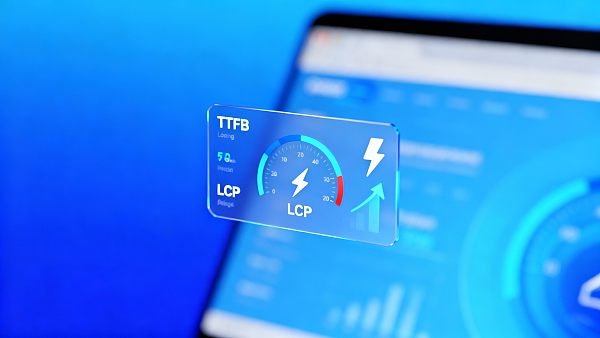
In B2B and cross-border scenarios, first-time visitors typically only have a few seconds of patience. Research shows that for every second of increased website loading speed, bounce rate and potential customer churn significantly increase; search engines also consider loading speed as a crucial factor in ranking and indexing. For companies seeking export and overseas market expansion, the first-screen loading experience of their independent foreign trade websites directly impacts inquiry volume and conversion rates. Common problems with traditional website building include uncompressed images, numerous third-party scripts, and high latency due to single-region data centers. These factors deteriorate TTFB (Time to First Byte) and LCP (Large Content Rendering) metrics, thus affecting SEO performance.
Therefore, when evaluating a company website or choosing an IDC SaaS platform, in addition to functionality and interface, more attention should be paid to the site's actual loading time, mobile experience, and responsive website SEO optimization capabilities. Many researchers and users refer to industry ratings and third-party reviews (such as Trustpilot) as well as publicly available data on user satisfaction with IDC SaaS platforms to determine whether a service provider can stably deliver low-latency access in multiple regions globally.
How does YiYingBao technology accelerate page loading and ensure SEO indexing from an architectural perspective?
To achieve a stable loading experience in the global market, collaborative optimization is needed across network, storage, front-end, and content management. YiYingBao utilizes its self-developed AI and big data-driven optimization engine to systematically address common bottlenecks in traditional website building: First, global server acceleration and intelligent CDN strategies leverage 2500+ global nodes and 120T of bandwidth to distribute resources at the nearest node and reduce transoceanic latency; second, automated front-end optimization includes image compression and WebP conversion, code splitting, lazy loading of resources, and HTTP/2 or HTTP/3 connection reuse, significantly reducing initial rendering time; third, SEO-friendly multilingual management and independent URL structures, combined with AI-generated TDK (title, description, keywords) and standardized schema tags, improve search engine crawling efficiency and indexing rates.
Meanwhile, the YiYingBao SaaS platform combines real-time monitoring and alerting mechanisms to continuously track key indicators such as TTFB, LCP, and CLS, and uses machine learning to intelligently schedule abnormal traffic or regional fluctuations. For the operations team, this means less manual intervention, shorter optimization iteration cycles, and more predictable search performance.
Compared to traditional website building: How much improvement in website loading speed is considered satisfactory?

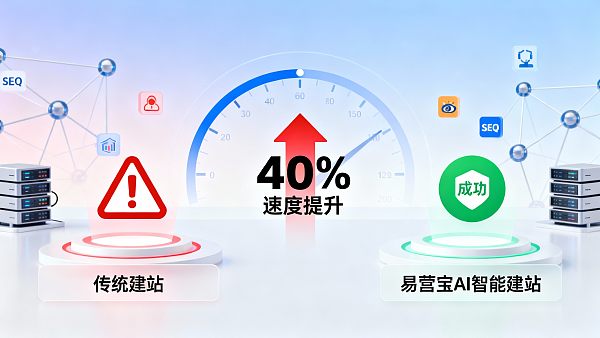
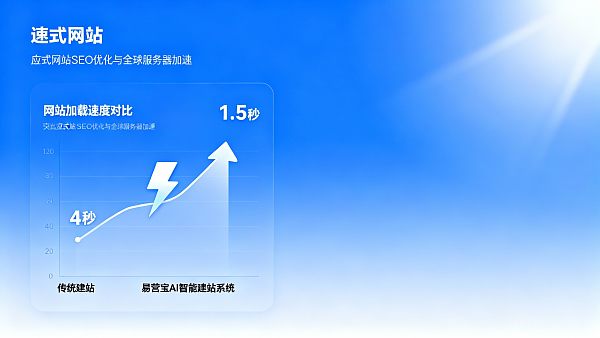
In practice, the definition of "qualified" should be determined by the target market and business type, but several industry reference standards can be used for quantitative judgment: First, the full load time (LCP) should ideally be less than 2 seconds, and ideally controlled within 1.5 seconds; second, the time to first page (TTFB) should be less than 200 milliseconds to ensure fast response; third, the visual stability index (CLS) should be less than 0.1, and the first input delay (FID) should be less than 100 milliseconds. For the 3-6 second loading time commonly observed by most traditional website builders, if the overall loading time can be shortened by 40% or more through technical means (e.g., from 4 seconds to 2.4 seconds or lower), it can be considered a significant improvement.
Taking YiYingBao's foreign trade product line as an example, its technical data shows that through global server acceleration and AI optimization, independent website loading speed can be improved by 40%, and SEO scores can be increased by an average of 35%. In practical terms, this means that the same traffic can bring a higher indexing rate and a lower bounce rate, thereby improving conversion rates and lead quality. For companies focusing on brand globalization and cross-border e-commerce, achieving or exceeding these indicators can typically significantly improve advertising ROI and organic traffic performance.
Furthermore, the evaluation should also consider actual business KPIs, such as the number of inquiries, form submission rate, and sales lead cost. By comparing data before and after the migration (traffic, conversion, page load speed, and search ranking), the benefits can be clearly quantified and the next optimization plan can be guided.
Best practices and implementation roadmap for migrating from traditional website building to smart website building
Migrating to an AI-driven website building platform requires a process that balances technology, SEO, and business considerations. Recommended steps include: 1) Conducting a site-wide performance and SEO baseline audit, recording current TTFB, LCP, page authority, and keyword placement; 2) Developing a phased migration plan, prioritizing acceleration of high-traffic pages and key conversion paths; 3) Using automated tools (such as AI keyword expansion + TDK automatic generation) to generate multilingual metadata and maintaining independent URL structures to facilitate search engine indexing; 4) Conducting A/B testing and continuous monitoring after deployment to ensure controllable fluctuations in indexing and traffic during the migration process.
In real-world examples, manufacturing and cross-border e-commerce clients have seen their average page load time drop to under 1.5 seconds after adopting AI-powered website building and global server acceleration, resulting in a significant increase in inquiries and ad conversions. For companies seeking rapid launch and multilingual support, choosing a service provider with multilingual management, automatic translation, and localization support is crucial. It is recommended to prioritize evaluating the supplier's delivery experience, SLAs, and security capabilities in the Chinese service provider sector for independent e-commerce websites.
It's important to note that platform selection involves more than just technical specifications; it's also crucial to consider the platform's ecosystem and operational support capabilities. For example, does the platform seamlessly integrate with mainstream advertising and social media channels? Does it offer advertising diagnostics and creative factory-style content creation capabilities to achieve a closed loop of "website building-customer acquisition-conversion"? User reviews of the YiYingBao SaaS platform within the industry, as well as feedback from third parties like Trustpilot, can serve as important reference points during the selection process.
To facilitate trial and evaluation, businesses can prioritize migrating commercial pages or product detail pages as pilot projects to measure the improvement in advertising return on investment and organic traffic before deciding whether to switch to a full site. For rapid deployment and coverage of multilingual markets, consider trying EasyTrade's Foreign Trade Super Website , which supports 100+ languages, 2500+ server nodes, and enterprise-level security, delivering a highly available and low-latency independent website in a short timeframe.
Summary and Action Guidance
In general, evaluating the quality of a website building solution should not solely focus on the interface and user experience. Instead, core criteria should include website loading speed, responsive SEO capabilities, and end-to-end customer acquisition effectiveness. Achieving a loading time of 1.5-2 seconds, providing multilingual support, stable global access, and quantifiable SEO improvements are the true keys to supporting businesses' overseas expansion and growth. In its actual deliveries, Eyingbao utilizes AI-powered intelligent website building, global acceleration nodes, and an automated SEO system to help clients across various industries achieve both speed and indexing improvements from the outset.
If you are evaluating a website migration or optimization plan, we recommend starting with a free performance and SEO diagnostic to quantify current weaknesses and develop an actionable roadmap. Contact us today to learn more about our solutions and case studies, or schedule a demo and technical assessment to take the first step towards improving your website's loading speed and search performance.
(Keyword coverage tips: This article includes keywords such as: website loading speed, corporate website building, responsive website SEO optimization, Eyingbao AI intelligent website building system, Eyingbao SaaS platform, Chinese service provider for independent foreign trade websites, IDC SaaS platform user satisfaction, Trustpilot, Eyingbao Website Builder, etc., aiming to help information researchers and users make comprehensive references when selecting a system.)
- Website Builder Platform
- Corporate website
- SEO diagnosis
- AI Website Builder
- Global server acceleration
- Website loading speed
- Corporate Website Development
- Yiyingbao
- SEO
- Independent Website
- Smart website builder system
- SEO Optimization
- Smart Website Development
- Website SEO Optimization
- Independent foreign trade website
- EasyStore AI Intelligent Website System
- Responsive website
- Responsive Website SEO Optimization
- Eyingbao
- Eyingbao Website Builder
- EasyBusiness SaaS Platform
- IDC SaaS Platform User Satisfaction
- Trustpilot 易营宝
Related Articles

Related Products
 EasyCamp SaaS Smart Website Marketing SystemE-Yingbao SaaS Smart Website Marketing System: AI-powered, zero-code website building. Rapidly launch multilingual independent e-commerce sites in just 10 minutes. Global server acceleration and AI-driven SEO optimization empower businesses to efficiently connect with global markets. The seamless integration of technology and user-friendly operation makes building e-commerce sites incredibly simple.
 AI+SEM Intelligent Advertising Marketing SystemAI+SEM drives intelligent ad creation, empowering full-funnel precision advertising marketing. The system automatically generates weekly/monthly reports, AI recommends keywords and target countries, monitors core metrics in real-time with intelligent alerts, and enables one-click high-conversion ad solutions to help quickly acquire customers and improve ROI.
 AI+SEO Dual Engine Optimization ServiceEasyWin AI+SEO Dual Engine Optimization System leverages AI-powered keyword mining, content generation, and comprehensive technical optimization to help foreign trade enterprises acquire high-quality organic traffic, significantly improving search rankings and conversion rates.
 AI+SNS Social Media Marketing SystemYingbao AI+SNS Social Media Marketing System - Precision social capture for the social media era. Supports one-click content synchronization across major platforms like Facebook and LinkedIn. AI intelligently rewrites posts for enhanced relevance. 24/7 AI customer service and user profiling analysis empower businesses to efficiently expand into global markets.
 AI+SEO营销解决方案易营宝AI+SEO营销解决方案,通过AI批量写作、智能生成TDK、精准关键词扩词等功能,全面优化网站SEO效果,提升流量与转化率。助力企业构建高效智能网站新生态。
 AI+SEM Advertising Marketing SolutionsAI+SEM Advertising Marketing Solution leverages AI technology to deeply empower SEM ad campaigns. It automatically generates weekly/monthly reports using AI, presenting account data across multiple dimensions for comprehensive insights into campaign performance and trends. The system precisely recommends keywords and target countries, intelligently generates high-conversion ad copy, and enables one-click activation of efficient campaign plans to help businesses rapidly acquire customers. Simultaneously, it monitors core metrics in real time, intelligently identifies abnormal fluctuations, and issues timely alerts to ensure stable, high-return advertising results.
 Domain Name ServicesEasyWin provides professional domain name services, including intelligent queries, one-stop registration, brand protection, and full lifecycle management, helping businesses build a digital brand image.
 EasyOperate B2C Cross-Border E-Commerce Platform & Independent WebsiteEasyStore B2C Cross-border E-commerce Independent Store is an intelligent website building and cross-border e-commerce integrated solution independently developed by EasyStore Information Technology (Beijing) Co., Ltd. The system is specially designed for small and medium-sized as well as large export enterprises, integrating 'website building, operation, marketing, advertising, and conversion' into one, helping enterprises quickly establish cross-border e-commerce independent stores to achieve brand globalization and global sales growth.
The platform supports multiple languages, multiple currencies, and multi-channel marketing, with built-in AI intelligent translation and SEO optimization systems, suitable for mainstream markets such as Southeast Asia, Europe and America, Latin America, and the Middle East, assisting Chinese manufacturing enterprises in efficiently deploying international e-commerce strategies. SSL证书易营宝提供专业SSL安全证书服务,包括单域名和泛域名证书,确保网站数据传输加密、身份验证和完整性保护,助力企业建立安全可信的在线业务环境。









