









Does website performance affect the number of inquiries? Measuring Load Time and Lead Loss with Data Modeling

Does website performance affect the number of inquiries? Using global CDN and load latency modeling to quantify load time and conversion loss, helping you improve conversion rates.
For users, business decision-makers, and project leaders, this article focuses on the closed loop of "load speed - user trust - inquiry conversion": first explaining why website experience directly impacts conversion, then introducing how global CDN acceleration and load latency modeling can quantify abstract issues into actionable data, and finally providing technical safeguard recommendations for corporate websites in security and multilingual scenarios to facilitate joint implementation by engineering and operations teams.

Why website performance directly affects inquiry volume: Experience, trust, and path shortening
How does website experience impact conversion rates? From cognitive and behavioral perspectives, page loading and interaction responsiveness constitute the primary experience factors. First-screen rendering, form loading, and interaction delays determine whether visitors are willing to continue operations. When page load exceeds user expectations, bounce rates, form abandonment, and submission delays increase significantly. Quantitatively, common empirical models show that in B2B scenarios, every 0.1-second increase in form page load delay leads to observable declines in potential lead completion rates (quantile regression or survival analysis can further model this). Additionally, "what kind of websites gain more customer trust?" closely relates to performance: stable, fast, HTTPS-encrypted sites are more readily accepted by procurement decision-makers, thereby improving inquiry quality and volume. When evaluating site performance, enterprises should simultaneously monitor frontend rendering time, DNS resolution latency, TLS handshake duration, and backend API response, as these metrics collectively influence the final inquiry conversion path.
Quantifying load time and conversion loss with global CDN and load latency modeling
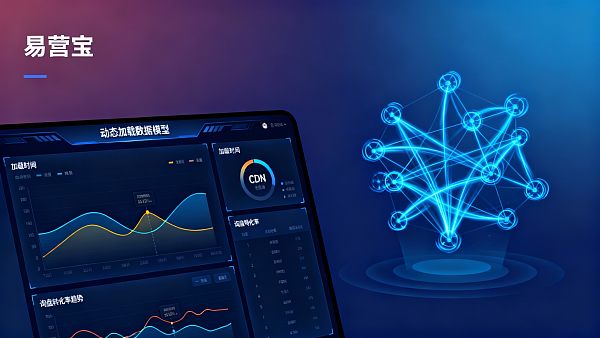
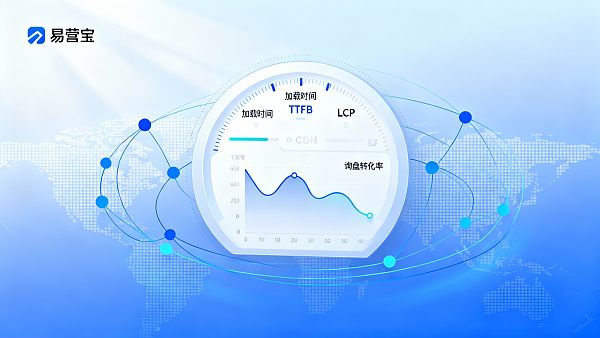
What is global CDN acceleration? Simply put, CDN (Content Delivery Network) deploys nodes across regions to distribute static resources and cached content to locations nearest users, reducing transmission delays and packet loss. How does CDN improve website access speed? By reducing network hops, optimizing bandwidth utilization, and enabling intelligent routing strategies, it typically shortens resource load time by 30%~60% (actual effects vary by original architecture and resource volume). For data modeling, we typically quantify load time and conversion loss through: 1) Sample collection: Group visits by country/region, device type, and entry pages; 2) Metric definition: Set TTFB, DOMReady, Largest Contentful Paint (LCP), and fully interactive time; 3) Modeling approach: Use logistic or probit regression to map "load time" to "inquiry submission probability," validated via A/B or natural experiments. Implementation recommendations: Deploy CDN nodes globally with auto-compression, lazy loading, and HTTP/2 or HTTP/3 to significantly reduce overseas access latency, yielding linear conversion rate improvements in statistical models. We also recommend a Russian-market solution for localization and performance optimization: Russian industry website construction and marketing solutions, integrating .ru domains, Yandex optimization tools, and automated SSL applications for lower network latency and higher local trust within Russia's internet ecosystem.
What foundational technical safeguards do corporate websites need? HTTPS, security, and O&M management
What foundational technical safeguards do corporate websites need? In universal internet service delivery systems, safeguards include global CDN, load balancing, automated SSL certificate management, WAF and DDoS protection, health checks, and auto-scaling. What does HTTPS do for websites? Beyond encrypting user data transmission, HTTPS is a baseline signal for search engine indexing and ranking—non-HTTPS sites suffer SEO weight penalties, browser security warnings, and indirect impacts on targeted visitor access and inquiries. Does website security affect SEO? Yes, compromised or blacklisted sites face index purges or ranking demotions, directly causing visitor loss and inquiry drops. Best practices include: automated certificate renewal, isolating sensitive form domains from content services, placing core business APIs on private networks with edge caching for read-only content, and implementing full-chain monitoring with log analysis for second-level alerts and rollback. For export enterprises, site credibility also requires localized domains, compliant legal declarations, and clear presentation of localized payment/logistics information—all influencing visitor decisions and inquiry quality.
Implementation recommendations for independent sites, B2B export, and multilingual marketing systems
Are independent sites suitable for B2B export? Typically yes, but contingent on technical and content capabilities. For B2B buyers, longer decision chains and greater information needs require sites supporting multilingual marketing systems, structured whitepaper downloads, case showcases, and multi-channel form CTAs. Multilingual isn't just translation—it demands SEO-level TDK optimization, hreflang tags, and localized domain/subdirectory strategies. Multilingual marketing systems should include AI translation and keyword expansion for rapid localized content generation, paired with local servers/CDN nodes to ensure access speed and compliance. Design-wise, highlight industry credentials, partners, and technical whitepapers to reduce procurement hesitations. Technically, adopt SSR or static generation with edge-rendered hybrid architectures balancing SEO crawlability and first-screen performance, and conduct pre-launch regional performance benchmarks and traffic replay analysis to meet target-country decision-makers' load experience expectations.
Summary and call to action
Summary: Website performance directly impacts inquiry volume, requiring dual technical-content drives to convert visits into high-quality leads. Through global CDN acceleration, quantified load latency modeling, HTTPS implementation, comprehensive security, and multilingual marketing systems with localized SEO strategies, enterprises can significantly reduce lead loss and improve conversion efficiency. Leveraging years of global delivery experience and AI-driven all-in-one smart marketing platforms, we provide integrated services from site building and CDN deployment to content localization and ad placement—helping clients transform "performance improvements" into "inquiry growth." Contact us to learn more about actionable performance optimization and conversion enhancement solutions, or schedule technical assessments and pilot deployments.
- Website Development
- Corporate website
- Website Security
- SSL Certificate
- Inquiry quality
- B2B Foreign Trade
- Yiyingbao
- SEO
- Independent Website
- Multilingual Marketing System
- Is a standalone website suitable for B2B foreign trade?
- What is global CDN acceleration?
- How does CDN improve website access speed?
- Does website security affect SEO?
- What does HTTPS do for a website?
- How does website experience affect conversion rates?
- Does website performance affect the number of inquiries?
- What basic technical safeguards are required for a corporate website?
- What kind of website is more likely to gain customer trust?
Related Articles
 How to view pricing in the global traffic ecosystem? Cost comparison of search, social media, and content channel advertising
 How to assess foreign trade website development trends?Looking at 2026 changes from multilingual,AI content to conversion paths
 What are the new trends in multilingual marketing data analytics tools in 2026? Focus on attribution、automation and compliance


Related Products
