









- What Does a Global Traffic Ecosystem Service Provider Do? What Are the Differences from a Single Advertising AgencyJul 16, 2026View details
- What should you focus on in the latest enterprise SaaS report? From renewal rates and delivery costs to overseas growth opportunitiesJul 12, 2026View details
- What signals are worth paying attention to in a cross-border marketing trend report? B2B companies should look at these 6 signalsJul 11, 2026View details
- How to Read a Cross-Border Marketing Trends Report? Five Key Dimensions for Evaluating Channel OpportunitiesJul 11, 2026View details
- Which channel has the highest ROI in the global traffic ecosystem? Comparative analysis of search, social media, and advertisingJul 10, 2026View details
- What multilingual website services are available in Sanya? Which model is more suitable for local businesses going global?Jul 08, 2026View details
Beijing vs. Shanghai website construction difference analysis: which is more suitable for your business layout?
What Are the Differences Between Beijing and Shanghai Website Development? How to Choose the Optimal City for Business Growth? This Article Provides an In-Depth Analysis of the Advantages of Both Cities, Along With Comparisons to Other First-Tier Cities Like Guangzhou, Shenzhen, and Hangzhou, to Help You Precisely Match Your Enterprise Growth Path.
In today's digital transformation wave sweeping the globe, a corporate website is not just a window for brand image but also a core battleground for acquiring customers and achieving conversions. With the "overseas expansion strategy" becoming a growth engine for many enterprises, website development needs have evolved from basic displays to multilingual, high-conversion, AI-driven global digital platforms. In this context, Beijing website development and Shanghai website development, as two major hubs in China, exhibit distinctly different development paths and service characteristics. Beijing leverages policy resources and technological clusters, excelling in AI-powered development, big data analytics, and global advertising. Shanghai, with its international vision and dense concentration of foreign enterprises, is more adept at brand tuning and overseas compliance adaptation. Additionally, cities like Guangzhou, Shenzhen, Hangzhou, and Chengdu are forming differentiated competitive edges in niche markets. For decision-makers, choosing a website development service provider in which city impacts not only initial investments but also long-term customer acquisition efficiency and market expansion pace.
Regional Ecosystem Comparison: A Panoramic View of Website Development Capabilities in First-Tier Cities
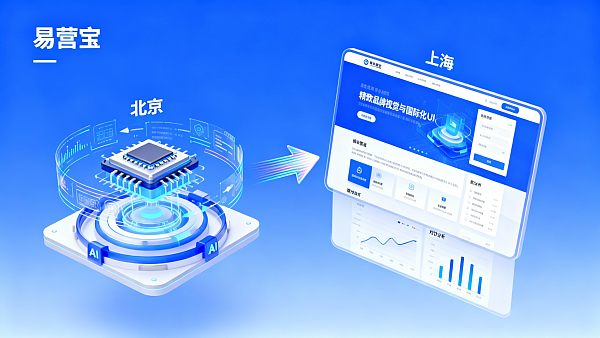
As the national hub for technological innovation, Beijing hosts numerous national-level research institutions and leading internet companies, forming a digital infrastructure cluster centered on artificial intelligence and cloud computing. Against this backdrop, Beijing website development generally offers stronger technical depth, particularly excelling in SEO optimization algorithms, automated TDK generation, and multilingual AI translation. For example, E-Yingbao Information Technology (Beijing) Co., Ltd., relying on its self-developed AI algorithm platform, achieves daily content generation and intelligent diagnostics at scale, helping client websites improve SEO scores by an average of 35%. In contrast, Shanghai website development emphasizes user experience design and brand storytelling, with service providers often catering to multinational corporations and high-end consumer goods industries, excelling in visual language for brand value communication. Shenzhen combines hardware and software integration, making it ideal for IoT and smart device companies. Hangzhou benefits from its e-commerce ecosystem, offering rich experience in independent site conversion path design. Guangzhou has deep expertise in B2B foreign trade websites, particularly in multi-language product page architecture. Emerging first-tier cities like Chengdu, Chongqing, Xi'an, and Nanjing leverage cost advantages and localized service responsiveness, becoming cost-effective choices for mid-sized enterprises.
Technology-Driven vs. Brand-Oriented: Website Strategies Should Align With Business Growth Stages
When selecting website services, enterprises must clarify their development stage and core objectives. Startups focused on rapid market validation and lead generation will find Beijing's AI-driven solutions more advantageous. For instance, E-Yingbao's intelligent website system integrates "AI keyword expansion + automated TDK generation + AI image creation" for three-dimensional optimization, significantly shortening launch cycles and improving search engine visibility. Simultaneously, its global CDN acceleration nodes ensure 40% faster website loading, particularly suitable for clients targeting multiple regions like Europe, America, and Southeast Asia. Mature brands, especially those planning to enter high-end European and American markets, will find Shanghai's website development more attuned to brand consistency and cross-cultural communication nuances. Additionally, project managers should evaluate post-launch support capabilities—Beijing providers typically offer dedicated technical teams with 24/7 incident response, while some Shanghai agencies rely on outsourced maintenance with longer cycles. Therefore, manufacturing, tech, and SaaS companies should prioritize Beijing teams, while consumer brands or image-conscious enterprises may consider Shanghai solutions.
Global Implementation: Building Closed-Loop Systems From Website to Customer Acquisition
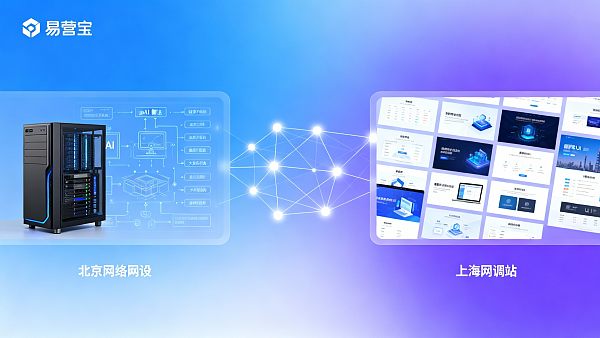
What truly determines website effectiveness is not homepage aesthetics but the ability to integrate "development-traffic-conversion" pathways. Here, Beijing providers demonstrate significant advantages through deep partnerships with platforms like Google, Meta, and Yandex. Taking Google Ads as an example, as a Google Ads China core partner, E-Yingbao offers end-to-end services from bilingual account setup to audience profiling and intelligent bidding strategies, supporting targeted campaigns in 100+ countries/regions across 37 emerging markets. Case studies show an industrial equipment exporter achieved 58% lower cost-per-conversion, 320% more inquiries, and 1:8.7 ROI through this service. This data-driven precision operation model typifies Beijing's differentiation. In contrast, most Shanghai providers remain focused on creative production and media buying, lacking underlying algorithmic support and cross-platform integration. For distributors and resellers, choosing a provider with global traffic ecosystem integration means faster overseas channel establishment and market penetration.
Future Outlook: AI Redefines Website Service Boundaries
As large-scale model technologies proliferate, traditional website models face disruptive changes. Future websites will not be static page collections but intelligent entities dynamically responding to user behavior and automatically optimizing conversion paths. Beijing's first-mover advantage in AI R&D has enabled breakthroughs like NLP-based real-time content generation, automatic language/payment method switching by geolocation, and ML-driven high-intent visitor prediction triggering personalized popups. E-Yingbao's recently launched AI Ad Manager can generate high-CTR ad copy and multilingual creatives via a creative factory model, reducing manual input by over 50% while increasing ad conversion rates by 200%. This trend pressures other city providers to accelerate tech upgrades. Within three years, native AI website capabilities will become key competitiveness metrics. For enterprises, choosing a technologically evolving partner outweighs pure price or design comparisons.

Conclusion: Scientific Decision-Making for Optimal Growth Paths
In summary, Beijing website development excels in technical depth, global coverage, and data-driven approaches, particularly suitable for enterprises pursuing efficient lead generation and scaled overseas expansion. Shanghai shines in brand expression and UX design, better for premium consumer goods or image-focused brands. Guangzhou, Shenzhen, Hangzhou, and Chengdu each have specialized strengths for industry-specific selections. Regardless of location, prioritize providers with integrated "development-marketing-conversion" capabilities. As a consecutive "China SaaS Top 100" innovator, E-Yingbao remains committed to client success through its AI-powered all-in-one smart marketing platform, empowering over 100,000 enterprises in global growth. If you seek a partner combining technical prowess with localized service capabilities, explore our complete solutions to begin your high-efficiency growth journey.
- Website Development
- Corporate website
- Google Ads
- Website loading speed
- Yiyingbao
- SEO
- Independent Website
- Smart website builder system
- SEO Optimization
- Smart Website Building
- AI Translation
- EasySite Intelligent Website Builder
- Global CDN Acceleration
- B2B Foreign Trade Website Development
- Global Traffic Ecosystem
- AI Website Building
- Beijing Website Construction
- Shanghai Website Construction
Related Articles
 What Does a Global Traffic Ecosystem Service Provider Do? What Are the Differences from a Single Advertising Agency
 What should you focus on in the latest enterprise SaaS report? From renewal rates and delivery costs to overseas growth opportunities
 What signals are worth paying attention to in a cross-border marketing trend report? B2B companies should look at these 6 signals
Related Products
 EasyCamp SaaS Smart Website Marketing SystemE-Yingbao SaaS Smart Website Marketing System: AI-powered, zero-code website building. Rapidly launch multilingual independent e-commerce sites in just 10 minutes. Global server acceleration and AI-driven SEO optimization empower businesses to efficiently connect with global markets. The seamless integration of technology and user-friendly operation makes building e-commerce sites incredibly simple.
 AI+SEM Intelligent Advertising Marketing SystemAI+SEM drives intelligent ad creation, empowering full-funnel precision advertising marketing. The system automatically generates weekly/monthly reports, AI recommends keywords and target countries, monitors core metrics in real-time with intelligent alerts, and enables one-click high-conversion ad solutions to help quickly acquire customers and improve ROI.
 AI+SEO Dual Engine Optimization ServiceEasyWin AI+SEO Dual Engine Optimization System leverages AI-powered keyword mining, content generation, and comprehensive technical optimization to help foreign trade enterprises acquire high-quality organic traffic, significantly improving search rankings and conversion rates.
 AI+SNS Social Media Marketing SystemYingbao AI+SNS Social Media Marketing System - Precision social capture for the social media era. Supports one-click content synchronization across major platforms like Facebook and LinkedIn. AI intelligently rewrites posts for enhanced relevance. 24/7 AI customer service and user profiling analysis empower businesses to efficiently expand into global markets.
 AI+SEO营销解决方案易营宝AI+SEO营销解决方案,通过AI批量写作、智能生成TDK、精准关键词扩词等功能,全面优化网站SEO效果,提升流量与转化率。助力企业构建高效智能网站新生态。
 AI+SEM Advertising Marketing SolutionsAI+SEM Advertising Marketing Solution leverages AI technology to deeply empower SEM ad campaigns. It automatically generates weekly/monthly reports using AI, presenting account data across multiple dimensions for comprehensive insights into campaign performance and trends. The system precisely recommends keywords and target countries, intelligently generates high-conversion ad copy, and enables one-click activation of efficient campaign plans to help businesses rapidly acquire customers. Simultaneously, it monitors core metrics in real time, intelligently identifies abnormal fluctuations, and issues timely alerts to ensure stable, high-return advertising results.
 Domain Name ServicesEasyWin provides professional domain name services, including intelligent queries, one-stop registration, brand protection, and full lifecycle management, helping businesses build a digital brand image.
 EasyOperate B2C Cross-Border E-Commerce Platform & Independent WebsiteEasyStore B2C Cross-border E-commerce Independent Store is an intelligent website building and cross-border e-commerce integrated solution independently developed by EasyStore Information Technology (Beijing) Co., Ltd. The system is specially designed for small and medium-sized as well as large export enterprises, integrating 'website building, operation, marketing, advertising, and conversion' into one, helping enterprises quickly establish cross-border e-commerce independent stores to achieve brand globalization and global sales growth.
The platform supports multiple languages, multiple currencies, and multi-channel marketing, with built-in AI intelligent translation and SEO optimization systems, suitable for mainstream markets such as Southeast Asia, Europe and America, Latin America, and the Middle East, assisting Chinese manufacturing enterprises in efficiently deploying international e-commerce strategies. SSL证书易营宝提供专业SSL安全证书服务,包括单域名和泛域名证书,确保网站数据传输加密、身份验证和完整性保护,助力企业建立安全可信的在线业务环境。









