









- Which customer acquisition channels will be affected by cross-border marketing trends in 2026?Sep 06, 2026View details
- Which homogenization risks should be considered in an analysis of the AI-powered website building industry?Aug 30, 2026View details
- How Will AI Marketing Trends 2026 Change Advertising Budget AllocationAug 28, 2026View details
- Is the EV SSL certificate market shrinking or upgrading? How should companies assess certificate procurement?Aug 11, 2026View details
- Why the old AMP SEO 2020 practices no longer work and what has changed in current optimization prioritiesAug 02, 2026View details
- How to Choose Topics for an Industry News Section to Attract More Organic Search TrafficJul 29, 2026View details
How to Choose a Multilingual Solution for a B2B International Trade Website to Improve Inquiry Conversion
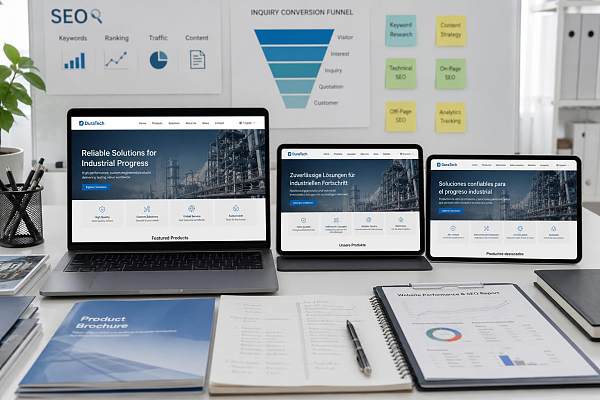
When many teams prepare to upgrade their overseas websites, the thing they struggle with most is not whether to create a multilingual website, but how to do it without hurting inquiry generation. A common situation is that the English version of the website is already online, and the business later plans to expand into German-, Spanish-, Japanese-, or Russian-speaking markets. This often leads to internal disagreement: some advocate using machine translation to expand quickly, some want to build a separate website for each language, while others worry that as the number of pages grows, later maintenance and indexing will become unmanageable.
The reason this issue is difficult is not that there are too few options, but that every option seems reasonable. If a multilingual solution for a B2B independent website focuses only on launch speed, it will often overlook the user reading experience. If it focuses only on translation quality, costs and maintenance cycles can easily become excessive. Once the website is actually put into promotion, the problems will emerge all at once: short user dwell times, high bounce rates, few form submissions, and even disorganized indexing of language versions by search engines, affecting subsequent advertising and organic traffic accumulation.
Before Comparing Prices, First Identify What Kind of Problem You Are Facing
Many people understand multilingual website development as translating a Chinese website into several versions. In reality, the points that affect inquiry conversion are usually not limited to translation itself. More commonly, several of the following situations exist at the same time:
- The page text has been translated, but the product selling points are still expressed from a Chinese perspective, so overseas users cannot understand the key information.
- Different languages share the same page structure, while keywords, titles, and descriptions are not differentiated, resulting in unstable indexing performance.
- Backend content maintenance is scattered. When product parameters are changed once, multiple versions must be updated, and omissions often occur.
- The language-switching experience is poor. After switching languages, users are redirected to the homepage and cannot find the product page they were viewing.
- When Google SEO or advertising is carried out later, the landing page language does not match the target region.
If multilingual functionality is treated merely as a feature, everything may appear normal during acceptance, but problems will begin to surface as soon as promotion starts. What really needs to be evaluated is whether the solution can balance localized expression, page indexability, content maintenance efficiency, and the difficulty of adding more languages in the future.
There Are Three Common Approaches; None Is Absolutely Better or Worse—It Depends on Suitability
When you have difficulty choosing, it is better to break down the common solutions rather than asking broadly which one is the best.
Approach One: Plugin-Based Rapid Translation
This approach is suitable for teams that already have a website and want to quickly add multilingual access. Its advantages are fast deployment and relatively controllable initial investment, making it suitable for testing new markets or temporarily supporting exhibitions and advertising campaigns.
However, its problems are also obvious: although frontend switching appears convenient, the actual content quality, URL structure, language tags, and independent indexing capabilities are often less than ideal. For websites that rely on long-term SEO accumulation, this approach can easily remain at the level of being readable without achieving conversion. If your goal is to obtain inquiries consistently, a plugin-based solution can usually only serve as a transitional option rather than a long-term foundation.
Approach Two: Build an Independent Website for Each Language
This approach offers the greatest degree of content control. Different regions can use different navigation, selling points, and form fields, while SEO settings can also be handled separately for each language market. This is more flexible for companies with complex products and significant market differences.
The problem is that maintenance pressure increases significantly. As long as product information, technical parameters, certificate descriptions, or news are updated frequently, running multiple websites in parallel makes content management burdensome. It may look professional at the beginning, but later, inconsistent versions caused by delayed updates can easily undermine trust.
Approach Three: A Multilingual Website System Based on a Shared Backend
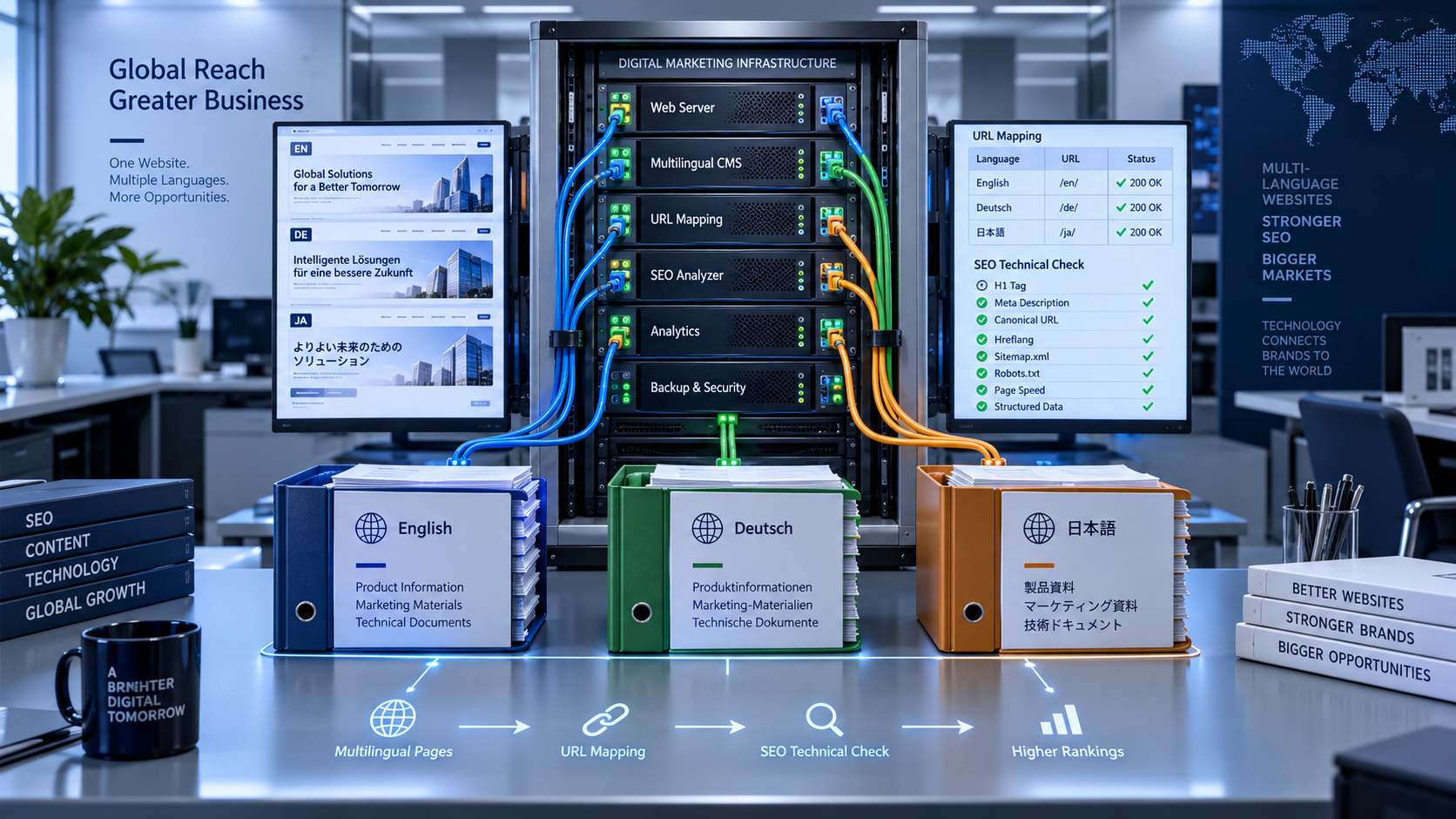
This has been a relatively practical approach in recent years. The key is not simply translation, but managing pages, URLs, SEO fields, and template components for different languages in a unified backend. This allows multilingual versions to maintain a consistent structure while making necessary adjustments for each market.
Its advantage lies in balance: it is neither as lightweight as a plugin-based solution nor as fragmented to maintain as completely independent websites. For teams that need to continuously update content, conduct SEO optimization, and build advertising landing pages, this approach makes it easier to develop a website asset that remains useful over the long term.
What Really Affects Inquiries Is Not the Number of Languages, but Four Evaluation Criteria
If you are evaluating a multilingual solution for a B2B independent website, it is recommended that you focus on the following four dimensions rather than looking only at the quotation or delivery schedule.
First, Determine Whether Users Can Read the Content Naturally
The problem with many websites is not grammatical errors, but inappropriate expression habits. For example, Chinese communication often introduces a company’s capabilities first and then discusses its products. Many overseas buyers, however, care more about specifications, application scenarios, certifications, lead times, customization capabilities, and whether contact information is readily accessible. If a multilingual page is simply translated word for word, it often retains the Chinese narrative order. As a result, users may understand the words but still fail to grasp the key points.
Therefore, during evaluation, check whether the page supports separate adjustments to titles, paragraph order, button copy, and form prompts for different languages, rather than merely copying the entire page.
Second, Determine Whether Search Engines Can Clearly Identify Each Language Version
After many teams complete multilingual development, their pages are accessible but are still not indexed or are indexed incorrectly. The causes are usually technical: no language-specific URL rules, nonstandard hreflang settings, canonical conflicts, or excessive duplication between content in different languages.
This cannot be overlooked if you plan to conduct Google SEO later. A solution suitable for long-term use should at least support independent URLs for language versions, independent title and description settings, and convenient page-level optimization in the future, rather than placing all languages in a structure that is difficult to manage.
Third, Determine Whether Ongoing Maintenance Will Become Increasingly Disorganized
One point often overlooked during business evaluation is that a website is not a one-time deliverable. Product updates, case study updates, news releases, and new landing pages will continue to occur. If every change requires repeated operations in multiple backends or must be handled by technical personnel, content gaps will eventually appear.
A more suitable approach is to coordinate content, languages, and page modules within one management system. In this way, even if more markets are added later, each additional language will not create an entirely new maintenance burden.
Fourth, Determine Whether It Can Connect Easily with Promotional Activities
Some website solutions are suitable only for display, not for marketing. For example, advertising campaigns require the rapid duplication of landing pages in different languages; SEO requires continuous development of product aggregation pages and article pages; and social media traffic acquisition requires fast mobile loading and a clear form path. If the multilingual system cannot support these activities, the website will remain at the level of language switching without being able to support the customer acquisition process.
Therefore, when selecting a solution, it is best to confirm whether it supports marketing-oriented page creation, SEO field management, landing page expansion for different regions, and subsequent data tracking integration.
If You Want to Make a Practical Decision, Follow This Approach
Do not decide immediately how many languages to create. Instead, work backward from business priorities.
First, divide your primary and secondary markets. Language versions for primary markets usually require deeper localization, independent optimization, and long-term content operations. For secondary markets, you can initially meet basic access and information comprehension needs, then gradually deepen localization based on traffic and inquiry performance.
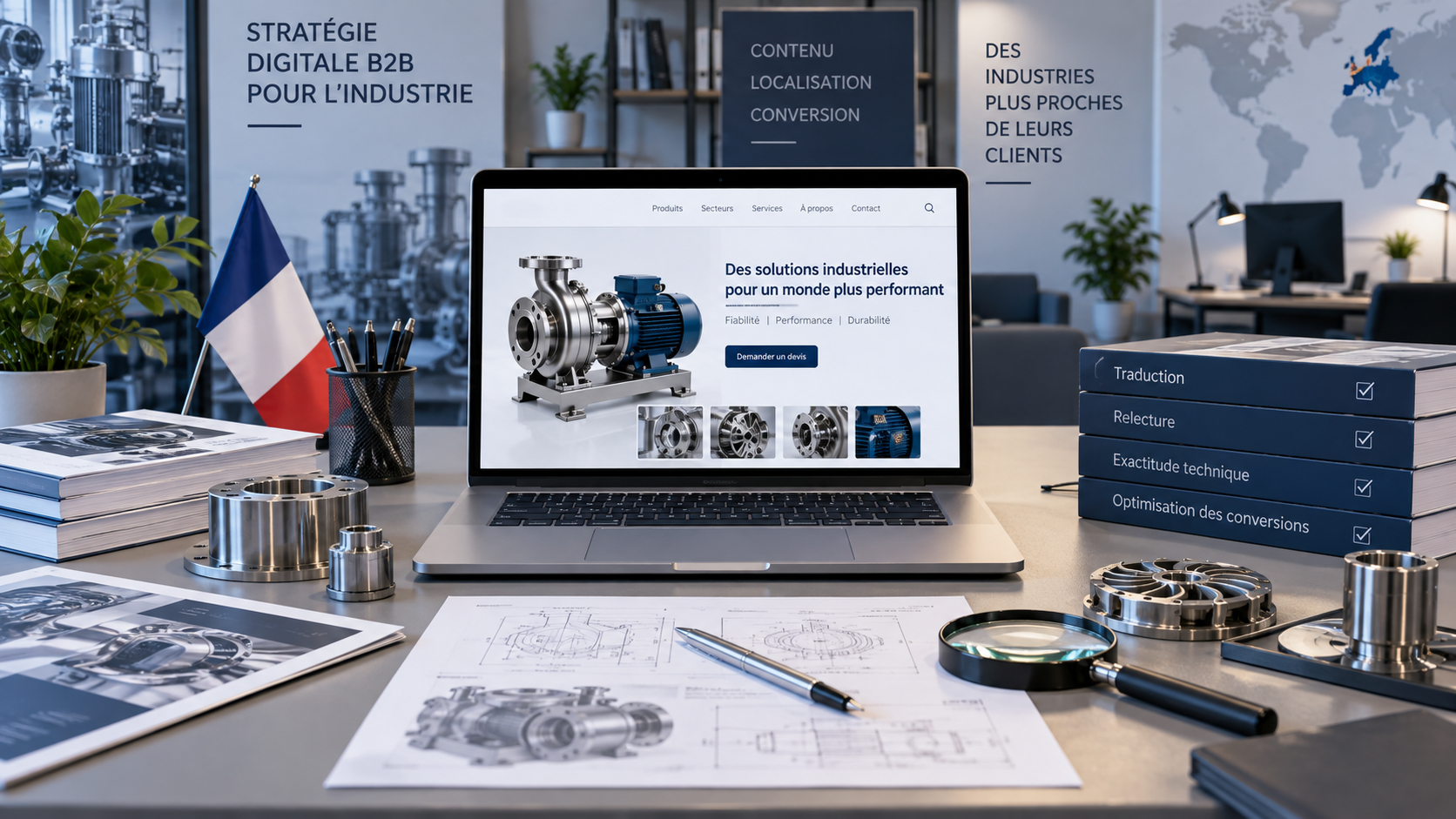
Second, identify which pages require in-depth localization. The homepage, product detail pages, solution pages, pages describing delivery capabilities, and contact pages usually directly affect inquiries. Recruitment pages, some news pages, or corporate event pages do not necessarily need to be fully refined from the beginning.
Third, confirm whether the technical architecture can support future expansion. This is not just about whether the website can go live today, but whether adding languages, changing the structure, or coordinating with SEO six months from now will require starting over. A shared backend, independent multilingual SEO configuration, and expandable page templates are all key elements that make later work easier.
Fourth, compare service models. Some teams need coordinated support from website development through SEO, advertising, and social media. Others prefer to establish a solid website foundation first and operate it themselves later. The former are better suited to platform-based services that combine intelligent website development, multilingual management, and marketing integration capabilities. The latter should focus on backend flexibility and operational usability after handover.
If you are already evaluating this type of solution, you will find that some platforms now combine intelligent website development, multilingual website development, SEO optimization, and advertising landing page capabilities within the same system. This approach is suitable for teams that do not want to separate their website, promotion, and content management. Especially when Google SEO, advertising, and overseas social media traffic acquisition will also be involved later, a unified architecture can reduce a great deal of duplicated development and integration costs. The key is not how many features are listed, but whether these features are organized around being indexable, promotable, and convertible.
Several Common Misconceptions—Avoiding Them Early Can Save Significant Rework
The first misconception is treating the number of languages as a measure of professionalism. More languages do not necessarily mean higher conversion. For markets that have not yet been validated, it is more practical to do the priority languages well than to launch too many versions at once.
The second misconception is assuming that good translation quality is sufficient. In reality, inquiries are greatly affected by page structure, form design, CTA placement, and the mobile experience. Correct wording does not necessarily mean a smooth conversion path.
The third misconception is considering website development and promotion separately. Many websites do not take SEO or advertising into account during development. When growth activities are needed later, they discover that the URL structure, page templates, and metadata management are unsupported, leaving no choice but to redo the work.
The fourth misconception is assuming that content in all languages should be completely identical. In fact, different markets do not always focus on the same aspects of a product. A truly reasonable solution should allow consistent brand communication while retaining room for localized differences.
How to Make the Final Decision: The Answer That Is Closer to Actual Work
If your goal is simply to quickly add multilingual presentation and you do not currently rely on SEO or ongoing content operations, you can first use a lightweight approach to validate market response. If you have already decided to use an overseas independent website as a long-term customer acquisition channel, do not treat multilingual functionality merely as a translation issue. Instead, view it as part of the website architecture, content management, and marketing conversion process.
When choosing a multilingual solution for a B2B independent website to better support inquiry conversion, the real decision-making logic can usually be summarized in one sentence: overseas users should be able to understand the content clearly, while your team should be able to modify, promote, and expand it easily in the future. A solution that meets all these requirements is often more worth choosing than one that is merely the cheapest or fastest to launch.
Related Articles

Related Products
 Yiyingbao SaaS Intelligent Website Building and Marketing SystemYiyingbao SaaS Intelligent Website Building and Marketing System, AI-powered no-code website building, rapid creation of multilingual B2B international websites in 10 minutes, global server acceleration, AI-powered SEO optimization, helping businesses connect efficiently with global markets. The perfect integration of technology and operation makes building an international trade website remarkably simple
 AI+SEM Intelligent Advertising Marketing SystemAI+SEM drives intelligent ad creation, empowering full-funnel precision advertising marketing. The system automatically generates weekly/monthly reports, AI recommends keywords and target countries, monitors core metrics in real-time with intelligent alerts, and enables one-click high-conversion ad solutions to help quickly acquire customers and improve ROI.
 AI+SEO Dual-Engine System Optimization ServicesYiyingbao’s AI+SEO dual-engine optimization system helps foreign trade enterprises acquire high-quality organic traffic through AI-powered keyword research, content generation, and comprehensive technical optimization, significantly improving search rankings and conversion rates.
 AI+SNS Social Media Marketing SystemYingbao AI+SNS Social Media Marketing System - Precision social capture for the social media era. Supports one-click content synchronization across major platforms like Facebook and LinkedIn. AI intelligently rewrites posts for enhanced relevance. 24/7 AI customer service and user profiling analysis empower businesses to efficiently expand into global markets.
 AI+SEO营销解决方案易营宝AI+SEO营销解决方案,通过AI批量写作、智能生成TDK、精准关键词扩词等功能,全面优化网站SEO效果,提升流量与转化率。助力企业构建高效智能网站新生态。
 AI+SEM Advertising Marketing SolutionsAI+SEM Advertising Marketing Solution leverages AI technology to deeply empower SEM ad campaigns. It automatically generates weekly/monthly reports using AI, presenting account data across multiple dimensions for comprehensive insights into campaign performance and trends. The system precisely recommends keywords and target countries, intelligently generates high-conversion ad copy, and enables one-click activation of efficient campaign plans to help businesses rapidly acquire customers. Simultaneously, it monitors core metrics in real time, intelligently identifies abnormal fluctuations, and issues timely alerts to ensure stable, high-return advertising results.
 Domain Name ServicesEasyWin provides professional domain name services, including intelligent queries, one-stop registration, brand protection, and full lifecycle management, helping businesses build a digital brand image.
 EasyOperate B2C Cross-Border E-Commerce Platform & Independent WebsiteEasyStore B2C Cross-border E-commerce Independent Store is an intelligent website building and cross-border e-commerce integrated solution independently developed by EasyStore Information Technology (Beijing) Co., Ltd. The system is specially designed for small and medium-sized as well as large export enterprises, integrating 'website building, operation, marketing, advertising, and conversion' into one, helping enterprises quickly establish cross-border e-commerce independent stores to achieve brand globalization and global sales growth.
The platform supports multiple languages, multiple currencies, and multi-channel marketing, with built-in AI intelligent translation and SEO optimization systems, suitable for mainstream markets such as Southeast Asia, Europe and America, Latin America, and the Middle East, assisting Chinese manufacturing enterprises in efficiently deploying international e-commerce strategies. SSL证书易营宝提供专业SSL安全证书服务,包括单域名和泛域名证书,确保网站数据传输加密、身份验证和完整性保护,助力企业建立安全可信的在线业务环境。









