









- 21st Century Business Herald: AI and CTV Become Core Growth Engines for Digital Marketing in Overseas MarketsNov 18, 2026View details
- China Presents 25 Cooperation Outcomes in Areas Including Cross-Border E-Commerce During APECNov 18, 2026View details
- AI Products Drive Hong Kong Exports Up 64.9% in September, Fastest Growth in Over 40 YearsNov 17, 2026View details
- National Bureau of Statistics: Foreign trade grew rapidly in October, providing stable support for global tradeNov 17, 2026View details
- The U.S. has ended the $800 de minimis exemption for non-postal shipments; express courier packages must be formally declared.Nov 16, 2026View details
- ASEAN Signs Digital Economy Framework Agreement, Moving Toward Harmonized Cross-Border E-Commerce RulesNov 15, 2026View details
Why Post-Editing Costs for Machine Translation of Independent Websites Can Easily Spiral Out of Control
Machine translation is often used for independent websites, with initial quotes frequently set very low, sometimes calculated only by character count or number of pages. However, once the project reaches later stages, revision costs can easily exceed initial expectations. The reason is not necessarily that machine-translated content cannot be used, but that website content is not simply continuous text. Product parameters, navigation hierarchy, inquiry forms, variant attributes, page templates, search term placement, and multi-device display are interconnected. An adjustment to a term or sentence structure in one place can often affect multiple pages, fields, and review stages.
Cost overruns typically occur under an arrangement of “generate in bulk first, revise centrally later.” The speed of translation generation can conceal the fact that content rules have not yet been defined. By the time language review, business verification, or pre-launch page testing takes place, isolated wording revisions may already have turned into cross-page rework, link repairs, component rearrangement, and republishing.
Why Low-Cost Translation Can Turn into Expensive Rework
Machine translation is well suited to content with clear structures, complete context, and stable terminology, such as short product descriptions, repetitive specification fields, or standardized internal explanations. On independent websites, however, the most difficult content is often not this type of material, but pages that carry conversion and search intent: above-the-fold selling points, category pages, solution pages, product details, technical document download pages, and advertising landing pages.
The same Chinese term does not necessarily correspond to the same foreign-language expression in every context. In product specifications, certain terms may refer to materials, processes, or functions, while in marketing headlines they may need to be converted into application-oriented language more familiar to buyers. Without constraints such as page type, target market, and surrounding fields, machine translation can easily produce results that are literally correct but do not conform to industry usage. When corrected sentence by sentence later, the review scope is no longer limited to whether the language reads smoothly; it also includes whether terminology is consistent, selling points are accurate, and the original conversion logic of the page is retained.
A more subtle issue is source-text quality. If the Chinese draft contains long sentences, missing subjects, mixed parameter units, undefined model abbreviations, or multiple names for the same item, machine translation will directly amplify these ambiguities. Post-editing requires first inferring the original meaning, then verifying product documentation, and finally determining the target-language wording. The resulting cost is, in essence, already close to content structuring and technical proofreading rather than ordinary polishing.
Four Types of Content That Truly Increase Workload
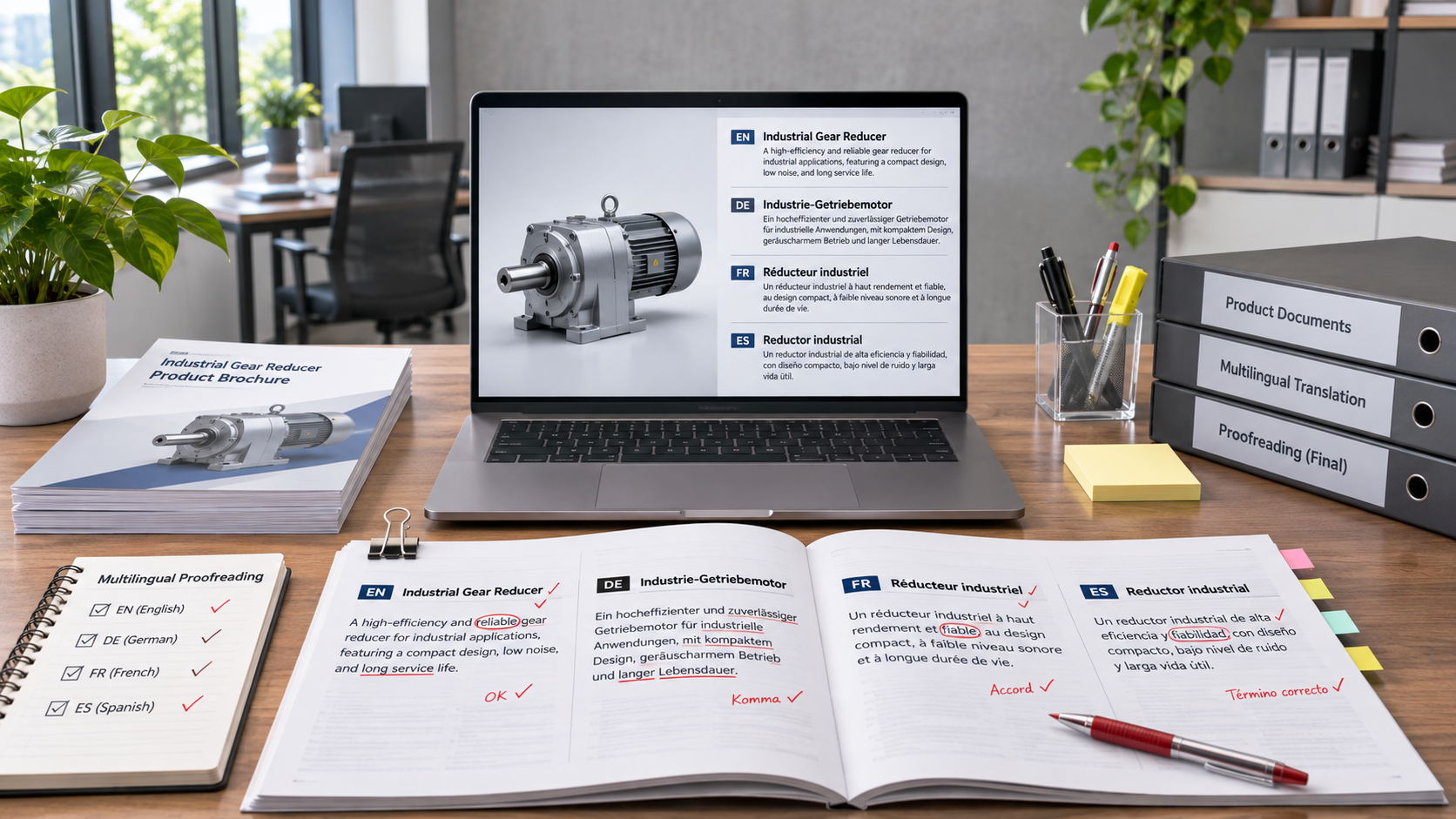
The first type is product pages with high terminology density. Material names, surface treatments, dimensional tolerances, interface types, compatibility ranges, packaging methods, and operating conditions must be consistent with drawings, catalogs, or inquiry materials. Translating “optional configuration” as “standard configuration,” or describing applicable conditions too broadly, is not merely a language issue; it can also lead to repeated confirmation in subsequent communication. Numbers, units, symbols, and model numbers in specification tables generally should not be rewritten by post-editors based on linguistic intuition and need to retain traceable sources.
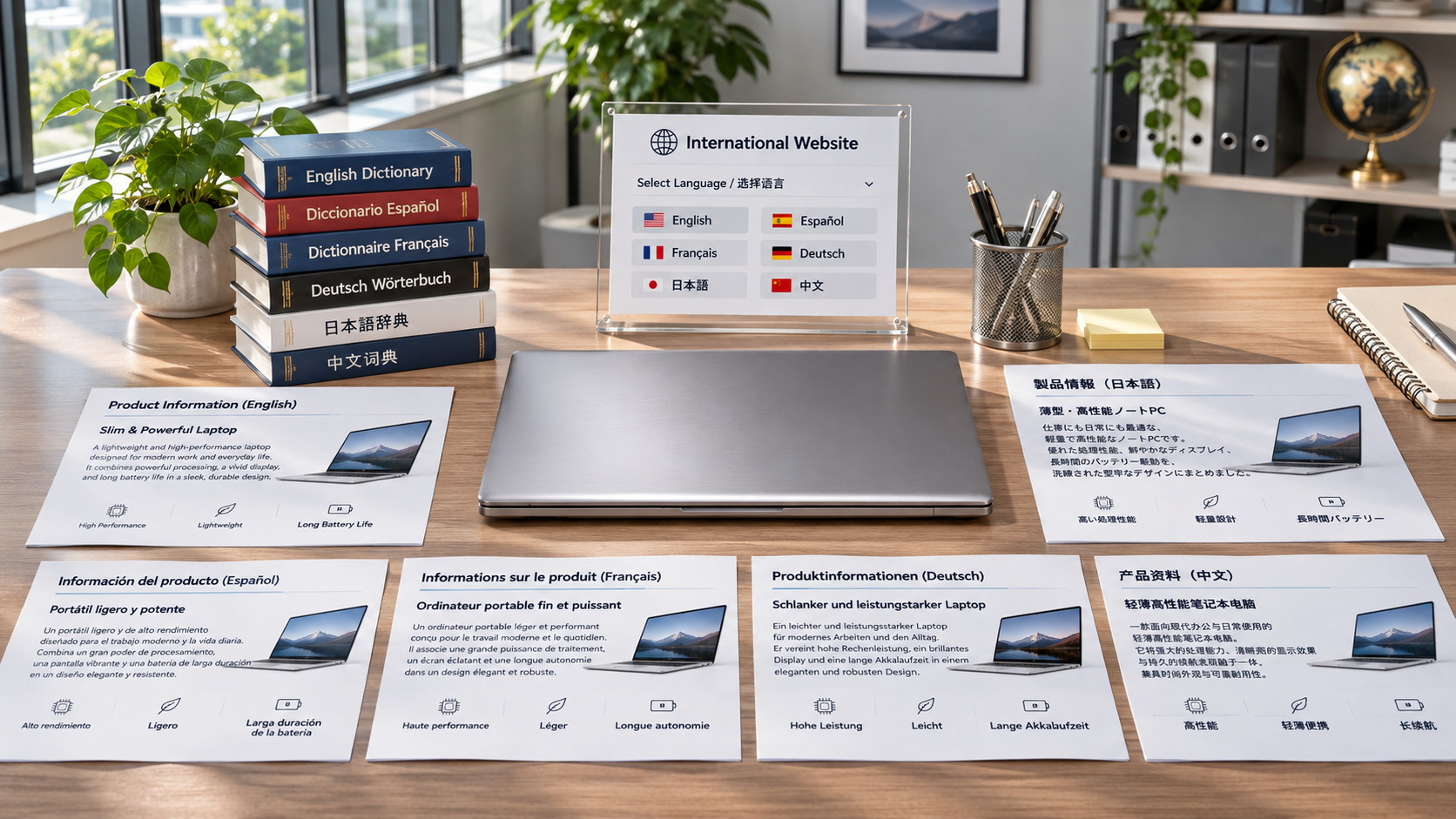
The second type is modular website-building content. A global block may appear on dozens of pages at the same time, such as footer statements, button copy, form prompts, delivery instructions, Cookie notices, and on-site search filters. If translations are submitted for review as static pages first and it is only later discovered that component text should be standardized, revisions will involve the content library, template call relationships, and multilingual versions. What appears to be a one-line copy change also requires confirmation that the revision covers every location where it is used.
The third type is pages prepared for search and advertising. Titles, descriptions, image alt text, URL paths, anchor text, and main body keywords need to remain semantically consistent. Machine translation often replaces the same core term with multiple synonymous expressions. While this may not read awkwardly, it can weaken the topical relationship between category pages and product pages. If advertising materials have already been written around the original keywords, changing the wording again on the landing page will also increase the work required for creative review and link mapping.
The fourth type is business content with conditional restrictions. Wording related to lead times, minimum order quantities, samples, payment, transportation responsibilities, after-sales service scope, and similar matters cannot focus solely on sounding natural. Conditions not stated in the source text should not be added by the translation without authorization; where the source text is ambiguous, fluent wording cannot be used to conceal that ambiguity. Later revisions are time-consuming because every conditional statement may require confirmation against the original business rules.

The Same “Unnatural Language” Issue Does Not Always Require the Same Treatment
Some translation issues require only editorial adjustments, such as awkward word order, missing articles, or titles that are not concise enough. Such revisions can be estimated by page count or word count, and costs are relatively controllable. Other issues may also appear to be “unnatural” on the surface, but are actually caused by missing content rules: product names lack a naming convention, the same function is described differently on different pages, the English variant for the target market has not been determined, or conflicts exist among source materials. If the latter are still handled as ordinary proofreading, reviewers will repeatedly make temporary decisions across different pages, ultimately causing terminology drift.
It is also necessary to distinguish between “text errors” and “publishing errors.” Correcting the text does not mean that the page is ready to go live. Buttons that are too long may squeeze the mobile layout, table column widths may change, line breaks and list hierarchies in rich text may be lost, and translated product attributes may also affect filters or on-site search. If editing permissions, website-building permissions, and publishing permissions are separated, revised content also requires secondary entry, previewing, and regression checks. Each additional manual transfer creates another opportunity for an old version to be missed.
Boundaries That Should Be Defined Before Quoting
To determine whether later-stage revision costs are likely to be high, it is not enough to compare machine translation rates with human translation rates. The boundaries of the work package should be confirmed first. The number of pages is only a volume indicator and does not represent complexity. A product page containing specification tables, downloadable materials, variant fields, and multiple reusable modules is often more difficult to finalize than several ordinary news or information pages.
A glossary does not need to be extensive from the start. It only needs to prioritize product series names, core components, materials and processes, key performance indicators, application industries, non-translatable fields, and commonly used call-to-action buttons. Its purpose is not to restrict all copy, but to reduce the number of times each reviewer must reinterpret the same term. For easily confused terms, it is best to indicate the usage context, such as whether they are used in specification tables, menus, or advertising headlines.
Move Rework Forward Instead of Piling Reviews at the End
A more reliable arrangement is to first select representative pages for a small-scale pilot translation and preview them in the actual website environment. The pilot should cover key homepage sections, one category page, one product detail page, one form or inquiry page, and a page containing parameters or downloadable materials. This makes it possible to expose terminology, length, template field, and page structure issues early, before deciding on the rules for bulk generation.
During the bulk stage, not all content should be treated as having the same priority. First handle core pages that affect launch and customer acquisition, then process news archives, low-traffic pages, or auxiliary content with a high degree of repetition. Translation memories or fixed mappings can be created for repeated fields, while manual review checkpoints should be retained for technical descriptions and business terms. Applying the same review depth to both types of content often wastes time while failing to concentrate risk on the areas that genuinely require judgment.
Final acceptance should be based on page status rather than translation files alone. In addition to language accuracy, it is necessary to check whether links point to the corresponding language pages, form prompts are complete, units and currencies retain their original meaning, titles are truncated, mobile buttons overflow, and revisions have been synchronized to reusable modules. Completing these checks before publishing each batch of pages costs far less than tracing outdated translations after the entire website goes live.
The cost of revisions after machine translation is not inherently high. Cost overruns often result from combining content generation, business confirmation, website content entry, and publishing validation into one vague process. Establish the rules first, then let machines handle repetitive work, and finally concentrate human review on content with ambiguity, technical conditions, and a direct impact on conversion. Only then can budgets and schedules be controlled more easily.
Related Articles
 How Long After Launch Should You Redesign a Multilingual Website? Check Whether the Content Is Outdated First
 How to Choose Target Languages When Building an International Website for Global Brand Expansion
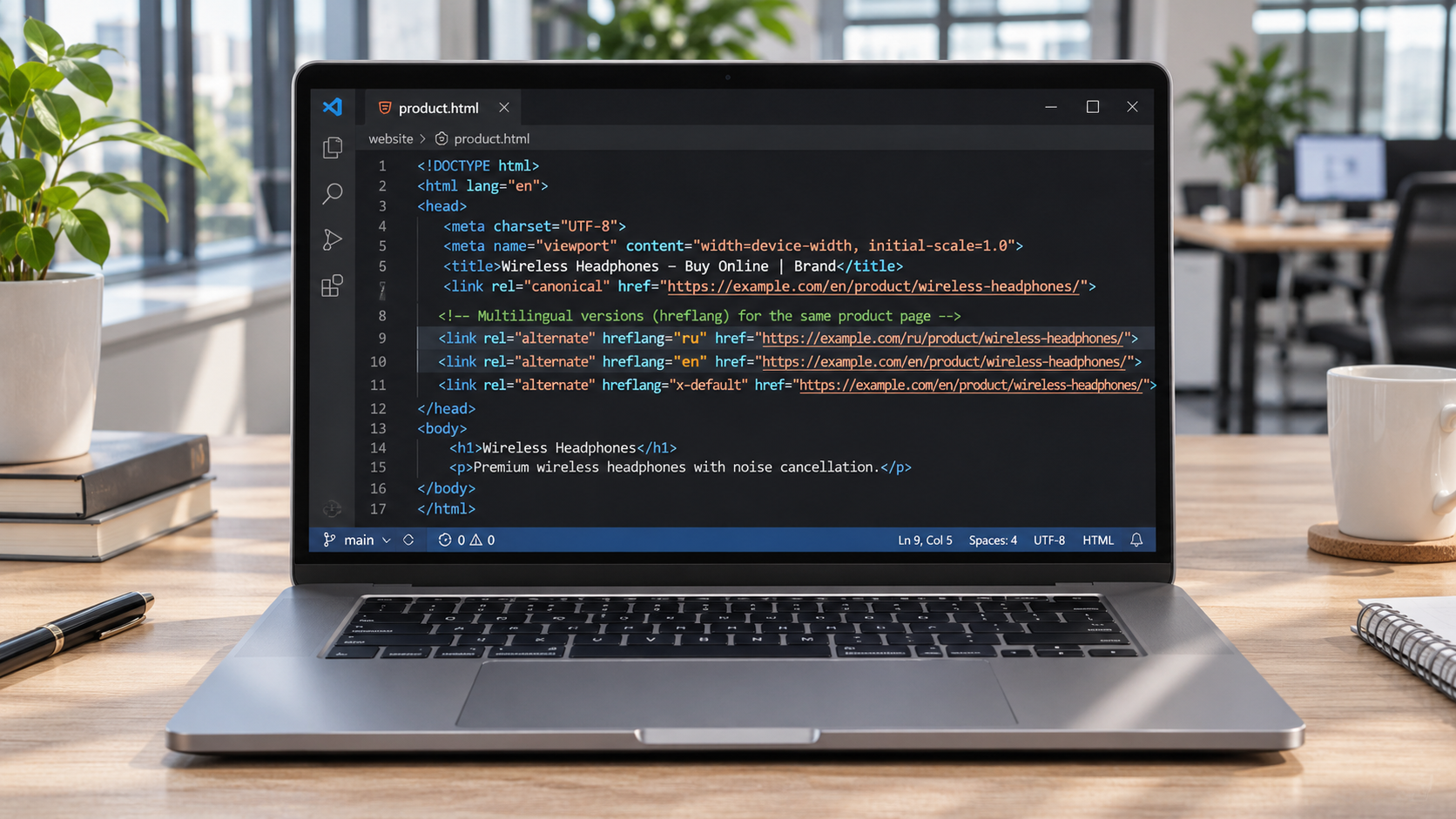
 How Do You Set Up Multilingual SEO Tags for a Russian-Language Website?
Related Products
 Yiyingbao SaaS Intelligent Website Building and Marketing SystemYiyingbao SaaS Intelligent Website Building and Marketing System, AI-powered no-code website building, rapid creation of multilingual B2B international websites in 10 minutes, global server acceleration, AI-powered SEO optimization, helping businesses connect efficiently with global markets. The perfect integration of technology and operation makes building an international trade website remarkably simple
 AI+SEM Intelligent Advertising Marketing SystemAI+SEM drives intelligent ad creation, empowering full-funnel precision advertising marketing. The system automatically generates weekly/monthly reports, AI recommends keywords and target countries, monitors core metrics in real-time with intelligent alerts, and enables one-click high-conversion ad solutions to help quickly acquire customers and improve ROI.
 AI+SEO Dual-Engine System Optimization ServicesYiyingbao’s AI+SEO dual-engine optimization system helps foreign trade enterprises acquire high-quality organic traffic through AI-powered keyword research, content generation, and comprehensive technical optimization, significantly improving search rankings and conversion rates.
 AI+SNS Social Media Marketing SystemYingbao AI+SNS Social Media Marketing System - Precision social capture for the social media era. Supports one-click content synchronization across major platforms like Facebook and LinkedIn. AI intelligently rewrites posts for enhanced relevance. 24/7 AI customer service and user profiling analysis empower businesses to efficiently expand into global markets.
 AI+SEO营销解决方案易营宝AI+SEO营销解决方案,通过AI批量写作、智能生成TDK、精准关键词扩词等功能,全面优化网站SEO效果,提升流量与转化率。助力企业构建高效智能网站新生态。
 AI+SEM Advertising Marketing SolutionsAI+SEM Advertising Marketing Solution leverages AI technology to deeply empower SEM ad campaigns. It automatically generates weekly/monthly reports using AI, presenting account data across multiple dimensions for comprehensive insights into campaign performance and trends. The system precisely recommends keywords and target countries, intelligently generates high-conversion ad copy, and enables one-click activation of efficient campaign plans to help businesses rapidly acquire customers. Simultaneously, it monitors core metrics in real time, intelligently identifies abnormal fluctuations, and issues timely alerts to ensure stable, high-return advertising results.
 Domain Name ServicesEasyWin provides professional domain name services, including intelligent queries, one-stop registration, brand protection, and full lifecycle management, helping businesses build a digital brand image.
 EasyOperate B2C Cross-Border E-Commerce Platform & Independent WebsiteEasyStore B2C Cross-border E-commerce Independent Store is an intelligent website building and cross-border e-commerce integrated solution independently developed by EasyStore Information Technology (Beijing) Co., Ltd. The system is specially designed for small and medium-sized as well as large export enterprises, integrating 'website building, operation, marketing, advertising, and conversion' into one, helping enterprises quickly establish cross-border e-commerce independent stores to achieve brand globalization and global sales growth.
The platform supports multiple languages, multiple currencies, and multi-channel marketing, with built-in AI intelligent translation and SEO optimization systems, suitable for mainstream markets such as Southeast Asia, Europe and America, Latin America, and the Middle East, assisting Chinese manufacturing enterprises in efficiently deploying international e-commerce strategies. SSL证书易营宝提供专业SSL安全证书服务,包括单域名和泛域名证书,确保网站数据传输加密、身份验证和完整性保护,助力企业建立安全可信的在线业务环境。









