- APEC Shenzhen Spotlight: Cross-Border E-Commerce Orders Promote Asia-Pacific Trade and Economic CooperationNov 08, 2026View details
- China-Europe Railway Express and CIIE Hold Business Matchmaking Event, Focusing on Cross-Border E-commerce B2B ExportsNov 07, 2026View details
- China’s Ministry of Commerce Responds to Additional Charges on Low-Value Imports Imposed by the EUNov 06, 2026View details
- Two Internet Development Reports Released at the 2026 World Internet ConferenceNov 05, 2026View details
- Internet Business Revenue of Enterprises Above the Designated Size Reached RMB 1.716 Trillion in the First Three Quarters, with Profits Up 17.6%Nov 05, 2026View details
- Shopify's Third-Quarter Revenue and GMV Fall Short of Expectations, Sending Shares Tumbling Before the Market OpensNov 04, 2026View details
Which Website SEO Configuration Errors Can Affect Page Indexing?
A page not appearing in search engine results does not necessarily mean its keywords are set incorrectly. A more direct cause may be that the search engine cannot access the page, the page is marked as not to be indexed, or its canonical URL points to another page. Some pages have all the right settings but have not yet been indexed because of duplicate content, insufficient value, or other reasons.
When troubleshooting, first distinguish between “unable to crawl,” “instructed not to index,” and “crawled but not indexed.” Do not repeatedly change the title or submit the URL as soon as a page cannot be found in search results. For Google, for example, check the page status in the “URL Inspection” tool in Search Console, then address the specific cause.
First, confirm whether the page is actually not indexed
Enter the complete URL in Search Console, including the protocol, domain, path, and trailing slash. The results show whether the URL is in the Google index and provide information about crawling, indexing, and the canonical page. If your site has versions of a URL with and without parameters, or with and without a trailing slash, be sure to check the version you actually want to appear in search results.
“URL is on Google” does not mean it will appear for every search query; indexing and ranking are two different things. Conversely, not finding a page with a site: search is not, by itself, reliable evidence that it is not indexed. Check the URL Inspection results to determine its status.
The index status in URL Inspection reflects the information Google has already collected. A live test can check current accessibility and page settings, but passing a live test does not guarantee that the page will ultimately be indexed. After changing settings, you also need to wait for the search engine to recrawl and process the page.

Can the page be accessed? Check crawl restrictions and server responses
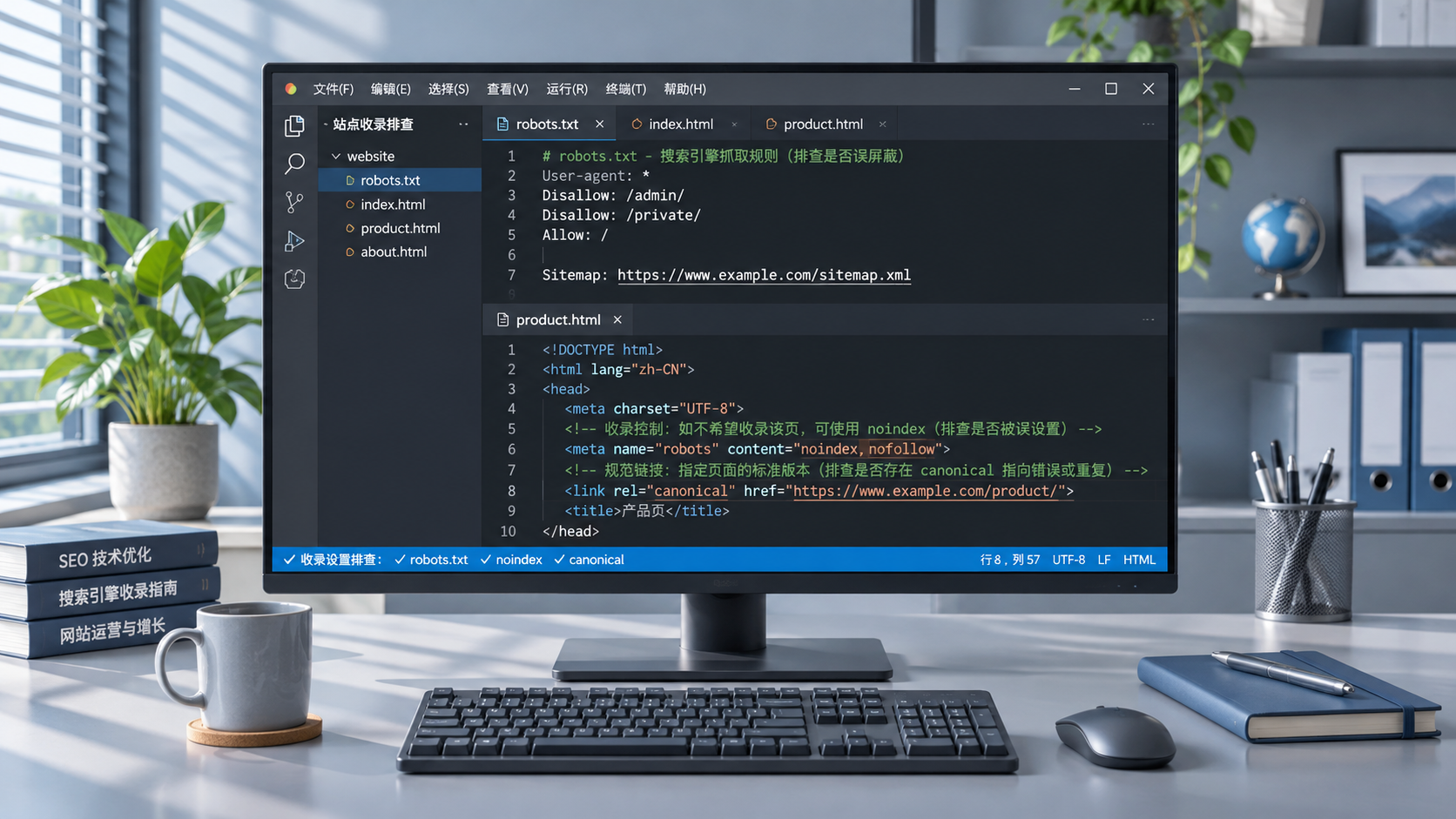
An accidental block in robots.txt is a key issue to check when launching a site. For example, if Disallow: / was used during testing and not removed after launch, it will prevent affected crawlers from accessing site paths. Check /robots.txt in the domain’s root directory, confirm which crawlers and paths the rules apply to, then remove or adjust any restrictions that should not be there.
Note that robots.txt controls crawling; it is not a reliable way to prevent indexing. A blocked URL may still appear in search results because it is linked to from other pages, but the search engine cannot read its content. If you want a public page to remain out of the index, allow crawling and use a valid noindex directive. If the content needs to be private, use access controls such as login authentication rather than relying on SEO directives.
The HTTP status returned by a page also affects how it is processed. Public pages should consistently return a 200 status code. 404 and 410 indicate that a page does not exist or has been deleted, while 5xx errors require checking the server, hosting service, or security settings. If the site has regional restrictions, CAPTCHAs, or firewall rules, make sure these settings are not blocking search engine crawlers. Do not rely only on your own browser to determine whether a page works properly.
Another easily overlooked issue is a “soft 404”: the server returns 200, but the page says that a product does not exist, shows no content, or displays an error message. A deleted page with no replacement content should return an appropriate not-found status. If there is a clear replacement page, consider using a relevant redirect, rather than redirecting large numbers of unrelated old URLs to the homepage.
Access is allowed, but the page is marked “noindex”
The <meta name="robots" content="noindex"> tag in a page’s source code, or an X-Robots-Tag: noindex in the HTTP response header, tells search engines not to index the page. After a test site is moved to its production domain, this setting may remain in a website builder’s “Prevent search engines from indexing” option, page-level SEO settings, or server response headers.
When checking, do not look only at the setting in the admin panel: open the page source and search for noindex, and check the response headers as well. Pay particular attention to directives in response headers for non-HTML files such as PDFs. Once you confirm that the page should be publicly indexed, remove the relevant restriction and make sure robots.txt does not prevent search engines from recrawling it; otherwise, they may not discover the change promptly.
You do not need to remove every noindex directive across the entire site. Search results pages, duplicate filter pages, and other pages with no independent search value may genuinely not need to be indexed. The key is to confirm that the restriction has not been mistakenly applied to product detail pages, category pages, or other pages that need to attract organic search traffic.
Canonical URLs and redirects point to the wrong destination
The canonical URL tag rel="canonical" tells search engines which version to prioritize. If every product page incorrectly identifies the homepage or the same category page as its canonical URL, search engines may treat those product pages as duplicates rather than indexing them separately.
Check the canonical URL in the page source or response headers and confirm that it points to an accessible URL with matching content that you want indexed. For pages with unique content, a self-referencing canonical URL is common practice. For parameterized pages with substantially the same content, you can point to the primary version as appropriate. A canonical URL is a hint, not a directive; Google may choose a different canonical URL based on signals such as page content, links, and redirects.
Redirects should also be checked. There should be a clear final destination for HTTP to HTTPS, old-domain to new-domain, and URL path changes. Avoid redirect loops, redirects to unrelated pages, or leaving sitemaps and internal links pointing to old URLs. If URL Inspection shows that Google selected a different canonical page, compare the content and canonical signals of the two pages instead of repeatedly submitting the original URL.
Multilingual sites can also mistakenly set all language-specific pages to the English homepage as their canonical URL. If pages in different languages or regions provide meaningful content of their own, check each page’s canonical URL and hreflang annotations. hreflang indicates language and regional relationships; it cannot replace settings that make a page crawlable and indexable, nor does it guarantee that a particular version will appear in a specified region.
The page can be indexed, but search engines have trouble discovering or understanding it
Orphan pages lack crawlable entry points from within the site. If a product detail page can only be reached through site search, form submissions, or complex interactions, search engines may have trouble discovering it. Add standard HTML links to the page from relevant category pages, navigation, or content pages, using <a> elements with a valid href attribute.
An XML sitemap helps provide URLs you want search engines to discover, but submitting a sitemap is not the same as submitting a request for indexing. Prioritize URLs that return a normal status, are eligible for indexing, and are intended to be canonical. Including large numbers of redirects, 404 pages, or pages with noindex can make troubleshooting more difficult. After submission, check in Search Console whether the sitemap was read successfully and review the status of the related pages.
Sites that use JavaScript to render their main content should also check whether search engines can retrieve and render that content. If the initial HTML is nearly empty and scripts, APIs, or resources are blocked, the content seen by search engines may differ from what appears in a browser. Use the live test in URL Inspection to check the rendered page and resource loading. If necessary, adjust the rendering method or allow access to the relevant resources.
“Crawled - currently not indexed” does not necessarily indicate a technical issue. If multiple product pages differ only by model number and have nearly identical text, images, and descriptions, search engines may choose not to index every page individually. Add useful information based on actual product differences, such as specifications or conditions of use. For duplicate pages with no distinct value, consider consolidating them or specifying a canonical version. Simply adding keywords or changing titles cannot replace the value of the page’s content.
How to verify changes
Address one clearly identified issue at a time, such as removing an accidentally added noindex, correcting a canonical URL, or restoring access to a blocked path. After publishing the changes, recheck the actual URL’s status code, page source, and response headers, then use the live test in Search Console to confirm that search engines can see the changes.
For important pages, you can request indexing after checking them. For issues affecting multiple pages, first fix the template, site configuration, or server rules rather than submitting URLs individually without addressing the root cause. Neither an indexing request nor sitemap submission guarantees indexing or a specific processing time. If the status does not change for a long time, recheck the actual crawl results, canonical URL, and page content instead of repeatedly submitting the URL.
Related Articles
 How does search engine crawling affect website SEO rankings?
 How can you improve Google rankings by optimizing page content?
 Which Website SEO Configuration Errors Can Affect Page Indexing?

Related Products
 Yiyingbao SaaS Intelligent Website Building and Marketing SystemYiyingbao SaaS Intelligent Website Building and Marketing System, AI-powered no-code website building, rapid creation of multilingual B2B international websites in 10 minutes, global server acceleration, AI-powered SEO optimization, helping businesses connect efficiently with global markets. The perfect integration of technology and operation makes building an international trade website remarkably simple
 AI+SEM Intelligent Advertising Marketing SystemAI+SEM drives intelligent ad creation, empowering full-funnel precision advertising marketing. The system automatically generates weekly/monthly reports, AI recommends keywords and target countries, monitors core metrics in real-time with intelligent alerts, and enables one-click high-conversion ad solutions to help quickly acquire customers and improve ROI.
 AI+SEO Dual-Engine System Optimization ServicesYiyingbao’s AI+SEO dual-engine optimization system helps foreign trade enterprises acquire high-quality organic traffic through AI-powered keyword research, content generation, and comprehensive technical optimization, significantly improving search rankings and conversion rates.
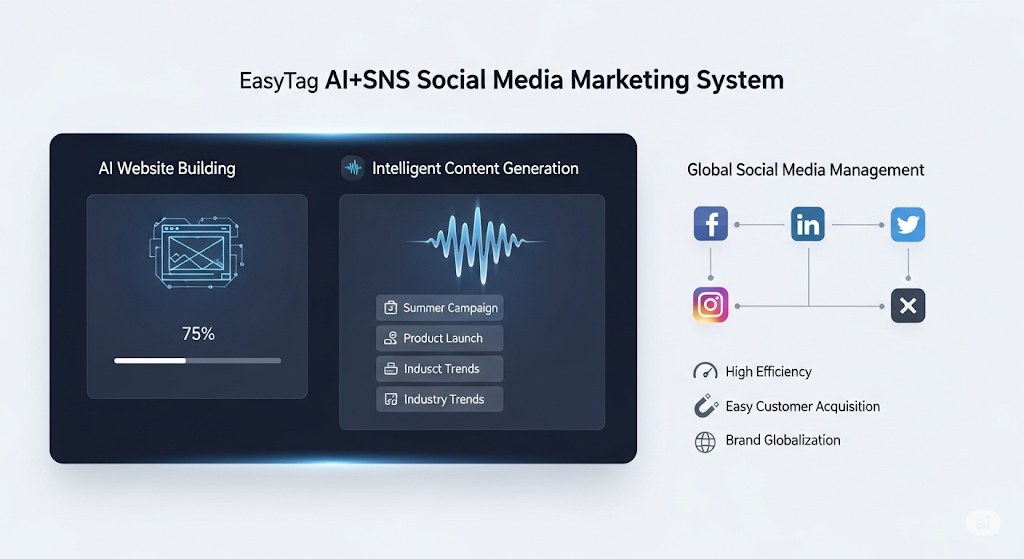
 AI+SNS Social Media Marketing SystemYingbao AI+SNS Social Media Marketing System - Precision social capture for the social media era. Supports one-click content synchronization across major platforms like Facebook and LinkedIn. AI intelligently rewrites posts for enhanced relevance. 24/7 AI customer service and user profiling analysis empower businesses to efficiently expand into global markets.
 AI+SEO营销解决方案易营宝AI+SEO营销解决方案,通过AI批量写作、智能生成TDK、精准关键词扩词等功能,全面优化网站SEO效果,提升流量与转化率。助力企业构建高效智能网站新生态。
 AI+SEM Advertising Marketing SolutionsAI+SEM Advertising Marketing Solution leverages AI technology to deeply empower SEM ad campaigns. It automatically generates weekly/monthly reports using AI, presenting account data across multiple dimensions for comprehensive insights into campaign performance and trends. The system precisely recommends keywords and target countries, intelligently generates high-conversion ad copy, and enables one-click activation of efficient campaign plans to help businesses rapidly acquire customers. Simultaneously, it monitors core metrics in real time, intelligently identifies abnormal fluctuations, and issues timely alerts to ensure stable, high-return advertising results.
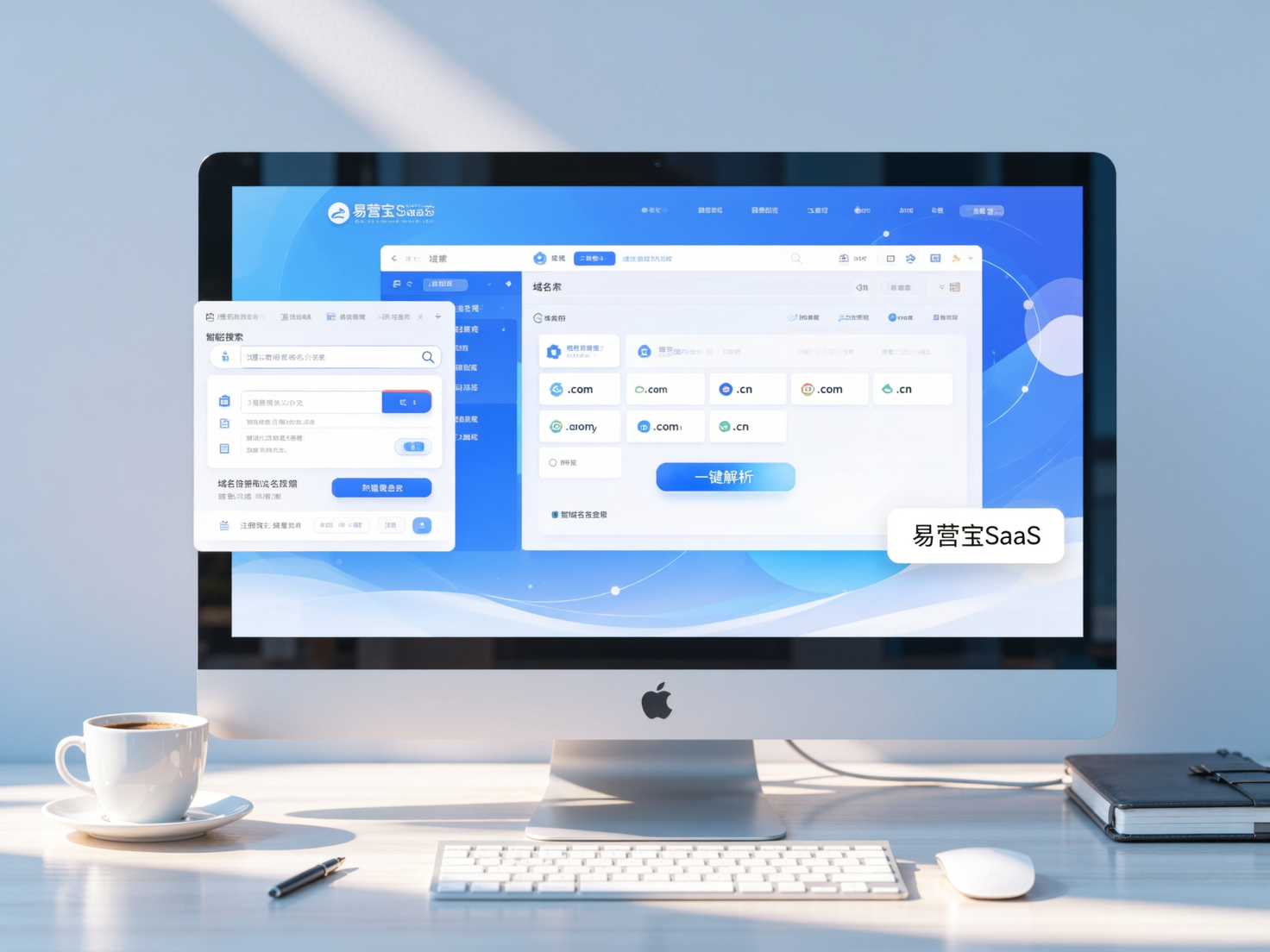
 Domain Name ServicesEasyWin provides professional domain name services, including intelligent queries, one-stop registration, brand protection, and full lifecycle management, helping businesses build a digital brand image.
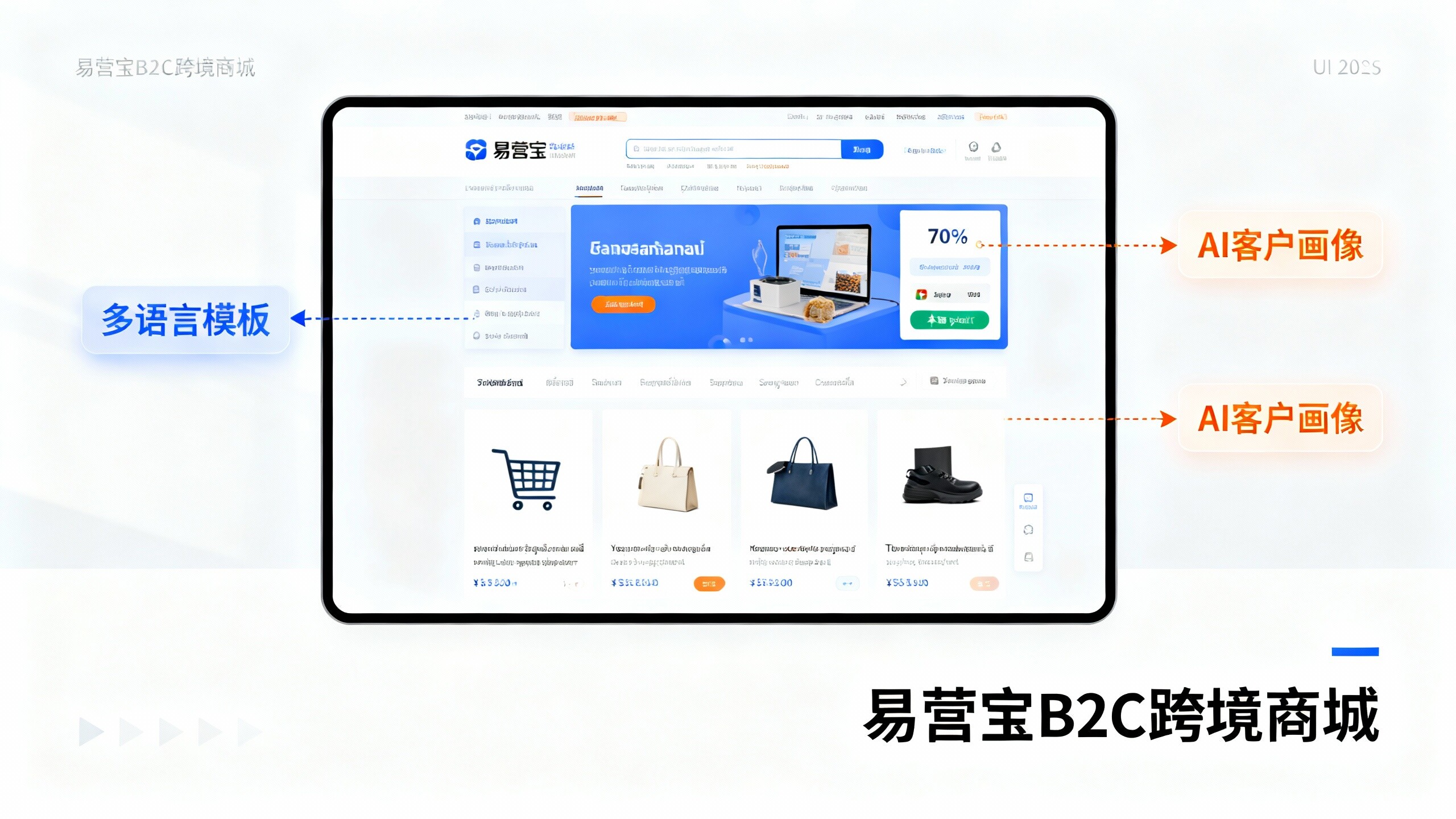
 EasyOperate B2C Cross-Border E-Commerce Platform & Independent WebsiteEasyStore B2C Cross-border E-commerce Independent Store is an intelligent website building and cross-border e-commerce integrated solution independently developed by EasyStore Information Technology (Beijing) Co., Ltd. The system is specially designed for small and medium-sized as well as large export enterprises, integrating 'website building, operation, marketing, advertising, and conversion' into one, helping enterprises quickly establish cross-border e-commerce independent stores to achieve brand globalization and global sales growth.
The platform supports multiple languages, multiple currencies, and multi-channel marketing, with built-in AI intelligent translation and SEO optimization systems, suitable for mainstream markets such as Southeast Asia, Europe and America, Latin America, and the Middle East, assisting Chinese manufacturing enterprises in efficiently deploying international e-commerce strategies. SSL证书易营宝提供专业SSL安全证书服务,包括单域名和泛域名证书,确保网站数据传输加密、身份验证和完整性保护,助力企业建立安全可信的在线业务环境。