









- APEC Shenzhen Spotlight: Cross-Border E-Commerce Orders Promote Asia-Pacific Trade and Economic CooperationNov 08, 2026View details
- China-Europe Railway Express and CIIE Hold Business Matchmaking Event, Focusing on Cross-Border E-commerce B2B ExportsNov 07, 2026View details
- China’s Ministry of Commerce Responds to Additional Charges on Low-Value Imports Imposed by the EUNov 06, 2026View details
- Two Internet Development Reports Released at the 2026 World Internet ConferenceNov 05, 2026View details
- Internet Business Revenue of Enterprises Above the Designated Size Reached RMB 1.716 Trillion in the First Three Quarters, with Profits Up 17.6%Nov 05, 2026View details
- Shopify's Third-Quarter Revenue and GMV Fall Short of Expectations, Sending Shares Tumbling Before the Market OpensNov 04, 2026View details
Slow indexing after launching an overseas website? Troubleshoot crawling, indexing, and regional signals
After an overseas website goes live, it may remain unindexed for some time. Site operators often start by submitting a sitemap or repeatedly searching for the URL in search engines. However, a page that “can’t be found” may be due to crawling restrictions, index selection, or confusing regional signals, and each requires a different solution. When optimizing an overseas website (оптимизация зарубежного сайта), it is more effective to first identify where the page is getting stuck than to rush to add more content.
First, check: Has the search engine discovered the page?
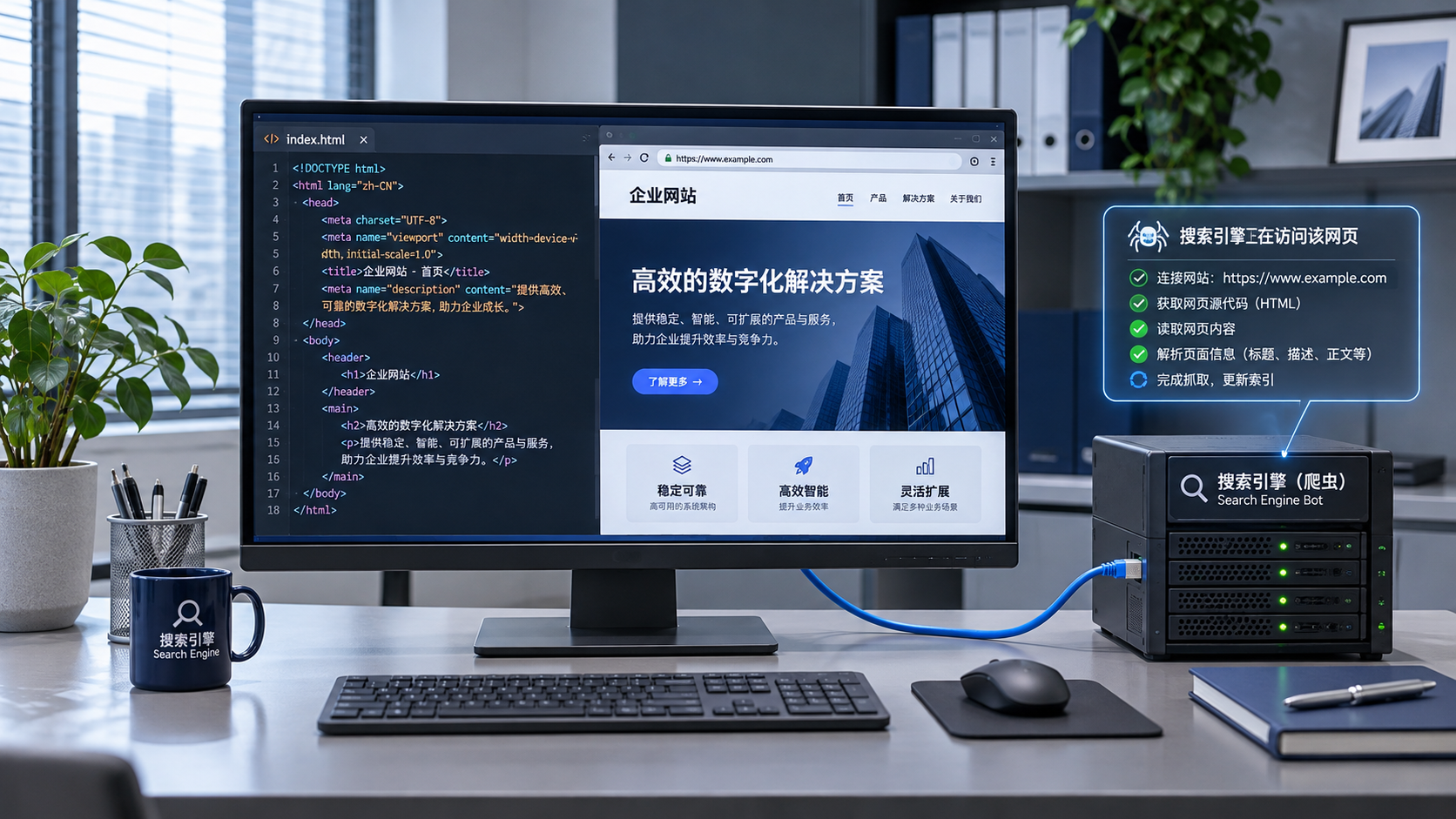
After verifying your website in Google Search Console, use the URL Inspection tool to check a representative sample of pages: select a few from the homepage, key product pages, category pages, and each language version. Record whether the search engine knows the URL, when it last crawled it, and its current indexing status. The inspection results may differ from the live test results: the former reflect existing data, while the latter help determine whether the page is accessible now.
If the page has not yet been discovered, check whether your site contains crawlable links pointing to it. Search engines may be unable to find the full product catalog if navigation relies only on a search box, filter buttons, or pages that require a login. A sitemap can help search engines discover URLs, but submitting one does not guarantee crawling or indexing. Keep the sitemap limited, as far as possible, to accessible canonical URLs that you want indexed.
If the search engine has discovered the page but has not crawled it yet, do not immediately assume there is a technical fault. For a new site, it is worth checking content value, internal links, and server response. Prioritize making core pages accessible from the navigation or relevant category pages rather than generating large numbers of similar URLs and waiting for them to be crawled.

Crawling blocked: Start with access, responses, and rendering
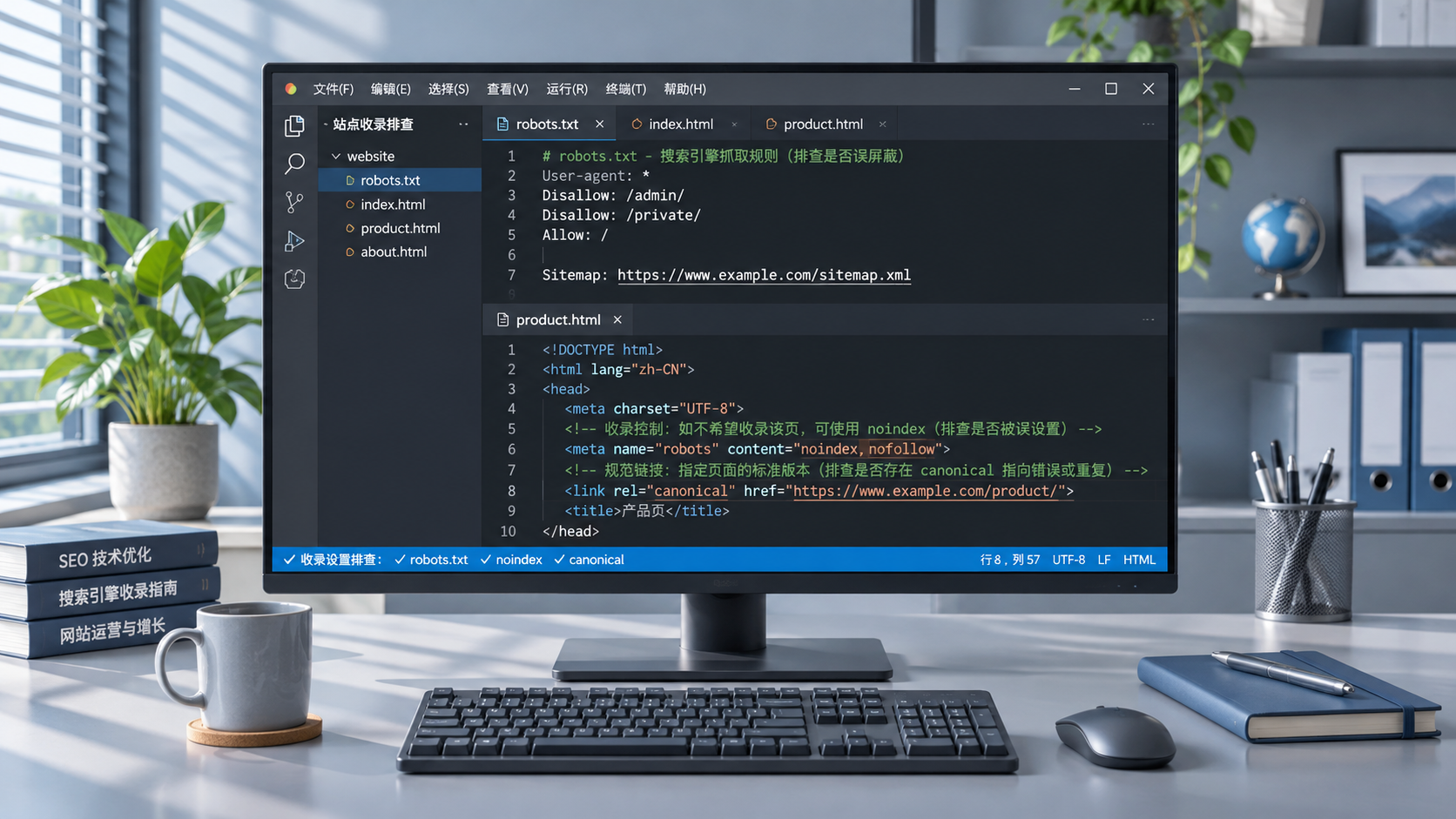
When a site moves from a development environment to production, test restrictions may sometimes be carried over. Check whether robots.txt is mistakenly blocking product directories, and make sure that unnecessary noindex directives have not been set in page tags or HTTP response headers. These are not the same: robots.txt primarily controls crawling, while noindex indicates that a page should not be indexed. If crawling is blocked, search engines may be unable to read the noindex directive on the page.
Next, check the server status. Normal pages should return status codes that accurately reflect their actual state: a page that no longer exists should not be disguised as normal content, and repeated timeouts, server errors, or redirects should also be investigated. Overseas websites should pay particular attention to firewalls, CAPTCHAs, and regional access restrictions: the fact that employees can open a page does not mean that search engine crawlers can access it successfully from other network environments.
Use the live test in the URL Inspection tool to review the rendered page and crawl results. If key product descriptions, links, or navigation depend on scripts and do not appear after rendering, developers should investigate script requests, blocked resources, and how the page is served. Do not rely only on browser screenshots; also confirm what content search engines can actually read.
Crawled but not indexed does not necessarily mean “the bots aren’t coming”
A successful crawl only means that a page has entered the candidate stage. For manufacturing products with highly similar specifications, if multiple pages differ only by model number and have almost identical body text, search engines may select only some of them or leave them unindexed for now. In this case, determine whether customers genuinely need separate pages. Models with few differences can be presented together; pages for which customers have distinct selection needs should include information on applicable operating conditions, key parameters, installation requirements, and details needed to submit an inquiry.
Also check your canonical URL settings. URLs with tracking parameters, different capitalization, or different trailing slashes may point to the same content. If so, standardize internal links and use canonical tags or redirects appropriately. A canonical URL is a signal, not a directive. If the canonical page declared by the website differs from the one selected by the search engine, check whether content similarity, internal links, and the sitemap all point to the same version.
Content planning should also take budget into account. When assessing the investment required to expand internationally, manufacturing companies can include website maintenance, content translation, and customer acquisition costs in the same plan. For background reading on financial arrangements, see A Study of Liquidity Risk Management Strategies for Manufacturing Enterprises. The number of pages should not be expanded indiscriminately without considering the capacity to maintain them.
Multilingual websites: Make regional signals clear and ensure accessibility
When targeting multiple markets, it is advisable to provide separate, stable URLs for different language or regional versions so that both users and search engines can access them directly. For example, the English and Russian pages for the same product should each present the main content in the corresponding language, rather than translating only the menu while leaving the body text in the original language.
hreflang can help search engines understand the relationship between language or regional versions, but it cannot replace content localization or guarantee that a particular version will rank in its target region. When implementing it, check the language and region codes, reciprocal references between pages, and whether each URL is accessible and indexable. If there is no genuinely corresponding product page, do not point every language version to the homepage just to fill the gap.
Take particular care with forced redirects based on a visitor’s location. A more reliable approach is usually to keep language URLs accessible and provide a clear language switcher. This allows customers to choose for themselves and makes it easier for crawlers to discover each version. If the Russian-speaking market is a target, also check the relevant search engine’s webmaster tools separately; do not treat data from a single platform as a complete picture of search performance.
How to follow up after fixes instead of repeatedly resubmitting
Organize issues by page type in a checklist, recording the URL, the issue found, the person responsible, the date of the change, and the results of the follow-up check. After making fixes, you can request recrawling for a small number of key pages and continue monitoring indexing reports, crawl activity, and actual search performance. Search engines need time to process changes, and a crawl request does not guarantee immediate indexing or rankings.
When different teams handle technology, content, and promotion, handoffs matter more than the number of tools: website developers need to know which pages must be indexable, content teams need to understand how products are described in different markets, and advertising teams should avoid directing budget to broken pages. 易营宝 offers services including intelligent website building, multilingual websites, SEO, and overseas promotion. When evaluating an integrated solution of this kind, ask the provider to specify who will maintain the sitemap, canonical URLs, language versions, and ongoing monitoring.
In practice, start with a priority set of product pages and complete the process of making them “accessible, crawlable, indexable, and distinct in content,” then apply the fixes to other templates. Even if indexing still takes time, the team will know what to check next instead of repeatedly refreshing search results.
Related Articles
 How does search engine crawling affect website SEO rankings?
 How can you improve Google rankings by optimizing page content?
 Which Website SEO Configuration Errors Can Affect Page Indexing?

Related Products
 Yiyingbao SaaS Intelligent Website Building and Marketing SystemYiyingbao SaaS Intelligent Website Building and Marketing System, AI-powered no-code website building, rapid creation of multilingual B2B international websites in 10 minutes, global server acceleration, AI-powered SEO optimization, helping businesses connect efficiently with global markets. The perfect integration of technology and operation makes building an international trade website remarkably simple
 AI+SEM Intelligent Advertising Marketing SystemAI+SEM drives intelligent ad creation, empowering full-funnel precision advertising marketing. The system automatically generates weekly/monthly reports, AI recommends keywords and target countries, monitors core metrics in real-time with intelligent alerts, and enables one-click high-conversion ad solutions to help quickly acquire customers and improve ROI.
 AI+SEO Dual-Engine System Optimization ServicesYiyingbao’s AI+SEO dual-engine optimization system helps foreign trade enterprises acquire high-quality organic traffic through AI-powered keyword research, content generation, and comprehensive technical optimization, significantly improving search rankings and conversion rates.
 AI+SNS Social Media Marketing SystemYingbao AI+SNS Social Media Marketing System - Precision social capture for the social media era. Supports one-click content synchronization across major platforms like Facebook and LinkedIn. AI intelligently rewrites posts for enhanced relevance. 24/7 AI customer service and user profiling analysis empower businesses to efficiently expand into global markets.
 AI+SEO营销解决方案易营宝AI+SEO营销解决方案,通过AI批量写作、智能生成TDK、精准关键词扩词等功能,全面优化网站SEO效果,提升流量与转化率。助力企业构建高效智能网站新生态。
 AI+SEM Advertising Marketing SolutionsAI+SEM Advertising Marketing Solution leverages AI technology to deeply empower SEM ad campaigns. It automatically generates weekly/monthly reports using AI, presenting account data across multiple dimensions for comprehensive insights into campaign performance and trends. The system precisely recommends keywords and target countries, intelligently generates high-conversion ad copy, and enables one-click activation of efficient campaign plans to help businesses rapidly acquire customers. Simultaneously, it monitors core metrics in real time, intelligently identifies abnormal fluctuations, and issues timely alerts to ensure stable, high-return advertising results.
 Domain Name ServicesEasyWin provides professional domain name services, including intelligent queries, one-stop registration, brand protection, and full lifecycle management, helping businesses build a digital brand image.
 EasyOperate B2C Cross-Border E-Commerce Platform & Independent WebsiteEasyStore B2C Cross-border E-commerce Independent Store is an intelligent website building and cross-border e-commerce integrated solution independently developed by EasyStore Information Technology (Beijing) Co., Ltd. The system is specially designed for small and medium-sized as well as large export enterprises, integrating 'website building, operation, marketing, advertising, and conversion' into one, helping enterprises quickly establish cross-border e-commerce independent stores to achieve brand globalization and global sales growth.
The platform supports multiple languages, multiple currencies, and multi-channel marketing, with built-in AI intelligent translation and SEO optimization systems, suitable for mainstream markets such as Southeast Asia, Europe and America, Latin America, and the Middle East, assisting Chinese manufacturing enterprises in efficiently deploying international e-commerce strategies. SSL证书易营宝提供专业SSL安全证书服务,包括单域名和泛域名证书,确保网站数据传输加密、身份验证和完整性保护,助力企业建立安全可信的在线业务环境。









