- Fujian Announces the First Batch of Provincial-Level Cross-Border E-Commerce Industrial Parks and Key Brands for CultivationNov 14, 2026View details
- Amazon Global Store Announces the Launch of the 2026 Black Friday Global Shopping SeasonNov 14, 2026View details
- CCTV.com Examines APEC’s Role in China’s Foreign TradeNov 12, 2026View details
- China’s Tariff Commission of the State Council Adjusts Additional Tariffs on U.S. Goods: 24% Tariff Suspended for Two MonthsNov 10, 2026View details
- APEC Shenzhen Spotlight: Cross-Border E-Commerce Orders Promote Asia-Pacific Trade and Economic CooperationNov 08, 2026View details
- China-Europe Railway Express and CIIE Hold Business Matchmaking Event, Focusing on Cross-Border E-commerce B2B ExportsNov 07, 2026View details
Where should you start optimizing a Google Ads account? Audit order and metrics
When advertising continues to consume budget but generates too few inquiries or orders, don’t rush to increase the budget or make sweeping bid changes. Google Ads account optimization should start by checking whether conversion data is reliable, then proceed to review targeting and budget, search intent and traffic quality, ads and landing pages, and finally bidding strategies. This sequence helps prevent tracking issues from being mistaken for poor ad performance and reduces unnecessary changes.
Before taking action, define the audit goal: lowering the cost per qualified inquiry or increasing order revenue. adwords optimisation is not just about click-through rate or cost per click; account data should be tied to actual business outcomes.
First, confirm that conversion tracking is reliable enough to inform decisions
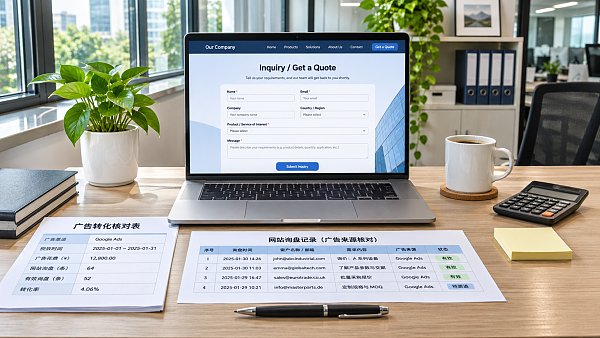
In Google Ads conversion goal settings, check whether actions such as form submissions, phone inquiries, and purchases are still working, and which actions are set as primary conversions and used for bidding. Page views and button clicks can provide useful context, but they should not be grouped indiscriminately with genuine inquiries or orders. Otherwise, the system may optimize for actions that are easy to generate but have no business value.
- Check triggers: Complete a test action and confirm that the corresponding conversion action and event fire correctly. Make sure test data does not affect official reporting.
- Check measurement definitions: Review duplicate submissions, cross-domain redirects, order values, and counting methods. Compare the data with your website backend or sales records to identify obvious omissions and duplicate counts.
- Check attribution and lag: Use the same date range when comparing data, allow for the time it takes conversions to occur after a click, and account for differences in attribution methods across systems.
If form submissions appear normal but the sales team reports few qualified inquiries, also check for spam, duplicate leads, and whether the target market is a good fit. Where possible, import qualified leads or closed sales, and verify data quality before considering these outcomes for bidding optimization.
Next, review where the money is going
Choose a date range that covers a normal business cycle and compare it with a previous period of the same length under similar business conditions. Start by reviewing spend, conversions, cost per conversion, and conversion value by campaign, then break the data down by country or region, device, time of day, and campaign type. When data is limited, extend the observation period to avoid judging a segment ineffective based on just a few conversions.
Look for two main issues: spend concentrated in areas that are not generating the expected conversions, and effective campaigns that are frequently limited by budget. For the first, investigate search terms, audiences, and landing pages rather than pausing everything immediately. For the second, first confirm that conversion quality and costs are acceptable, then consider adjusting the budget. With shared budgets, also check whether campaigns are competing for the same funds.
Impression share and lost impression share due to budget can help indicate whether campaigns are budget-constrained, but they are not sufficient reasons on their own to increase the budget. If conversion tracking is unreliable or the traffic is unsuitable, expanding reach may simply increase waste.
Trace user intent through search terms
For search ads, don’t just review the keyword list; also examine the search terms that are actually visible. Compare high-spend terms with your products, service areas, and the user’s stage in the buying process. Are users looking for procurement services, job listings, free tutorials, or after-sales support for an existing product? Add irrelevant search terms as negative keywords. For relevant terms with substantially different intent, consider adjusting match types, reorganizing ad groups, or creating a dedicated landing page.
Before adding negative keywords, check their match scope to make sure you don’t exclude potential customers. Search terms reports do not show every query, so visible terms should not be treated as a complete picture of traffic. For campaigns with broader reach, also use the platform’s search term insights, ad assets, and conversion data to guide your assessment; don’t simply apply the same troubleshooting approach used for standard search ads.
Getting clicks but no conversions?
First, distinguish between an ad problem and a landing page problem. If impressions are high but clicks are low, check whether the ad copy addresses search needs and whether the keywords align with the ad theme. If clicks are plentiful but the conversion rate is low, check whether the landing page delivers on the ad’s promise—for example, an ad highlights a specific type of equipment, but the page only provides a general company overview.
Open the page on devices commonly used in your target market and test loading, language, product information, forms, and contact details in sequence. Too many form fields, an unresponsive button, or parameters lost after a redirect can all lead to drop-offs. For B2B inquiries, check that the page explains the intended applications, specifications, or delivery options so visitors have enough information to decide whether to get in touch.
A high click-through rate does not necessarily mean the traffic is high quality, and a high conversion rate does not necessarily mean inquiries are qualified. Assess both conversion costs and downstream lead quality. For e-commerce accounts, verify conversion value, order value, and profit margins to avoid focusing solely on the apparent return on ad spend.
Review bids and run experiments only after verifying the data
Check which conversion goals the current bidding strategy uses, and confirm that the target cost or target return aligns with actual business needs. If conversion actions, budgets, or targets have just been changed, allow time for the system to adjust and for data to accumulate. Changing several variables at once makes it difficult to identify what caused subsequent changes.
When testing new ad copy, landing pages, or bidding approaches, record the original settings and key metrics first, then validate the changes through an experiment or another controlled comparison where possible. During the comparison, watch for confounding factors such as promotions, inventory, seasonality, and website redesigns. If conversion volume is insufficient, avoid switching strategies frequently in response to short-term fluctuations. Instead, extend the observation period or focus the analysis on traffic relevance and tracking completeness.
If your business also needs to examine how advertising data connects with financial information, An Exploration of Pathways for the Integrated Development of Enterprise Artificial Intelligence and Accounting Digitalization may serve as a related reference. Account changes should still be guided by actual conversion records, cost definitions, and business objectives.
Related Articles
 How do you measure the overall conversion performance of multilingual overseas advertising?
 How do you evaluate campaign experience when choosing a Meta ads management service?
 Which scenarios are better suited to data-driven advertising than manual ad placement?



Related Products
 Yiyingbao SaaS Intelligent Website Building and Marketing SystemYiyingbao SaaS Intelligent Website Building and Marketing System, AI-powered no-code website building, rapid creation of multilingual B2B international websites in 10 minutes, global server acceleration, AI-powered SEO optimization, helping businesses connect efficiently with global markets. The perfect integration of technology and operation makes building an international trade website remarkably simple
 AI+SEM Intelligent Advertising Marketing SystemAI+SEM drives intelligent ad creation, empowering full-funnel precision advertising marketing. The system automatically generates weekly/monthly reports, AI recommends keywords and target countries, monitors core metrics in real-time with intelligent alerts, and enables one-click high-conversion ad solutions to help quickly acquire customers and improve ROI.
 AI+SEO Dual-Engine System Optimization ServicesYiyingbao’s AI+SEO dual-engine optimization system helps foreign trade enterprises acquire high-quality organic traffic through AI-powered keyword research, content generation, and comprehensive technical optimization, significantly improving search rankings and conversion rates.
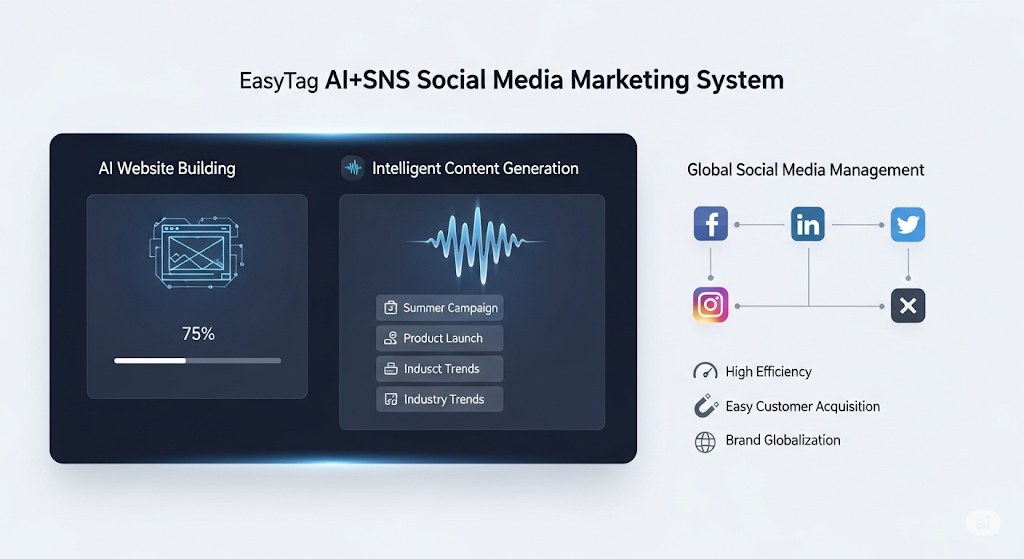
 AI+SNS Social Media Marketing SystemYingbao AI+SNS Social Media Marketing System - Precision social capture for the social media era. Supports one-click content synchronization across major platforms like Facebook and LinkedIn. AI intelligently rewrites posts for enhanced relevance. 24/7 AI customer service and user profiling analysis empower businesses to efficiently expand into global markets.
 AI+SEO营销解决方案易营宝AI+SEO营销解决方案,通过AI批量写作、智能生成TDK、精准关键词扩词等功能,全面优化网站SEO效果,提升流量与转化率。助力企业构建高效智能网站新生态。
 AI+SEM Advertising Marketing SolutionsAI+SEM Advertising Marketing Solution leverages AI technology to deeply empower SEM ad campaigns. It automatically generates weekly/monthly reports using AI, presenting account data across multiple dimensions for comprehensive insights into campaign performance and trends. The system precisely recommends keywords and target countries, intelligently generates high-conversion ad copy, and enables one-click activation of efficient campaign plans to help businesses rapidly acquire customers. Simultaneously, it monitors core metrics in real time, intelligently identifies abnormal fluctuations, and issues timely alerts to ensure stable, high-return advertising results.
 Domain Name ServicesEasyWin provides professional domain name services, including intelligent queries, one-stop registration, brand protection, and full lifecycle management, helping businesses build a digital brand image.
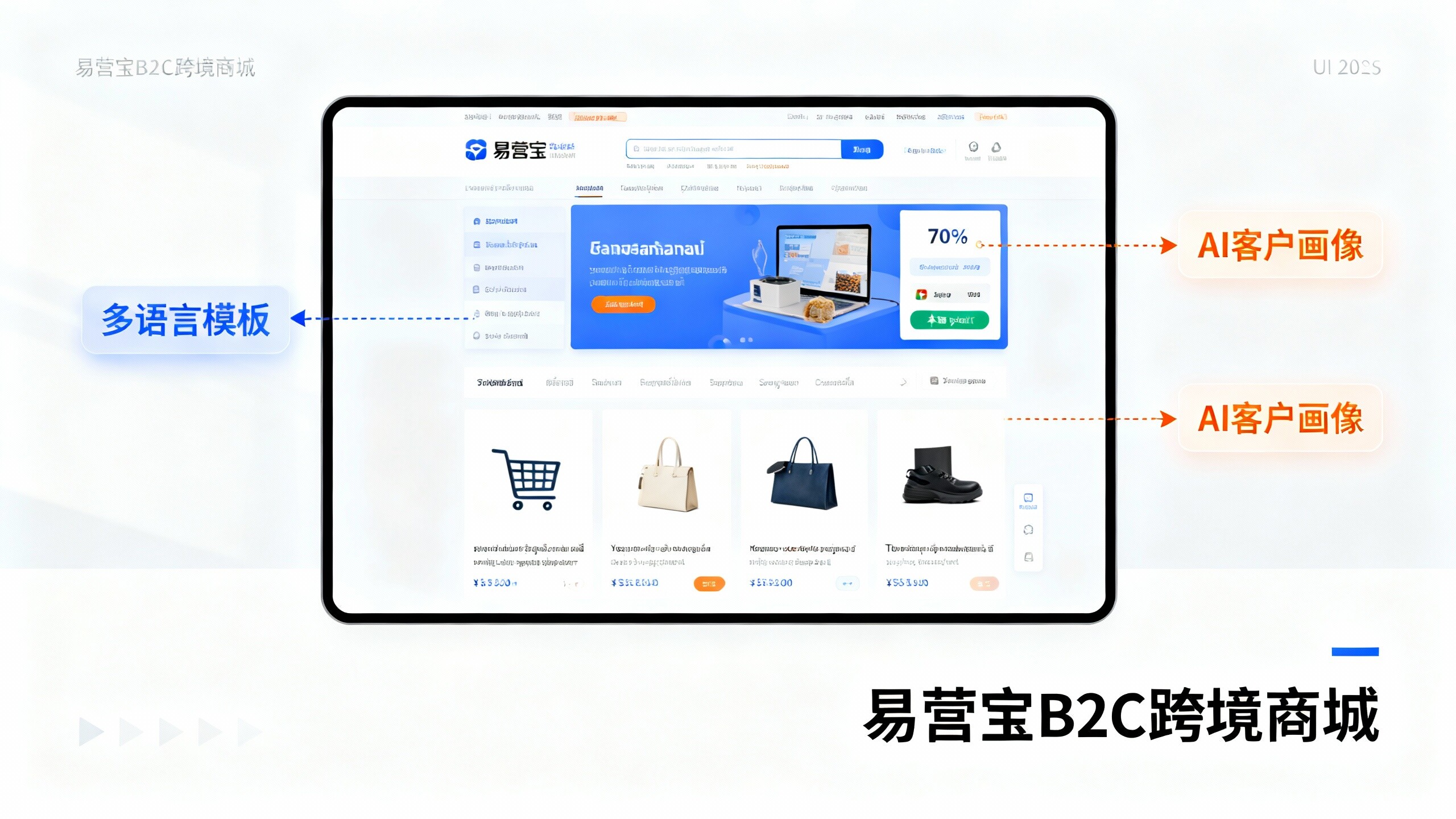
 EasyOperate B2C Cross-Border E-Commerce Platform & Independent WebsiteEasyStore B2C Cross-border E-commerce Independent Store is an intelligent website building and cross-border e-commerce integrated solution independently developed by EasyStore Information Technology (Beijing) Co., Ltd. The system is specially designed for small and medium-sized as well as large export enterprises, integrating 'website building, operation, marketing, advertising, and conversion' into one, helping enterprises quickly establish cross-border e-commerce independent stores to achieve brand globalization and global sales growth.
The platform supports multiple languages, multiple currencies, and multi-channel marketing, with built-in AI intelligent translation and SEO optimization systems, suitable for mainstream markets such as Southeast Asia, Europe and America, Latin America, and the Middle East, assisting Chinese manufacturing enterprises in efficiently deploying international e-commerce strategies. SSL证书易营宝提供专业SSL安全证书服务,包括单域名和泛域名证书,确保网站数据传输加密、身份验证和完整性保护,助力企业建立安全可信的在线业务环境。