









- Can the average annual growth rate reflect real opportunities in overseas markets?Oct 07, 2026View details
- Which customer acquisition channels will be affected by cross-border marketing trends in 2026?Sep 06, 2026View details
- Which homogenization risks should be considered in an analysis of the AI-powered website building industry?Aug 30, 2026View details
- How Will AI Marketing Trends 2026 Change Advertising Budget AllocationAug 28, 2026View details
- Is the EV SSL certificate market shrinking or upgrading? How should companies assess certificate procurement?Aug 11, 2026View details
- Why the old AMP SEO 2020 practices no longer work and what has changed in current optimization prioritiesAug 02, 2026View details
How Much Does It Cost to Build a Multilingual Standalone Website for Cross-Border E-Commerce?
How Much Does It Cost to Build a Multilingual Independent Website for Cross-Border E-Commerce? Don't Focus Only on the “Website Building Quote”
The cost range for building a multilingual independent website for cross-border e-commerce is usually not determined by “how many pages are needed.” It is jointly determined by what you sell, where you sell it, how many languages are required, whether payment and logistics are integrated, and how customers will be acquired afterward. The market offers everything from template sites costing several thousand yuan to customized online stores costing tens of thousands of yuan or even more. Large differences in quotations do not necessarily mean that one party is overpriced; in many cases, the delivery scope is simply completely different.
The real pitfall is completing a seemingly functional website at a low price in the early stage, only to find later that multilingual content cannot be managed, product filters are unsuitable for overseas users, payment is not connected, advertising landing pages cannot be modified, or search engines have indexed only the homepage. For cross-border sellers, an independent website is not an online business card, but a business system that captures traffic, displays products, builds trust, and completes inquiries or transactions.
Common Cost Ranges for Multilingual Independent Websites
For basic brand presentation only, using a mature template, configuring a limited number of products, and supporting one or two languages, website-building costs can generally be controlled between several thousand yuan and ten to twenty thousand yuan. This type of solution is suitable for factories and trading companies that are just beginning to test overseas markets, or businesses that are temporarily focused on generating inquiries. Its advantage is fast launch, but templates offer limited room for adjustment. When complex features need to be added later, system capabilities often need to be reassessed.
For B2C online stores aimed at actual cross-border sales, typical investment often reaches the tens of thousands of yuan range. The reason is not simply that there are more pages, but that product specifications, inventory, orders, promotions, tax displays, payment interfaces, logistics rules, user accounts, and after-sales processes must be handled. If the target markets involve different regions such as Europe, North America, the Middle East, Japan, or South Korea, currencies, language conventions, address formats, and local consumer habits must also be considered. For example, the way sizes and shipping information are commonly presented on English websites cannot simply be copied to Japanese or Arabic websites.
When a project includes multi-country site strategies, in-depth visual design, complex product configurators, membership systems, channel data integration, or the ongoing creation of content pages for advertising and organic search, the overall budget may range from tens of thousands to more than one hundred thousand yuan. The key here is not “how attractive the pages look,” but whether the system can be continuously used by the operations team: whether products can be maintained in batches, language versions can be adjusted independently, campaign pages can be published quickly, and data can be sent back to advertising platforms. All of these affect long-term costs.
The above ranges can only help with an initial assessment and should not be treated directly as the final budget. The same “German website” may simply involve adding an automatically translated version, or it may include localized copy, an independent page structure, product compliance information, and German-market keyword planning. The workloads of the two differ significantly.
Where Do the Main Costs Go? The Number of Languages Is Only a Surface Factor
The most easily underestimated aspect of multilingual websites is content localization. Machine translation can improve first-draft efficiency, but product selling points, size units, material descriptions, after-sales terms, payment prompts, and call-to-action buttons still need to be checked according to the market context. This is especially important for B2B manufacturing companies: if technical parameters, certification descriptions, and application scenarios are translated inaccurately, it will not only affect conversion but may also increase customer communication costs.
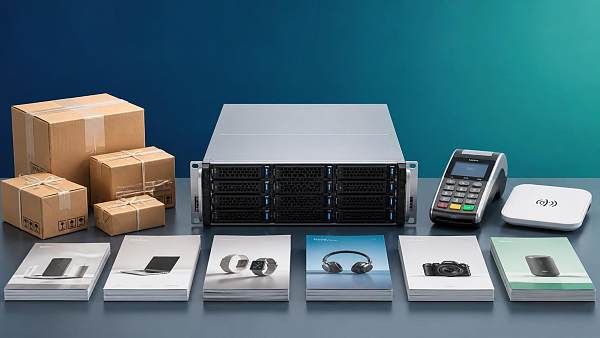
The second item is online store functions and third-party services. Domains, servers, system subscriptions, payment channels, logistics applications, email tools, and data analytics tools are partly ongoing annual expenses and are not all included in the initial website-building quotation. When requesting a quote, clarify: which costs are one-time implementation fees and which are renewed annually; who bears the transaction fees charged by payment service providers; and whether adding languages, products, or country-specific sites in the future will trigger a plan upgrade.
The third item is marketing infrastructure. A website that can be promoted should at least consider page loading speed, mobile experience, search engine crawling rules, sitemaps, relationship settings between language versions, conversion-event tracking, and the scalability of advertising landing pages. If you plan to run Google SEO, Google Ads, or social media ads, this foundational work is best completed during the website-building stage. Reworking it after advertising begins is often more expensive than planning it from the outset.
FAQ: If We Build Four Languages, Will the Cost Be Four Times Higher?
Not necessarily. The website framework, online store system, product data, and basic design can be reused, so additional languages are usually not priced entirely at the same rate as the first language site. However, costs will increase significantly if each market requires independent homepage content, different product combinations, different currencies, and marketing campaigns. A more reasonable approach is to first distinguish between “translated versions” and “independent market versions.” The former is suitable for validating demand, while the latter is suitable for brands that already have stable orders and clear regional strategies.
FAQ: Template Sites Are Cheaper, So Why Choose Custom Development?
Templates themselves are not the issue; the issue is whether a template suits the business. For consumer goods with standardized products, a limited number of SKUs, and high-quality product images, a template-based store can fully deliver results in the first stage. Conversely, for industrial equipment, custom furniture, complex components, or products requiring tiered quotations, customers care more about parameter filtering, document downloads, inquiry forms, and project case studies. Applying a typical retail template may instead make the purchasing process awkward.
The value of customization does not lie in visual “uniqueness,” but in streamlining key paths: after customers arrive through search or advertising, can they quickly find the relevant products? Can they submit models, purchase quantities, and application requirements when making an inquiry? Can the sales team obtain sufficiently complete information from the backend? If these requirements are not complex, there is no need to purchase heavily customized development from the beginning.
FAQ: Should Website-Building Costs Include SEO and Advertising?
Website building and long-term operations can be quoted separately, but it is not advisable to separate them completely. SEO is not as simple as adding a few articles after launch. Website architecture, category pages, product page titles, internal-link logic, and relationships between multilingual pages all affect the room available for future optimization. Advertising is similar: without clear landing pages and data tracking, even a high advertising budget may result only in traffic whose quality cannot be assessed.
Taking a platform such as Yiyingbao, which provides integrated website-building and overseas marketing services, as an example, its cloud intelligent website-building, cross-border online store, AI advertising marketing, and SEO/GEO optimization capabilities enable companies to handle website development, content optimization, and promotional conversion within the same business framework. For companies preparing to operate long-term in markets such as North America, Europe, and Southeast Asia, the value of this collaborative approach lies in reducing repeated data migration between systems, rather than simply purchasing several additional services.
Before Requesting a Quote, Clarify These Five Matters
First, whether the languages include human proofreading and localization revisions; second, which payment, logistics, tax, or email tool integrations are included in the quotation; third, who will maintain products, campaign pages, and language content after the website goes live; fourth, whether data access, domain access, and website backend access will be delivered; and fifth, how future additions of country-specific sites, functional modules, or marketing pages will be charged.
There is no standard answer detached from business needs to the question of how much it costs to build a multilingual independent website for cross-border e-commerce. When the budget is limited, it is better to first solidify the language, payment, product pages, and conversion path for one core market, and then expand step by step. When the budget is sufficient, funds should also be prioritized for system capabilities that support sustainable operations and localized market content, rather than spending most of the investment on decorative features that are most eye-catching on launch day but least likely to generate orders.
Related Articles


Related Products
 Yiyingbao SaaS Intelligent Website Building and Marketing SystemYiyingbao SaaS Intelligent Website Building and Marketing System, AI-powered no-code website building, rapid creation of multilingual B2B international websites in 10 minutes, global server acceleration, AI-powered SEO optimization, helping businesses connect efficiently with global markets. The perfect integration of technology and operation makes building an international trade website remarkably simple
 AI+SEM Intelligent Advertising Marketing SystemAI+SEM drives intelligent ad creation, empowering full-funnel precision advertising marketing. The system automatically generates weekly/monthly reports, AI recommends keywords and target countries, monitors core metrics in real-time with intelligent alerts, and enables one-click high-conversion ad solutions to help quickly acquire customers and improve ROI.
 AI+SEO Dual-Engine System Optimization ServicesYiyingbao’s AI+SEO dual-engine optimization system helps foreign trade enterprises acquire high-quality organic traffic through AI-powered keyword research, content generation, and comprehensive technical optimization, significantly improving search rankings and conversion rates.
 AI+SNS Social Media Marketing SystemYingbao AI+SNS Social Media Marketing System - Precision social capture for the social media era. Supports one-click content synchronization across major platforms like Facebook and LinkedIn. AI intelligently rewrites posts for enhanced relevance. 24/7 AI customer service and user profiling analysis empower businesses to efficiently expand into global markets.
 AI+SEO营销解决方案易营宝AI+SEO营销解决方案,通过AI批量写作、智能生成TDK、精准关键词扩词等功能,全面优化网站SEO效果,提升流量与转化率。助力企业构建高效智能网站新生态。
 AI+SEM Advertising Marketing SolutionsAI+SEM Advertising Marketing Solution leverages AI technology to deeply empower SEM ad campaigns. It automatically generates weekly/monthly reports using AI, presenting account data across multiple dimensions for comprehensive insights into campaign performance and trends. The system precisely recommends keywords and target countries, intelligently generates high-conversion ad copy, and enables one-click activation of efficient campaign plans to help businesses rapidly acquire customers. Simultaneously, it monitors core metrics in real time, intelligently identifies abnormal fluctuations, and issues timely alerts to ensure stable, high-return advertising results.
 Domain Name ServicesEasyWin provides professional domain name services, including intelligent queries, one-stop registration, brand protection, and full lifecycle management, helping businesses build a digital brand image.
 EasyOperate B2C Cross-Border E-Commerce Platform & Independent WebsiteEasyStore B2C Cross-border E-commerce Independent Store is an intelligent website building and cross-border e-commerce integrated solution independently developed by EasyStore Information Technology (Beijing) Co., Ltd. The system is specially designed for small and medium-sized as well as large export enterprises, integrating 'website building, operation, marketing, advertising, and conversion' into one, helping enterprises quickly establish cross-border e-commerce independent stores to achieve brand globalization and global sales growth.
The platform supports multiple languages, multiple currencies, and multi-channel marketing, with built-in AI intelligent translation and SEO optimization systems, suitable for mainstream markets such as Southeast Asia, Europe and America, Latin America, and the Middle East, assisting Chinese manufacturing enterprises in efficiently deploying international e-commerce strategies. SSL证书易营宝提供专业SSL安全证书服务,包括单域名和泛域名证书,确保网站数据传输加密、身份验证和完整性保护,助力企业建立安全可信的在线业务环境。









