









- Hapag-Lloyd’s $4.2 billion acquisition of ZIM faces a closing delay; ZIM reports third-quarter net profit of $830 millionNov 24, 2026View details
- SCFI falls for a third straight week to 3,503.78 points, with blank sailings on trans-Pacific routes rising to 10Nov 24, 2026View details
- Lazada 11.11 Mega Sale: LazMall Contributes Nearly Two-Thirds of GMVNov 23, 2026View details
- Shein’s European Revenue Falls 16% as Tighter Rules on Low-Value Direct Shipments Take EffectNov 23, 2026View details
- EU Low-Value Parcel Rules Impact Cargo Flows: Air Freight Volume from China to Europe Down 17% in OctoberNov 23, 2026View details
- Indonesia and the EU Sign Comprehensive Economic Partnership Agreement, 90.4% of Tariff Lines to Become Duty-Free ImmediatelyNov 23, 2026View details
How Long Should It Take to Launch Foreign Trade Website Content Without Affecting Promotion?
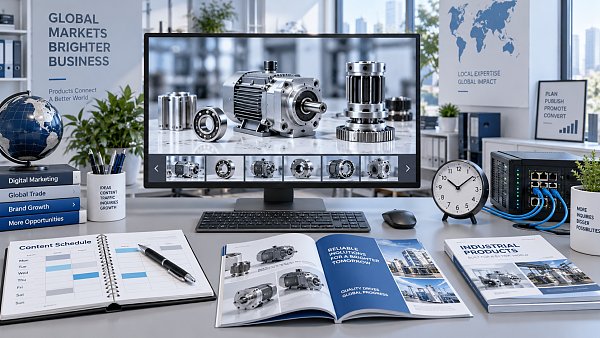
How long does it generally take for foreign trade website content to go live? You cannot judge it solely by “when the pages are finished.” If the website is intended to receive Google Ads, organic SEO traffic, or visits from social media landing pages, a more reliable arrangement is to complete and review the core content before the technical launch of the website, and publish the first batch of promotable pages together with the basic configurations. The remaining sections can be added in stages, but they must not delay product pages, solution pages, inquiry pages, and key landing pages.
The actual timeline is usually determined by content readiness rather than the website-building tool itself. For projects with complete materials, clearly defined language versions, and a short approval process, core content can be completed within a relatively short period. When product materials are scattered, selling points have not yet been unified, multilingual localization is required, or reviews involve multiple departments, content often becomes the main variable affecting the overall schedule. Promotion does not need to wait until every page is “perfect,” but at launch, there must be a minimum viable content loop that can be accessed, understood, and converted.
First, distinguish between “the website is accessible” and “promotion can begin”
Completing domain resolution and having pages open only means that the website meets the conditions for access. Being ready for promotion means that, after entering a page, visitors can quickly understand what the company does, whether the products are a fit, how to get in touch, and what action to take next.
For B2B foreign trade websites, the initial content released should at least include: the homepage, core product or product category pages, application or industry solution pages, pages explaining company capabilities and qualifications, contact/inquiry pages, and basic pages such as a privacy policy. If the site is to receive advertising traffic, corresponding landing pages should also be prepared based on campaign themes, rather than directing all ad traffic to a homepage with overly broad information.
Therefore, how long foreign trade website content should take to go live without affecting promotion does not mean waiting for all content to be written. It means ensuring that the first pages receiving traffic meet usability standards. Treating “completion of the entire website” as the only launch condition often means missing scheduled trade shows, promotional seasons, or advertising test windows. Conversely, rushing into campaigns before content is ready can waste budget and lead to incorrect judgments about channel performance.
What most often slows progress is not copywriting, but content decisions
Many projects initially assume that they only need to organize a company profile and product specifications. Once page production begins, however, they discover that product naming is inconsistent, image authorization is unclear, different departments disagree on which products to prioritize in the target market, and the English materials cannot be used directly. Unless these issues are resolved, even quickly written copy will require repeated revisions.
Especially for manufacturing or non-standard products, content cannot simply copy a specification sheet. Overseas buyers typically also focus on application scenarios, material or process ranges, available customization capabilities, delivery coordination methods, and contact channels. A website should organize into page content the questions that sales teams repeatedly explain in emails or inquiries, rather than simply moving a product catalog online.
Multilingual projects also require dedicated time. Translation is only the first step; more importantly, units, terminology, case-study wording, contact details, and call-to-action buttons must align with the reading habits of the target market. Expanding into several minor languages before the English version is confirmed often multiplies review and revision work. A more reasonable approach is to first determine one primary language version and the initial target markets, then expand language sites according to promotion priorities.
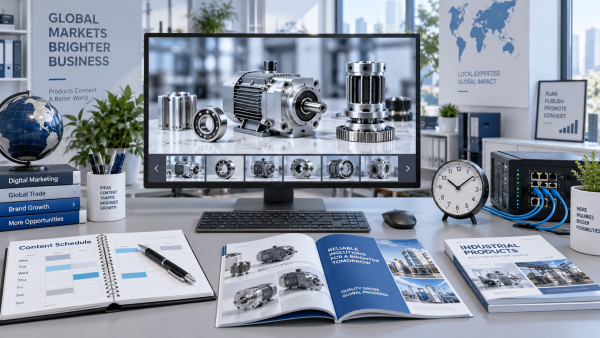
A content schedule that does not affect promotion should be organized around traffic entry points
Content scheduling should not follow the internal habit of “finish the company introduction first, then write about products.” Instead, it should first consider where future traffic will come from. Visitors from ads, organic search, and social media enter through different pages and therefore have different content requirements.
- Preparing search ads: Prioritize product pages or dedicated landing pages corresponding to advertising keywords. Page titles, core selling points, forms, and contact information should be consistent. If an ad promises “customization capability” but the landing page provides no corresponding explanation, clicks do not necessarily mean effective visits.
- Preparing for SEO: First ensure that the category hierarchy, core product pages, URLs, title descriptions, internal links, and sitemap are usable. Articles can be updated continuously, but core pages should not remain empty for long periods or have their addresses changed frequently.
- Preparing for social media traffic generation: Prioritize completing the brand introduction, key products, visual materials, and mobile inquiry path. Social media users usually have a short dwell time, so the page needs to clearly communicate value and the next action within limited space.
- Preparing for trade shows or offline visits: Prioritize product collection pages, downloadable material pages, or appointment forms that sales staff can send directly, making it easier to receive visits quickly after offline communications.
A practical approach is to divide pages into Categories A, B, and C: Category A consists of pages essential for the first round of promotion and must be completed before launch; Category B consists of content that supports conversion and can be continuously improved during the first promotion cycle; Category C includes long-tail topics, news, and additional language pages, which can be included in subsequent content plans. This way, even if all materials have not yet been collected, the team can clearly identify which gaps will directly affect promotion and which can be addressed later.
Four content milestones to lock in before launch
First, lock in the product scope. First determine the initial priority products, model classifications, and target industries. It is not necessary to display every product at the beginning, but the content that is displayed must be accurate to avoid inquiries that the sales team cannot actually handle.
Second, lock in information sources. Assign a person responsible for the materials of each core page, including specifications, images, certificates, application descriptions, and frequently asked questions. Without fixed sources, later updates can easily result in inconsistent wording across different pages.
Third, lock in review boundaries. What needs to be confirmed is factual accuracy, brand messaging, market-restricted wording, and contact details. There is no need for multiple people to discuss every sentence word by word. An overly broad review scope will cause minor changes to repeatedly block publication.
Fourth, lock in conversion actions. Every page should have a clear purpose, such as submitting an inquiry, requesting a quotation, scheduling a consultation, or downloading a catalog. Form fields, email routing, the language of automated replies, and the sales response mechanism should all be tested before promotion; otherwise, visits generated by content cannot be converted into leads.
Do not wait until content is “fully complete” before implementing SEO configurations
The foundational SEO work should be completed in parallel with content publication. When core pages are published, they should already have clear page titles, descriptions, canonical links, readable URLs, image alt text, and internal linking relationships. After the website is made publicly accessible, submit the sitemap promptly and check for settings that may mistakenly block indexing. Waiting until many pages have accumulated before handling these tasks often increases redesign and troubleshooting costs.
However, SEO does not mean publishing a large volume of generic articles. For a new foreign trade website, clearly explaining product pages is more valuable than quickly producing a batch of content with weak relevance to the business. Content expansion should focus on questions buyers will search for and compare, such as product application scope, selection differences, customization conditions, packaging and shipping, or delivery coordination, rather than merely repeating corporate promotional language.
Integrated collaboration can reduce “rework after launch”
When website development, SEO, advertising, and social media are handled by separate teams, a common issue is that the website is completed according to display logic, only to discover after campaigns begin that there are no matching landing pages. Once SEO starts, the category hierarchy and link structure may also prove unsuitable for expansion. When selecting services that cover website development and marketing collaboration capabilities, focus on whether content, pages, and promotion configurations can be coordinated within the same rhythm, rather than simply comparing the number of website pages.
For example, Yiyingbao provides intelligent website building, multilingual websites, SEO, advertising, and social media marketing services for foreign trade companies. For projects that need to launch overseas promotion quickly, it is more appropriate to define the initial promotion markets, priority pages, and content owners during the website-building stage, and include advertising landing pages, core product pages, and indexing fundamentals in the launch checklist, rather than reorganizing them after the website is published.
Ultimately, whether promotion is affected is determined not by the number of content pages, but by whether the core visitor path is complete: users can find the target page, understand the products and cooperation terms, and are willing to leave their information, while the team can promptly follow up on leads. Launching and stabilizing this path first, then expanding content gradually, is usually more aligned with the actual pace of promotion than waiting for a full-site version that is always “just a little short.”
Related Articles
 Amazon Canada to Introduce Automatic Refunds Without Returns for Low-Priced Items Starting November 23
 Are Your Export Website Conversion Tracking Data Inaccurate? Troubleshoot Form Submissions and Duplicate Counts
 Does a Slow-Loading Mobile Website Affect Ad Conversions?


Related Products
 Yiyingbao SaaS Intelligent Website Building and Marketing SystemYiyingbao SaaS Intelligent Website Building and Marketing System, AI-powered no-code website building, rapid creation of multilingual B2B international websites in 10 minutes, global server acceleration, AI-powered SEO optimization, helping businesses connect efficiently with global markets. The perfect integration of technology and operation makes building an international trade website remarkably simple
 AI+SEM Intelligent Advertising Marketing SystemAI+SEM drives intelligent ad creation, empowering full-funnel precision advertising marketing. The system automatically generates weekly/monthly reports, AI recommends keywords and target countries, monitors core metrics in real-time with intelligent alerts, and enables one-click high-conversion ad solutions to help quickly acquire customers and improve ROI.
 AI+SEO Dual-Engine System Optimization ServicesYiyingbao’s AI+SEO dual-engine optimization system helps foreign trade enterprises acquire high-quality organic traffic through AI-powered keyword research, content generation, and comprehensive technical optimization, significantly improving search rankings and conversion rates.
 AI+SNS Social Media Marketing SystemYingbao AI+SNS Social Media Marketing System - Precision social capture for the social media era. Supports one-click content synchronization across major platforms like Facebook and LinkedIn. AI intelligently rewrites posts for enhanced relevance. 24/7 AI customer service and user profiling analysis empower businesses to efficiently expand into global markets.
 AI+SEO营销解决方案易营宝AI+SEO营销解决方案,通过AI批量写作、智能生成TDK、精准关键词扩词等功能,全面优化网站SEO效果,提升流量与转化率。助力企业构建高效智能网站新生态。
 AI+SEM Advertising Marketing SolutionsAI+SEM Advertising Marketing Solution leverages AI technology to deeply empower SEM ad campaigns. It automatically generates weekly/monthly reports using AI, presenting account data across multiple dimensions for comprehensive insights into campaign performance and trends. The system precisely recommends keywords and target countries, intelligently generates high-conversion ad copy, and enables one-click activation of efficient campaign plans to help businesses rapidly acquire customers. Simultaneously, it monitors core metrics in real time, intelligently identifies abnormal fluctuations, and issues timely alerts to ensure stable, high-return advertising results.
 Domain Name ServicesEasyWin provides professional domain name services, including intelligent queries, one-stop registration, brand protection, and full lifecycle management, helping businesses build a digital brand image.
 EasyOperate B2C Cross-Border E-Commerce Platform & Independent WebsiteEasyStore B2C Cross-border E-commerce Independent Store is an intelligent website building and cross-border e-commerce integrated solution independently developed by EasyStore Information Technology (Beijing) Co., Ltd. The system is specially designed for small and medium-sized as well as large export enterprises, integrating 'website building, operation, marketing, advertising, and conversion' into one, helping enterprises quickly establish cross-border e-commerce independent stores to achieve brand globalization and global sales growth.
The platform supports multiple languages, multiple currencies, and multi-channel marketing, with built-in AI intelligent translation and SEO optimization systems, suitable for mainstream markets such as Southeast Asia, Europe and America, Latin America, and the Middle East, assisting Chinese manufacturing enterprises in efficiently deploying international e-commerce strategies. SSL证书易营宝提供专业SSL安全证书服务,包括单域名和泛域名证书,确保网站数据传输加密、身份验证和完整性保护,助力企业建立安全可信的在线业务环境。









