









- Lazada 11.11 Mega Sale: LazMall Contributes Nearly Two-Thirds of GMVNov 23, 2026View details
- Shein’s European Revenue Falls 16% as Tighter Rules on Low-Value Direct Shipments Take EffectNov 23, 2026View details
- EU Low-Value Parcel Rules Impact Cargo Flows: Air Freight Volume from China to Europe Down 17% in OctoberNov 23, 2026View details
- Indonesia and the EU Sign Comprehensive Economic Partnership Agreement, 90.4% of Tariff Lines to Become Duty-Free ImmediatelyNov 23, 2026View details
- Qingdao Port's Imports and Exports Exceed RMB 23.699 Trillion in the First 10 Months, Drawing Attention to Port IntelligenceNov 22, 2026View details
- Ningbo Cross-Border E-Commerce Export Value Surges 94.87% Year on Year, Opening Up a New Billion-Yuan Growth TrackNov 22, 2026View details
EU Low-Value Parcel Rules Impact Cargo Flows: Air Freight Volume from China to Europe Down 17% in October
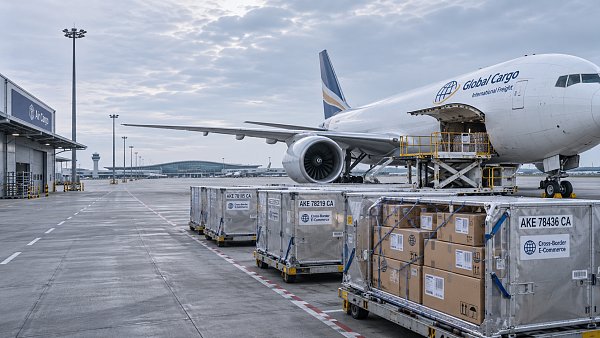
In October 2026, the impact of the EU’s new rules on low-value parcels began to emerge in air cargo flows between Asia and Europe. Data show that air cargo tonnage from mainland China to Europe fell 8% year over year, while tonnage from Hong Kong to Europe fell 32%, bringing the combined decline to 17%. Tighter taxes and fees on low-value direct shipments are changing the transportation costs and fulfillment arrangements for cross-border e-commerce goods.
The difference in the declines across these two cargo flows is a notable detail in the data. The decline from Hong Kong to Europe was significantly greater than that from mainland China to Europe. However, the available data reflect changes in total air cargo tonnage from the two locations to Europe; they do not separately report the volume of low-value parcels, nor can they show on their own whether goods shifted to other origins or modes of transport.
Even so, the decline in combined tonnage from the two locations provides a direct signal of cross-border logistics adjustments under the new rules. As taxes and fees on low-value direct shipments tighten, sellers need to recalculate the total cost of each order from dispatch to delivery, while carriers and logistics providers need to monitor how changes in cargo volumes affect capacity planning.
What the Decline in Tonnage Shows
Air cargo tonnage measures the weight of goods transported. It is not equivalent to the number of parcels and does not directly represent cross-border e-commerce order volumes or sales. The same percentage change in tonnage may correspond to different changes in cargo mix and order volumes. The October data therefore show that air cargo volumes declined, but they cannot be used to calculate how much the number of low-value parcel orders fell.
Year-over-year data also need to be viewed alongside subsequent developments. A monthly decline can reflect the state of cargo flows at the time, but cannot on its own prove that the decline will continue or that the relevant cargo volumes have shifted permanently. For air cargo service providers, more useful indicators to track are whether tonnage from the two locations to Europe continues to change and whether the gap between the two origins widens or narrows.
How Changes in Taxes and Fees Affect Logistics and Fulfillment
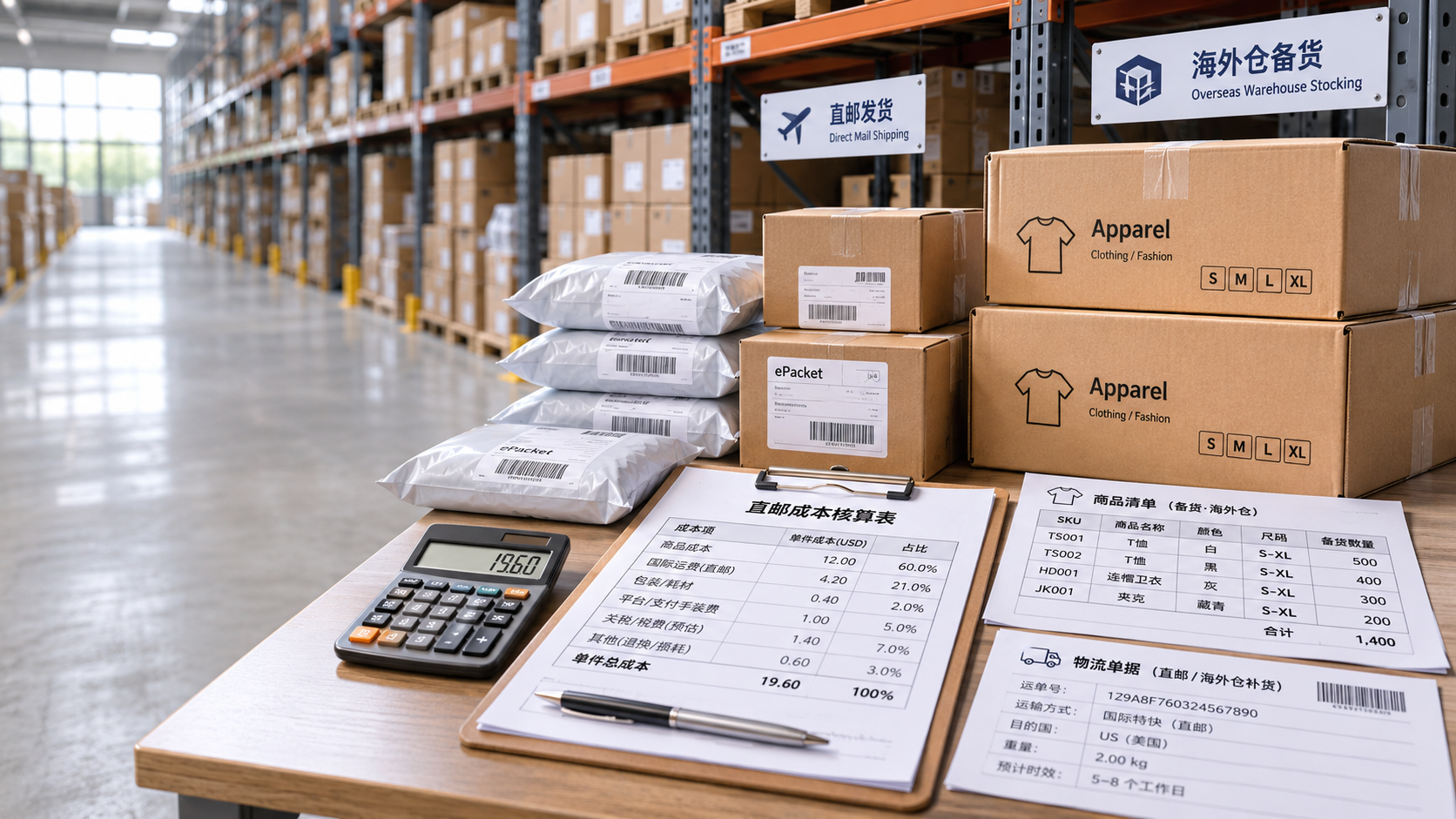
Tighter taxes and fees on low-value direct shipments first affect the cost calculation for each shipment. For cross-border e-commerce sellers that rely on direct shipping for delivery, taxes and fees associated with each order need to be included in the overall calculation, in addition to transportation costs. Changes in costs affect product pricing and order margins, and can further influence sellers’ choices of shipping method and delivery speed.
This does not mean that all sellers’ costs will rise by the same amount. Product prices, order composition, and fulfillment arrangements vary, so the impact of the same rule change may differ from one order to another. If the additional cost accounts for a relatively large share of the product’s selling price, sellers may be more sensitive to transportation costs and fulfillment methods.
Logistics providers face a different set of considerations. A decline in cargo volumes may affect the utilization of existing capacity and could also change the demand for organizing shipments across different origins. If these changes persist, carriers and logistics providers may need to adjust capacity in line with actual cargo volumes. If volumes fluctuate only in the short term, the scope and duration of any adjustments may differ.
For sellers and logistics providers, costs and delivery times need to be considered together. A lower-cost fulfillment arrangement may not meet the delivery requirements of every order, while faster transportation requires sufficient room in the cost structure. The current data do not show that sellers have broadly shifted to any particular option, but they do indicate that the previous cost-and-delivery-time balance for low-value direct shipments is being reassessed.
Monitoring Actual Changes in Cargo Volumes and Costs
Going forward, in addition to tracking air cargo tonnage from mainland China and Hong Kong to Europe, it will be useful to monitor whether cargo volumes related to low-value parcels show a similar trend. If future data distinguish between types of goods, they will help provide a clearer picture of the new rules’ impact on low-value direct shipments.
Another point to watch is how changes in taxes and fees are reflected in actual fulfillment costs. The costs ultimately borne by sellers, and the effects of those costs on pricing, shipping arrangements, and delivery times, will continue to depend on the specific order and fulfillment method. What can be confirmed at this stage is that air cargo tonnage on relevant Asia–Europe routes declined in October. The extent to which this change will persist and affect cross-border e-commerce operations remains to be seen in light of subsequent cargo volumes and how the rules are implemented.
Related Articles
 Lazada 11.11 Mega Sale: LazMall Contributes Nearly Two-Thirds of GMV
 Shein’s European Revenue Falls 16% as Tighter Rules on Low-Value Direct Shipments Take Effect
 EU Low-Value Parcel Rules Impact Cargo Flows: Air Freight Volume from China to Europe Down 17% in October

Related Products
 Yiyingbao SaaS Intelligent Website Building and Marketing SystemYiyingbao SaaS Intelligent Website Building and Marketing System, AI-powered no-code website building, rapid creation of multilingual B2B international websites in 10 minutes, global server acceleration, AI-powered SEO optimization, helping businesses connect efficiently with global markets. The perfect integration of technology and operation makes building an international trade website remarkably simple
 AI+SEM Intelligent Advertising Marketing SystemAI+SEM drives intelligent ad creation, empowering full-funnel precision advertising marketing. The system automatically generates weekly/monthly reports, AI recommends keywords and target countries, monitors core metrics in real-time with intelligent alerts, and enables one-click high-conversion ad solutions to help quickly acquire customers and improve ROI.
 AI+SEO Dual-Engine System Optimization ServicesYiyingbao’s AI+SEO dual-engine optimization system helps foreign trade enterprises acquire high-quality organic traffic through AI-powered keyword research, content generation, and comprehensive technical optimization, significantly improving search rankings and conversion rates.
 AI+SNS Social Media Marketing SystemYingbao AI+SNS Social Media Marketing System - Precision social capture for the social media era. Supports one-click content synchronization across major platforms like Facebook and LinkedIn. AI intelligently rewrites posts for enhanced relevance. 24/7 AI customer service and user profiling analysis empower businesses to efficiently expand into global markets.
 AI+SEO营销解决方案易营宝AI+SEO营销解决方案,通过AI批量写作、智能生成TDK、精准关键词扩词等功能,全面优化网站SEO效果,提升流量与转化率。助力企业构建高效智能网站新生态。
 AI+SEM Advertising Marketing SolutionsAI+SEM Advertising Marketing Solution leverages AI technology to deeply empower SEM ad campaigns. It automatically generates weekly/monthly reports using AI, presenting account data across multiple dimensions for comprehensive insights into campaign performance and trends. The system precisely recommends keywords and target countries, intelligently generates high-conversion ad copy, and enables one-click activation of efficient campaign plans to help businesses rapidly acquire customers. Simultaneously, it monitors core metrics in real time, intelligently identifies abnormal fluctuations, and issues timely alerts to ensure stable, high-return advertising results.
 Domain Name ServicesEasyWin provides professional domain name services, including intelligent queries, one-stop registration, brand protection, and full lifecycle management, helping businesses build a digital brand image.
 EasyOperate B2C Cross-Border E-Commerce Platform & Independent WebsiteEasyStore B2C Cross-border E-commerce Independent Store is an intelligent website building and cross-border e-commerce integrated solution independently developed by EasyStore Information Technology (Beijing) Co., Ltd. The system is specially designed for small and medium-sized as well as large export enterprises, integrating 'website building, operation, marketing, advertising, and conversion' into one, helping enterprises quickly establish cross-border e-commerce independent stores to achieve brand globalization and global sales growth.
The platform supports multiple languages, multiple currencies, and multi-channel marketing, with built-in AI intelligent translation and SEO optimization systems, suitable for mainstream markets such as Southeast Asia, Europe and America, Latin America, and the Middle East, assisting Chinese manufacturing enterprises in efficiently deploying international e-commerce strategies. SSL证书易营宝提供专业SSL安全证书服务,包括单域名和泛域名证书,确保网站数据传输加密、身份验证和完整性保护,助力企业建立安全可信的在线业务环境。









