









- Qingdao Port's Imports and Exports Exceed RMB 23.699 Trillion in the First 10 Months, Drawing Attention to Port IntelligenceNov 22, 2026View details
- Ningbo Cross-Border E-Commerce Export Value Surges 94.87% Year on Year, Opening Up a New Billion-Yuan Growth TrackNov 22, 2026View details
- AliExpress Global Double 11: Brand Sales Grow Nearly 50% in the First Week, U.S. GMV Rises 70%Nov 21, 2026View details
- Ministry of Commerce Reports E-commerce Development from January to October 2026, with Cross-Border Imports Performing StronglyNov 21, 2026View details
- Amazon Black Friday Orders Sluggish on Day One; NRF Forecasts 4.2 Million Fewer ParticipantsNov 21, 2026View details
- 21st Century Business Herald: AI and CTV Become Core Growth Engines for Digital Marketing in Overseas MarketsNov 18, 2026View details
Qingdao Port's Imports and Exports Exceed RMB 23.699 Trillion in the First 10 Months, Drawing Attention to Port Intelligence
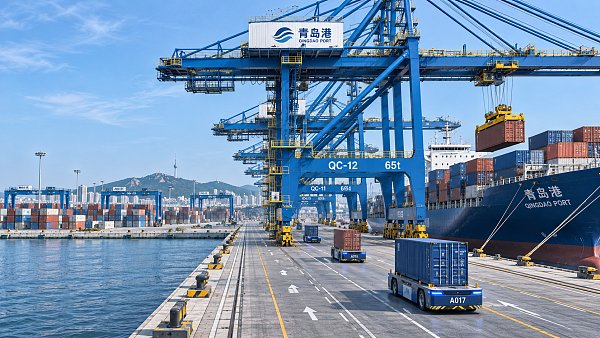
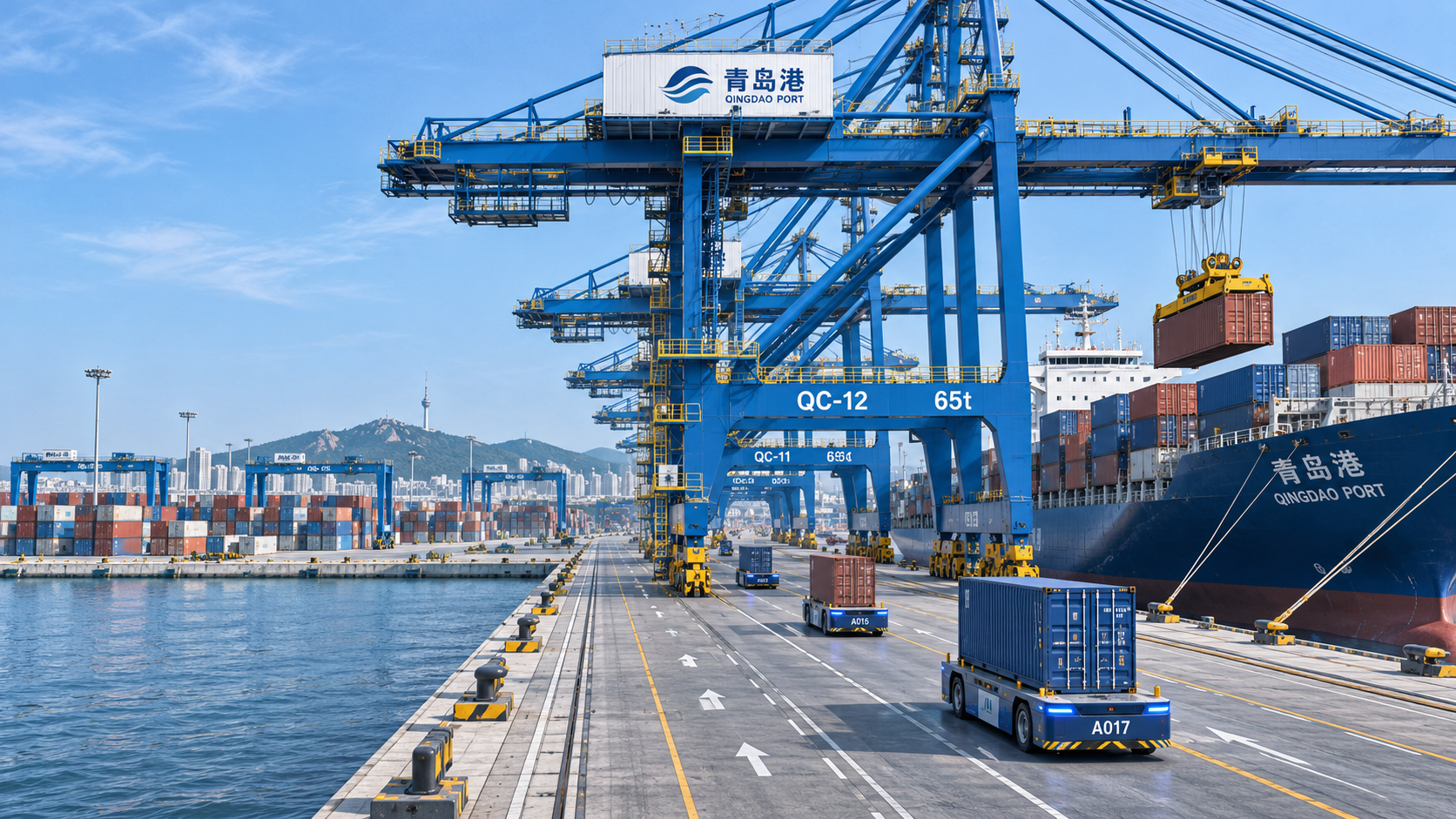
According to CCTV.com, from January to October this year, the value of imports and exports through Qingdao Port exceeded RMB 2,369.9 billion, up 8.8% year over year. At the same time, technology is accelerating the transformation and upgrading of port development, with automated and intelligent equipment being widely adopted. Growth in foreign trade value and port technology upgrades have both attracted attention, offering two interrelated perspectives on the operation of port supply chains.
Import and export value refers to the total value of goods imported and exported through a port during a given period. Year-over-year growth of 8.8% indicates that the value during this statistical period was higher than in the same period of the previous year. However, changes in value are affected by multiple factors, including the volume of goods, prices, and product mix. This indicator alone cannot establish that cargo volume or port operating efficiency increased by the same percentage.
For foreign trade companies and logistics service providers that rely on port transportation, the news is notable not only for the value of trade, but also for whether port technology can support more reliable cargo delivery. The scope of equipment deployment, coordination between different operational stages, and the actual performance of cargo flows all affect the extent to which technology investments can bring improvements.
How Automation Equipment Affects Cargo Flows
Port operations involve cargo loading and unloading, on-site transfers, and the communication of related information. With the wider use of automated and intelligent equipment, the potential impact may first be seen in operational execution and coordination: more stable equipment performance and more timely information transmission can help reduce unnecessary waiting between stages and make cargo flows more orderly.
However, the use of equipment does not in itself mean that efficiency will improve across the entire logistics chain. A shipment typically requires coordination across multiple stages, from entering the port operating process to onward transportation. Even if capacity improves at one stage, the benefits may be limited if coordination with preceding and subsequent stages is inadequate. Therefore, assessing the actual results of port digitalization requires looking beyond whether equipment has been deployed to whether the relevant processes can operate in a coordinated manner.
For cargo owners, the more immediate question is whether cargo handoffs and transportation arrangements have become easier to predict. For logistics service providers, it is whether they can plan transportation and allocate resources based on port operations. If equipment and information systems can continuously improve operational stability, these stages may benefit, but the specific results still need to be assessed in light of actual operating conditions.
Trade Value Growth and Technology Upgrades Should Still Be Distinguished
The year-over-year increase in the value of imports and exports through Qingdao Port appeared in the report alongside the widespread use of automated and intelligent port equipment, reflecting changes in foreign trade activity and port infrastructure. However, based on the report alone, the growth in trade value cannot be directly attributed to port technology upgrades, nor can it be used to calculate cost savings from technology investments or changes in customs clearance times.
This distinction is essential to understanding the news. Growth in trade value indicates an increase in monetary terms, while the use of port equipment concerns the infrastructure that supports cargo flows. The two are connected in business operations, but measure different things. To better understand the effects of technology upgrades, it is also necessary to consider port operating efficiency, cargo turnover, and performance across different stages.
From a supply chain perspective, the value of port capacity is not limited to handling more cargo. For companies planning procurement and delivery, the predictability of transit times also affects how feasible their plans are. If coordination in port operations improves, companies may be able to plan onward transportation more accurately; the actual benefits depend on the type of cargo, transportation arrangements, and coordination among the relevant stages.
Going forward, it will be worth monitoring changes in the value of imports and exports through the port, as well as how automated and intelligent equipment performs in actual port operations. Looking at trade volumes together with cargo flows, rather than focusing on a single indicator, can provide a better understanding of the practical role of technology upgrades in foreign trade supply chains.
Related Articles
 Qingdao Port's Imports and Exports Exceed RMB 23.699 Trillion in the First 10 Months, Drawing Attention to Port Intelligence
 Ningbo Cross-Border E-Commerce Export Value Surges 94.87% Year on Year, Opening Up a New Billion-Yuan Growth Track
 AliExpress Global Double 11: Brand Sales Grow Nearly 50% in the First Week, U.S. GMV Rises 70%

Related Products
 Yiyingbao SaaS Intelligent Website Building and Marketing SystemYiyingbao SaaS Intelligent Website Building and Marketing System, AI-powered no-code website building, rapid creation of multilingual B2B international websites in 10 minutes, global server acceleration, AI-powered SEO optimization, helping businesses connect efficiently with global markets. The perfect integration of technology and operation makes building an international trade website remarkably simple
 AI+SEM Intelligent Advertising Marketing SystemAI+SEM drives intelligent ad creation, empowering full-funnel precision advertising marketing. The system automatically generates weekly/monthly reports, AI recommends keywords and target countries, monitors core metrics in real-time with intelligent alerts, and enables one-click high-conversion ad solutions to help quickly acquire customers and improve ROI.
 AI+SEO Dual-Engine System Optimization ServicesYiyingbao’s AI+SEO dual-engine optimization system helps foreign trade enterprises acquire high-quality organic traffic through AI-powered keyword research, content generation, and comprehensive technical optimization, significantly improving search rankings and conversion rates.
 AI+SNS Social Media Marketing SystemYingbao AI+SNS Social Media Marketing System - Precision social capture for the social media era. Supports one-click content synchronization across major platforms like Facebook and LinkedIn. AI intelligently rewrites posts for enhanced relevance. 24/7 AI customer service and user profiling analysis empower businesses to efficiently expand into global markets.
 AI+SEO营销解决方案易营宝AI+SEO营销解决方案,通过AI批量写作、智能生成TDK、精准关键词扩词等功能,全面优化网站SEO效果,提升流量与转化率。助力企业构建高效智能网站新生态。
 AI+SEM Advertising Marketing SolutionsAI+SEM Advertising Marketing Solution leverages AI technology to deeply empower SEM ad campaigns. It automatically generates weekly/monthly reports using AI, presenting account data across multiple dimensions for comprehensive insights into campaign performance and trends. The system precisely recommends keywords and target countries, intelligently generates high-conversion ad copy, and enables one-click activation of efficient campaign plans to help businesses rapidly acquire customers. Simultaneously, it monitors core metrics in real time, intelligently identifies abnormal fluctuations, and issues timely alerts to ensure stable, high-return advertising results.
 Domain Name ServicesEasyWin provides professional domain name services, including intelligent queries, one-stop registration, brand protection, and full lifecycle management, helping businesses build a digital brand image.
 EasyOperate B2C Cross-Border E-Commerce Platform & Independent WebsiteEasyStore B2C Cross-border E-commerce Independent Store is an intelligent website building and cross-border e-commerce integrated solution independently developed by EasyStore Information Technology (Beijing) Co., Ltd. The system is specially designed for small and medium-sized as well as large export enterprises, integrating 'website building, operation, marketing, advertising, and conversion' into one, helping enterprises quickly establish cross-border e-commerce independent stores to achieve brand globalization and global sales growth.
The platform supports multiple languages, multiple currencies, and multi-channel marketing, with built-in AI intelligent translation and SEO optimization systems, suitable for mainstream markets such as Southeast Asia, Europe and America, Latin America, and the Middle East, assisting Chinese manufacturing enterprises in efficiently deploying international e-commerce strategies. SSL证书易营宝提供专业SSL安全证书服务,包括单域名和泛域名证书,确保网站数据传输加密、身份验证和完整性保护,助力企业建立安全可信的在线业务环境。









