









- Can the average annual growth rate reflect real opportunities in overseas markets?Oct 07, 2026View details
- Which customer acquisition channels will be affected by cross-border marketing trends in 2026?Sep 06, 2026View details
- Which homogenization risks should be considered in an analysis of the AI-powered website building industry?Aug 30, 2026View details
- How Will AI Marketing Trends 2026 Change Advertising Budget AllocationAug 28, 2026View details
- Is the EV SSL certificate market shrinking or upgrading? How should companies assess certificate procurement?Aug 11, 2026View details
- Why the old AMP SEO 2020 practices no longer work and what has changed in current optimization prioritiesAug 02, 2026View details
What is the typical conversion rate for overseas lead generation websites in the manufacturing industry?
Don't rush to look for an "industry average"
There is generally no single, universally applicable answer for the conversion rate of overseas lead-generation websites in the manufacturing industry. If "conversion" is defined as submitting an inquiry form, many B2B manufacturing companies use 1% to 3% as an initial reference range; websites with highly targeted traffic, highly standardized products, and mature pages and sales follow-up may exceed this level. Conversely, for websites focused on complex industrial products, high-value projects, non-standard equipment, or multi-role purchasing decisions, a low form conversion rate does not necessarily indicate poor lead-generation efficiency.
What companies should truly focus on is not an isolated percentage, but whether website visitors are close to target buyers, whether they can quickly establish trust, whether they can leave follow-up information at the right time, and whether the sales team can further advance these leads into quotations, samples, factory audits, or orders.
Therefore, people searching for "what is the typical conversion rate for overseas lead-generation websites in manufacturing" are often trying to determine whether a website is merely a showcase or a business infrastructure capable of participating in overseas customer acquisition. The investment approach, measurement methods, and expected outcomes of the two are not the same.
First align the definition: website conversion is not limited to "form submission"
The purchasing journey in manufacturing is usually long. Overseas buyers may first enter a product page through a Google search, then download catalogs, review factory capabilities, and verify certifications before contacting the supplier via WhatsApp, email, or an inquiry form. Some may browse several times and only submit a formal inquiry through their purchasing staff weeks later. If only visits to the "Thank You Page" are counted, the website's actual role can easily be underestimated.
Conversion metrics more suitable for manufacturing websites should generally be divided into at least three levels:
- Micro-conversions: Viewing core product pages, downloading brochures or technical materials, clicking email addresses and phone numbers, initiating online chats, and entering inquiry pages. These actions reflect whether visitors have started seriously evaluating the supplier.
- Lead conversions: Submitting forms, sending emails, WhatsApp inquiries, scheduling meetings, and requesting quotations. These should be further distinguished between general inquiries and information-rich inquiries containing specifications, quantities, destinations, and project timelines.
- Commercial conversions: Sales confirms qualified leads, moves into quotation, obtains sample orders, or generates an initial order or repeat purchase. For high-ticket, long-cycle equipment, this level has greater business significance than web-page percentages.
For example, a website may receive 10,000 visits and 100 inquiries in one month, appearing to have a form conversion rate of 1%. But if 80 of these come from unsupported retail markets, job seekers, or irrelevant regions, there may be very few leads that sales can actually follow up on. In another case, there may be only 2,000 visits and 30 inquiries, but 15 come from buyers with clearly defined industries, target countries, and reasonable purchasing volumes. The latter is usually more worthy of investment.
What factors can cause conversion rates to differ by several times
Traffic sources determine the baseline
Users who enter through high-purchase-intent terms such as "CNC machining supplier" and "industrial valve manufacturer" have completely different levels of intent from users who arrive through general industry news, social media short videos, or broad display ads. The former may not generate large traffic volumes, but are closer to taking purchasing action; the latter are suitable for brand exposure or remarketing, but should not be evaluated using the same conversion-rate target.
Many companies see ads generate large amounts of traffic but find that inquiries do not grow accordingly. The issue may not necessarily be website design; keywords, regions, audience targeting, and product delivery capabilities may also be misaligned. Manufacturing website data should at least be analyzed separately by channels such as organic search, paid search, social media, direct visits, and email campaigns, preferably further segmented by country, language, and product line.
Product complexity lengthens the decision-making cycle
For products such as standard fasteners, packaging materials, and general components, buyers can often quickly assess specifications, MOQ, lead time, and price range, making page conversion relatively easier. Automated production lines, precision equipment, custom molds, and medical- or energy-related components involve drawings, materials, process validation, certifications, installation, and after-sales capabilities. Buyers are unlikely to place an order directly after viewing a single page.
For the latter, the website's task is not to force visitors to "request a quote immediately," but to lower the barrier to the next step of communication: helping buyers understand what the company can do, what it has done, how key parameters are confirmed, how to send drawings, and how long a reply is expected to take. Presenting options such as "Get Technical Advice," "Send RFQ," and "Download Capability Information" alongside a standard contact form is usually more aligned with real-world scenarios than using only "Contact Us."
Without sufficient trust information, traffic is difficult to turn into leads
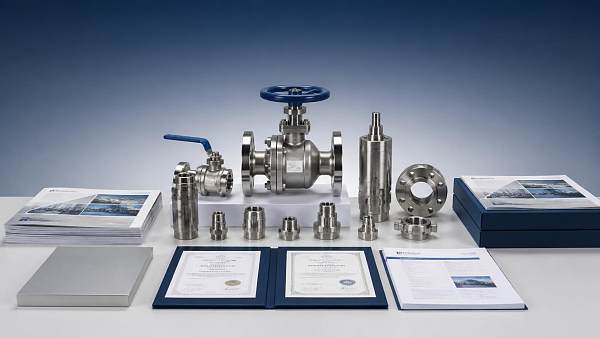
Overseas buyers are not only looking at product images. They are also assessing whether a supplier genuinely exists, has stable delivery capabilities, and understands local-market communication practices. Common issues on manufacturing websites include homepages filled with promotional language while key facts are difficult to find; product pages that provide only model numbers without materials, dimensions, tolerances, processes, or application descriptions; and factory pages with large images but no production capacity, quality inspection process, certification status, or export experience.
Another misconception should be avoided here: more certificates, cases, and data are not always better. Content that cannot be verified, has expired, or is irrelevant to target products may instead increase buyers' concerns. For compliance information involving ISO, CE, RoHS, REACH, FDA, and similar requirements, applicable products, markets, and validity scope should be clearly stated; information that cannot be confirmed should be internally verified before publication.
Before deciding whether a website has "low conversion," conduct four checks
Many companies believe their website conversion rate is low and their first reaction is to redesign the homepage. In practice, the investigation sequence should be closer to the business process.
- Check whether the traffic is right: Whether target countries generate visits, whether search terms relate to core products, processing capabilities, and target industries, whether the proportion of mobile traffic is unusual, and whether there is a large volume of invalid traffic from irrelevant regions.
- Check whether product pages answer purchasing questions: Whether pages clearly state specification ranges, application industries, customization options, MOQ, lead-time logic, quality control, and materials needed for inquiries, rather than only providing product names and a set of images.
- Check whether contact paths are smooth: Form fields should not be too long, nor should they contain only a "message" field. For manufacturing companies, product name, quantity, destination, drawing upload, or attachment descriptions often help sales quickly assess leads, but excessive sensitive information should be avoided at the first contact.
- Check whether sales follow-up is closed-loop: Whether lead sources, initial response times, invalid reasons, quotation results, and reasons for lost opportunities are recorded. Without a CRM or at least a unified lead register, website and sales teams can hardly determine whether the problem occurs at the lead-generation stage or the follow-up stage.
Do not be misled by several common claims
"The higher the conversion rate, the better" is not entirely true. If a large number of submissions are attracted through overly broad promotional messaging, low-threshold free materials, or excessive promises, web metrics may improve, but sales teams may be burdened with low-quality inquiries. Manufacturing companies should focus more on qualified lead rate, quotation rate, and opportunity cost.
"Multilingual means internationalized" is also not true. Machine-translating Chinese content into multiple languages does not automatically improve the trust of buyers in Germany, Japan, or the Middle East. Different markets have different preferences for units of measurement, certifications, delivery terms, case presentation, and communication tools. Multilingual pages should at least prioritize key markets and key products instead of rolling out a large number of unmaintained pages all at once.
"Traffic will generate orders" is equally untrue. SEO, Google Ads, and social media operations can generate visits at different stages, but the website must be able to capture those visits. For integrated website and marketing service projects, website building, content, media placement, data analysis, and sales follow-up should be viewed as continuous stages. Evaluating only one stage often results in attractive partial metrics but unsatisfactory actual orders.
How should companies at different stages set their goals?
Factories just beginning to build overseas independent websites should not first commit to a very high inquiry volume. A more realistic goal is to establish baseline data: whether core product pages are indexed, whether target countries begin generating qualified traffic, whether visitors download materials, click contact options, or enter RFQ pages, and whether forms and emails can be tracked completely.
Companies with stable exports and advertising budgets should focus on channel attribution and lead qualification. For example, which countries' search ads generate real quotations, which product pages bring high-quality inquiries, and which keywords only consume budget without sales value. At this stage, conversion rate can serve as an optimization signal, but it should not be used independently from the cost per qualified lead, sales cycle, and gross margin.
For manufacturing groups with multiple product lines and markets, establishing tiered targets is more important. High-frequency standard products can pursue more direct inquiries and sample requests; complex equipment should track technical material downloads, scheduled consultations, and project-based RFQs; brand-building content should be evaluated by target customer coverage and subsequent remarketing performance. Using the same conversion-rate threshold to assess all businesses will usually mislead resource allocation.
The next step is to assess "optimizable potential"
An overseas lead-generation website worth continuous investment does not necessarily need to have a high conversion rate at launch, but it should offer conditions that can be observed, identified, and iterated: knowing where customers come from, which page they leave from, what type of content generates inquiries, and why sales determines a lead is invalid.
In actual service delivery, platforms such as Yiyingbao that cover intelligent website building, SEO, advertising placement, and multilingual operations should not be valued only for "building a website," but for whether they can bring channel data, page performance, and lead quality into one business perspective. When selecting a provider, companies can focus on asking: where data ownership resides, whether segmentation by market and channel is supported, how leads enter the sales process, who continuously maintains content and media placement, and whether the website and historical data can be migrated and used normally after cooperation ends.
Ultimately, the conversion rate of an overseas lead-generation website for manufacturing is not an attractive figure for comparing performance, but a mirror reflecting whether the lead-generation process is healthy. First confirm the four aspects of traffic, trust, pathways, and sales follow-up, then discuss whether to increase 1% to 2% or 3%. This is closer to actual order growth than asking about the "industry average" from the outset.
Related Articles


Related Products
 Yiyingbao SaaS Intelligent Website Building and Marketing SystemYiyingbao SaaS Intelligent Website Building and Marketing System, AI-powered no-code website building, rapid creation of multilingual B2B international websites in 10 minutes, global server acceleration, AI-powered SEO optimization, helping businesses connect efficiently with global markets. The perfect integration of technology and operation makes building an international trade website remarkably simple
 AI+SEM Intelligent Advertising Marketing SystemAI+SEM drives intelligent ad creation, empowering full-funnel precision advertising marketing. The system automatically generates weekly/monthly reports, AI recommends keywords and target countries, monitors core metrics in real-time with intelligent alerts, and enables one-click high-conversion ad solutions to help quickly acquire customers and improve ROI.
 AI+SEO Dual-Engine System Optimization ServicesYiyingbao’s AI+SEO dual-engine optimization system helps foreign trade enterprises acquire high-quality organic traffic through AI-powered keyword research, content generation, and comprehensive technical optimization, significantly improving search rankings and conversion rates.
 AI+SNS Social Media Marketing SystemYingbao AI+SNS Social Media Marketing System - Precision social capture for the social media era. Supports one-click content synchronization across major platforms like Facebook and LinkedIn. AI intelligently rewrites posts for enhanced relevance. 24/7 AI customer service and user profiling analysis empower businesses to efficiently expand into global markets.
 AI+SEO营销解决方案易营宝AI+SEO营销解决方案,通过AI批量写作、智能生成TDK、精准关键词扩词等功能,全面优化网站SEO效果,提升流量与转化率。助力企业构建高效智能网站新生态。
 AI+SEM Advertising Marketing SolutionsAI+SEM Advertising Marketing Solution leverages AI technology to deeply empower SEM ad campaigns. It automatically generates weekly/monthly reports using AI, presenting account data across multiple dimensions for comprehensive insights into campaign performance and trends. The system precisely recommends keywords and target countries, intelligently generates high-conversion ad copy, and enables one-click activation of efficient campaign plans to help businesses rapidly acquire customers. Simultaneously, it monitors core metrics in real time, intelligently identifies abnormal fluctuations, and issues timely alerts to ensure stable, high-return advertising results.
 Domain Name ServicesEasyWin provides professional domain name services, including intelligent queries, one-stop registration, brand protection, and full lifecycle management, helping businesses build a digital brand image.
 EasyOperate B2C Cross-Border E-Commerce Platform & Independent WebsiteEasyStore B2C Cross-border E-commerce Independent Store is an intelligent website building and cross-border e-commerce integrated solution independently developed by EasyStore Information Technology (Beijing) Co., Ltd. The system is specially designed for small and medium-sized as well as large export enterprises, integrating 'website building, operation, marketing, advertising, and conversion' into one, helping enterprises quickly establish cross-border e-commerce independent stores to achieve brand globalization and global sales growth.
The platform supports multiple languages, multiple currencies, and multi-channel marketing, with built-in AI intelligent translation and SEO optimization systems, suitable for mainstream markets such as Southeast Asia, Europe and America, Latin America, and the Middle East, assisting Chinese manufacturing enterprises in efficiently deploying international e-commerce strategies. SSL证书易营宝提供专业SSL安全证书服务,包括单域名和泛域名证书,确保网站数据传输加密、身份验证和完整性保护,助力企业建立安全可信的在线业务环境。









