









- The China-US tariff arrangement has reached a preliminary consensus, and the trade association will be establishedJun 15, 2026View details
- What determines B2C cross-border e-commerce website development costs? A breakdown of features, interfaces, and deployment methodsJun 17, 2026View details
- China-Morocco zero-tariff access, a breakthrough in the cost of Moroccan goods exports to ChinaJun 11, 2026View details
- What signal should be released for the suspension of exports to JapanJun 10, 2026View details
- China's May LNG imports rebounded, with increased volumes from Russia and Canada filling the Middle East supply gapJun 10, 2026View details
- Will GEO change its SEO strategy?Jun 04, 2026View details
- What types of businesses are end-to-end solutions suitable for?Jun 03, 2026View details
- 2026 Global Growth Channel TrendsJun 02, 2026View details
How to Use a Middle East Website Building System in a Way That Better Fits Local Habits
How should a Middle East website building system be used to truly align with local language, culture, and browsing habits? For companies looking to enter the Middle East market, the answer is not simply “translating the website into Arabic.” What really makes Middle East website development effective is whether the interface matches local reading direction, whether the content respects the cultural context, whether forms and inquiry paths are easy to use, whether the mobile experience is stable, and whether the follow-up marketing system can handle traffic and conversions. This article will combine how to use a responsive corporate website building system, Middle East website building system features, and foreign trade marketing system features to break down a more practical website building approach that better fits the local market.
How to use a Middle East website building system: the focus is not on “being able to launch,” but on “feeling like a local website”
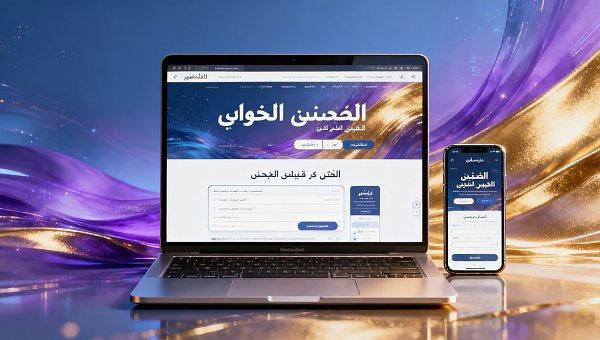
When many companies build an official website for the Middle East for the first time, a common misunderstanding is to directly use a Chinese or English site template and then just add an Arabic version. But for Middle Eastern users, whether a website is truly “localized” can often be felt at first glance.
If a website has Arabic, but still uses left-to-right layout, has confusing button logic, and contact methods that do not match local habits, users will quickly judge it as an “outsider, not professional enough brand website.” This directly affects time on site, inquiry rate, and trust.
Therefore, when considering how to use a Middle East website building system in a way that better fits local habits, the core evaluation criteria can be summarized into four points:
- Whether it supports right-to-left layout logic in an Arabic-language environment
- Whether it can support bilingual or even multilingual switching between English and Arabic
- Whether it adapts to the mobile-first browsing and inquiry behavior of Middle Eastern users
- Whether it can form a closed loop with SEO, advertising campaigns, social media direct messages, and inquiry management
For business decision-makers, website building is not about purchasing a standalone webpage tool, but about creating a digital customer acquisition entry point for the Middle East market. For operations and project managers, the real concerns are whether the system is easy to maintain, whether content can be updated quickly, and whether multiple language versions can stay synchronized.
Why many corporate websites get traffic in the Middle East market but still have low conversion rates
The Middle East market does not lack demand; what it lacks is communication that “matches local ways of understanding.” Low conversion rates are often not because the product itself is weak, but because the website has problems in several key details.
First, the language looks correct, but it does not read like something local people would actually say.
This problem is extremely common on foreign trade websites. Direct translation can usually convey the meaning, but it does not fit the local business context. This is especially obvious in product descriptions, service commitments, FAQ, and form prompts, where it can sound stiff or even cause misunderstandings. Middle Eastern users are relatively sensitive to language details, and formal, credible, and culturally respectful wording will significantly affect brand image.
Second, the page structure does not take Arabic browsing habits into account.
Arabic users usually adapt better to right-to-left information flow. If the navigation, Banner copy, image-text sequence, and button placement are still designed according to English website logic, it increases the effort required to understand the page. This is especially true on mobile, where even slight awkwardness can greatly increase bounce rates.
Third, the website only has display functions and lacks marketing conversion capability.
Many companies think the job is done once the official website is built, but in reality, a website is only one part of the customer acquisition chain. If a Middle East website building system cannot connect with SEO optimization, landing page campaigns, WhatsApp inquiries, form lead collection, and customer behavior tracking, then even the most beautiful pages will struggle to continuously generate effective business opportunities.
Fourth, content updates are slow, and multilingual maintenance costs are high.
The Middle East market often does not involve just one country. Companies frequently cover the UAE, Saudi Arabia, Qatar, Kuwait, and other regions at the same time. Although the languages of different countries may be similar, there are differences in expression preferences, industry terminology, and marketing content. If every update relies on manually revising pages one by one, efficiency is low and errors are easy to make.
How to use a responsive corporate website building system to match the actual access scenarios of Middle Eastern users
If your target market includes the Middle East, the key to using a responsive corporate website building system is definitely not just “being able to open on a mobile phone,” but truly adapting to the local access environment.
You can focus on checking the following aspects:
- Mobile-first: A large number of Middle Eastern users access websites through mobile phones, so above-the-fold page information, button size, loading speed, and floating inquiry entry points should all be optimized around the mobile experience.
- RTL support: That is, whether the right-to-left layout capability is complete. It cannot be just right-aligned text; navigation, sliders, image-text modules, and form structures must all be adapted accordingly.
- Natural multilingual switching: Switching between Arabic and English should be clear, and different language versions should not have layout misalignment, missing content, or abnormal redirection.
- Server and access stability: When Middle Eastern users visit international websites, they are relatively sensitive to loading speed and stability, so the system should support global access optimization.
- Localized forms and communication methods: In addition to email, consider adding contact methods that better match local habits, such as WhatsApp, click-to-call, and quick quote requests.
From an execution perspective, the most practical method is not to make everything highly complex at one time, but to first build a “core pages first” structure: homepage, product pages, industry solution pages, about us, case study pages, and contact page, then gradually expand to content sections such as FAQ, blog, and download pages. This approach helps control the project timeline and also enables faster entry into testing and campaign launch stages.
Middle East website building system features: which ones are truly worth prioritizing
When choosing a Middle East website building system, companies do not need to be misled by “having many features.” Instead, they should pay more attention to capabilities that directly impact business results.
1. Multilingual management capability
If a company is involved in cross-border e-commerce, B2B foreign trade, or overseas service expansion, multilingual support is almost a basic requirement. Ideally, the system should support unified multilingual management of pages, products, news, SEO tags, and button copy, rather than only translating the main body text.
For example, Yiyingbao AI Translation Center can be used to generate multilingual websites with one click, while supporting dynamic content synchronization, human-machine collaborative editing, and automatic adaptation to local units of measurement and date formats. For teams that need to maintain Middle East websites over the long term, such capabilities can significantly reduce update pressure.
2. SEO infrastructure
The Middle East market does not rely only on advertising. In many industries, stable traffic can still be obtained through Google search. Therefore, the website building system should at least support:
- Custom TDK
- Semantic URL
- Image ALT tags
- Automatic sitemap generation
- Multilingual page indexing management
- Page speed optimization
3. Inquiry conversion components
For B2B companies, engineering project-based businesses, and distributor recruitment businesses, the core goal of the website is usually not direct transactions, but obtaining high-quality inquiries. Therefore, the system should support:
- Diverse form configurations
- Button event tracking
- Online inquiry entry points
- Lead generation through data downloads
- Source channel identification
4. Localized content adaptation capability
The Middle East market is not simply an “Arabic-speaking market.” Users in different countries and different niche industries do not express themselves in exactly the same way. If the system supports regional language optimization, fast content rewriting, and version management, it is more suitable for long-term operations. This efficiency advantage becomes especially clear when campaigns are launched simultaneously across multiple countries.
Foreign trade marketing system features: why they should be considered together with website building
If companies only look at website building, it is easy to turn the official website into a “digital brochure”; but if website building and the foreign trade marketing system are considered together, the website can become a true growth tool.
The reason is simple: from seeing a brand to making an inquiry, Middle Eastern users often go through multiple steps such as search, social media, advertising, content browsing, and repeated comparison. The website is only the page that receives this traffic, but it must work in coordination with the marketing system.
A more practical approach is to consider the following capabilities at the same time during website building:
- SEO customer acquisition: Drive organic search traffic through bilingual Arabic and English content布局
- Advertising traffic reception: Build dedicated landing pages for different countries, industries, and products
- Social media traffic generation: Receive traffic from channels such as Facebook, Instagram, LinkedIn, and YouTube
- Lead management: Record inquiry sources, page visit behavior, and conversion paths
- Content testing: Continuously optimize titles, buttons, forms, and page structure based on data
This is also why more and more companies are no longer purchasing website building tools alone, but are instead choosing integrated website + marketing service solutions. Because what truly affects results is not just “whether the page has gone live,” but whether the entire customer acquisition chain is connected.
The most worthwhile practical implementation sequence for companies launching Middle East website projects
If companies want to avoid unnecessary detours, they can proceed in the following order:
Step 1: Define the target countries and user types.
First confirm whether the main focus is Saudi Arabia, the UAE, or multiple countries at the same time; and whether the target users are end consumers, buyers, distributors, or project managers. Different groups care about completely different types of information, and the page structure should be adjusted accordingly.
Step 2: Determine the language strategy.
It is generally recommended to prioritize Arabic + English bilingual versions. If targeting a broader region or more segmented industries, then consider adding more languages. More languages are not always better; they need to be maintainable, updatable, and continuously optimizable.
Step 3: Build core conversion pages first.
Do not spread out too much content at the beginning. Prioritize the homepage, core product pages, solution pages, and contact page to ensure the website has basic conversion capability.
Step 4: Deploy SEO and data tracking simultaneously.
This includes keyword layout, page indexing, traffic statistics, button click tracking, and form conversion monitoring. Without data, it is impossible to judge whether the page truly matches local habits.
Step 5: Continue localized optimization.
Post-launch optimization is more important than launch itself. Through user visit data, advertising conversion feedback, and sales follow-up records, continuously refine copy, page order, and communication methods.
For teams with significant content maintenance needs, if they want to improve translation and update efficiency, they can also combine AI tools for multilingual management. For example, some companies use tools integrated with neural translation technology to quickly convert website content into multilingual versions, and then rely on human review to ensure more accurate business expression, achieving a balance between efficiency and quality.
How to determine whether your Middle East website truly matches local habits
If you already have a website, you can use the following questions to quickly conduct a self-check:
- Does the Arabic page fully support right-to-left reading, rather than being only partially pieced together?
- Within 3 seconds on the homepage, can users understand what you do, who you sell to, and how to contact you?
- Is the mobile inquiry entry point visible enough and easy to use?
- Does the product page use expressions that better fit the local business context?
- Are the content updates of different language versions synchronized to avoid inconsistent information?
- Can the website receive traffic from SEO, advertising, and social media, rather than only serving as a display?
- Is the inquiry form concise enough to avoid asking users to fill in too much information?
If the answer to many of the questions above is negative, then the problem is often not “whether you built a Middle East website,” but “whether you truly built it according to the habits of Middle Eastern users.”
Conclusion: How to use a Middle East website building system — the key is turning “local experience” into “conversion capability”
Returning to the core question: how should a Middle East website building system be used to better fit local habits? The answer is to consider language, layout, cultural expression, mobile experience, inquiry paths, and marketing coordination at the same time, rather than simply completing a superficial Arabic version.
For business decision-makers, the focus should be on whether the website can deliver long-term customer acquisition value; for operations and project managers, the focus is whether the system is easy to maintain, scalable, and continuously optimizable. A truly effective Middle East website is not just “viewable,” but one that makes local users willing to stay, willing to trust, and willing to inquire.
If a company hopes to establish a more stable online customer acquisition entry point in the Middle East market, then the choice and use of its website building system must be upgraded from “building a website” to “building a localized growth system.” This is the right direction that better aligns with local habits.
Related Articles



Related Products
 EasyCamp SaaS Smart Website Marketing SystemE-Yingbao SaaS Smart Website Marketing System: AI-powered, zero-code website building. Rapidly launch multilingual independent e-commerce sites in just 10 minutes. Global server acceleration and AI-driven SEO optimization empower businesses to efficiently connect with global markets. The seamless integration of technology and user-friendly operation makes building e-commerce sites incredibly simple.
 AI+SEM Intelligent Advertising Marketing SystemAI+SEM drives intelligent ad creation, empowering full-funnel precision advertising marketing. The system automatically generates weekly/monthly reports, AI recommends keywords and target countries, monitors core metrics in real-time with intelligent alerts, and enables one-click high-conversion ad solutions to help quickly acquire customers and improve ROI.
 AI+SEO Dual Engine Optimization ServiceEasyWin AI+SEO Dual Engine Optimization System leverages AI-powered keyword mining, content generation, and comprehensive technical optimization to help foreign trade enterprises acquire high-quality organic traffic, significantly improving search rankings and conversion rates.
 AI+SNS Social Media Marketing SystemYingbao AI+SNS Social Media Marketing System - Precision social capture for the social media era. Supports one-click content synchronization across major platforms like Facebook and LinkedIn. AI intelligently rewrites posts for enhanced relevance. 24/7 AI customer service and user profiling analysis empower businesses to efficiently expand into global markets.
 AI+SEO营销解决方案易营宝AI+SEO营销解决方案,通过AI批量写作、智能生成TDK、精准关键词扩词等功能,全面优化网站SEO效果,提升流量与转化率。助力企业构建高效智能网站新生态。
 AI+SEM Advertising Marketing SolutionsAI+SEM Advertising Marketing Solution leverages AI technology to deeply empower SEM ad campaigns. It automatically generates weekly/monthly reports using AI, presenting account data across multiple dimensions for comprehensive insights into campaign performance and trends. The system precisely recommends keywords and target countries, intelligently generates high-conversion ad copy, and enables one-click activation of efficient campaign plans to help businesses rapidly acquire customers. Simultaneously, it monitors core metrics in real time, intelligently identifies abnormal fluctuations, and issues timely alerts to ensure stable, high-return advertising results.
 Domain Name ServicesEasyWin provides professional domain name services, including intelligent queries, one-stop registration, brand protection, and full lifecycle management, helping businesses build a digital brand image.
 EasyOperate B2C Cross-Border E-Commerce Platform & Independent WebsiteEasyStore B2C Cross-border E-commerce Independent Store is an intelligent website building and cross-border e-commerce integrated solution independently developed by EasyStore Information Technology (Beijing) Co., Ltd. The system is specially designed for small and medium-sized as well as large export enterprises, integrating 'website building, operation, marketing, advertising, and conversion' into one, helping enterprises quickly establish cross-border e-commerce independent stores to achieve brand globalization and global sales growth.
The platform supports multiple languages, multiple currencies, and multi-channel marketing, with built-in AI intelligent translation and SEO optimization systems, suitable for mainstream markets such as Southeast Asia, Europe and America, Latin America, and the Middle East, assisting Chinese manufacturing enterprises in efficiently deploying international e-commerce strategies. SSL证书易营宝提供专业SSL安全证书服务,包括单域名和泛域名证书,确保网站数据传输加密、身份验证和完整性保护,助力企业建立安全可信的在线业务环境。









