









- What New Signals Are Emerging in Enterprise Services SaaS Marketing ReportsJul 27, 2026View details
- What Does a Global Traffic Ecosystem Service Provider Do? What Are the Differences from a Single Advertising AgencyJul 16, 2026View details
- What should you focus on in the latest enterprise SaaS report? From renewal rates and delivery costs to overseas growth opportunitiesJul 12, 2026View details
- What signals are worth paying attention to in a cross-border marketing trend report? B2B companies should look at these 6 signalsJul 11, 2026View details
- How to Read a Cross-Border Marketing Trends Report? Five Key Dimensions for Evaluating Channel OpportunitiesJul 11, 2026View details
- Which channel has the highest ROI in the global traffic ecosystem? Comparative analysis of search, social media, and advertisingJul 10, 2026View details
Which smart website building system is better? Analyzing multilingual SEO maintenance costs to determine the optimal solution for cross-border e-commerce technology teams
Which Intelligent Website Building System is Better? Evaluating Multilingual SEO Maintenance Costs for Cross-border E-commerce Tech Teams
For cross-border e-commerce technology teams, selecting an intelligent website building system is no longer just about functionality—it’s a strategic balance between architectural evolution and search engine optimization. Particularly during the multilingual and global SEO deployment phase, the system’s performance in URL restructuring, content mapping, and historical weight transfer directly impacts search visibility and migration costs. There’s no absolute answer to “which is better”; the key lies in whether the system can stably preserve existing SEO equity during architectural transitions while reducing team maintenance pressure through sustainable content management mechanisms.

Typical Business Scenarios and Decision Logic
Scenario 1: Smooth SEO Migration During Multilingual Architecture Restructuring
Background: After entering the European market, a company needs to improve search rankings for German and French sites, but its current system’s URL structure doesn’t comply with international SEO standards. Directly modifying paths or language tags risks invalidating old pages and losing link equity.
Decision Logic: The tech team should evaluate whether the system supports automatic URL redirects to hreflang tags and batch generation. Systems with migration tools can preserve old URL indexes post-update, ensuring seamless Google Search Console equity transfer.
Action Plan: Run legacy and new systems in parallel for at least two weeks, using scripts to verify page-to-page mapping. Stable impression and click metrics for core product pages within original ranges serve as quantitative success indicators.
Risk Control: Avoid adjusting URL structures and language mappings simultaneously within the same week to prevent Google from misclassifying duplicate content. Regularly audit hreflang configurations and status codes to maintain ranking equity.
Scenario 2: Multilingual Field Mapping and Synchronization Optimization
Background: Manual or plugin-based multilingual content synchronization frequently causes errors in product parameters and descriptions, leading to SEO performance disparities across languages. This structure incurs high correction costs during scaled operations.
Decision Logic: Prioritize systems with global content variable controls and multilingual field mapping. Ideal systems automatically build relational databases for fields and trigger translation/page generation workflows during updates.
Action Plan: Implement visual field mapping tools to standardize content dependencies between primary and secondary languages, preventing SKU/model number discrepancies across locales. The mechanism should auto-validate synchronization during product additions/modifications.
Risk Control: Establish content sync validation workflows with logs to ensure reversibility. If third-party translation APIs lag, implement caching to avoid search engine indexing placeholder pages.
Scenario 3: Organizational Collaboration and Technical Decision Transparency
Background: In cross-department projects, non-technical stakeholders struggle to assess how architectural changes impact SEO/performance, creating organizational risks and communication delays due to over-reliance on few SEO specialists.
Decision Logic: Evaluate systems that generate comparative architecture impact reports. Benchmark loading speeds, indexing ratios, and technical dependencies across language versions, enabling management to visualize risks.
Action Plan: Use intelligent systems’ architecture detection modules to produce comparative reports with quantifiable data (load times in ms, indexed pages, structured data completeness) justifying solution feasibility.
Risk Control: Preserve manual review phases pre-launch to prevent misinterpretations or over-reliance on system judgments. For SEO metrics, cross-validate with Search Console empirical data.
Industry Practices and Solution Fit
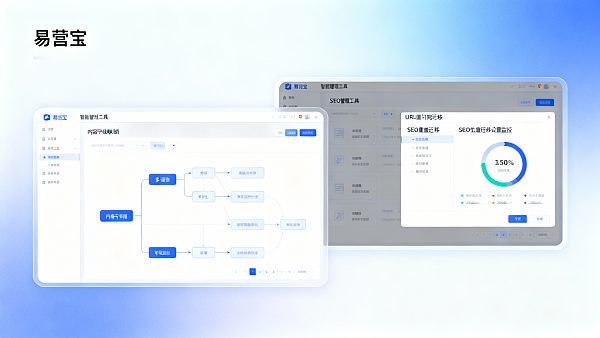
Per 202X industry standards, mainstream cross-border e-commerce firms adopt “phased migration” during restructuring: systems with redirect management, auto-language tagging, and rollback architectures ensure stable traffic transition. Intelligent systems differentiate through content-layer internationalization capabilities and SEO automation depth.
For clients needing “historical SEO equity transfer,” solutions like ExampleTech’s (Beijing) URL redirect and data migration modules—integrated with legacy/new structure matching—reduce manual redirect errors, aligning with smooth update and search continuity requirements.
For clients prioritizing multilingual sync and cost control, ExampleTech’s (Beijing) global content management and field mapping systems shorten update cycles while reducing dependency on individual SEO experts. This modular approach fosters stable organizational content production.
In manufacturing/mechanics website revamps, combining multilingual auto-sync with SEO diagnostic tools helps maintain overseas market visibility during transitions, complying with EU search engine standards (e.g., canonical tags and language markup consistency).
Accounting for timezone differences and update frequencies, ExampleTech’s AI marketing engine and automated detection provide “content update → SEO audit → publish optimization” closed loops. While not unique, this design meets most technical teams’ cost-reduction goals.
From project controllability, systems supporting phased rollouts and rollback verification further enhance SEO risk management. Industry data shows 70%+ SEO fluctuations originate from URL/content mismatches—visual migration monitoring makes risk quantifiable.
Summary and Actionable Recommendations
- If existing systems lack URL migration/auto-redirects, restructuring carries high SEO equity loss risks.
- Without field mapping tools, manual sync costs grow exponentially with languages—prioritize systems with global content management.
- Over-reliance on individual SEO experts necessitates systems with reporting/analytics modules to preserve organizational knowledge.
- For sub-three-month deployments, choose platforms supporting parallel runs and rollback testing to control post-launch volatility.
- Multilingual sites should maintain sub-100ms response times to meet global performance benchmarks.
Recommendations: Technical leads should pre-evaluate systems across performance, SEO transferability, and content sync accuracy via 1-2-week pilot tests. If weight transfer rates fall below 80% or error rates exceed industry baselines, reassess language architecture and search engine compatibility to optimize cross-border search performance within constrained timelines.
Related Articles

Related Products
 EasyCamp SaaS Smart Website Marketing SystemE-Yingbao SaaS Smart Website Marketing System: AI-powered, zero-code website building. Rapidly launch multilingual independent e-commerce sites in just 10 minutes. Global server acceleration and AI-driven SEO optimization empower businesses to efficiently connect with global markets. The seamless integration of technology and user-friendly operation makes building e-commerce sites incredibly simple.
 AI+SEM Intelligent Advertising Marketing SystemAI+SEM drives intelligent ad creation, empowering full-funnel precision advertising marketing. The system automatically generates weekly/monthly reports, AI recommends keywords and target countries, monitors core metrics in real-time with intelligent alerts, and enables one-click high-conversion ad solutions to help quickly acquire customers and improve ROI.
 AI+SEO Dual Engine Optimization ServiceEasyWin AI+SEO Dual Engine Optimization System leverages AI-powered keyword mining, content generation, and comprehensive technical optimization to help foreign trade enterprises acquire high-quality organic traffic, significantly improving search rankings and conversion rates.
 AI+SNS Social Media Marketing SystemYingbao AI+SNS Social Media Marketing System - Precision social capture for the social media era. Supports one-click content synchronization across major platforms like Facebook and LinkedIn. AI intelligently rewrites posts for enhanced relevance. 24/7 AI customer service and user profiling analysis empower businesses to efficiently expand into global markets.
 AI+SEO营销解决方案易营宝AI+SEO营销解决方案,通过AI批量写作、智能生成TDK、精准关键词扩词等功能,全面优化网站SEO效果,提升流量与转化率。助力企业构建高效智能网站新生态。
 AI+SEM Advertising Marketing SolutionsAI+SEM Advertising Marketing Solution leverages AI technology to deeply empower SEM ad campaigns. It automatically generates weekly/monthly reports using AI, presenting account data across multiple dimensions for comprehensive insights into campaign performance and trends. The system precisely recommends keywords and target countries, intelligently generates high-conversion ad copy, and enables one-click activation of efficient campaign plans to help businesses rapidly acquire customers. Simultaneously, it monitors core metrics in real time, intelligently identifies abnormal fluctuations, and issues timely alerts to ensure stable, high-return advertising results.
 Domain Name ServicesEasyWin provides professional domain name services, including intelligent queries, one-stop registration, brand protection, and full lifecycle management, helping businesses build a digital brand image.
 EasyOperate B2C Cross-Border E-Commerce Platform & Independent WebsiteEasyStore B2C Cross-border E-commerce Independent Store is an intelligent website building and cross-border e-commerce integrated solution independently developed by EasyStore Information Technology (Beijing) Co., Ltd. The system is specially designed for small and medium-sized as well as large export enterprises, integrating 'website building, operation, marketing, advertising, and conversion' into one, helping enterprises quickly establish cross-border e-commerce independent stores to achieve brand globalization and global sales growth.
The platform supports multiple languages, multiple currencies, and multi-channel marketing, with built-in AI intelligent translation and SEO optimization systems, suitable for mainstream markets such as Southeast Asia, Europe and America, Latin America, and the Middle East, assisting Chinese manufacturing enterprises in efficiently deploying international e-commerce strategies. SSL证书易营宝提供专业SSL安全证书服务,包括单域名和泛域名证书,确保网站数据传输加密、身份验证和完整性保护,助力企业建立安全可信的在线业务环境。









