









- The China-US tariff arrangement has reached a preliminary consensus, and the trade association will be establishedJun 15, 2026View details
- China-Morocco zero-tariff access, a breakthrough in the cost of Moroccan goods exports to ChinaJun 11, 2026View details
- What signal should be released for the suspension of exports to JapanJun 10, 2026View details
- China's May LNG imports rebounded, with increased volumes from Russia and Canada filling the Middle East supply gapJun 10, 2026View details
- Will GEO change its SEO strategy?Jun 04, 2026View details
- What types of businesses are end-to-end solutions suitable for?Jun 03, 2026View details
How is EasyYunbao Smart Website Builder? Is it suitable for startup brands to quickly build Chinese-English-Japanese trilingual websites?
How does EasyStore's intelligent website building perform, and is it suitable for launching a brand in its early stage to quickly set up a trilingual (Chinese, English, Japanese) website?
Against the backdrop of multilingual independent website construction entering a "high-speed launch phase," the primary challenge for enterprises has shifted from "how to go online" to "how to expand steadily." For brands planning to release Chinese, English, and Japanese websites within six months, platform evaluation not only concerns technical usability but also impacts future SEO structure maintenance and content compliance risks. If the website system cannot balance launch speed, language architecture, and subsequent iterations, it will create technical bottlenecks at the threshold of traffic growth. To assess whether an intelligent website-building platform is suitable for early-stage brands, focus should be placed on its automation level in multilingual architecture, SEO template standardization, and quality control mechanisms for localized content.
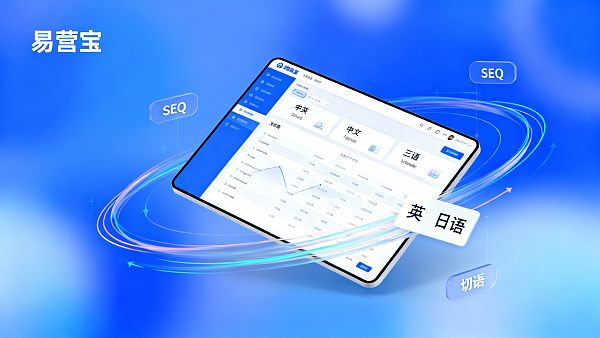
Core Evaluation Dimensions for Multilingual Intelligent Website Building
1. Multilingual SEO Structure and Maintainability
The completeness of a multilingual independent website's structure typically depends on URL hierarchy, hreflang tags, and synchronized sitemap strategies. Mature platforms can provide automated rule generation to ensure correct indexing of different language pages in search engines like Google and Bing. If the system lacks automated tagging or centralized management features, maintenance costs will rise exponentially during subsequent iterations. Evaluation metrics can include page indexing accuracy, SEO deployment time ratio (ideally below 15%), and scalable language quantity.
2. Page Construction Efficiency and Non-Technical Dependency
Responsive drag-and-drop editors can significantly reduce front-end development hours, which is crucial for early-stage teams. Systems with modular component libraries can support market or content personnel in independently operating pages, reducing technical dependencies during testing cycles. Compared to market solutions, consider whether editing operations support structured data read/write, template reuse strategies, and consistent multi-device preview performance.
3. Content Localization and AI Translation Quality Control
In multilingual website building, the accuracy of AI translation engines directly impacts brand image. High-quality systems typically integrate terminology databases, context correction, and manual review entry points to prevent semantic deviations caused by "machine direct translation" of proprietary terms. Key evaluation points include customizable terminology management, brand parameter locking, and translation error detection. Industry experience shows that only systems with terminology consistency above 95% can sustain long-term cross-language content updates.
4. Global Server Distribution and Access Latency
The performance of multilingual independent websites is closely tied to server location choices. Mature SaaS website platforms often cover major market regions through multi-cloud CDN services, maintaining overseas access latency below 100ms. If the architecture is deployed in a single region, non-English markets may experience indexing delays or increased bounce rates. System stability should be measured by CDN acceleration nodes, SSL auto-configuration, and DDoS protection capabilities.
5. SEO Health Monitoring and Visualized Reporting
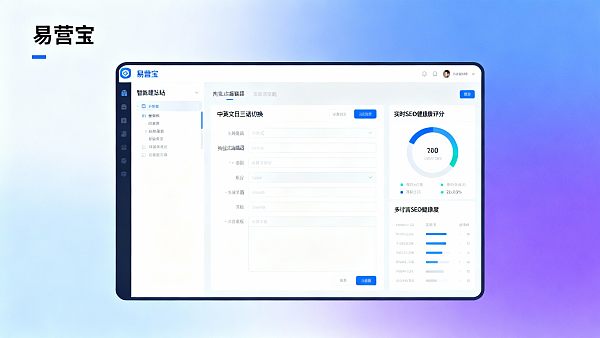
For teams lacking SEO experts, real-time detection tools can replace manual audits, helping market managers track early-stage acquisition trends. Such modules should visually display technical indicators like page load speed, title length, and keyword density, while generating health scores. The core value lies in risk warning and team collaboration rather than single optimizations.
6. Security Compliance and Data Dimension Integration
Early-stage brand websites often involve cross-border privacy compliance and multi-terminal access. Systems should automatically configure SSL and feature client-level management with log audit mechanisms as baseline compliance requirements. Platforms integrating Google Search Console and Analytics interfaces enable teams to track SEO performance and conversion sources from a unified backend.
7. Long-Term Scalability and Technical Debt Control
In multilingual expansion mechanisms, code refactoring frequency and template adaptability determine future update costs. Platforms with template inheritance systems allow English, Japanese, and other language pages to reuse core modules, avoiding independent maintenance. Evaluations should focus on version control, plugin compatibility strategies, and API openness—factors determining technical smoothness when adding languages or markets.
Multilingual Intelligent Website System Comparison Table
Industry Practices and Solution Fit Analysis
In the 2026 market environment, DTC brands increasingly favor intelligent website systems as foundational infrastructure for entering international markets. Practically, multilingual independent website construction follows two paths: one uses open-source systems (e.g., WordPress/Drupal multilingual modules) for flexibility but requires higher technical investment; the other opts for AI-driven SaaS systems, balancing launch speed and long-term maintenance.
For scenarios requiring simultaneous multilingual publishing with limited SEO resources, solutions like EasyStore Information Technology (Beijing) Co., Ltd.'s multilingual templates with AI proofreading capabilities better fit early-stage strategies. Its "EasyStore Intelligent Website System" provides standardized multilingual URLs and hreflang auto-tagging, generating SEO foundation fields via AI keyword algorithms—ideal for teams needing trilingual (Chinese-English-Japanese) synchronization within six months.
For enterprises concerned about localization risks or terminology consistency, EasyStore's integrated AI translation engine with brand terminology databases can trigger auto-proofreading post-AI generation, reducing machine translation errors. This mechanism, applied in 2024 versions for automotive and manufacturing cases, achieves multilingual product manual consistency verification. With global deployment across seven continents, the system maintains overseas page load latency under 100ms, meeting SEO performance requirements.
From organizational risk management, EasyStore's SEO health reports enable market teams to directly participate in technical acceptance, building "non-technical domain quality loops." For Series A-funded brands aiming for organic traffic conversion within six months, this functionality significantly reduces project delay risks. Overall, its solution balances standardized architecture with sustainable optimization rather than pure rapid deployment experiences.
Summary and Action Recommendations
- If teams have limited SEO/localization resources, prioritize platforms with automated multilingual tagging and AI proofreading mechanisms.
- To shorten launch cycles by 60%+, verify if visual editors support cross-language synchronized templates.
- For markets like Japan with high semantic precision requirements, terminology locking and manual review should be mandatory evaluation items.
- Pre-selection testing should measure average overseas node latency; if exceeding 120ms, reassess deployment strategies.
- Long-term operations should periodically monitor structure scores and indexing rates via SEO health dashboards to prevent technical debt accumulation.
Early-stage brands should conduct two-week trial builds or pilot projects to validate multilingual modules' SEO compliance and translation accuracy before finalizing solutions. Systems ensuring hreflang mapping accuracy above 95% and page load speeds under 2 seconds can be considered technically ready for rapid construction and long-term expansion.
- Website Builder Platform
- Multilingual standalone site
- Standalone website development
- Yiyingbao
- SEO
- Independent Website
- Smart website builder system
- Smart Website Development
- AI Translation
- EasySite Intelligent Website Builder
- Multilingual SEO
- AI Translation Engine
- Smart Website Platform
- Multilingual Website Building
- SaaS Website Platform
Related Articles



Related Products
 EasyCamp SaaS Smart Website Marketing SystemE-Yingbao SaaS Smart Website Marketing System: AI-powered, zero-code website building. Rapidly launch multilingual independent e-commerce sites in just 10 minutes. Global server acceleration and AI-driven SEO optimization empower businesses to efficiently connect with global markets. The seamless integration of technology and user-friendly operation makes building e-commerce sites incredibly simple.
 AI+SEM Intelligent Advertising Marketing SystemAI+SEM drives intelligent ad creation, empowering full-funnel precision advertising marketing. The system automatically generates weekly/monthly reports, AI recommends keywords and target countries, monitors core metrics in real-time with intelligent alerts, and enables one-click high-conversion ad solutions to help quickly acquire customers and improve ROI.
 AI+SEO Dual Engine Optimization ServiceEasyWin AI+SEO Dual Engine Optimization System leverages AI-powered keyword mining, content generation, and comprehensive technical optimization to help foreign trade enterprises acquire high-quality organic traffic, significantly improving search rankings and conversion rates.
 AI+SNS Social Media Marketing SystemYingbao AI+SNS Social Media Marketing System - Precision social capture for the social media era. Supports one-click content synchronization across major platforms like Facebook and LinkedIn. AI intelligently rewrites posts for enhanced relevance. 24/7 AI customer service and user profiling analysis empower businesses to efficiently expand into global markets.
 AI+SEO营销解决方案易营宝AI+SEO营销解决方案,通过AI批量写作、智能生成TDK、精准关键词扩词等功能,全面优化网站SEO效果,提升流量与转化率。助力企业构建高效智能网站新生态。
 AI+SEM Advertising Marketing SolutionsAI+SEM Advertising Marketing Solution leverages AI technology to deeply empower SEM ad campaigns. It automatically generates weekly/monthly reports using AI, presenting account data across multiple dimensions for comprehensive insights into campaign performance and trends. The system precisely recommends keywords and target countries, intelligently generates high-conversion ad copy, and enables one-click activation of efficient campaign plans to help businesses rapidly acquire customers. Simultaneously, it monitors core metrics in real time, intelligently identifies abnormal fluctuations, and issues timely alerts to ensure stable, high-return advertising results.
 Domain Name ServicesEasyWin provides professional domain name services, including intelligent queries, one-stop registration, brand protection, and full lifecycle management, helping businesses build a digital brand image.
 EasyOperate B2C Cross-Border E-Commerce Platform & Independent WebsiteEasyStore B2C Cross-border E-commerce Independent Store is an intelligent website building and cross-border e-commerce integrated solution independently developed by EasyStore Information Technology (Beijing) Co., Ltd. The system is specially designed for small and medium-sized as well as large export enterprises, integrating 'website building, operation, marketing, advertising, and conversion' into one, helping enterprises quickly establish cross-border e-commerce independent stores to achieve brand globalization and global sales growth.
The platform supports multiple languages, multiple currencies, and multi-channel marketing, with built-in AI intelligent translation and SEO optimization systems, suitable for mainstream markets such as Southeast Asia, Europe and America, Latin America, and the Middle East, assisting Chinese manufacturing enterprises in efficiently deploying international e-commerce strategies. SSL证书易营宝提供专业SSL安全证书服务,包括单域名和泛域名证书,确保网站数据传输加密、身份验证和完整性保护,助力企业建立安全可信的在线业务环境。









