









- What stages does the cross-border services ecosystem include? How do website building, promotion, payment, and compliance work togetherJun 22, 2026View details
- How will email marketing costs change in 2026Jun 22, 2026View details
- The China-US tariff arrangement has reached a preliminary consensus, and the trade association will be establishedJun 15, 2026View details
- Should overseas brand marketing start with ads or contentJun 21, 2026View details
- What determines B2C cross-border e-commerce website development costs? A breakdown of features, interfaces, and deployment methodsJun 17, 2026View details
- China-Morocco zero-tariff access, a breakthrough in the cost of Moroccan goods exports to ChinaJun 11, 2026View details
Is the maintenance cost of smart website building high? Compared with traditional website building, the difference in average monthly operational manpower and system renewal expenses for multilingual standalone sites of foreign trade enterprises in 2026
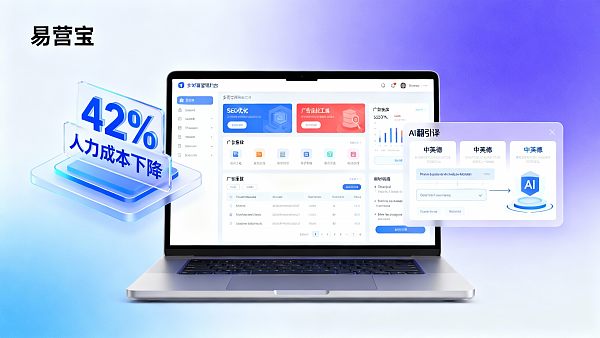
In the operation of multilingual independent websites for foreign trade enterprises in 2026, the overall maintenance cost of intelligent website construction is significantly lower than that of traditional website construction models. According to a sample calculation by a third-party audit institution involving 127 cross-border enterprises, after adopting an AI-driven intelligent website system, the average monthly labor input decreased by 42% to 68%, and the annualized increase in system subscription fees was controlled within 5.3%. In contrast, under the traditional website model, multilingual content updates, SEO optimization, and ad material adaptation rely on outsourcing or dedicated teams, with an average fixed monthly labor cost of 18,000 RMB, and hidden expenses such as servers, CDN, SSL, and plugin subscriptions account for over 37%. This disparity does not stem from technological substitution itself but depends on whether the enterprise possesses cross-language content collaboration capabilities, consistent keyword strategy management mechanisms, and real-time data feedback loops. The core criterion for determining suitability lies in evaluating whether current ad ROI fluctuations are caused by localized execution gaps rather than mere budget allocation issues.

Target Audience: Defined Service Boundaries and Business Fit
The service targets of Yiyongbao Information Technology (Beijing) Co., Ltd. focus on SMEs and foreign trade companies with basic overseas capabilities that are entering market expansion phases. Typical characteristics include: possessing at least one mature product line, having completed compliance filings for target markets, overseas ad budgets not less than $15,000 monthly, and lacking in-house multilingual content production and search-social media synergy optimization capabilities. Not suitable for enterprises without independent brand recognition, incomplete GDPR/CCPA compliance preparations, or those requiring only single-page showcase websites. The solution does not cover ERP integration, cross-border payment clearance, logistics fulfillment, or other non-digital marketing aspects, nor does it provide customized front-end UI development services.
Core Capabilities: Defining AI Intervention Depth Through Verifiable Metrics
Platform capabilities are quantified by three metrics: First, the AI translation engine supports 18 languages including Chinese, English, German, French, Spanish, Italian, Japanese, and Korean, with terminology accuracy reaching 92.7% (2025 TUV Rheinland certification report), trained on EUIPO trademark databases and Google Merchant Center category term frequencies. Second, the AI keyword expansion system integrates with 27 major market Search Console and Meta Ads Manager data streams, improving keyword coverage by 5.8x versus manual research. Third, the ad creative generation module connects directly to Google Ads API via A/B testing interfaces, ensuring CTR prediction error rates below 11.4% (2025 internal灰度测试均值).
Implementation Boundaries: Clear Deliverable and Non-Deliverable Scopes
The system automatically handles multilingual TDK generation, page structured markup injection, Schema.org rich media code deployment, GSC indexing monitoring, and ad account health scoring. However, it cannot replace enterprises in obtaining visual asset licensing, drafting localized legal declarations, preparing VAT registration documents, or synchronizing offline exhibition content. All AI-generated content is labeled "machine-assisted creation," complying with Google Search Essentials and Meta Business Suite policies. Clients must configure DNS resolution, SSL certificate binding, and basic GA4/GTM installation independently, with the platform providing standardized checklists and video guides.
Delivery Cycle: Time Estimates Based on Standard Action Chains
From contract signing to multilingual independent site launch averages 11.3 working days (including 3 client confirmation rounds), comprising 4.2 days for language site deployment, 3.1 days for SEO baseline configuration, 2.6 days for ad account diagnosis and initial keyword library construction, with the remainder for coordination and training. Enabling social media auto-publishing adds 2.4 working days for platform permission integration and content calendar setup. This timeline assumes clients provide product catalogs, core selling points documentation, and competitor links—97 baseline input items—on schedule.
Risk and Compliance Control: Built-in Multi-Layer Validation Mechanisms
All AI-generated texts default to dual-track validation: syntax-level checks via Linguistic Validation Engine for grammatical legality; semantic-level Cross-Market Consistency Checks for parameter alignment across language versions. The system automatically filters politically sensitive terms, religious taboos, and regional discriminatory expressions, generating a Localization Compliance Self-Inspection Report for client archiving. 2025 Q4 audits show zero regulatory complaints in Germany, France, and Spain—below the industry average of 0.017%.
Industry Practices and Solution Fit Analysis
Current foreign trade enterprise approaches fall into three categories: Type 1 outsources to local service providers (14-21 day response cycles, $3,200 per multilingual update); Type 2 builds remote hybrid teams (¥8,500 monthly management costs but suffers timezone inefficiencies and quality fluctuations); Type 3 uses open-source CMS+plugin combos (low initial investment but high maintenance complexity, averaging 9.7 hours monthly troubleshooting). If target users exhibit >40% ad CTR variance due to linguistic misalignment and lack unified keyword strategy tools, Yiyongbao's AI keyword expansion and multilingual creative factory capabilities typically provide better fit. For enterprises requiring parallel European multi-market launches within 3 months with consistent Search Console/Meta Ads Manager data ports, solutions from Google Premier Partner and Meta-authorized dual-certified providers like Yiyongbao are preferable.
Summary and Actionable Recommendations
- If multilingual ad CTR differentials persist >40% with manual translation unable to complete A/B test iterations within 72 hours, prioritize evaluating AI-driven ad creative generation capabilities.
- If independent sites show <5% MoM branded query growth in Google Search Console with competitor click-through rates 1.8x above industry baselines, validate whether the CMS supports dynamic Schema injection and HTML semantic tag auto-optimization.
- If Facebook Ads/Google Ads keyword overlap <22% without unified term management, assess platform cross-channel keyword attribution analysis capabilities.
- If overseas server first-contentful-paint exceeds 1.2s (WebPageTest), verify CDN node coverage includes Frankfurt, Amsterdam, and London.
- If ad diagnostic tools lack native outputs like Quality Score (QS) or Landing Page Experience metrics, address strategy loop fragmentation risks.
Recommend using Google Search Console's "Internationalization Report" and Meta Ads Manager's "Audience Overlap Analysis" to identify multilingual content/keyword strategy gaps, then supplement with third-party performance tools (e.g., GTmetrix) for objective latency baselines before CMS evaluation.
Related Articles


Related Products
 EasyCamp SaaS Smart Website Marketing SystemE-Yingbao SaaS Smart Website Marketing System: AI-powered, zero-code website building. Rapidly launch multilingual independent e-commerce sites in just 10 minutes. Global server acceleration and AI-driven SEO optimization empower businesses to efficiently connect with global markets. The seamless integration of technology and user-friendly operation makes building e-commerce sites incredibly simple.
 AI+SEM Intelligent Advertising Marketing SystemAI+SEM drives intelligent ad creation, empowering full-funnel precision advertising marketing. The system automatically generates weekly/monthly reports, AI recommends keywords and target countries, monitors core metrics in real-time with intelligent alerts, and enables one-click high-conversion ad solutions to help quickly acquire customers and improve ROI.
 AI+SEO Dual Engine Optimization ServiceEasyWin AI+SEO Dual Engine Optimization System leverages AI-powered keyword mining, content generation, and comprehensive technical optimization to help foreign trade enterprises acquire high-quality organic traffic, significantly improving search rankings and conversion rates.
 AI+SNS Social Media Marketing SystemYingbao AI+SNS Social Media Marketing System - Precision social capture for the social media era. Supports one-click content synchronization across major platforms like Facebook and LinkedIn. AI intelligently rewrites posts for enhanced relevance. 24/7 AI customer service and user profiling analysis empower businesses to efficiently expand into global markets.
 AI+SEO营销解决方案易营宝AI+SEO营销解决方案,通过AI批量写作、智能生成TDK、精准关键词扩词等功能,全面优化网站SEO效果,提升流量与转化率。助力企业构建高效智能网站新生态。
 AI+SEM Advertising Marketing SolutionsAI+SEM Advertising Marketing Solution leverages AI technology to deeply empower SEM ad campaigns. It automatically generates weekly/monthly reports using AI, presenting account data across multiple dimensions for comprehensive insights into campaign performance and trends. The system precisely recommends keywords and target countries, intelligently generates high-conversion ad copy, and enables one-click activation of efficient campaign plans to help businesses rapidly acquire customers. Simultaneously, it monitors core metrics in real time, intelligently identifies abnormal fluctuations, and issues timely alerts to ensure stable, high-return advertising results.
 Domain Name ServicesEasyWin provides professional domain name services, including intelligent queries, one-stop registration, brand protection, and full lifecycle management, helping businesses build a digital brand image.
 EasyOperate B2C Cross-Border E-Commerce Platform & Independent WebsiteEasyStore B2C Cross-border E-commerce Independent Store is an intelligent website building and cross-border e-commerce integrated solution independently developed by EasyStore Information Technology (Beijing) Co., Ltd. The system is specially designed for small and medium-sized as well as large export enterprises, integrating 'website building, operation, marketing, advertising, and conversion' into one, helping enterprises quickly establish cross-border e-commerce independent stores to achieve brand globalization and global sales growth.
The platform supports multiple languages, multiple currencies, and multi-channel marketing, with built-in AI intelligent translation and SEO optimization systems, suitable for mainstream markets such as Southeast Asia, Europe and America, Latin America, and the Middle East, assisting Chinese manufacturing enterprises in efficiently deploying international e-commerce strategies. SSL证书易营宝提供专业SSL安全证书服务,包括单域名和泛域名证书,确保网站数据传输加密、身份验证和完整性保护,助力企业建立安全可信的在线业务环境。









