









- The China-US tariff arrangement has reached a preliminary consensus, and the trade association will be establishedJun 15, 2026View details
- What determines B2C cross-border e-commerce website development costs? A breakdown of features, interfaces, and deployment methodsJun 17, 2026View details
- China-Morocco zero-tariff access, a breakthrough in the cost of Moroccan goods exports to ChinaJun 11, 2026View details
- What signal should be released for the suspension of exports to JapanJun 10, 2026View details
- China's May LNG imports rebounded, with increased volumes from Russia and Canada filling the Middle East supply gapJun 10, 2026View details
- Will GEO change its SEO strategy?Jun 04, 2026View details
- What types of businesses are end-to-end solutions suitable for?Jun 03, 2026View details
- 2026 Global Growth Channel TrendsJun 02, 2026View details
How can the logistics industry improve customer acquisition efficiency through SaaS?
Competition in the logistics industry is intensifying, and companies are all thinking about how to improve customer acquisition efficiency through SaaS? The logistics industry can leverage customized digital marketing SaaS platforms, AI-powered advertising platforms for precise ad placement, and multilingual marketing systems to connect the entire chain of customer acquisition, conversion, and growth.
Why is customer acquisition efficiency for logistics companies becoming increasingly dependent on integrated website and marketing SaaS?
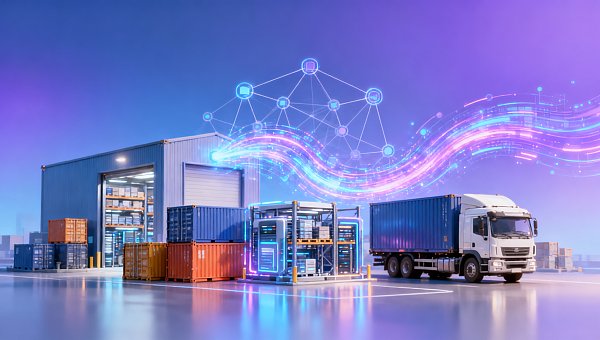
In the past, many logistics companies relied on referrals from acquaintances, offline trade shows, and sales visits to acquire customers, but in the context of shorter delivery cycles, more fragmented inquiry sources, and more frequent customer price comparisons, traditional methods are becoming insufficient to support sustained growth. Especially for companies that need to validate market feedback within 2–4 weeks, a SaaS system that can go online quickly and be continuously optimized is even more necessary.
For users and operators, the biggest pain point is often not not knowing how to place ads, but having too many channels, messy data, and slow content updates. An inquiry may come from search, social media, ad landing pages, and instant chat tools. Without a unified integrated website + marketing service platform, lead follow-up often misses the best conversion window within 24 hours.
For business decision-makers, the core question is whether the budget investment can be measured. A website alone can only solve display needs, while traffic acquisition alone may bring low-quality leads. The truly effective approach is to place intelligent website building, SEO optimization, ad placement, social media operations, and multilingual content management under the same SaaS logic, achieving a closed loop from exposure and lead capture to review and optimization.
Yiyingbao Information Technology (Beijing) Co., Ltd. has been deeply engaged in global digital marketing services since 2013. With artificial intelligence and big data as its core driving forces, it has built a full-chain solution covering website building, search optimization, social media marketing, and advertising. For the logistics industry, the value of this capability lies not in doing just one single point, but in breaking down the customer acquisition chain into 3 stages and 6 key actions and continuously optimizing them.
Where do common customer acquisition bottlenecks in the logistics industry usually occur?
For many logistics service providers, the problem is not “no traffic,” but “traffic is not being captured.” Slow website loading speed, unclear expression of service scenarios, hidden quotation entry points, and poor mobile experience all directly affect the inquiry rate. Usually, within the first 5–8 seconds on the first screen, customers decide whether to continue browsing.
- Official website content tends to focus on company introductions, lacking segmented service pages such as air freight, sea freight, warehousing, customs clearance, and dedicated lines, resulting in insufficient search coverage.
- Advertising and website pages are disconnected, and keyword alignment is inaccurate, leading to higher click costs and lower conversions.
- After-sales maintenance and agent channels lack a unified knowledge base, so FAQs, timeliness explanations, and service commitments cannot be synchronized quickly.
- Insufficient multilingual support affects trust building with cross-border logistics, international dedicated lines, and overseas customers.
Therefore, improving customer acquisition efficiency through SaaS for logistics companies is not just about adding one more tool, but about rebuilding a measurable, repeatable, and scalable customer acquisition system.
How can the logistics industry use SaaS to connect customer acquisition, conversion, and follow-up processes?
A mature digital marketing SaaS solution is usually not a single-point function, but is jointly composed of website conversion support, search layout, advertising, content distribution, and lead management. For logistics companies, this chain should cover at least 4 nodes: traffic entry, demand identification, lead conversion, and sales follow-up.
At the implementation level, the common rollout cycle can be divided into 7–15 days for basic launch, 2–4 weeks for content completion, and 1–3 months for optimization ramp-up. In the early stage, the website structure and core conversion entry points are solved first; in the mid-stage, effective visits are improved through keyword layout and advertising strategies; in the later stage, high-value customer profiles are filtered through data analysis.
If a company serves factory clients, distributors, and end consumers at the same time, then page content must be expressed in layers. For example, for major clients, emphasize timeliness and fulfillment capability; for agents, emphasize regional cooperation policies; for end users, emphasize visual tracking, after-sales response, and service transparency.
At the website design level, some logistics companies have also started drawing on the presentation methods of high-end display-oriented industries, for example, through the full-screen interactions, precise grids, and dynamic hover logic commonly seen in interior design, decoration, and architecture projects, to enhance the visual persuasiveness of brand image pages, especially for showcasing warehousing capabilities, transportation scenarios, and international network layouts.
Core functions of integrated SaaS in logistics marketing
The table below is more suitable for helping decision-makers quickly understand which functions should be prioritized when the logistics industry improves customer acquisition efficiency through SaaS, and which type of objective each function serves.
The table shows that the logistics industry is not suitable for the approach of “run ads first and patch the website later.” A more reasonable sequence is to complete the conversion support interface first and then import traffic. Otherwise, even if monthly clicks increase, it is still difficult to form stable and effective business opportunity accumulation.
Execution priorities suitable for different roles
- Users/operators: Focus on whether the backend is easy to maintain, and whether content updates, form management, and new page creation can be completed within 1 day.
- Business decision-makers: Focus on lead cost, the proportion of valid inquiries, and whether clear review reports can be formed within 3 months.
- After-sales maintenance personnel: Focus on whether FAQ, logistics status explanations, and exception handling pages are convenient for unified output.
- Distributors/agents: Focus on whether招商 pages, regional cooperation information, brochure materials, and cooperation application processes are clear.
What should you focus on when selecting a solution? 3 types of evaluation criteria for logistics companies to avoid inefficient investment
When selecting SaaS, many companies are easily attracted by “many functions,” but what truly affects customer acquisition efficiency often comes down to only 3 core indicators: whether it can go online quickly, whether it can support continuous optimization, and whether it can serve complex business structures. For logistics companies, these 3 types of indicators are directly related to whether the budget is being wasted.
If a company is involved in domestic logistics, international freight, integrated warehousing and distribution, and customized transportation solutions at the same time, then the website structure and marketing system must be scalable. A common and reasonable practice is to first plan 5–10 core service pages, and then gradually expand topic content based on search data, instead of piling up a large number of non-converting pages all at once.
In addition, different vendors also differ greatly in their delivery methods. Some are more template-based and suitable for quick launch; others are more strategy-driven and better suited for long-term growth. Before procurement, companies need to clearly distinguish between “wanting a website” and “wanting customer acquisition results.”
The following table is suitable for internal evaluation during the procurement stage, especially for joint scoring by general managers, marketing leaders, and operations leaders. It is usually recommended to complete the first round of comparison within 5 working days.
SaaS selection evaluation table: integrated capabilities from website building to marketing
If a company is currently in a transformation stage, it is recommended to prioritize solutions with website and marketing collaboration. This not only reduces fragmentation between tools, but also makes it easier to judge input-output results within 1 quarter, instead of having each channel fight on its own.
5 key questions recommended for review during procurement
- Whether it supports the expansion of multi-service-line pages, for example, separate builds for full truckload, less-than-truckload, warehousing, cold chain, and cross-border dedicated lines.
- Whether it has an SEO-friendly page structure, rather than focusing only on visuals while neglecting search conversion support.
- Whether ad landing pages can be configured independently to avoid different advertising plans sharing the same page.
- Whether it supports multilingual and overseas market page management to adapt to cross-border logistics expansion.
- Whether the service provider has long-term optimization capabilities, rather than only one-time delivery.
What are the common misunderstandings during implementation? How can customer acquisition efficiency really be improved?
When the logistics industry uses SaaS to improve customer acquisition efficiency, failed cases are usually not due to problems with the tool itself, but because the implementation method is off track. The most common misunderstanding is treating the website as an electronic business card rather than a conversion tool. This leads to pages that look good, but have few inquiry entry points, long customer paths, and weak expression of core advantages.
The second misunderstanding is only pursuing traffic without screening customer quality. Inquiry differences in the logistics industry are significant: some are for price comparisons, some are for long-term cooperation, and some are for regional agency consultations. If form fields, page content, and advertising strategies are not differentiated, the sales team will waste a lot of time on invalid leads, usually adding 5–10 extra low-value communications per week.
The third misunderstanding is ignoring after-sales and content maintenance. For after-sales maintenance personnel, what customers care about most is often timeliness, compensation, exception handling, service scope, and response mechanisms. If this information is missing from the website and marketing content, the more customers acquired at the front end, the higher the explanation cost at the back end.
Therefore, during implementation it is recommended to adopt the approach of “standardize first, then differentiate.” First build a unified service framework and lead entry points in the first month, then begin refining industry pages, regional pages, and agent cooperation pages in the second month, gradually deepening the conversion rate instead of spreading out in all directions at once.
A more reliable implementation process is generally divided into 4 steps
- Step 1: Sort out the business structure, clarify 3 types of priority customers and core service selling points, usually requiring 3–5 working days.
- Step 2: Build the official website and landing pages, complete first-screen value expression, form design, and mobile adaptation, usually taking 7–15 days.
- Step 3: Introduce SEO and advertising strategies, and start placement and optimization around high-intent keywords and key regions, usually seeing preliminary data in 2–4 weeks.
- Step 4: Review inquiry quality weekly, adjust pages, content, and advertising structure monthly, and form a continuous iteration mechanism.
If a company values brand presentation, it can also incorporate more high-end visual expression into some topic pages. For example, by drawing on the immersive scrolling, asymmetrical dynamic layouts, and panoramic display concepts commonly seen in interior design, decoration, and architecture projects, warehousing environments, operating processes, equipment capabilities, and service networks can be presented more persuasively.
Frequently asked questions: Before adopting SaaS, what decision points do logistics companies care about most?
Which SaaS customer acquisition scenarios are suitable for the logistics industry?
Suitable scenarios include new website launch, old website redesign, cross-border business expansion, agent recruitment, key route promotion, and off-season traffic supplementation. Especially when a company has more than 3 main service lines, or serves both domestic and overseas customers at the same time, integrated SaaS can better demonstrate its value, because it can centrally manage content, traffic, and forms across different scenarios.
How long is the delivery cycle generally, and how soon can results be seen?
A common delivery rhythm is 7–15 days to complete the basic website, 2–4 weeks to complete core content and conversion pages, and 1–3 months to enter the continuous optimization stage. As for results, different companies have different foundations. If the original website is weak, what is usually seen first is improvement in traffic quality; if there is already a certain foundation, it is easier to see optimization in the inquiry structure in subsequent cycles.
When the budget is limited, should you build the website first or do promotion first?
When the budget is limited, it is recommended to first complete the minimum viable conversion-oriented website, and then carry out promotion. The reason is simple: the website is the conversion support interface, and traffic acquisition without conversion support capability often amplifies waste. The priority order is usually: core pages, basic SEO, forms and inquiry entry points, and then ad testing, rather than the other way around.
How can companies judge whether a service provider is suitable for long-term cooperation?
You can focus on 4 points: whether they understand the business structure of the logistics industry, whether they can provide integrated website + marketing capabilities, whether they have multilingual and international support, and whether they have weekly and monthly review and optimization mechanisms. For companies that need long-term growth, delivery is not the endpoint; continuous operational capability is the key dividing line.
Why choose us: from website building to growth, helping logistics companies make every lead more valuable
Yiyingbao Information Technology (Beijing) Co., Ltd. was established in 2013 and is headquartered in Beijing, long committed to driving global digital marketing services with artificial intelligence and big data. After more than ten years of deep industry engagement, the company has formed a complete solution centered on technological innovation and localized services, with intelligent website building, SEO optimization, social media marketing, and advertising working in coordination, and has already served more than 100,000 enterprises in achieving global growth.
For logistics companies, we focus more on practical business implementation: how website structures should be built to better suit the logistics industry, which keywords are more likely to bring valid inquiries, how multilingual content should be deployed, how agent recruitment pages should be designed, and how advertising budgets can complete testing within 30 days and accumulate reusable data assets.
If you are evaluating how the logistics industry can improve customer acquisition efficiency through SaaS, you are welcome to communicate around the following topics: existing website diagnosis, service page planning, keyword direction confirmation, delivery cycle evaluation, multilingual marketing solutions, advertising testing, agent recruitment page building, quotation, and phased goal breakdown.
Whether you are an operator who needs a system that is easier to maintain, or a business decision-maker who needs clearer input-output judgment, we can provide customized recommendations based on your business stage, helping you build a more stable customer acquisition foundation within 1 quarter and gradually improve lead quality and deal-closing efficiency.
Related Articles



Related Products
 EasyCamp SaaS Smart Website Marketing SystemE-Yingbao SaaS Smart Website Marketing System: AI-powered, zero-code website building. Rapidly launch multilingual independent e-commerce sites in just 10 minutes. Global server acceleration and AI-driven SEO optimization empower businesses to efficiently connect with global markets. The seamless integration of technology and user-friendly operation makes building e-commerce sites incredibly simple.
 AI+SEM Intelligent Advertising Marketing SystemAI+SEM drives intelligent ad creation, empowering full-funnel precision advertising marketing. The system automatically generates weekly/monthly reports, AI recommends keywords and target countries, monitors core metrics in real-time with intelligent alerts, and enables one-click high-conversion ad solutions to help quickly acquire customers and improve ROI.
 AI+SEO Dual Engine Optimization ServiceEasyWin AI+SEO Dual Engine Optimization System leverages AI-powered keyword mining, content generation, and comprehensive technical optimization to help foreign trade enterprises acquire high-quality organic traffic, significantly improving search rankings and conversion rates.
 AI+SNS Social Media Marketing SystemYingbao AI+SNS Social Media Marketing System - Precision social capture for the social media era. Supports one-click content synchronization across major platforms like Facebook and LinkedIn. AI intelligently rewrites posts for enhanced relevance. 24/7 AI customer service and user profiling analysis empower businesses to efficiently expand into global markets.
 AI+SEO营销解决方案易营宝AI+SEO营销解决方案,通过AI批量写作、智能生成TDK、精准关键词扩词等功能,全面优化网站SEO效果,提升流量与转化率。助力企业构建高效智能网站新生态。
 AI+SEM Advertising Marketing SolutionsAI+SEM Advertising Marketing Solution leverages AI technology to deeply empower SEM ad campaigns. It automatically generates weekly/monthly reports using AI, presenting account data across multiple dimensions for comprehensive insights into campaign performance and trends. The system precisely recommends keywords and target countries, intelligently generates high-conversion ad copy, and enables one-click activation of efficient campaign plans to help businesses rapidly acquire customers. Simultaneously, it monitors core metrics in real time, intelligently identifies abnormal fluctuations, and issues timely alerts to ensure stable, high-return advertising results.
 Domain Name ServicesEasyWin provides professional domain name services, including intelligent queries, one-stop registration, brand protection, and full lifecycle management, helping businesses build a digital brand image.
 EasyOperate B2C Cross-Border E-Commerce Platform & Independent WebsiteEasyStore B2C Cross-border E-commerce Independent Store is an intelligent website building and cross-border e-commerce integrated solution independently developed by EasyStore Information Technology (Beijing) Co., Ltd. The system is specially designed for small and medium-sized as well as large export enterprises, integrating 'website building, operation, marketing, advertising, and conversion' into one, helping enterprises quickly establish cross-border e-commerce independent stores to achieve brand globalization and global sales growth.
The platform supports multiple languages, multiple currencies, and multi-channel marketing, with built-in AI intelligent translation and SEO optimization systems, suitable for mainstream markets such as Southeast Asia, Europe and America, Latin America, and the Middle East, assisting Chinese manufacturing enterprises in efficiently deploying international e-commerce strategies. SSL证书易营宝提供专业SSL安全证书服务,包括单域名和泛域名证书,确保网站数据传输加密、身份验证和完整性保护,助力企业建立安全可信的在线业务环境。









