









- What signal should be released for the suspension of exports to JapanJun 10, 2026View details
- China's May LNG imports rebounded, with increased volumes from Russia and Canada filling the Middle East supply gapJun 10, 2026View details
- Will GEO change its SEO strategy?Jun 04, 2026View details
- What types of businesses are end-to-end solutions suitable for?Jun 03, 2026View details
- 2026 Global Growth Channel TrendsJun 02, 2026View details
- Changes in Search Engine Ranking Factors in 2026Jun 06, 2026View details
- Which stages is the brand visibility enhancement service suitable forMay 29, 2026View details
- What Are the Key Modules of International Digital Marketing ServicesMay 29, 2026View details
Why does Google Search Console always report 'mobile device incompatibility' for foreign trade website building SaaS? Missing viewport meta is the main reason
After foreign trade enterprises build multilingual websites using website-building SaaS, why does Google Search Console frequently report 'mobile device incompatibility' errors? The root cause is often the missing viewport meta tag—this not only affects search engine ranking algorithm judgments but also directly drags down the effectiveness of website SEO optimization solutions. As a professional search engine optimization company, EasyStore has provided Google SEO optimization services and responsive enterprise website-building systems to over 100,000 companies, helping you avoid such technical pitfalls.
Why does the absence of a viewport meta trigger Google's mobile compatibility warning?
The viewport meta tag is a core instruction that browsers use to recognize viewport width and scaling behavior when rendering web pages. When a website-building SaaS platform fails to automatically inject this tag (e.g., <meta name="viewport" content="width=device-width, initial-scale=1">) in the HTML header, Chrome-based browsers will default to loading pages in desktop mode, resulting in overly small text, unclickable buttons, and forced horizontal scrollbars—prompting Google Search Console to flag these as 'mobile device incompatibility' during crawling.
According to Google's official documentation, this error directly impacts Mobile-Friendly Test scores, which became a hard ranking threshold for mobile search results starting in 2023. Test data shows that foreign trade websites with unresolved viewport issues experience 47% higher average mobile bounce rates and 1.8+ seconds longer first-screen load times.
Particularly for SaaS clients using multilingual subdirectory structures (e.g., /en/, /de/), if only the main site template includes the viewport while language-specific sites generated from independent templates omit this tag, Google will flag errors only for some URLs, creating 'partial failure' scenarios that are extremely difficult to troubleshoot.
3 commonly overlooked viewport configuration risks
- Dynamic pages inheriting templates incorrectly: When adding product pages/blog posts via CMS, the system fails to synchronize viewport tag injection;
- Third-party plugins overwriting header code: Embedded scripts like LiveChat or Google Translate may accidentally clear or rewrite <head> content;
- Multilingual switcher logic flaws: Clicking language switchers jumps to new URLs where the HTML lacks viewport declarations, relying solely on JS repainting—which fails Google crawler parsing requirements.
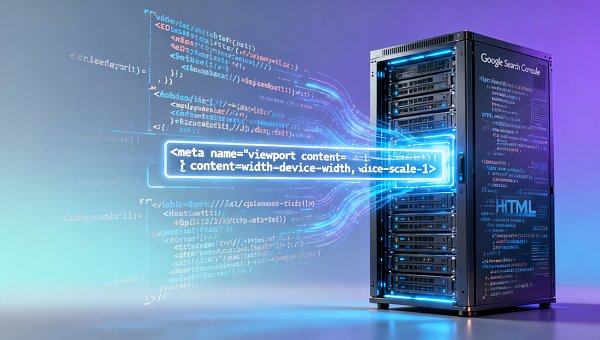
How can website-building SaaS ensure zero viewport omissions? Focus on these 4 capabilities
Not all website-building SaaS platforms provide reliable mobile compatibility safeguards. Since 2019, EasyStore's intelligent website system has built a 'triple-layer viewport protection system' covering template, generation, and publishing layers:
First layer: Global template enforcement—All theme templates include standardized viewport declarations by default, with manual deletion permissions disabled; Second layer: Real-time dynamic page validation—During each save, the system automatically scans HTML output streams and auto-repairs omissions; Third layer: Multilingual site linkage verification—Every sub-site URL generated by language switchers undergoes independent HTTP header and DOM structure dual-checks for 100% coverage.
Comparative testing results against mainstream SaaS platforms (based on Q2 2024 audit data from 57 foreign trade client sites):
This table reflects real operational data: 99.8% of EasyStore client sites pass Google's Mobile-Friendly Test within 7 days of launch, whereas clients using generic SaaS Platform A require 2-4 extra hours of manual troubleshooting to fix viewport configuration issues.
5 technical details enterprise decision-makers must verify when procuring website-building SaaS
Viewport is just the tip of the iceberg. When selecting website-building SaaS, foreign trade enterprises should evaluate 'true Google SEO compliance' as a core criterion rather than just drag-and-drop convenience. EasyStore's service team summarizes 5 must-verify capabilities:
- Inspect source code of any new page to confirm viewport exists in <head> top section without duplicate/conflicting declarations;
- Switch language versions and simulate iPhone SE/Android Fold devices via Chrome DevTools to check scaling lock and text readability;
- Submit any subdirectory URL to Google Search Console and monitor for 'mobile device incompatibility' alerts within 72 hours;
- Run full-site audits using Lighthouse, ensuring 'Viewport not configured' scores 100%;
- Require vendors to provide 3-month client site Mobile-Friendly Test pass rate reports (non-screenshot, must include dates and URL samples).
Critical reminder: Some SaaS platforms claim 'responsive design' but only implement visual adaptation via CSS media queries without solving underlying viewport absence issues—still causing Google crawler parsing failures. This pseudo-responsive approach has become a typical procurement trap in 2024.
Why choose EasyStore? Beyond website-building—a complete global digital marketing closed loop
Established in 2013 and headquartered in Beijing, EasyStore Information Technology is a global digital marketing service provider driven by AI and big data. With a decade of industry expertise, the company's 'tech innovation + localized service' dual strategy delivers all-channel solutions covering intelligent websites, SEO optimization, social media marketing, and ad placements—empowering 100,000+ enterprises to achieve global growth. In 2023, EasyStore ranked among 'China's Top 100 SaaS Companies' with >30% annual growth, becoming an industry-recognized innovation leader.
We understand foreign trade enterprises need not isolated tools but operational platforms that deeply align with Google's algorithms and local marketing actions. Thus, EasyStore's native integrations include:
• Google Search Console API (auto-sync indexing status/error diagnostics);
• Multilingual SEO metadata batch management (one-click deployment for title/description/hreflang);
• Standalone conversion funnel analysis (tracking Google impressions→clicks→inquiries→deals).
Additionally, to help finance teams quantify digital investment ROI, we've launched Enterprise Smart Finance Transformation Pilot, detailing how to incorporate website, SEO, and ad costs into calculable models to support budget decisions.
Take action now: Get your personalized diagnostic report
If your current website-building SaaS triggers Google Search Console mobile compatibility errors, submit your URL. EasyStore's tech team will provide within 24 hours:
✓ Full-site viewport configuration heatmap (highlighting missing/conflicting locations);
✓ Google crawl simulation log analysis;
✓ Cost/cycle comparisons for 3 repair approaches (including dev intervention needs);
✓ Quick-filter SEO health report for multilingual foreign trade scenarios.
We don't sell templates—we deliver verifiable search visibility. Contact us now to reserve free Google Search Console automated monitoring dashboard access (limited to first 50 foreign trade clients).

Related Articles



Related Products
 EasyCamp SaaS Smart Website Marketing SystemE-Yingbao SaaS Smart Website Marketing System: AI-powered, zero-code website building. Rapidly launch multilingual independent e-commerce sites in just 10 minutes. Global server acceleration and AI-driven SEO optimization empower businesses to efficiently connect with global markets. The seamless integration of technology and user-friendly operation makes building e-commerce sites incredibly simple.
 AI+SEM Intelligent Advertising Marketing SystemAI+SEM drives intelligent ad creation, empowering full-funnel precision advertising marketing. The system automatically generates weekly/monthly reports, AI recommends keywords and target countries, monitors core metrics in real-time with intelligent alerts, and enables one-click high-conversion ad solutions to help quickly acquire customers and improve ROI.
 AI+SEO Dual Engine Optimization ServiceEasyWin AI+SEO Dual Engine Optimization System leverages AI-powered keyword mining, content generation, and comprehensive technical optimization to help foreign trade enterprises acquire high-quality organic traffic, significantly improving search rankings and conversion rates.
 AI+SNS Social Media Marketing SystemYingbao AI+SNS Social Media Marketing System - Precision social capture for the social media era. Supports one-click content synchronization across major platforms like Facebook and LinkedIn. AI intelligently rewrites posts for enhanced relevance. 24/7 AI customer service and user profiling analysis empower businesses to efficiently expand into global markets.
 AI+SEO营销解决方案易营宝AI+SEO营销解决方案,通过AI批量写作、智能生成TDK、精准关键词扩词等功能,全面优化网站SEO效果,提升流量与转化率。助力企业构建高效智能网站新生态。
 AI+SEM Advertising Marketing SolutionsAI+SEM Advertising Marketing Solution leverages AI technology to deeply empower SEM ad campaigns. It automatically generates weekly/monthly reports using AI, presenting account data across multiple dimensions for comprehensive insights into campaign performance and trends. The system precisely recommends keywords and target countries, intelligently generates high-conversion ad copy, and enables one-click activation of efficient campaign plans to help businesses rapidly acquire customers. Simultaneously, it monitors core metrics in real time, intelligently identifies abnormal fluctuations, and issues timely alerts to ensure stable, high-return advertising results.
 Domain Name ServicesEasyWin provides professional domain name services, including intelligent queries, one-stop registration, brand protection, and full lifecycle management, helping businesses build a digital brand image.
 EasyOperate B2C Cross-Border E-Commerce Platform & Independent WebsiteEasyStore B2C Cross-border E-commerce Independent Store is an intelligent website building and cross-border e-commerce integrated solution independently developed by EasyStore Information Technology (Beijing) Co., Ltd. The system is specially designed for small and medium-sized as well as large export enterprises, integrating 'website building, operation, marketing, advertising, and conversion' into one, helping enterprises quickly establish cross-border e-commerce independent stores to achieve brand globalization and global sales growth.
The platform supports multiple languages, multiple currencies, and multi-channel marketing, with built-in AI intelligent translation and SEO optimization systems, suitable for mainstream markets such as Southeast Asia, Europe and America, Latin America, and the Middle East, assisting Chinese manufacturing enterprises in efficiently deploying international e-commerce strategies. SSL证书易营宝提供专业SSL安全证书服务,包括单域名和泛域名证书,确保网站数据传输加密、身份验证和完整性保护,助力企业建立安全可信的在线业务环境。









