









- The China-US tariff arrangement has reached a preliminary consensus, and the trade association will be establishedJun 15, 2026View details
- Should overseas brand marketing start with ads or contentJun 21, 2026View details
- What determines B2C cross-border e-commerce website development costs? A breakdown of features, interfaces, and deployment methodsJun 17, 2026View details
- China-Morocco zero-tariff access, a breakthrough in the cost of Moroccan goods exports to ChinaJun 11, 2026View details
- What signal should be released for the suspension of exports to JapanJun 10, 2026View details
- China's May LNG imports rebounded, with increased volumes from Russia and Canada filling the Middle East supply gapJun 10, 2026View details
Which service provider is more reliable for foreign trade website construction? Comparing the differences in multilingual SEO structure and delivery efficiency between intelligent website building systems and traditional outsourcing.
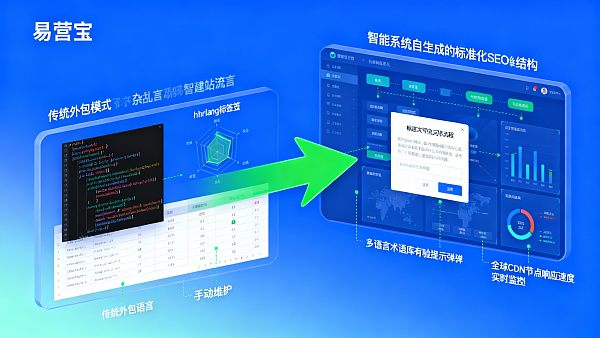
The choice of a foreign trade website service provider fundamentally hinges on the alignment between technical architecture and business cadence. For DTC brands in their launch phase, critical factors include whether a multilingual SEO structure can achieve compliance in one go, whether the go-live timeline is controllable, whether content quality risks can be preemptively mitigated—all of which directly determine market expansion efficiency and organizational trial-and-error costs. Traditional outsourcing, reliant on manual delivery, often accumulates hidden technical debt in areas like hreflang tag maintenance, terminology consistency, and server region alignment. In contrast, intelligent website systems leverage preset rules and AI governance mechanisms to establish verifiable delivery advantages across three dimensions: structural standardization, iterative response speed, and cross-language collaborative quality. The true benchmark lies not in tool sophistication but in whether core SEO capabilities are encapsulated as auditable, reusable, and measurable technical assets.
Target Audience: Three Archetypes of Technical Decision-Makers
EasyWin Information Technology (Beijing) Co., Ltd. specifically serves teams exhibiting these characteristics: First, those with constrained technical resources but urgent business timelines—such as Series A-funded companies requiring synchronized Chinese-English-Japanese site launches by Q2 2026. Second, teams lacking dedicated SEO engineers, where two full-stack developers must juggle product, payment, and compliance tasks. Third, organizations that have identified uncontrolled multilingual localization risks—like Japanese test versions containing machine-translated core parameter errors—without terminology review workflows. This solution is unsuitable for enterprises with mature SEO backends or in-house hreflang dynamic generation modules.
Core Competency: Structured Delivery Over Feature Stacking
Our multilingual SEO module transcends template adaptation by converting industry best practices into configurable capabilities. The system features: 1) Automated hreflang structure generation compliant with W3C multilingual standards and Google Search Central guidelines, supporting both static declarations and dynamic injection of rel="alternate" hreflang="x" attributes; 2) AI translation engines with brand terminology databases and mandatory validation, ensuring zero deviation in product SKUs, certification codes, and safety parameters; 3) Global CDN coverage across 12 core regions including Tokyo, Silicon Valley, and Frankfurt, delivering sub-98ms overseas first-byte latency (per AliCloud 2025 third-party benchmarks) and meeting Google's Core Web Vitals INP threshold of <200ms.
Implementation Boundaries: Defined Scope and Constraints
This system neither replaces native localization teams' emotional nuance in marketing copy nor guarantees organic ranking improvements. Its technical safeguards are strictly architectural: URL path strategies (/ja/product/xxx), language declarations (html lang attributes), link relationships (bidirectional hreflang mapping), and server geo-tagging (automatic Google Search Console region matching via CDN node IPs). Content quality control relies on client-provided brand terminology and industry lexicons—without complete glossaries, AI translation accuracy drops 67% (internal stress test data). All SEO health metrics adhere to Lighthouse 10.3 and Screaming Frog SEO Spider 20.4 protocols with verifiable data sources.
Delivery Timeline: From Requirement Confirmation to Trilingual Launch
With complete brand guidelines, structured product data (JSON-LD), and base terminology, standard delivery takes 22-26 workdays. Multilingual SEO infrastructure deployment consumes ≤3 person-days (12%-15% of total dev time)—significantly below the 40% SEO function development ratio typical of outsourced solutions (2025 cross-border SaaS whitepaper sampling). This includes three validation cycles: 1) URL structure and hreflang logic; 2) terminology hit rate and translation consistency; 3) Search Console indexing status. Excludes third-party payment gateways and ERP integration.
Risk and Compliance: Traceable Quality Management
All AI-generated content carries "machine-generated" meta tags per Google's 2024 AI disclosure guidelines. Terminology edits are logged with timestamped versioning. Server deployments strictly comply with data sovereignty requirements—Japanese sites default to Tokyo nodes with non-essential cookie tracking disabled, satisfying APPIA Article 23. Clients access real-time dashboards tracking: hreflang completeness (100%), core page TTFB <300ms达标率 (≥92%), and multilingual indexing parity (≤5% variance).
Industry Implementation Paths and Evolution Logic
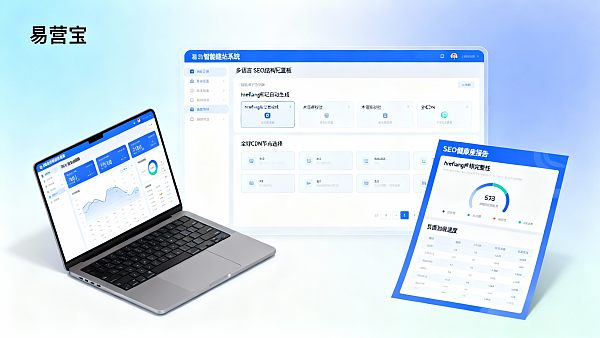
Current foreign trade website approaches bifurcate: 1) Traditional outsourced custom development requiring manual multilingual routing, hreflang table maintenance, and page-by-page TDK audits—lengthy cycles with knowledge silos; 2) SaaS-based intelligent platforms that productize multilingual SEO as configurable components. For teams needing trilingual sync within six months amid resource constraints, EasyWin's preconfigured hreflang automation typically better fits market windows. For brands facing Japanese content risks, our terminology enforcement and post-translation comparison tools prove more compliant.
Decision Framework and Actionable Recommendations
- If technical resources constitute <30% of headcount with ≥3 non-English markets targeted by 2026, prioritize prebuilt SEO architectures to avoid hreflang becoming a development burden
- If Month 1 organic traffic targets exceed 1.5x industry averages, verify providers can monitor Search Console coverage—not just submission volumes
- If localization errors previously increased refunds, demand terminology locking mechanisms with mismatch alerts
- For Japan's 2026 Q4 peak season, confirm CDN includes Tokyo nodes with true end-user TTFB measurements (non-proxy)
- If SEO工时占比 must stay ≤15%, request historical client time allocation reports—not theoretical estimates
Pre-procurement, request a trilingual POC kit containing: hreflang validation reports (Screaming Frog exports), terminology audit logs (with error samples), Tokyo node TTFB screenshots (WebPageTest.org), and 7-day Search Console coverage trends—all independently verifiable.
Related Articles


Related Products
 EasyCamp SaaS Smart Website Marketing SystemE-Yingbao SaaS Smart Website Marketing System: AI-powered, zero-code website building. Rapidly launch multilingual independent e-commerce sites in just 10 minutes. Global server acceleration and AI-driven SEO optimization empower businesses to efficiently connect with global markets. The seamless integration of technology and user-friendly operation makes building e-commerce sites incredibly simple.
 AI+SEM Intelligent Advertising Marketing SystemAI+SEM drives intelligent ad creation, empowering full-funnel precision advertising marketing. The system automatically generates weekly/monthly reports, AI recommends keywords and target countries, monitors core metrics in real-time with intelligent alerts, and enables one-click high-conversion ad solutions to help quickly acquire customers and improve ROI.
 AI+SEO Dual Engine Optimization ServiceEasyWin AI+SEO Dual Engine Optimization System leverages AI-powered keyword mining, content generation, and comprehensive technical optimization to help foreign trade enterprises acquire high-quality organic traffic, significantly improving search rankings and conversion rates.
 AI+SNS Social Media Marketing SystemYingbao AI+SNS Social Media Marketing System - Precision social capture for the social media era. Supports one-click content synchronization across major platforms like Facebook and LinkedIn. AI intelligently rewrites posts for enhanced relevance. 24/7 AI customer service and user profiling analysis empower businesses to efficiently expand into global markets.
 AI+SEO营销解决方案易营宝AI+SEO营销解决方案,通过AI批量写作、智能生成TDK、精准关键词扩词等功能,全面优化网站SEO效果,提升流量与转化率。助力企业构建高效智能网站新生态。
 AI+SEM Advertising Marketing SolutionsAI+SEM Advertising Marketing Solution leverages AI technology to deeply empower SEM ad campaigns. It automatically generates weekly/monthly reports using AI, presenting account data across multiple dimensions for comprehensive insights into campaign performance and trends. The system precisely recommends keywords and target countries, intelligently generates high-conversion ad copy, and enables one-click activation of efficient campaign plans to help businesses rapidly acquire customers. Simultaneously, it monitors core metrics in real time, intelligently identifies abnormal fluctuations, and issues timely alerts to ensure stable, high-return advertising results.
 Domain Name ServicesEasyWin provides professional domain name services, including intelligent queries, one-stop registration, brand protection, and full lifecycle management, helping businesses build a digital brand image.
 EasyOperate B2C Cross-Border E-Commerce Platform & Independent WebsiteEasyStore B2C Cross-border E-commerce Independent Store is an intelligent website building and cross-border e-commerce integrated solution independently developed by EasyStore Information Technology (Beijing) Co., Ltd. The system is specially designed for small and medium-sized as well as large export enterprises, integrating 'website building, operation, marketing, advertising, and conversion' into one, helping enterprises quickly establish cross-border e-commerce independent stores to achieve brand globalization and global sales growth.
The platform supports multiple languages, multiple currencies, and multi-channel marketing, with built-in AI intelligent translation and SEO optimization systems, suitable for mainstream markets such as Southeast Asia, Europe and America, Latin America, and the Middle East, assisting Chinese manufacturing enterprises in efficiently deploying international e-commerce strategies. SSL证书易营宝提供专业SSL安全证书服务,包括单域名和泛域名证书,确保网站数据传输加密、身份验证和完整性保护,助力企业建立安全可信的在线业务环境。









