









- Can Zhejiang foreign trade independent websites still be developed today? Look at changes in traffic and lead generationJul 28, 2026View details
- What New Signals Are Emerging in Enterprise Services SaaS Marketing ReportsJul 27, 2026View details
- What Does a Global Traffic Ecosystem Service Provider Do? What Are the Differences from a Single Advertising AgencyJul 16, 2026View details
- What should you focus on in the latest enterprise SaaS report? From renewal rates and delivery costs to overseas growth opportunitiesJul 12, 2026View details
- What signals are worth paying attention to in a cross-border marketing trend report? B2B companies should look at these 6 signalsJul 11, 2026View details
- How to Read a Cross-Border Marketing Trends Report? Five Key Dimensions for Evaluating Channel OpportunitiesJul 11, 2026View details
- Which channel has the highest ROI in the global traffic ecosystem? Comparative analysis of search, social media, and advertisingJul 10, 2026View details
- What multilingual website services are available in Sanya? Which model is more suitable for local businesses going global?Jul 08, 2026View details
What factors affect the construction timeline of a multilingual foreign trade website
How long it takes to build a multilingual foreign trade website depends on the complexity of the functions, the number of languages, site acceleration optimization, and the SEO strategy. Compared with ordinary websites, multilingual foreign trade websites place greater emphasis on localization and international digital marketing services, so the timeline, cost, and risk all need to be evaluated comprehensively.
For information researchers, business decision-makers, after-sales maintenance staff, as well as dealers, distributors, and agents, the main concern is not only “how soon it can go live,” but whether it can support overseas customer acquisition, inquiry conversion, and subsequent maintenance after launch. Especially under the integrated website + marketing service model, the website-building timeline is often closely related to content preparation, technical integration, SEO planning, and localized operations.
Since its establishment in 2013, Easy-Biz Information Technology (Beijing) Co., Ltd. has long served global growth scenarios. Relying on artificial intelligence and big data capabilities, it connects intelligent website building, SEO optimization, social media marketing, and advertising placement. For enterprises, understanding the factors that affect the construction timeline of a multilingual foreign trade website helps arrange budgets, schedules, and marketing launch rhythms more accurately.
Why multilingual foreign trade website development takes longer than a standard corporate website

A standard showcase website usually takes about 7–15 days, while a multilingual foreign trade website generally requires 3–8 weeks. If it involves multi-country versions, inquiry systems, CRM integration, or overseas SEO deployment, the timeline may extend to 8–12 weeks. The reason is not simply an increase in the number of pages, but a change in the delivery standards.
The first type of difference comes from languages and localization. Expanding one Chinese website into 2 languages and expanding it into 6 languages does not mean the workload grows linearly. In addition to text translation, it also involves localization of menu structure, URL rules, image copy, form fields, time zones, currencies, contact methods, and privacy terms.
The second type of difference comes from the simultaneous advancement of technology and marketing. Launching a foreign trade website does not end when the “pages are completed.” It is also necessary to consider Google crawling logic, site speed, mobile adaptation, CDN acceleration, structured content planning, and the ability to expand subsequent advertising landing pages. Without early-stage planning, later rework often increases the time cost by 20%–40%.
The third type of difference comes from a more complex target audience. From the first visit to submitting an inquiry, foreign trade customers may go across more than 3 pages and will focus on qualifications, product specifications, delivery capabilities, after-sales support, and contact methods. Therefore, website construction is not just a design task, but also part of a digital marketing conversion system.
Timeline differences between multilingual websites and standard websites
The table below can help enterprises quickly determine why there are significant differences in the construction timelines of different types of websites.
As can be seen from the table, the core of a multilingual foreign trade website construction timeline is not just “building pages,” but “balancing customer acquisition and operations.” If an enterprise plans to run Google Ads or carry out organic search optimization later, the initial architecture must be planned properly in one go. Otherwise, modifying URLs, categories, and language directories later can easily affect indexing and promotion rhythm.
5 key factors that determine the construction timeline
The factors affecting the construction timeline of a multilingual foreign trade website can usually be summarized into 5 categories: functional complexity, number of languages, degree of content preparation, technical environment, and SEO depth. The differences among enterprises in these 5 dimensions directly determine whether the project can go live in 4 weeks or requires more than 10 weeks to complete.
1. Functional complexity
If it only includes basic display, product listings, and contact forms, the development timeline is relatively controllable; but once features such as online inquiry distribution, quotation downloads, member center, dealer portal, or ERP/CRM interfaces are added, development and testing time often increases by 30%–60%. In particular, multi-end data synchronization requires reserved time for integration and debugging.
2. Number of languages and quality requirements
2 languages and 5 languages are not on the same scale. The more languages there are, the more necessary it becomes to unify translation standards, keyword mapping, and localization review. If the target markets cover English, Spanish, Arabic, and other languages with different writing directions or grammatical structures, the front-end adaptation and review cycle will be further extended.
3. Content preparation efficiency
Many project delays are not caused by technical problems, but by insufficient internal preparation of materials by the enterprise. Common gaps include inconsistent company profile versions, incomplete product specifications, low-resolution case images, and missing certification materials. If key materials need to be supplemented while the project is underway, the overall timeline may be delayed by 1–3 weeks.
4. Server and acceleration deployment
For websites targeting users in Europe, America, the Middle East, or Southeast Asia, overseas access speed often needs to be considered. Server region selection, CDN node configuration, image compression strategy, caching rules, and HTTPS security deployment all affect the pre-launch testing cycle. In general, speed optimization requires at least 2–5 working days for verification.
5. Depth of SEO strategy
If it is only basic website building, the timeline will be shorter; if keyword layout, title descriptions, language tags, content clusters, internal linking logic, and sitemaps are planned simultaneously, then the early-stage planning will be more detailed, but the customer acquisition foundation after launch will be more stable. For enterprises engaged in long-term international marketing, this part of the time investment is usually worthwhile.
Checklist recommended for confirmation before project launch
- Clarify whether the target market is 1 country or 3 or more regions, to avoid frequent later changes to languages and categories.
- Prepare a complete product information package, including specifications, application scenarios, delivery methods, frequently asked questions, and after-sales policies.
- Determine the inquiry conversion path, such as forms, WhatsApp, email, phone, or dealer portal.
- Decide in advance whether SEO, advertising landing pages, and social media redirects are needed, so as to avoid redoing the architecture later.
Among these 5 factors, content preparation and SEO planning are the easiest to underestimate. For enterprises with more complex dealer systems, the website may also need to support channel display and after-sales support functions. Therefore, information architecture, permission logic, and later maintenance plans should be considered from the early stage of website building.
How to judge common delivery timelines for different project types
To make scheduling easier for enterprises, the construction timeline of a multilingual foreign trade website can be estimated based on project type. It should be noted that the following timeframes fall within common industry ranges, on the premise that communication between both parties is smooth, materials are relatively well prepared, and there are no major revisions midway.
If an enterprise is preparing for exhibitions, seasonal promotions, or overseas advertising campaigns, it is recommended to start the website project at least 4–8 weeks in advance. If SEO content or localized landing pages are also planned to go live at the same time, it is best to reserve more than 8 weeks to ensure more stable testing, indexing, and promotional integration.
Reference table of common project timelines
The table below is suitable for internal reporting or supplier communication, helping determine the normal construction time range for different types of projects.
When judging the timeline, it is also necessary to look at the acceptance standards. If the acceptance only requires that the “pages can be opened,” the time will be shorter; if it also requires “accurate multilingual switching, complete mobile adaptation, speed compliance, trackable forms, and usable basic SEO at launch,” then the testing and correction phase must be included in the plan, usually adding 5–10 working days.
In enterprise digitalization, websites are often not standalone modules. Research such as On the Path of Enterprise Financial Management Informatization Construction in the Context of the Digital Economy also reminds enterprises that when planning front-end marketing platforms, they should simultaneously consider back-end information system coordination, so as to avoid fragmentation among marketing data, customer leads, and internal processes.
How to shorten the construction timeline while avoiding later rework
Many enterprises hope to “go live as soon as possible,” but the truly efficient approach is not to compress necessary steps, but to reduce repeated confirmations and duplicated development. Experience shows that if project requirements are unclear in the early stage, the delay caused by rework later is often much higher than spending an extra 3–5 days sorting out requirements at the beginning.
Manage the project rhythm in 4 stages
- Requirement sorting stage: confirm languages, categories, functions, target markets, and inquiry paths within 1–3 days.
- Content and prototype stage: complete material collection, page planning, and key module confirmation within 3–7 days.
- Development and testing stage: complete front-end and back-end production, multi-device debugging, and form integration testing within 7–20 days.
- Launch and optimization stage: complete DNS resolution, monitoring, acceleration, search engine submission, and basic training within 2–5 days.
It is best for the enterprise to designate 1 project leader internally to coordinate opinions from branding, product, technical, and management teams. If one page needs to go through layered approvals from more than 3 departments, the project timeline can easily be extended by an additional 1–2 weeks. For foreign trade enterprises, centralized decision-making is more important than frequent reversals.
Prepare these contents in advance for more noticeable efficiency improvement
- Prepare at least 10–30 high-definition product images, and label the model, use, and selling points.
- Organize 5–10 core product categories to avoid frequently adding new levels during website construction.
- Prepare English company information, service scope, delivery process, and frequently asked questions.
- Clarify the target keyword direction, such as product keywords, industry keywords, regional keywords, and solution keywords.
If the enterprise also plans to carry out social media marketing, search promotion, or content marketing later, it is recommended to choose an integrated website + marketing service team. In this way, landing page structure, tracking code deployment, inquiry allocation, and later content expansion can all be considered simultaneously during the website-building stage, without needing to dismantle and modify the system again after launch.
For after-sales maintenance staff, backend usability also affects long-term efficiency. Whether categories are easy to update, whether language versions can be managed independently, whether form leads can be exported, and whether images support batch compression—although these details may not be obvious, they determine the actual maintenance cost of the website within 6 months after launch.
What capabilities enterprises should focus on when selecting a supplier
The construction timeline of a multilingual foreign trade website is greatly affected by supplier capability. Some teams are good at design but do not understand international search layout; others are good at development but lack localized copywriting and conversion thinking. When choosing a partner, enterprises should not only compare prices and homepage visual effects, but also check whether the project methodology is complete.
It is recommended to focus on evaluating 6 capabilities
- Whether they have experience in multilingual website construction and can handle language directories, hreflang logic, and multi-regional content differences.
- Whether they understand overseas marketing scenarios and can not only create displays, but also balance inquiry conversion and subsequent promotion.
- Whether they can provide speed optimization, mobile adaptation, security deployment, and basic monitoring configuration.
- Whether they have a clear project schedule, acceptance milestones, and feedback timeliness standards.
- Whether they support subsequent SEO, advertising placement, social media marketing, and content update services.
- Whether they can provide training and operation support to help enterprises reduce later maintenance barriers.
Taking service providers such as Easy-Biz Information Technology (Beijing) Co., Ltd., which has long been deeply engaged in global digital marketing, as an example, their advantage lies in connecting technical delivery with marketing goals. For enterprises, this means the website is designed around growth from the very beginning, rather than patching in strategy, structure, and promotional interfaces after going live.
FAQ: Common decision-making questions
Does a multilingual foreign trade website have to launch many languages all at once?
Not necessarily. If the enterprise is currently focusing mainly on 2 key markets, it is recommended to launch 2–3 languages first and refine the structure, content, and conversion path. Expanding into more languages later is usually more stable than rolling out more than 5 languages at the beginning, and it is also more helpful for controlling budget and timeline.
How soon after the website goes live can promotion begin?
Advertising can usually start immediately after the basic testing is completed, commonly 1–3 days after launch; organic search optimization, however, requires continuous content building and technical maintenance, and should usually be planned simultaneously during the website-building stage. If SEO is only considered after the website is fully completed, the overall customer acquisition rhythm will be significantly delayed.
What problems do maintenance staff fear most?
The most common issues are a difficult-to-use backend, language versions overwriting each other, needing to modify multiple pages for one update, and the inability to manage form leads in a unified way. Choosing a service team that supports independent multilingual maintenance, has clear template standards, and provides training support can greatly reduce long-term operation and maintenance pressure. If the enterprise is also advancing internal management digitalization, reading content such as On the Path of Enterprise Financial Management Informatization Construction in the Context of the Digital Economy can also help in understanding the importance of front-end and back-end coordination on a broader scale.
There is no fixed answer to the construction timeline of a multilingual foreign trade website, but the judging logic is clear: look at functional complexity, number of languages, content preparation, technical deployment, SEO depth, and whether the supplier has integrated website and marketing capabilities. For enterprises planning to expand overseas, a short timeline does not equal high efficiency. What really matters is less rework, better conversion, and easier maintenance.
If you are evaluating construction solutions for a multilingual corporate website, overseas marketing site, or international brand website, it is recommended to sort out your target markets, category structure, and promotion needs as early as possible. Choosing a service team that understands both website building and global digital marketing can help you more steadily control delivery rhythm and subsequent growth paths. You are welcome to consult further to obtain customized solutions and implementation recommendations that better match your current business stage.
Related Articles
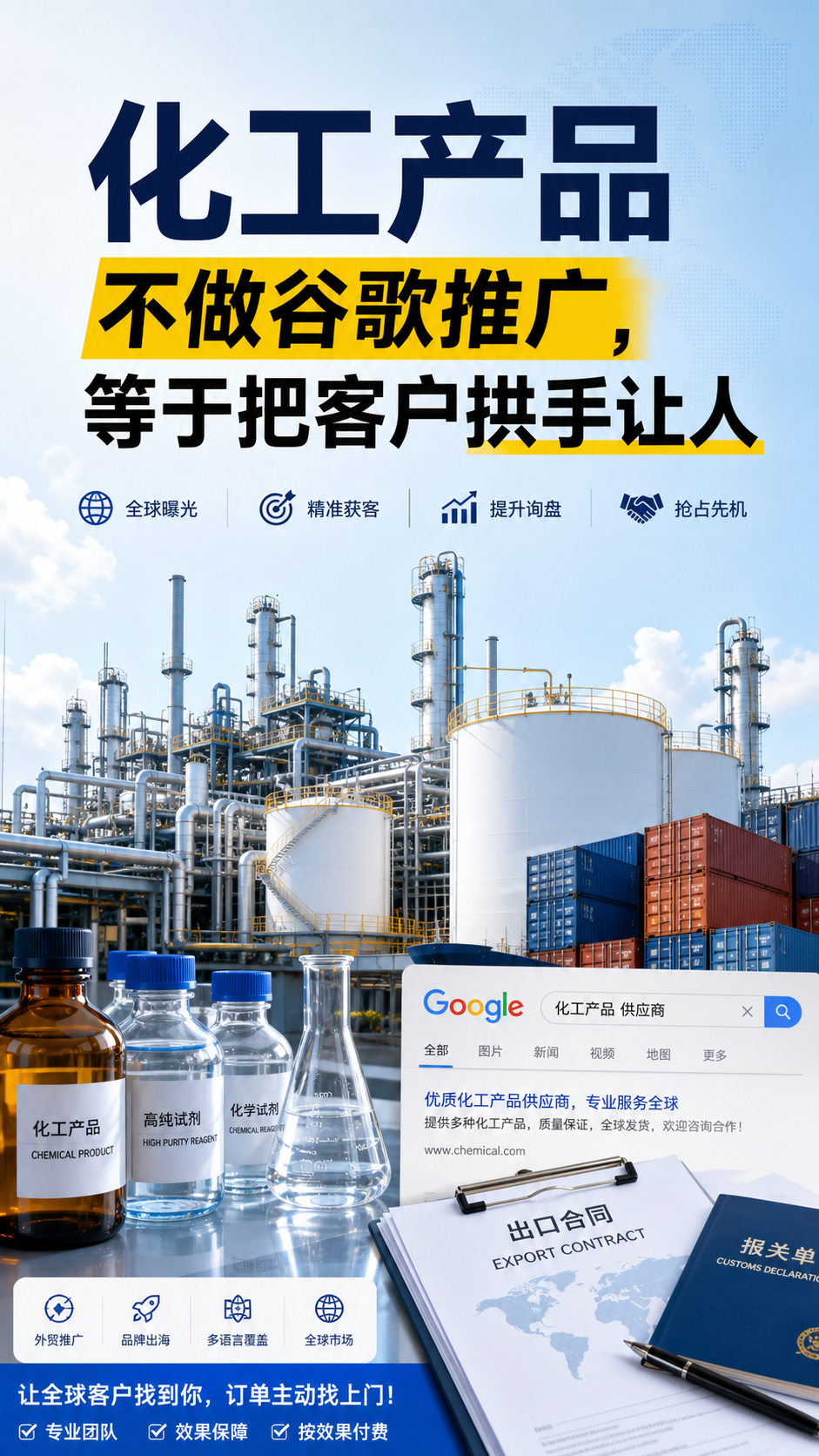
 Promoting chemical products on Google is essential—otherwise, you are effectively handing your customers over to competitors
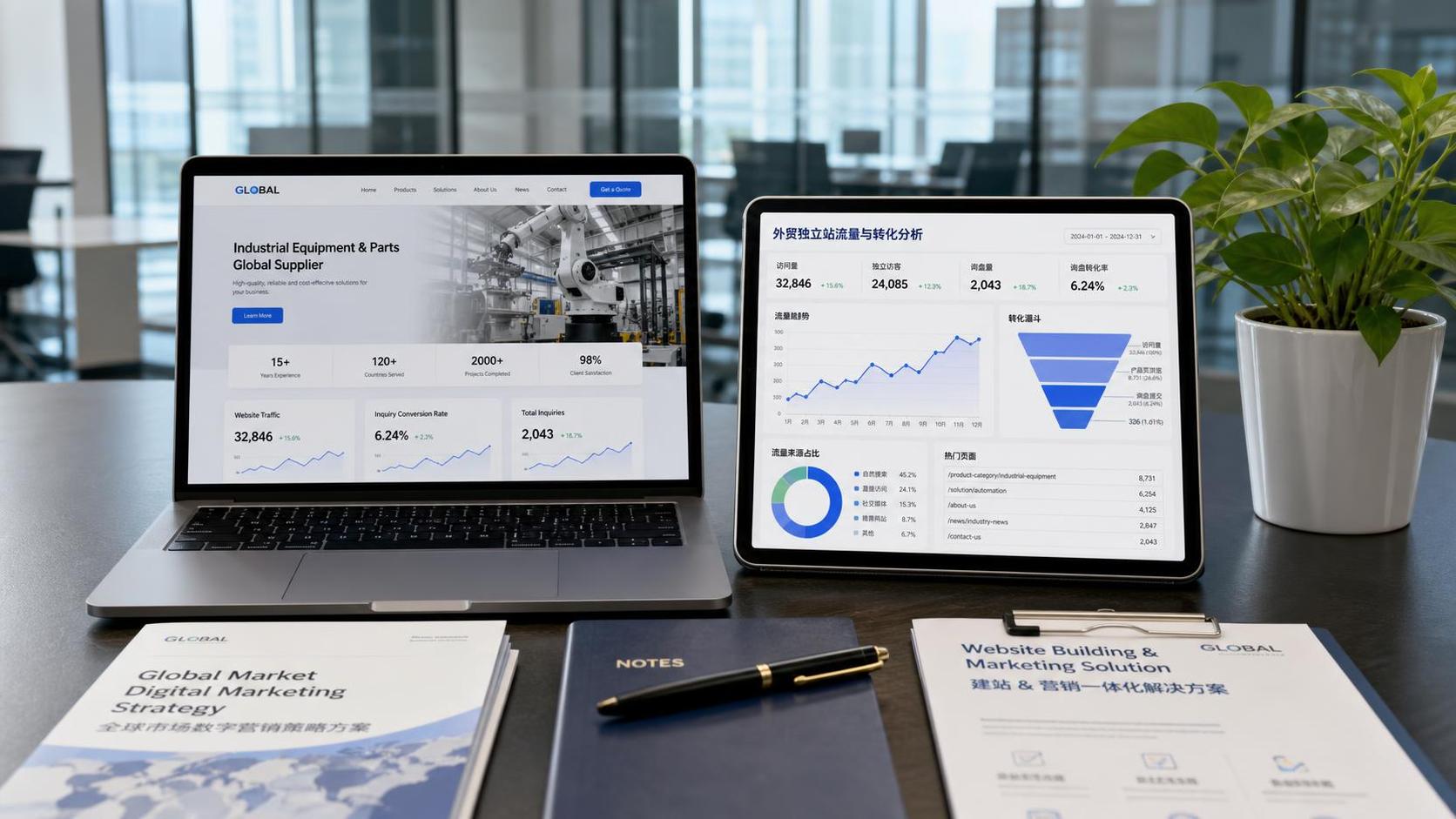
 Can Zhejiang foreign trade independent websites still be developed today? Look at changes in traffic and lead generation
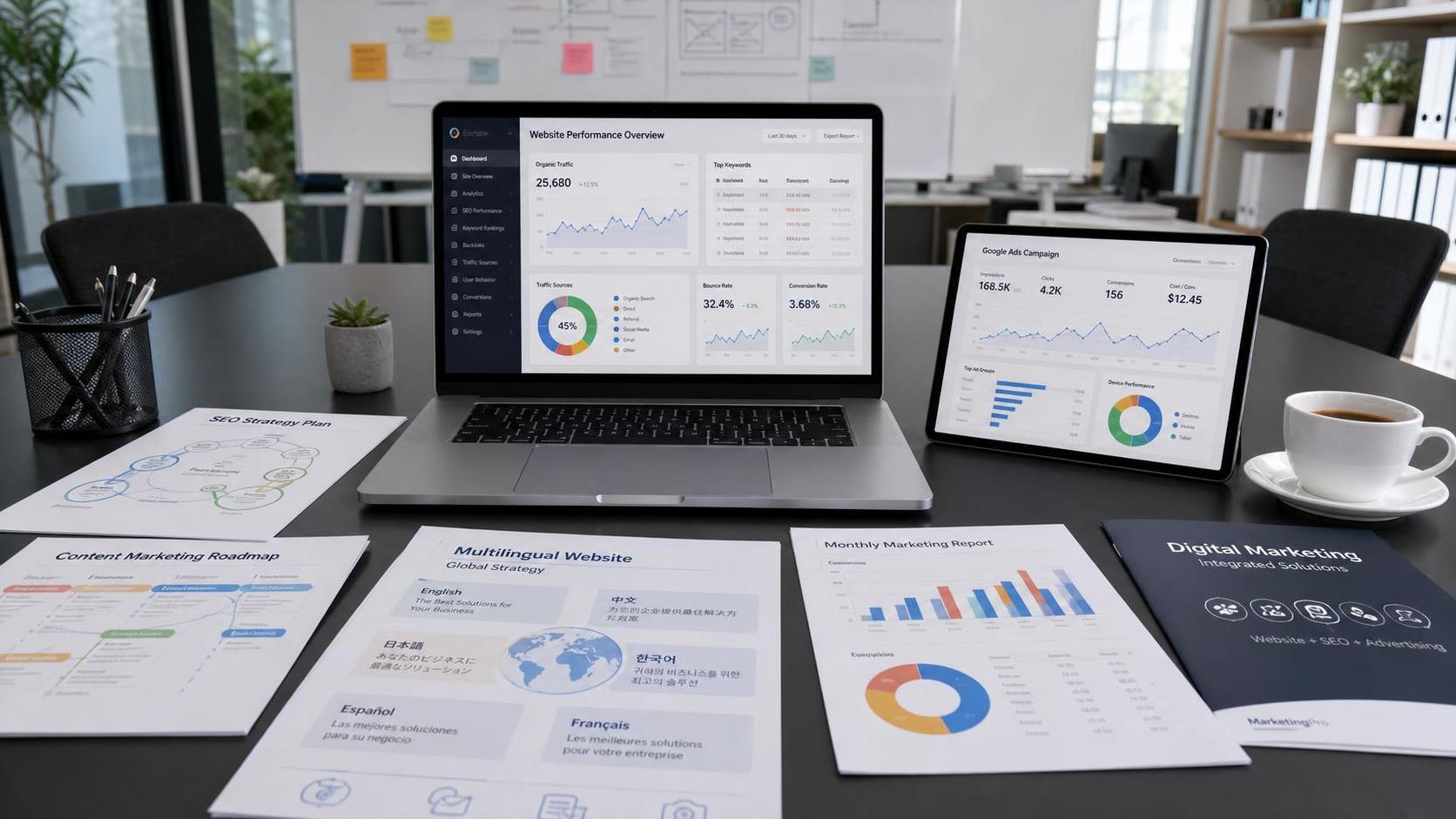
 What New Signals Are Emerging in Enterprise Services SaaS Marketing Reports
Related Products
 EasyCamp SaaS Smart Website Marketing SystemE-Yingbao SaaS Smart Website Marketing System: AI-powered, zero-code website building. Rapidly launch multilingual independent e-commerce sites in just 10 minutes. Global server acceleration and AI-driven SEO optimization empower businesses to efficiently connect with global markets. The seamless integration of technology and user-friendly operation makes building e-commerce sites incredibly simple.
 AI+SEM Intelligent Advertising Marketing SystemAI+SEM drives intelligent ad creation, empowering full-funnel precision advertising marketing. The system automatically generates weekly/monthly reports, AI recommends keywords and target countries, monitors core metrics in real-time with intelligent alerts, and enables one-click high-conversion ad solutions to help quickly acquire customers and improve ROI.
 AI+SEO Dual Engine Optimization ServiceEasyWin AI+SEO Dual Engine Optimization System leverages AI-powered keyword mining, content generation, and comprehensive technical optimization to help foreign trade enterprises acquire high-quality organic traffic, significantly improving search rankings and conversion rates.
 AI+SNS Social Media Marketing SystemYingbao AI+SNS Social Media Marketing System - Precision social capture for the social media era. Supports one-click content synchronization across major platforms like Facebook and LinkedIn. AI intelligently rewrites posts for enhanced relevance. 24/7 AI customer service and user profiling analysis empower businesses to efficiently expand into global markets.
 AI+SEO营销解决方案易营宝AI+SEO营销解决方案,通过AI批量写作、智能生成TDK、精准关键词扩词等功能,全面优化网站SEO效果,提升流量与转化率。助力企业构建高效智能网站新生态。
 AI+SEM Advertising Marketing SolutionsAI+SEM Advertising Marketing Solution leverages AI technology to deeply empower SEM ad campaigns. It automatically generates weekly/monthly reports using AI, presenting account data across multiple dimensions for comprehensive insights into campaign performance and trends. The system precisely recommends keywords and target countries, intelligently generates high-conversion ad copy, and enables one-click activation of efficient campaign plans to help businesses rapidly acquire customers. Simultaneously, it monitors core metrics in real time, intelligently identifies abnormal fluctuations, and issues timely alerts to ensure stable, high-return advertising results.
 Domain Name ServicesEasyWin provides professional domain name services, including intelligent queries, one-stop registration, brand protection, and full lifecycle management, helping businesses build a digital brand image.
 EasyOperate B2C Cross-Border E-Commerce Platform & Independent WebsiteEasyStore B2C Cross-border E-commerce Independent Store is an intelligent website building and cross-border e-commerce integrated solution independently developed by EasyStore Information Technology (Beijing) Co., Ltd. The system is specially designed for small and medium-sized as well as large export enterprises, integrating 'website building, operation, marketing, advertising, and conversion' into one, helping enterprises quickly establish cross-border e-commerce independent stores to achieve brand globalization and global sales growth.
The platform supports multiple languages, multiple currencies, and multi-channel marketing, with built-in AI intelligent translation and SEO optimization systems, suitable for mainstream markets such as Southeast Asia, Europe and America, Latin America, and the Middle East, assisting Chinese manufacturing enterprises in efficiently deploying international e-commerce strategies. SSL证书易营宝提供专业SSL安全证书服务,包括单域名和泛域名证书,确保网站数据传输加密、身份验证和完整性保护,助力企业建立安全可信的在线业务环境。









