









- How to view pricing in the global traffic ecosystem? Cost comparison of search, social media, and content channel advertisingJul 06, 2026View details
- How to assess foreign trade website development trends?Looking at 2026 changes from multilingual,AI content to conversion pathsJul 04, 2026View details
- What are the new trends in multilingual marketing data analytics tools in 2026? Focus on attribution、automation and complianceJul 04, 2026View details
- Is Brand Globalization Marketing Consulting Worth Buying? At What Stage Should Companies Bring It InJul 01, 2026View details
- Cross-Border Marketing Trend Research: Why More and More Companies Are Starting to Deploy AI Search and GEO OptimizationJun 30, 2026View details
- Cross-Border Marketing Trend Research: How Independent Sites, AI Content, and Short-Video Customer Acquisition Are ChangingJun 30, 2026View details
How to Acquire Customers for a Foreign Trade Independent Website? B2B Channel Integration and ROI Evaluation Methods

Want to know how to acquire customers for a foreign trade independent site? This article combines B2B channel integration with ROI evaluation to provide actionable customer acquisition strategies and practical tools. As a guide for end-users and enterprise decision-makers, it focuses on customer profiling, functional requirements, channel integration pathways, and data-driven evaluation methods for foreign trade independent sites. Common concerns for project managers and after-sales personnel include: How to build a foreign trade independent site? What features does a foreign trade independent site need? Are independent sites suitable for B2B foreign trade? Addressing these FAQs, each section offers executable steps and measurable KPIs to help distributors and end-consumers understand implementation workflows and expected outcomes, while balancing technical feasibility and maintenance cost control for operations teams.
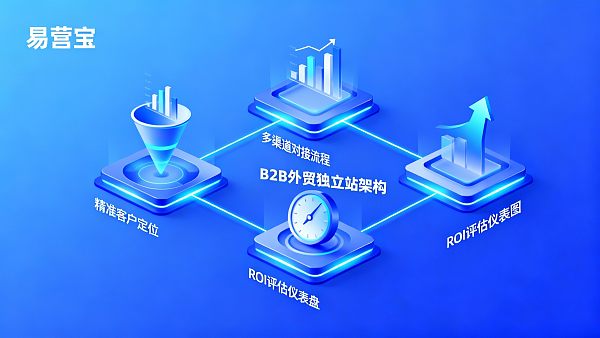
Define Target Customers and Channel Priority: Positioning Is the First Step in Customer Acquisition
In B2B scenarios, how do foreign trade independent sites acquire customers? The answer begins with precise customer positioning and channel selection. Start by segmenting industries and products to define buyer personas including company size, purchase frequency, decision cycles, and key stakeholder roles. Then evaluate channel priorities—common effective channels include: trade show and procurement platform lead generation, high-intent outreach via LinkedIn/email marketing, long-term engagement through vertical industry media/content marketing, and Google/Baidu search-ad combinations. Implement tiered management for each channel (e.g., setting SLA-based lead quality standards and rapid response mechanisms) to boost B2B conversion rates. Project owners should establish periodic review cycles, optimizing initial outreach templates, landing page content, and form fields via A/B testing to reduce friction and improve lead conversion. This section also answers: How long does it typically take to launch a foreign trade independent site? With defined scope and content, standard B2B sites can go live in 4-8 weeks, while complex e-commerce or multilingual sites may require longer.
Building High-Conversion Independent Sites and Feature Matrix: A Complete Technical-to-Experience Checklist
What features do foreign trade independent sites need? For B2B enterprises, functionalities extend beyond basic product displays and multilingual support to include quote requests, permission management, price catalogs, bulk ordering, and reconciliation tools. Technically, sites must meet international SEO standards, structured data, mobile-first optimization, and fast-loading strategies—why does page speed matter? It directly impacts search rankings and business responsiveness, especially critical for overseas visitors with slower connections. Recommended solutions: multilingual CMS, geo-distributed CDN, automated translation, and localized payment gateways. Can AI accelerate independent site development? Absolutely—AI aids in auto-generating TDK (title/description/keywords), content expansion, and image creation, reducing launch timelines while ensuring consistency. To balance domestic/global search traffic and mobile experience, evaluate solutions like mobile acceleration technologies (e.g., official AMP standards significantly improve mobile conversion rates and page performance). Many enterprises achieve millisecond-level load speeds through acceleration tech, reducing bounce rates and increasing qualified inquiries. Optional industry-leading products can implement multilingual AMP/MIP dual-engine coverage for global accessibility and local experience. In practice, weigh construction costs against long-term ROI for foreign trade independent sites.
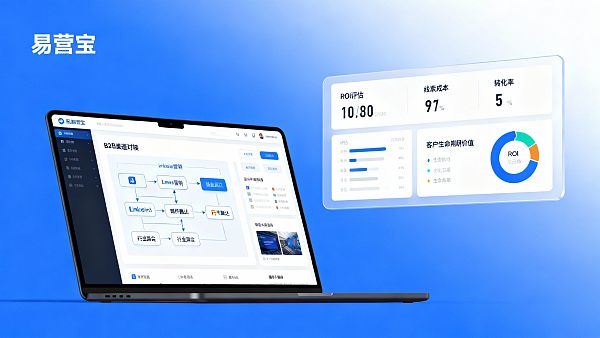
B2B Channel Integration Practical Methods: Designing Touchpoints from Leads to Contracts
B2B customer acquisition isn’t about stacking single channels but closed-loop design integrating channels and workflows. Operational steps: 1) Allocate channels and map resources—distribute potential clients by industry/interest across exhibitions, search, social media, and agent channels; 2) Build multi-touchpoint strategies combining LinkedIn outreach, email sequences, content marketing, and targeted ads; 3) Design landing pages/forms centered on corporate procurement decisions—minimize mandatory fields while offering sample requests, whitepapers, and certifications to build trust; 4) Link CRM with automated marketing engines to timestamp every stage from first visit to quotes, samples, and contracts; 5) Standardize channel partner agreements on protocols, commission rules, and post-sale responsibilities to avoid disputes. For performance measurement, set KPIs like MQL-to-SQL conversion rates, cost per acquired customer, average deal cycles, and customer lifetime value. Addressing slow overseas traffic? Pre-channel technical checks should prioritize near-origin nodes and mobile-optimized templates to reduce latency, ensuring sales teams don’t lose opportunities due to technical delays.
ROI Evaluation and Data Loop Optimization: Quantifying Input-Output for Repeatable Decision-Making

Evaluating how foreign trade independent sites acquire customers ultimately circles back to ROI and repeatability. Recommended ROI models use stepwise attribution to break down traffic acquisition costs by channel/campaign/creative, applying multi-touch attribution to understand each touchpoint’s marginal contribution. Key metrics: cost per qualified lead, lead-to-order conversion rates, average order value, and customer repurchase rates. Building data loops requires three capabilities: 1) integrating channel and CRM data; 2) implementing unified tracking/event standards on-site; 3) establishing quarterly business reviews to adjust channel weights by market. Pilot testing in smaller markets is advised to validate traffic strategies and page conversions before scaling. Technically, prioritize page speed, core Web Vitals, and server response times—automated monitoring/alerts significantly reduce lead loss from performance issues. With AI in content generation, platforms can produce thousands of localized pages and run real-time A/B tests to lower acquisition costs and boost overall ROI.
Conclusion & Action Plan: Foreign trade independent sites are systematic projects combining technology, market, and operational capabilities. Success hinges on precise positioning, feature-experience balance, standardized B2B channel workflows, and continuous data-driven optimization. For enterprises seeking global mobile/search advantages, prioritize solving mobile performance and multilingual coverage bottlenecks. Adopting Google/Baidu-compliant acceleration technologies delivers dual returns in search visibility and user experience. For example, implementing AMP/MIP solutions ensures millisecond loading alongside multilingual/localized payments, directly increasing lead conversion. To explore cross-border e-commerce localization solutions, learn more about EasyStore’s AMP/MIP mobile site builder capabilities and case studies. Contact us for free diagnostics or request a demo to evaluate how your independent site can achieve higher B2B acquisition efficiency and stable ROI.
- Foreign Trade Independent Website Development
- Standalone website development
- Yiyingbao
- SEO
- Independent Website
- Smart Website Building
- Independent foreign trade website
- cross-border e-commerce
- How to build a foreign trade independent station?
- What features are needed for a foreign trade independent website?
- How long does it usually take for a foreign trade independent website to go online?
- How can a foreign trade independent website acquire customers?
- Is a standalone website suitable for B2B foreign trade?
- Why is website loading speed so important?
Related Articles
 Rising European Shipping Costs Extend the Inquiry Conversion Cycle in Europe
 How to avoid data distortion in website traffic analysis? The GA4 and heatmap joint verification method
 For SaaS companies expanding their brands globally,should they build an official website first or run ads first?How can the growth path be planned more steadily

Related Products
 EasyCamp SaaS Smart Website Marketing SystemE-Yingbao SaaS Smart Website Marketing System: AI-powered, zero-code website building. Rapidly launch multilingual independent e-commerce sites in just 10 minutes. Global server acceleration and AI-driven SEO optimization empower businesses to efficiently connect with global markets. The seamless integration of technology and user-friendly operation makes building e-commerce sites incredibly simple.
 AI+SEM Intelligent Advertising Marketing SystemAI+SEM drives intelligent ad creation, empowering full-funnel precision advertising marketing. The system automatically generates weekly/monthly reports, AI recommends keywords and target countries, monitors core metrics in real-time with intelligent alerts, and enables one-click high-conversion ad solutions to help quickly acquire customers and improve ROI.
 AI+SEO Dual Engine Optimization ServiceEasyWin AI+SEO Dual Engine Optimization System leverages AI-powered keyword mining, content generation, and comprehensive technical optimization to help foreign trade enterprises acquire high-quality organic traffic, significantly improving search rankings and conversion rates.
 AI+SNS Social Media Marketing SystemYingbao AI+SNS Social Media Marketing System - Precision social capture for the social media era. Supports one-click content synchronization across major platforms like Facebook and LinkedIn. AI intelligently rewrites posts for enhanced relevance. 24/7 AI customer service and user profiling analysis empower businesses to efficiently expand into global markets.
 AI+SEO营销解决方案易营宝AI+SEO营销解决方案,通过AI批量写作、智能生成TDK、精准关键词扩词等功能,全面优化网站SEO效果,提升流量与转化率。助力企业构建高效智能网站新生态。
 AI+SEM Advertising Marketing SolutionsAI+SEM Advertising Marketing Solution leverages AI technology to deeply empower SEM ad campaigns. It automatically generates weekly/monthly reports using AI, presenting account data across multiple dimensions for comprehensive insights into campaign performance and trends. The system precisely recommends keywords and target countries, intelligently generates high-conversion ad copy, and enables one-click activation of efficient campaign plans to help businesses rapidly acquire customers. Simultaneously, it monitors core metrics in real time, intelligently identifies abnormal fluctuations, and issues timely alerts to ensure stable, high-return advertising results.
 Domain Name ServicesEasyWin provides professional domain name services, including intelligent queries, one-stop registration, brand protection, and full lifecycle management, helping businesses build a digital brand image.
 EasyOperate B2C Cross-Border E-Commerce Platform & Independent WebsiteEasyStore B2C Cross-border E-commerce Independent Store is an intelligent website building and cross-border e-commerce integrated solution independently developed by EasyStore Information Technology (Beijing) Co., Ltd. The system is specially designed for small and medium-sized as well as large export enterprises, integrating 'website building, operation, marketing, advertising, and conversion' into one, helping enterprises quickly establish cross-border e-commerce independent stores to achieve brand globalization and global sales growth.
The platform supports multiple languages, multiple currencies, and multi-channel marketing, with built-in AI intelligent translation and SEO optimization systems, suitable for mainstream markets such as Southeast Asia, Europe and America, Latin America, and the Middle East, assisting Chinese manufacturing enterprises in efficiently deploying international e-commerce strategies. SSL证书易营宝提供专业SSL安全证书服务,包括单域名和泛域名证书,确保网站数据传输加密、身份验证和完整性保护,助力企业建立安全可信的在线业务环境。









