Foreign trade enterprises face the dilemma of choosing between independent websites and platform stores: Independent websites can shape brand image and master data ownership, while platform stores come with built-in traffic but intense competition. This article provides an in-depth analysis of the core differences between the two from dimensions such as SEO optimization, customer trust, and conversion rates, offering scientific decision-making strategies for businesses to quickly build high-converting independent websites using AI technology.
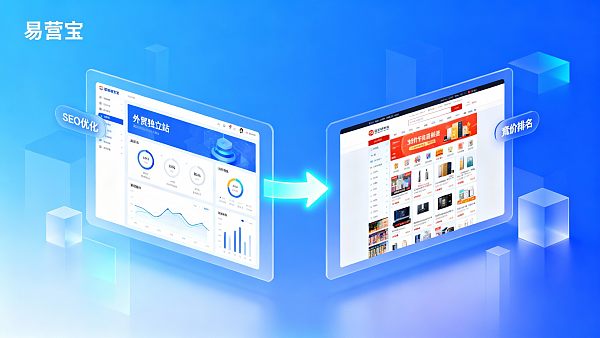
1. Core Differences Between Independent Websites and Platform Stores for Foreign Trade
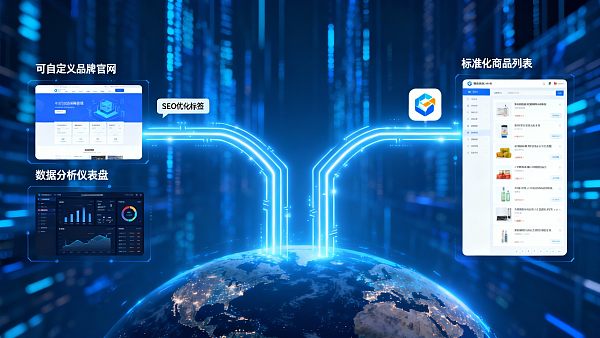
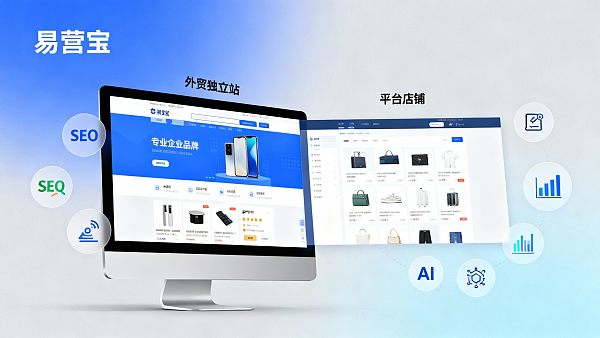
In the wave of global digital marketing, foreign trade enterprises often face the binary choice between "independent websites" and "platform stores." Essentially, independent websites are official websites built and owned by enterprises, offering complete brand control and data ownership, while platform stores rely on third-party e-commerce platforms like Amazon and eBay for online sales. The core differences between the two are reflected in the following five dimensions:
- Traffic Acquisition Methods: Platform stores depend on internal traffic distribution mechanisms and require high advertising costs for exposure, while independent websites attract traffic through SEO and social media marketing, resulting in lower long-term costs.
- Brand Premium Potential: Independent websites can customize brand stories and values, such as laser engraving machine industry solutions, enhancing product presentation through professional website design. Platform stores, constrained by uniform templates, offer weak brand differentiation.
- Data Asset Ownership: Independent websites can fully capture user behavior data to support precision marketing, while platform stores only provide limited transaction data.
- Rule Adaptability: Platforms require strict compliance with operational rules, with violations risking store closures, whereas independent websites offer complete autonomy.
- Technical Control: Security measures like HTTPS encryption and CDN acceleration significantly improve SEO rankings, which can be freely configured on independent websites but not optimized on platform stores.
1.1 Long-Term Value from an SEO Perspective
According to SEMrush 2023 data, high-quality independent websites account for an average of 47% of organic search traffic, far exceeding the 12% of platform stores. This is because independent websites leverage AI-driven intelligent website systems to automate TDK tag optimization, semantic content layout, and mobile responsiveness—core SEO elements. For example, website solutions integrated with AI editors can automatically generate product descriptions aligned with search engine preferences, boosting keyword rankings by over 35%.
2. Four Key Evaluation Metrics for Business Decisions
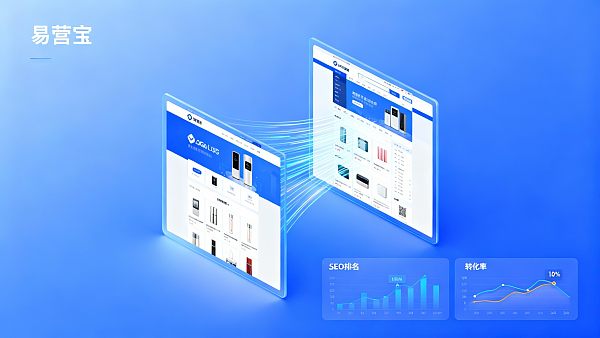
Choosing between an independent website or a platform store is not an either-or decision but requires multi-dimensional evaluation based on business strategy. We recommend decision-makers focus on the following metrics:
2.1 Direct Correlation Between Website Performance and Conversion Rates
Google's core algorithm explicitly considers page load speed as a ranking factor, with data showing that pages taking over 3 seconds to load lose 53% of visitors. This is why intelligent website systems emphasize global CDN node deployment—distributed server clusters can reduce latency for Asian users accessing Euro-American sites to under 1.2 seconds, directly increasing inquiry conversion rates by 28%.
3. AI-Driven Hybrid Operation Strategy
Mature enterprises often adopt a "independent website + platform store" hybrid model, with AI technology now reshaping its execution efficiency:
- Intelligent Traffic Allocation: Machine learning analyzes ROI across channels to automatically adjust ad budgets.
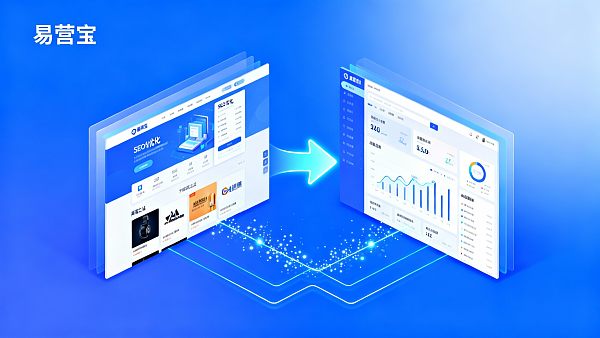
- Cross-Platform Content Synchronization: AI generates multilingual product descriptions for simultaneous updates to independent websites and major platforms.
- Data Middle-Platform Integration: Breaks down data silos to unify analysis of user journey behavior.
- Automated Operations: Real-time monitoring of website security to prevent risks like DDoS attacks.
3.1 Case Study: AI Empowerment from Website Building to Operations
A laser equipment manufacturer adopted an AI-powered website solution, achieving within six months: 320% growth in independent website organic traffic, 45% improvement in user search efficiency through smart categorization, and ultimately increasing inquiry conversion rates from 1.2% to 4.7% with integrated laser engraving machine industry solutions marketing modules.
4. Actionable Recommendations and Future Trends
Based on a decade of industry experience, we recommend a three-phase digital transformation for enterprises:
- Startup Phase (0-1 year): Prioritize mainstream platform entry for quick market validation while launching basic independent website construction.
- Growth Phase (1-3 years): Increase SEO investment in independent websites and implement scalable content production via AI tools.
- Maturity Phase (3+ years): Build autonomous traffic ecosystems integrating email marketing, social media matrices, and omnichannel touchpoints.
As AI search recommendation algorithms evolve, the core competitiveness of independent websites will lie in: structured data markup capabilities, multimodal content generation efficiency, and real-time personalized interaction experiences. Enterprises must solidify their technical foundations now to gain an edge in global digital competition.
Contact our digital marketing experts today for customized foreign trade growth solutions, leveraging AI technology to accelerate your global expansion!