









- What Does a Global Traffic Ecosystem Service Provider Do? What Are the Differences from a Single Advertising AgencyJul 16, 2026View details
- What should you focus on in the latest enterprise SaaS report? From renewal rates and delivery costs to overseas growth opportunitiesJul 12, 2026View details
- What signals are worth paying attention to in a cross-border marketing trend report? B2B companies should look at these 6 signalsJul 11, 2026View details
- How to Read a Cross-Border Marketing Trends Report? Five Key Dimensions for Evaluating Channel OpportunitiesJul 11, 2026View details
- Which channel has the highest ROI in the global traffic ecosystem? Comparative analysis of search, social media, and advertisingJul 10, 2026View details
- What multilingual website services are available in Sanya? Which model is more suitable for local businesses going global?Jul 08, 2026View details
- How to view the complete list of China SaaS companies in the top 100? Practical methods for screening website-building and marketing service providersJul 08, 2026View details
- How to view pricing in the global traffic ecosystem? Cost comparison of search, social media, and content channel advertisingJul 06, 2026View details
Should your social media marketing strategy follow trending topics? The key is to look at these 3 points
Whether a social media marketing strategy should follow trends cannot be judged by surface-level traffic alone; it must also be aligned with brand positioning, content cadence, and conversion goals. This article will help you determine whether a trend is worth following from the perspectives of social media content marketing and website traffic growth solutions.
Don’t rush to follow it first: before deciding whether a trend is worth leveraging, first check whether it matches your brand and business

When many companies do social media marketing, they see a topic gaining traction rapidly within 24 hours and immediately arrange for content to go live. But for the website + marketing service integration industry, trends are not better the faster you act; they are more effective the better they match. Decision-makers and information researchers in particular care more about lead quality, inquiry intent, and subsequent deal conversion than the surface-level exposure of a single piece of content.
If your brand mainly provides end-to-end services such as smart website building, SEO optimization, social media marketing, and advertising placement, then trending content should be related to at least 1 of these 3 types of goals: customer pain points, industry trends, or product capabilities. If it is only about riding emotions or entertainment topics, it may bring traffic fluctuations in the short term, but it often provides limited help for website traffic growth solutions and inquiry conversion.
A more practical issue is that trending content affects brand perception. If a company keeps following irrelevant topics for 7 consecutive days, the platform may easily identify the account as general entertainment or content reposting, and when enterprise service content is published later, the precise reach rate usually declines. This is also a common misconception among many distributors and agents when operating social media.
To judge whether to follow a trend, the first step is not to look at popularity metrics, but to conduct a “fit screening.” It is recommended that companies spend 1 internal 10-minute evaluation before selecting a topic to confirm whether it can bring out brand advantages, website conversion paths, and conversion actions; otherwise, it is better to give it up.
A practical way to judge: first pass these 4 checkpoints
When deciding whether to follow a trend, companies can first use a simple review framework to avoid content teams being swept up by traffic and neglecting business goals.
- Topic relevance: whether the trend can naturally extend to website building, SEO, social media operations, or advertising placement without feeling forced or requiring too large a transition.
- User consistency: whether the people attracted by the trend are the customer groups your company is currently focusing on reaching, rather than broad traffic that only contributes page views without inquiries.
- Handover completeness: after the content is published, whether there are landing pages, case pages, inquiry forms, or customer service responses in place to complete conversion handover within 1–3 steps.
- Execution sustainability: whether the team can complete materials, review, publishing, and post-analysis within 48 hours instead of disrupting the content cadence for the entire month.
This method is also valuable for after-sales maintenance personnel. Because once traffic brought by a trend exceeds expectations, website stability, form notifications, customer service distribution, and lead follow-up will all come under pressure. If marketing actions are not coordinated front and back end, amplified traffic can instead make problems easier to expose.
The key is point 2: whether trending content can connect to the website traffic and conversion chain

Many brands separate social media marketing from official website operations, which leads to a typical problem: content is hot on social media, but there is no handover on the website side. As a result, platform data may look good, but the number of inquiries, lead submissions, and order conversions does not grow accordingly. This broken-chain phenomenon is especially common in B2B marketing.
A truly effective trend strategy is not about making content “go viral once,” but about letting traffic enter an owned channel where it can accumulate. Common practices include using short trending content to drive traffic to topic pages, industry article pages, solution pages, or to guide users to book diagnostics, consult on solutions, or discuss quotations. In this way, trends can potentially turn from platform exposure into effective assets in a website traffic growth solution.
Taking website + marketing service integration companies as an example, trending content is best suited to connect to 3 types of pages: brand capability pages, scenario solution pages, and case or knowledge content pages. Different pages correspond to different conversion stages: the first is suitable for quickly building trust, the middle page is suitable for demand education, and the latter is suitable for search-oriented users.
Yiyingbao Information Technology (Beijing) Co., Ltd. has long focused on coordinated services covering smart website building, SEO optimization, social media marketing, and advertising placement. Its core advantage lies in connecting “content exposure—website handover—data feedback—secondary conversion.” For companies seeking global growth, this kind of integrated capability is more critical than simply chasing trends at isolated points.
Comparison of common paths between trending content and website handover
If a company does not know where trending traffic should land, it can first look at the table below. It is suitable for information researchers, decision-makers, and channel partners to quickly determine the direction of coordination between placement and content.
From an execution perspective, before trending content goes live, it is best to simultaneously check 4 nodes: whether the landing page is accessible, whether the form can be submitted, whether customer service can respond, and whether tracking tags can be monitored. Even if it is only a 3-day trend placement window, you still need to ensure that data can be recovered; otherwise, it is impossible to judge whether the content is truly effective.
Beyond content marketing, don’t ignore the accumulation of knowledge assets
Trends are suitable for acquiring new users, while knowledge content is suitable for accumulation. For corporate websites, continuously building searchable, reusable, and convertible content assets often has more long-term value than temporarily chasing a trend once. For example, laying out topic content around issues such as business management and digital upgrading makes it easier to serve medium- and high-intent customers.
If the company itself is also engaged in internal learning, training, or material procurement, topic content like Research on Enterprise Industrial and Commercial Management in the Context of Digital Transformation can also serve as a reference direction for knowledge-based landing pages, helping content teams understand what issues decision-makers care about more.
The key is point 3: whether trends will disrupt content cadence, budget, and team coordination
What is most easily overlooked when chasing trends is not creativity, but cost. The cost here is not just advertising fees, but also topic discussion, material production, legal review, page adjustments, customer service reception, and data analysis. For companies with smaller teams, if 2–3 temporary insertions are made every week, the original content schedule will be continuously disrupted.
Therefore, when companies formulate social media marketing strategies, they should divide trends into 3 categories: must follow, selectively follow, and clearly do not follow. The ones that must be followed are usually industry policy changes, platform rule adjustments, and new trends widely watched by customers; selectively followed ones are mostly public topics connected to brand scenarios; clearly not followed ones are trends unrelated to the business, with high controversy risk and low conversion value.
This is especially important for distributors, resellers, and agents. Because the channel side often values short-term inquiries more, but if content standards and brand consistency are ignored, unified headquarters placement, unified official website intake, and regional lead distribution will all become more complex later. If trends do not have unified messaging, they can easily cause confusion in channel communication.
Relying on AI and big data-driven capabilities, Yiyingbao Information Technology (Beijing) Co., Ltd. can help companies establish clear mechanisms for content topic selection, website handover, traffic analysis, and multi-channel coordination. Compared with operating a single platform, this full-chain approach is more suitable for companies with limited budgets but requiring stable delivery.
A decision table for companies to judge whether to “follow or not follow”
The table below is suitable for direct use in monthly content meetings. It does not judge based on popularity level, but helps companies determine whether a trend is worth investing execution resources in.
The core significance of this table is to turn “it feels like we should follow it” into “judging with standards.” When a company can make a judgment across 3 dimensions within 4 hours, trend operations shift from passive reaction to a manageable marketing action.
Which scenarios are more suitable for following trends, and which situations are more suitable for evergreen content
Not every industry needs to chase trends frequently. For website + marketing service integration companies, trending content is more suitable for taking on the tasks of “driving traffic” and “amplifying awareness,” while evergreen content is more suitable for “explaining solutions” and “stably acquiring customers.” Only with a reasonable mix of the two can both short-term traffic and long-term growth be achieved.
Generally speaking, these 4 phases are more suitable for following trends: new product launch periods, exhibition event periods, platform policy adjustment periods, and advertising strategy switching periods. This is because customers have stronger search intent during these periods and are more willing to click, compare, and inquire. In contrast, when a brand’s foundational content is weak and the official website conversion path is incomplete, blindly chasing trends often does more harm than good.
Evergreen content is not necessarily “slow.” As long as it is built around real customer problems, such as “Why are there no inquiries after launching a website,” “Why does social media content get exposure but no conversion,” and “How should SEO and advertising placement work together,” these topics can continue to bring organic search value and sales support value, and their lifecycle is usually longer than 30 days.
Companies can set their content structure at 7:3 or 6:4: evergreen content accounts for 6–7 tenths, and trending content accounts for 3–4 tenths. This preserves flexibility without allowing short-term traffic fluctuations to affect the overall marketing cadence. If it involves management upgrades or team training, topics like Research on Enterprise Industrial and Commercial Management in the Context of Digital Transformation are also more suitable to be placed in the evergreen knowledge content system.
A list of scenarios suitable for following trends and suitable for evergreen content
- Suitable for following trends: industry policy updates, platform algorithm changes, holiday marketing nodes, exhibition events, and sudden changes in market demand.
- Suitable for evergreen content: website building processes, SEO strategies, social media content planning, advertising placement coordination, lead nurturing, and after-sales maintenance instructions.
- Suitable for combined publishing: first use short trending content to drive traffic, then use long-form official website content to take over, and finally drive conversion through forms or customer service.
For end consumers, they care more about whether the content solves problems; for enterprise decision-makers, they care more about whether the budget investment generates returns. Therefore, an integrated marketing solution must serve both the reading experience and business goals at the same time, and cannot merely pursue platform-level buzz.
Common misconceptions and execution suggestions: don’t mistake “having traffic” for “having growth”
One misconception is equating high views with high conversion. In fact, social media marketing data should be viewed at least at 3 levels: exposure level, interaction level, and conversion level. If a company only focuses on the first 2 levels, it is easy to misjudge content performance. For B2B business, 1 piece of content bringing 3 high-quality inquiries is often more valuable than 100,000 broad impressions.
The second misconception is operating trending content independently. A truly mature approach is to coordinate the content team, website operations, advertising placement, and sales follow-up within the same rhythm. At a minimum, 5 pieces of information should be unified: target audience, core selling points, landing page path, inquiry method, and review criteria.
The third misconception is not setting a stop-loss line. It is recommended that companies set basic thresholds for trend execution. For example, within 24–72 hours after launch, if click-through rate, dwell time, private message count, or form count are significantly lower than the average of regular content, then the budget should be reduced in time and resources should be redirected to evergreen content and high-intent channels.
For companies that need stable delivery, a better strategy is not “follow every trend,” but to build a replicable content grading mechanism. In this way, whether it is information researchers, distributor partners, or after-sales maintenance teams, all can collaborate under the same set of rules.
FAQ: the 4 questions companies ask most often
1. Must a social media marketing strategy always follow trends?
Not necessarily. If the brand currently has insufficient official website handover, an unstable content system, and an unclear sales conversion chain, strengthening the foundation first is more important. Trends are suitable for amplification, not for replacing the basics. It is usually recommended to first complete the core official website pages, forms, and content system, and then gradually increase the proportion of trending content.
2. How long after following a trend can results be seen?
Exposure feedback at the platform level usually appears within 4 hours to 48 hours, but website inquiries and deal conversion may require 7 days to 30 days of observation. Especially for enterprise customers with longer decision-making cycles, you cannot look only at same-day interaction data; you should make a comprehensive judgment based on visit depth, return visits, and sales feedback.
3. When the budget is limited, should money be invested in trends or official website content?
If the budget is limited, it is recommended to first ensure official website content, conversion pages, and basic SEO, and then conduct small-scale trend testing. This is because the official website is a long-term asset, while trends are more like amplifiers. Without a handover foundation, traffic brought by trends is difficult to accumulate and also difficult to turn into sustained growth.
4. How can you tell whether trending traffic is high quality?
You can focus on 4 indicators: number of pages visited, dwell time, form submission rate, and sales follow-up feedback. If users leave after viewing only 1 page, or the message content is obviously unrelated to the core business, it indicates insufficient traffic fit. High-quality traffic usually features more complete visit paths, more specific inquiry questions, and clearer willingness for follow-up communication.
Why choose us: from trend evaluation to website handover, giving companies a set of actionable solutions
If you are evaluating whether your social media marketing strategy should follow trends, what you need more is not a simple “should or shouldn’t,” but an executable judgment framework. Since its establishment in 2013, Yiyingbao Information Technology (Beijing) Co., Ltd. has continuously provided full-chain digital marketing support around smart website building, SEO optimization, social media marketing, and advertising placement, helping customers at different stages build more stable growth paths.
For information researchers, we can help sort out the logic between platform content and official website handover; for enterprise decision-makers, we can jointly evaluate budget allocation, execution cycles, and conversion paths; for after-sales maintenance personnel and channel partners, we can also provide suggestions for page coordination, lead handover, and data recovery to reduce the system pressure caused by trend operations.
If you are currently facing issues such as “content gets exposure but no inquiries,” “the official website has traffic but low conversion,” or “you want to do trend marketing but worry about disrupting the overall rhythm,” you can directly communicate about the following: website structure optimization, planning for trending content handover pages, SEO and social media coordination, advertising testing cycles, delivery scheduling, customized growth solutions, and quotation ranges.
Turning trends into growth tools depends not on how fast you follow them, but on judging accurately, handing over steadily, and reviewing clearly. If you hope to obtain a website + marketing service integration solution that better fits your business stage, you can now further consult on specific scenarios, implementation steps, and resource allocation recommendations.
Related Articles
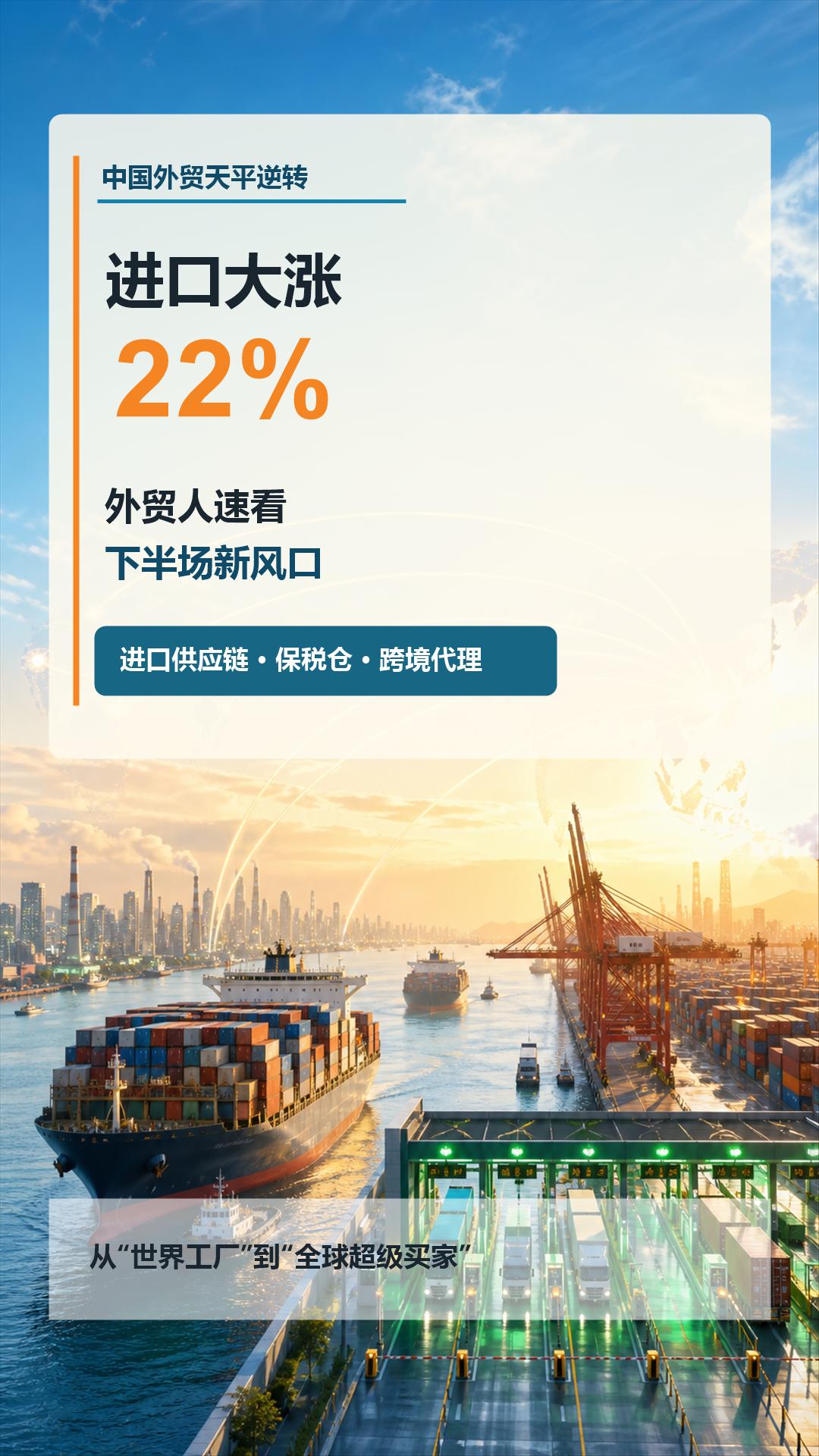
 China's foreign trade sees a turnaround: imports surge by 22%! Foreign trade professionals should quickly take note of the new trends in the second half of the year
 What Does a Global Traffic Ecosystem Service Provider Do? What Are the Differences from a Single Advertising Agency
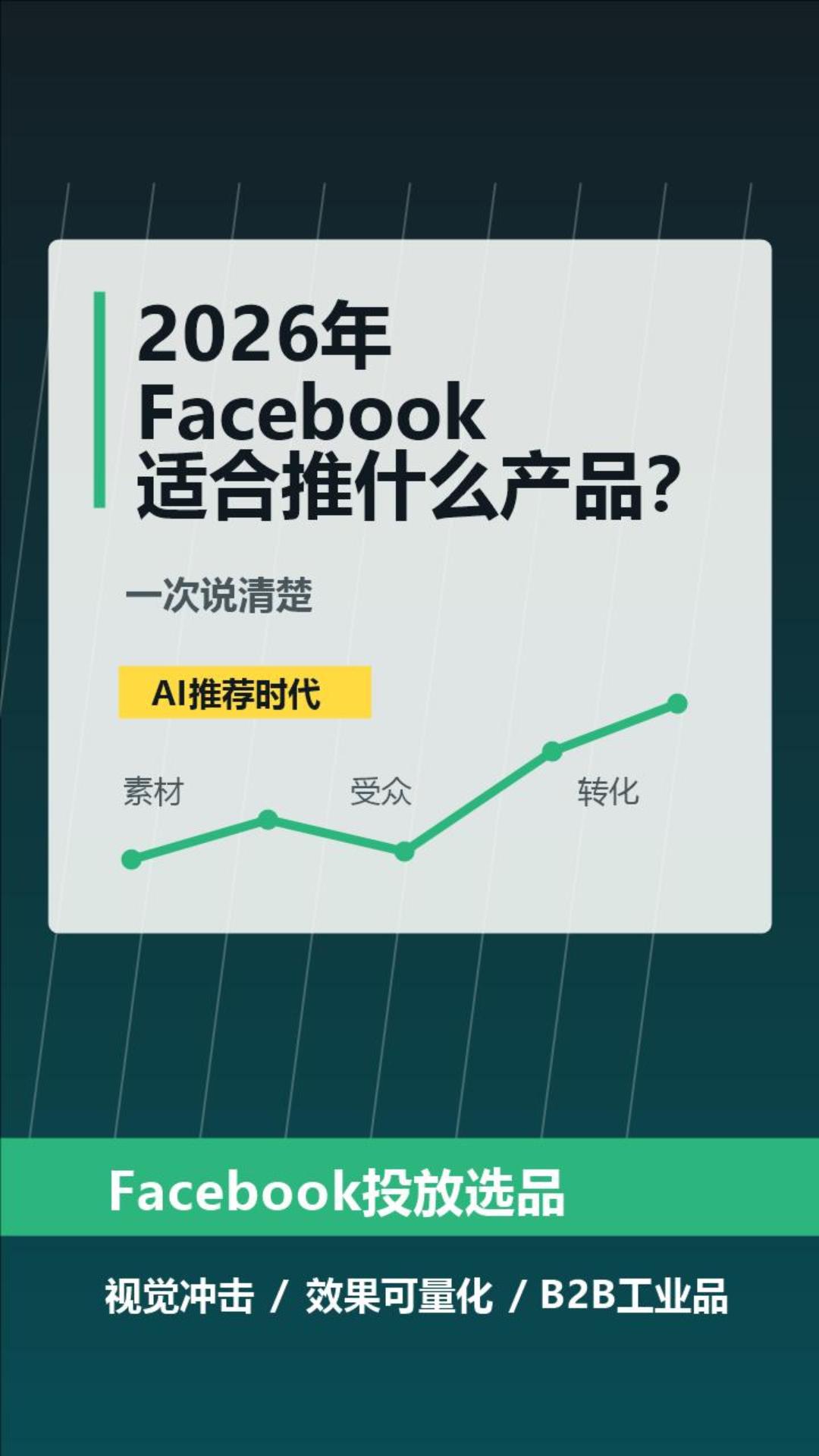
 What Products Are Suitable for Facebook in 2026? Explained Clearly at Once

Related Products
 EasyCamp SaaS Smart Website Marketing SystemE-Yingbao SaaS Smart Website Marketing System: AI-powered, zero-code website building. Rapidly launch multilingual independent e-commerce sites in just 10 minutes. Global server acceleration and AI-driven SEO optimization empower businesses to efficiently connect with global markets. The seamless integration of technology and user-friendly operation makes building e-commerce sites incredibly simple.
 AI+SEM Intelligent Advertising Marketing SystemAI+SEM drives intelligent ad creation, empowering full-funnel precision advertising marketing. The system automatically generates weekly/monthly reports, AI recommends keywords and target countries, monitors core metrics in real-time with intelligent alerts, and enables one-click high-conversion ad solutions to help quickly acquire customers and improve ROI.
 AI+SEO Dual Engine Optimization ServiceEasyWin AI+SEO Dual Engine Optimization System leverages AI-powered keyword mining, content generation, and comprehensive technical optimization to help foreign trade enterprises acquire high-quality organic traffic, significantly improving search rankings and conversion rates.
 AI+SNS Social Media Marketing SystemYingbao AI+SNS Social Media Marketing System - Precision social capture for the social media era. Supports one-click content synchronization across major platforms like Facebook and LinkedIn. AI intelligently rewrites posts for enhanced relevance. 24/7 AI customer service and user profiling analysis empower businesses to efficiently expand into global markets.
 AI+SEO营销解决方案易营宝AI+SEO营销解决方案,通过AI批量写作、智能生成TDK、精准关键词扩词等功能,全面优化网站SEO效果,提升流量与转化率。助力企业构建高效智能网站新生态。
 AI+SEM Advertising Marketing SolutionsAI+SEM Advertising Marketing Solution leverages AI technology to deeply empower SEM ad campaigns. It automatically generates weekly/monthly reports using AI, presenting account data across multiple dimensions for comprehensive insights into campaign performance and trends. The system precisely recommends keywords and target countries, intelligently generates high-conversion ad copy, and enables one-click activation of efficient campaign plans to help businesses rapidly acquire customers. Simultaneously, it monitors core metrics in real time, intelligently identifies abnormal fluctuations, and issues timely alerts to ensure stable, high-return advertising results.
 Domain Name ServicesEasyWin provides professional domain name services, including intelligent queries, one-stop registration, brand protection, and full lifecycle management, helping businesses build a digital brand image.
 EasyOperate B2C Cross-Border E-Commerce Platform & Independent WebsiteEasyStore B2C Cross-border E-commerce Independent Store is an intelligent website building and cross-border e-commerce integrated solution independently developed by EasyStore Information Technology (Beijing) Co., Ltd. The system is specially designed for small and medium-sized as well as large export enterprises, integrating 'website building, operation, marketing, advertising, and conversion' into one, helping enterprises quickly establish cross-border e-commerce independent stores to achieve brand globalization and global sales growth.
The platform supports multiple languages, multiple currencies, and multi-channel marketing, with built-in AI intelligent translation and SEO optimization systems, suitable for mainstream markets such as Southeast Asia, Europe and America, Latin America, and the Middle East, assisting Chinese manufacturing enterprises in efficiently deploying international e-commerce strategies. SSL证书易营宝提供专业SSL安全证书服务,包括单域名和泛域名证书,确保网站数据传输加密、身份验证和完整性保护,助力企业建立安全可信的在线业务环境。









