









- How to view pricing in the global traffic ecosystem? Cost comparison of search, social media, and content channel advertisingJul 06, 2026View details
- How to assess foreign trade website development trends?Looking at 2026 changes from multilingual,AI content to conversion pathsJul 04, 2026View details
- What are the new trends in multilingual marketing data analytics tools in 2026? Focus on attribution、automation and complianceJul 04, 2026View details
- Is Brand Globalization Marketing Consulting Worth Buying? At What Stage Should Companies Bring It InJul 01, 2026View details
- Cross-Border Marketing Trend Research: Why More and More Companies Are Starting to Deploy AI Search and GEO OptimizationJun 30, 2026View details
- Cross-Border Marketing Trend Research: How Independent Sites, AI Content, and Short-Video Customer Acquisition Are ChangingJun 30, 2026View details
How to Improve the Conversion Rate of Foreign Trade Websites: 10 Data-Driven Optimization Strategies
Introduction
How to improve the conversion rate of foreign trade websites This article provides ten actionable optimization strategies based on data, combined with the practical experience of using Easy Treasure and multilingual website construction recommendations to help companies steadily increase inquiries and conversion rates in the international market. In global competition, conversion rate directly impacts customer acquisition costs and revenue scale. Therefore, this article addresses both operational staff and corporate decision-makers, project managers, after-sales support personnel, distributors, agents, and end consumers, offering executable methods and practical workflows. The content covers page experience, site performance, content localization, closed-loop advertising, and data-driven continuous optimization paths. Through examples and industry data, each step is evidence-based.
Definition and Industry Background Market Overview

In foreign trade scenarios, website conversion rate typically refers to the proportion of site visitors converted into valid leads or transactions. While this definition seems simple, it often sparks debate in comparisons between international websites and platforms. There is no single answer to whether foreign trade international websites or platforms perform better. Platforms offer rich traffic entry points and short conversion paths but are limited by pricing and rules. Independent websites have brand display and long-term SEO assets but require time to scale. Current market data shows that through multilingual automated website construction systems combined with precise social media and ad placements, companies can implement short- and medium-term parallel customer acquisition strategies. Nearly 40% of companies achieve more stable conversion performance by operating a mix of independent sites and platforms. Therefore, understanding industry background and target market language and cultural differences is a prerequisite.
Ten Data-Driven Optimization Strategies Data Driven Strategies
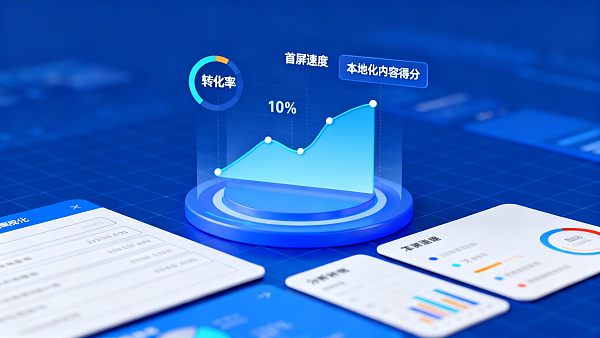
The following ten strategies are data-driven, covering traffic quality, page experience, content, localization, advertising closed-loop, and operational stability. Each is quantifiable and integrated into a continuous improvement system. 1. Page Speed and Usability Prioritize optimizing above-the-fold loading and mobile experience. Use CDN and lazy loading to control load times under three seconds. A 40% page speed improvement typically reduces bounce rates significantly. 2. Visitor Intent Layering Segment visitors by scenario tags, categorizing traffic by purchase intent, information-seeking intent, brand recognition intent, and designing corresponding landing pages. 3. Landing Page A/B Testing Establish hypotheses and conduct at least two weeks of continuous testing. Compare conversion leaks, optimize headlines, forms, and CTAs, and make statistically significant judgments. 4. Simplified Forms and Quotation Processes Keep form fields minimal and mandatory, with clear instructions supporting auto-fill and multilingual prompts. 5. Content Localization and Trust Elements Localization goes beyond language translation, including unit measurements, payment methods, logistics timeliness, and compliance certificates. 6. Social Media Guidance and Social Proof Leverage overseas social media platforms’ matrix exposure, combined with user-generated content to enhance trust. 7. Multi-Channel Closed-Loop Use standardized UTM parameters and tracking pixels to ensure traceability from ads to conversions. 8. Automation and Smart Recommendations Implement machine learning models to dynamically recommend products and content to visitors, boosting personalized conversions. 9. Ad and Organic Traffic Synergy Optimize keyword structures, target countries, and creatives to balance ad costs and conversion rates. 10. Continuous Monitoring and Alerts Establish core indicator dashboards and anomaly detection strategies to ensure timely responses to fluctuations. Each can be quantified on data platforms and integrated into weekly/monthly reports for management decisions.
Technical Performance and Product Integration Technical Performance
From a technical perspective, site performance, localization capabilities, and automated operational tools are foundational to improving foreign trade website conversion rates. Easy Treasure’s intelligent website building system provides multilingual automated website construction, integrating AI translation engines and global CDN nodes for faster page responses across seven continents. This technical foundation boosts independent site loading speeds by 40% and SEO scores by 35%. In advertising closed-loops, combining AI ad smart managers enables real-time diagnosis of Google Ads, Yandex, and Meta account structures, keyword performance, and creative issues, recommending optimization strategies. Companies can also introduce specialized ad products for automated placements and stable reporting. For example, the company’s AI+SEM Advertising Solution features AI-generated weekly/monthly reports, multi-dimensional data presentation, AI-precise keyword and country recommendations, and high-conversion ad copy generation. It enables one-click high-efficiency ad campaigns with real-time core metric monitoring for stable ad performance and high ROI. In practice, these tools should integrate with site data and business goals to form closed loops.
Application Scenarios and Client Case Studies Application Scenarios Case Studies
Different industries and business models have varying application scenarios in foreign trade marketing systems. Manufacturing and e-commerce clients typically need to solve inquiry conversion and international payment/trust issues, while service-oriented companies focus more on form quality and meeting booking rates. In Arabic markets, for example, independent Arabic website construction companies and Arabic website solutions require precise language and cultural alignment. These clients need regional compliance information, localized payments, and right-to-left layout support. Easy Treasure has accumulated extensive Arabic website construction experience in Middle Eastern markets, including building independent sites for electronics and home brands. Combining social media automation and AI ad smart managers achieved an average ad conversion rate increase of 200%. Under multilingual automated website systems, user experience is localized. These successes demonstrate the replicability of combining technology and processes, providing clear implementation paths for project managers.
Common Mistakes and Procurement Guide FAQ Procurement Guide Why Choose Us Contact Us
Common mistakes in selection and execution include focusing only on short-term traffic over quality, over-relying on platform traffic while neglecting independent sites’ long-term assets, and ignoring operational and compliance costs. Procurement and selection recommendations: First, clarify target markets and stage KPIs. Second, evaluate suppliers’ multilingual capabilities, global CDN deployment, and AI capabilities. Third, require suppliers to provide quantifiable success cases and SLAs. Finally, prioritize partners with local service capabilities. Easy Treasure Information Technology, founded in 2013 in Beijing, drives innovation with AI and big data. With a decade of industry expertise, it combines technological innovation and local services in a dual-wheel strategy, offering full-chain solutions covering smart site building, SEO optimization, social media marketing, and ad placements. Serving over 100,000 clients, it was listed among China’s top 100 SaaS companies in 2023. For consultations, product demos, or customized solutions, contact us. We provide tailored implementation plans based on your industry and target market, with pilot metrics to quickly validate and scale success. Why choose us? We offer both mature technology platforms and local execution capabilities, plus data-driven continuous optimization support, helping companies close the loop from acquisition to conversion. Ready to boost your foreign trade website’s conversion rate? Click to contact or request a demo for targeted project recommendations and implementation roadmaps.
- Website Development
- Overseas social media
- Social Media Marketing
- Google Ads
- Standalone website development
- Yiyingbao
- SEO
- Independent Website
- Smart website builder system
- SEO Optimization
- Smart Website Building
- AI Translation
- EasySite Intelligent Website Builder
- Social Media Automation
- AI Translation Engine
- Arabic Website Construction Solutions
- Foreign Trade Marketing System
- Easy Treasure User Experience
- Multilingual Website Building
- How to improve the conversion rate of foreign trade websites
- Multilingual automated website construction system
Related Articles
 Rising European Shipping Costs Extend the Inquiry Conversion Cycle in Europe
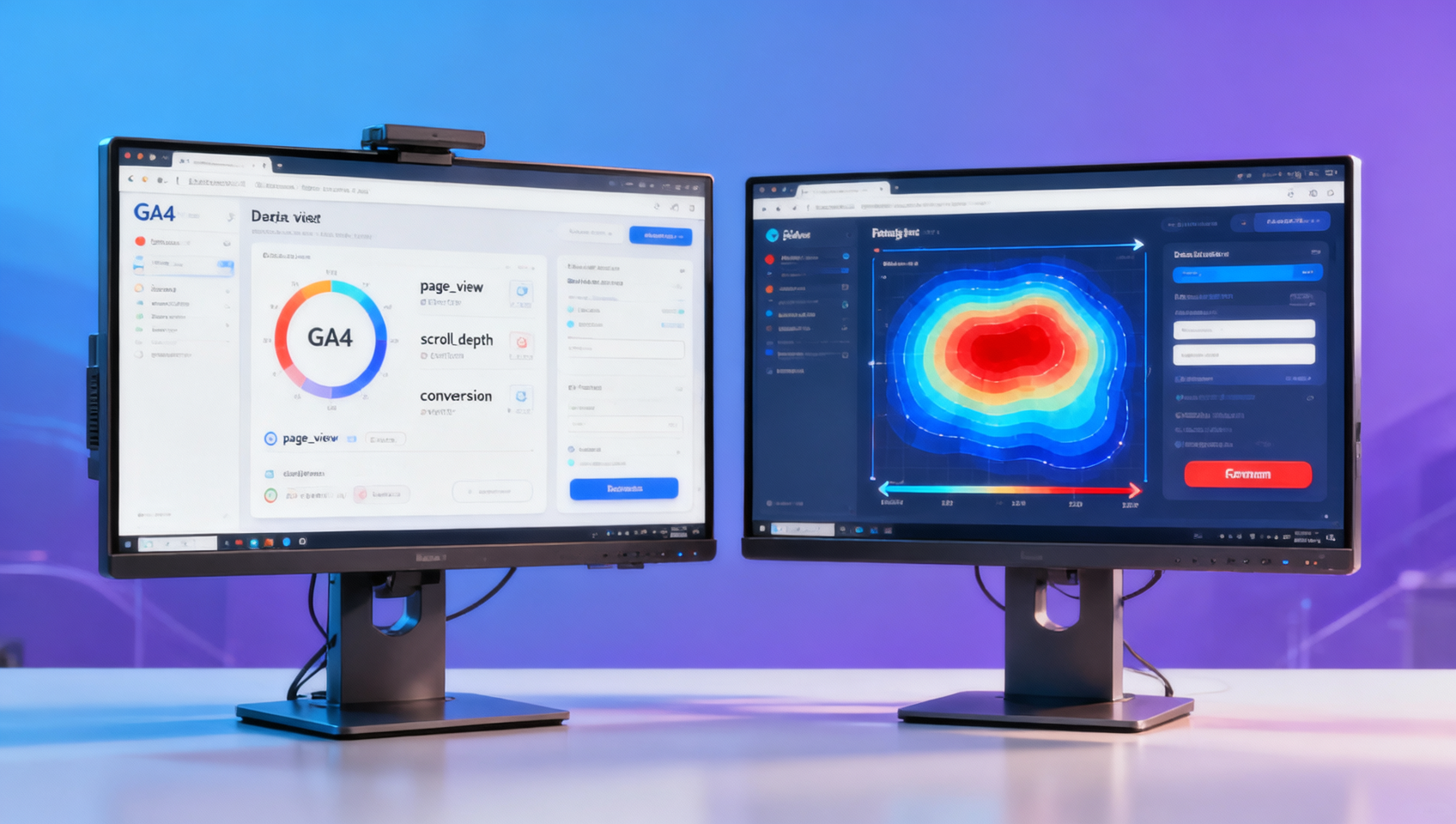
 How to avoid data distortion in website traffic analysis? The GA4 and heatmap joint verification method
 For SaaS companies expanding their brands globally,should they build an official website first or run ads first?How can the growth path be planned more steadily

Related Products
 EasyCamp SaaS Smart Website Marketing SystemE-Yingbao SaaS Smart Website Marketing System: AI-powered, zero-code website building. Rapidly launch multilingual independent e-commerce sites in just 10 minutes. Global server acceleration and AI-driven SEO optimization empower businesses to efficiently connect with global markets. The seamless integration of technology and user-friendly operation makes building e-commerce sites incredibly simple.
 AI+SEM Intelligent Advertising Marketing SystemAI+SEM drives intelligent ad creation, empowering full-funnel precision advertising marketing. The system automatically generates weekly/monthly reports, AI recommends keywords and target countries, monitors core metrics in real-time with intelligent alerts, and enables one-click high-conversion ad solutions to help quickly acquire customers and improve ROI.
 AI+SEO Dual Engine Optimization ServiceEasyWin AI+SEO Dual Engine Optimization System leverages AI-powered keyword mining, content generation, and comprehensive technical optimization to help foreign trade enterprises acquire high-quality organic traffic, significantly improving search rankings and conversion rates.
 AI+SNS Social Media Marketing SystemYingbao AI+SNS Social Media Marketing System - Precision social capture for the social media era. Supports one-click content synchronization across major platforms like Facebook and LinkedIn. AI intelligently rewrites posts for enhanced relevance. 24/7 AI customer service and user profiling analysis empower businesses to efficiently expand into global markets.
 AI+SEO营销解决方案易营宝AI+SEO营销解决方案,通过AI批量写作、智能生成TDK、精准关键词扩词等功能,全面优化网站SEO效果,提升流量与转化率。助力企业构建高效智能网站新生态。
 AI+SEM Advertising Marketing SolutionsAI+SEM Advertising Marketing Solution leverages AI technology to deeply empower SEM ad campaigns. It automatically generates weekly/monthly reports using AI, presenting account data across multiple dimensions for comprehensive insights into campaign performance and trends. The system precisely recommends keywords and target countries, intelligently generates high-conversion ad copy, and enables one-click activation of efficient campaign plans to help businesses rapidly acquire customers. Simultaneously, it monitors core metrics in real time, intelligently identifies abnormal fluctuations, and issues timely alerts to ensure stable, high-return advertising results.
 Domain Name ServicesEasyWin provides professional domain name services, including intelligent queries, one-stop registration, brand protection, and full lifecycle management, helping businesses build a digital brand image.
 EasyOperate B2C Cross-Border E-Commerce Platform & Independent WebsiteEasyStore B2C Cross-border E-commerce Independent Store is an intelligent website building and cross-border e-commerce integrated solution independently developed by EasyStore Information Technology (Beijing) Co., Ltd. The system is specially designed for small and medium-sized as well as large export enterprises, integrating 'website building, operation, marketing, advertising, and conversion' into one, helping enterprises quickly establish cross-border e-commerce independent stores to achieve brand globalization and global sales growth.
The platform supports multiple languages, multiple currencies, and multi-channel marketing, with built-in AI intelligent translation and SEO optimization systems, suitable for mainstream markets such as Southeast Asia, Europe and America, Latin America, and the Middle East, assisting Chinese manufacturing enterprises in efficiently deploying international e-commerce strategies. SSL证书易营宝提供专业SSL安全证书服务,包括单域名和泛域名证书,确保网站数据传输加密、身份验证和完整性保护,助力企业建立安全可信的在线业务环境。









