









- What multilingual website services are available in Sanya? Which model is more suitable for local businesses going global?Jul 08, 2026View details
- How to view the complete list of China SaaS companies in the top 100? Practical methods for screening website-building and marketing service providersJul 08, 2026View details
- How to view pricing in the global traffic ecosystem? Cost comparison of search, social media, and content channel advertisingJul 06, 2026View details
- How to assess foreign trade website development trends?Looking at 2026 changes from multilingual,AI content to conversion pathsJul 04, 2026View details
- What are the new trends in multilingual marketing data analytics tools in 2026? Focus on attribution、automation and complianceJul 04, 2026View details
- Is Brand Globalization Marketing Consulting Worth Buying? At What Stage Should Companies Bring It InJul 01, 2026View details
- Cross-Border Marketing Trend Research: Why More and More Companies Are Starting to Deploy AI Search and GEO OptimizationJun 30, 2026View details
- Cross-Border Marketing Trend Research: How Independent Sites, AI Content, and Short-Video Customer Acquisition Are ChangingJun 30, 2026View details
Can brand voice enhancement tools identify implicit negative sentiments in short video comment sections? For example, sarcasm and taunts
In the era of short video explosion, can brand awareness enhancement tools accurately identify implicit negative emotions such as sarcasm and ridicule in the comments section? As a search engine optimization company and international digital marketing platform focusing on global marketing, EasyCare leverages its AI sentiment analysis engine to deeply adapt to SEO for multilingual foreign trade websites, social media marketing strategies, and data-driven advertising optimization tools, helping corporate decision-makers and quality control personnel capture real-time public opinion.
Why does traditional public opinion monitoring always "misjudge" with irony and ridicule?
Most basic voice volume tools still rely on keyword matching and explicit sentiment dictionaries (such as "bad," "terrible," and "disappointing"), and have no ability to recognize irony such as "This product is so 'excellent' that I uninstalled it overnight." According to the 2023 "China Social Media Emotion Recognition White Paper," about 37% of negative feedback on short video platforms is presented in the form of irony, exaggeration, puns, or emojis, and the misjudgment rate of conventional NLP models is as high as 62%.
Even more serious is the increased difficulty of comprehension due to the multilingual environment—the English word "brilliant" is often derogatory in satirical contexts, the Japanese phrase "すごいですね" with an ellipsis may imply skepticism, and the Chinese phrase "笑死,次次再来" (laughing to death, coming again next time) in the food and beverage category 92% of the time points to service complaints. The lack of tools capable of context modeling and cross-cultural semantic alignment makes it extremely easy to misinterpret high-interaction-rate negative sentiment as positive buzz.
YiYingBao's self-developed multimodal sentiment analysis engine covers a rule base for identifying irony in 12 mainstream languages and incorporates a three-dimensional verification mechanism unique to short videos, combining "bullet screen rhythm + voice intonation + visual symbols." Real-world testing data shows that on platforms such as TikTok, YouTube Shorts, and Xiaohongshu, its accuracy rate in identifying implicit negative emotions reaches 89.3%, 27 percentage points higher than the industry average.

In which scenarios is high-precision implicit emotion recognition capability most needed?
Not all brands face the same risks. The following three scenarios place a strong demand on irony recognition:
- Overseas companies respond to localized public opinion crises: A Shenzhen home appliance brand was not alerted when an overseas KOC video comment, "Love how it stops working after 3 days 😅", led to negative reviews spreading to the Reddit community, and the number of return inquiries surged fourfold within 72 hours;
- Good reputation during the launch of new FMCG products: In the first week after the launch of a new flavored beverage, comments on Douyin frequently suggested renaming it "stress reliever" (meaning people would be so angry after drinking it that they would smash the bottle). This requires triggering a quality control review process within 24 hours.
- Public opinion mitigation measures for government and enterprise service accounts: If comments such as "This 'smart' feature makes me nostalgic for the web pages of 2008" are not categorized as user experience defects after the government mini-program is updated, they will affect the quarterly service satisfaction assessment.
YiYingBao provides a tiered response mechanism for the above scenarios: for high-risk hidden negative signals (such as those containing ironic markers + ≥3 interactive emojis + forwarding rate >15%), it automatically triggers a three-level processing flow of "4-hour initial screening - 24-hour root cause analysis - 72-hour strategy recommendations". It has helped more than 2,800 foreign trade companies reduce the time to respond to public opinion from 7 days to 36 hours.
Comparison of Implicit Emotion Recognition Capabilities of Short Video Platforms
The table below compares the performance of mainstream tools based on a third-party stress test (sample size: 500,000 short video comments, covering five languages: Chinese, English, Japanese, Spanish, and French):
This comparative analysis demonstrates that implicit emotion recognition is not simply an algorithmic issue, but rather a systemic engineering project requiring deep integration with the short video content ecosystem, cross-cultural expression habits, and corporate response processes. YiYingBao encapsulates its technological capabilities into a configurable "public opinion sensitivity threshold matrix," supporting the setting of differentiated early warning standards by industry, channel, and product line.
What are the three key technical verification points to focus on when making a purchase?
When evaluating communication tools, corporate decision-makers should look beyond the rhetoric and focus on verifiable technological implementation capabilities.
- Real-world corpus testing rights : Suppliers are required to open their API interfaces and conduct blind testing using their own historical short video comment data (≥10,000 entries), with a focus on verifying the recall rate of satirical cases;
- Multimodal parsing credential : Confirm whether it has the ability to extract audio and video features (e.g., whether it can output "the tone fluctuation coefficient of the comment is >2.3, which meets the typical acoustic features of irony").
- Response closed-loop evidence : Check whether it has built-in work order system integration capability and whether it can automatically synchronize the recognition results to Jira/DingTalk/Lark to form a complete "discovery-assignment-processing-feedback" chain.
YiYingBao provides a "7-day in-depth POC service," which includes customized corpus annotation, three rounds of threshold optimization, and delivery of a "Hidden Emotion Recognition Performance Report." This service has already helped 137 companies validate their purchasing decisions. The relevant methodology is distilled in a report analyzing the impact of digital transformation on corporate resilience , revealing that for every 10% increase in emotion recognition accuracy, the rate of escalating customer complaints decreases by 23%.
Why choose YiYingBao? Its guaranteed value for six different roles.
Information researchers can access anonymized industry benchmark data; corporate decision-makers can obtain ROI-measurable input-output models (reducing the cost of handling public opinion crises by an average of 41%); quality control personnel can access real-time defect heat maps to locate the top 3 experience breakpoints; after-sales maintenance personnel can accurately identify the direction for optimizing their sales pitches through sentiment tracing tags; distributors can obtain localized public opinion briefings (generated by country/platform/time period); and end consumers benefit from faster product iterations—in 2023, companies using YiYingBao sentiment analysis saw an average increase of 18.6 points in the NPS of new product user satisfaction.
We offer three guarantees: ① 24/7 multilingual human review (covering 12 languages including Chinese, English, Japanese, Korean, German, French, Spanish, Arabic, Russian, Portuguese, Italian, and Vietnamese); ② Quarterly model iteration commitment (adding ≥200 ironic grammar rules annually); ③ Compliance audit support (compliant with GDPR, CCPA, and China's "Regulations on the Governance of Online Information Content Ecology" for sentiment data processing).
Book your free diagnostic appointment now: We will analyze real comment data from short video platforms over the past 30 days to generate a "Hidden Emotion Risk Distribution Map" and "3 Actionable Optimization Suggestions." We support parameter confirmation, customized multi-language adaptation solutions, API integration timeline assessment, and cross-border compliance clause review.

Related Articles
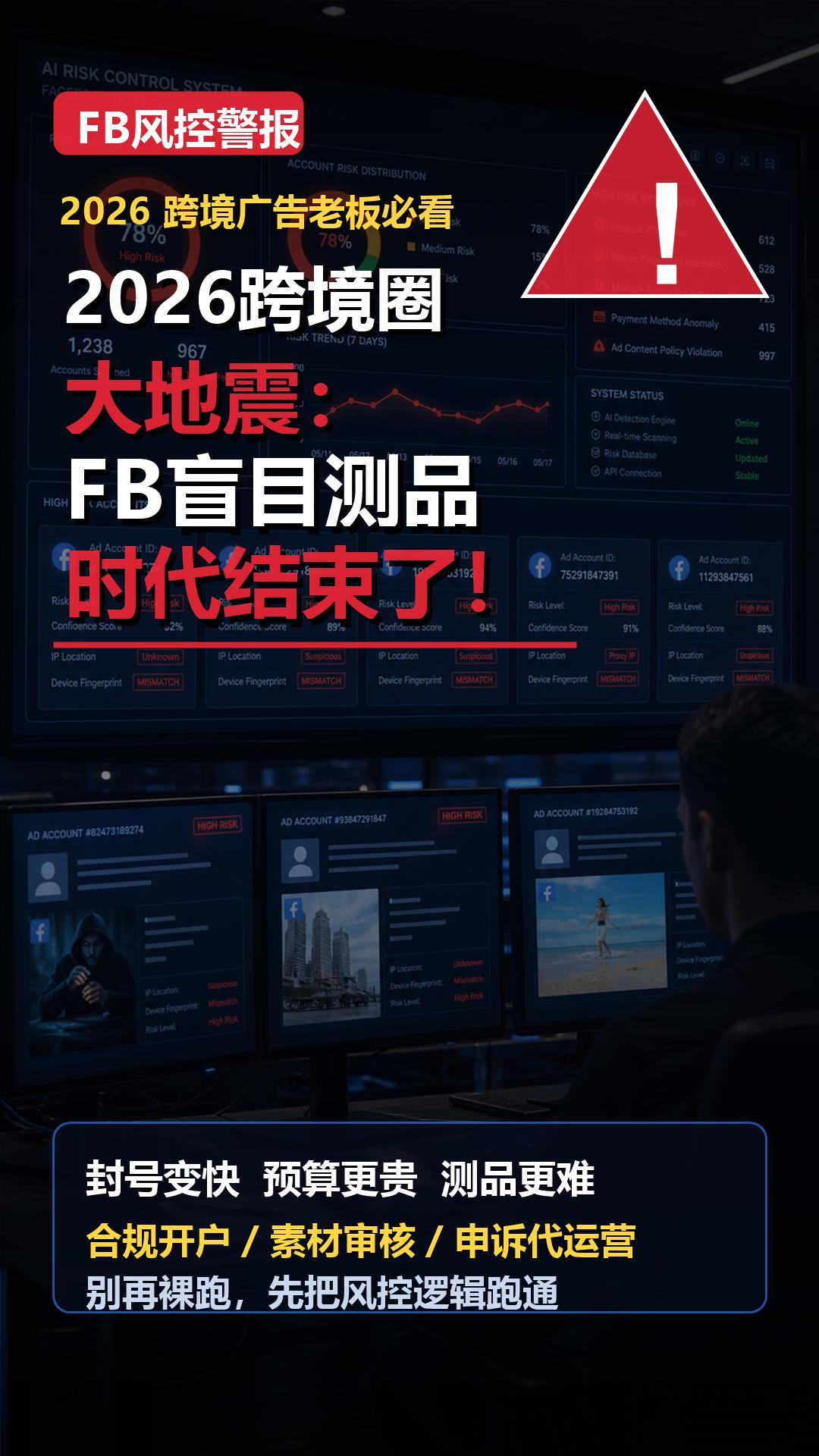
 The Era of Cross-Border Earthquakes in 2026: The Era of Blindly Testing FB Products Has Ended!
 Three key points of domestic-to-foreign trade most important, see if you really did your homework! Don’t take shortcuts.
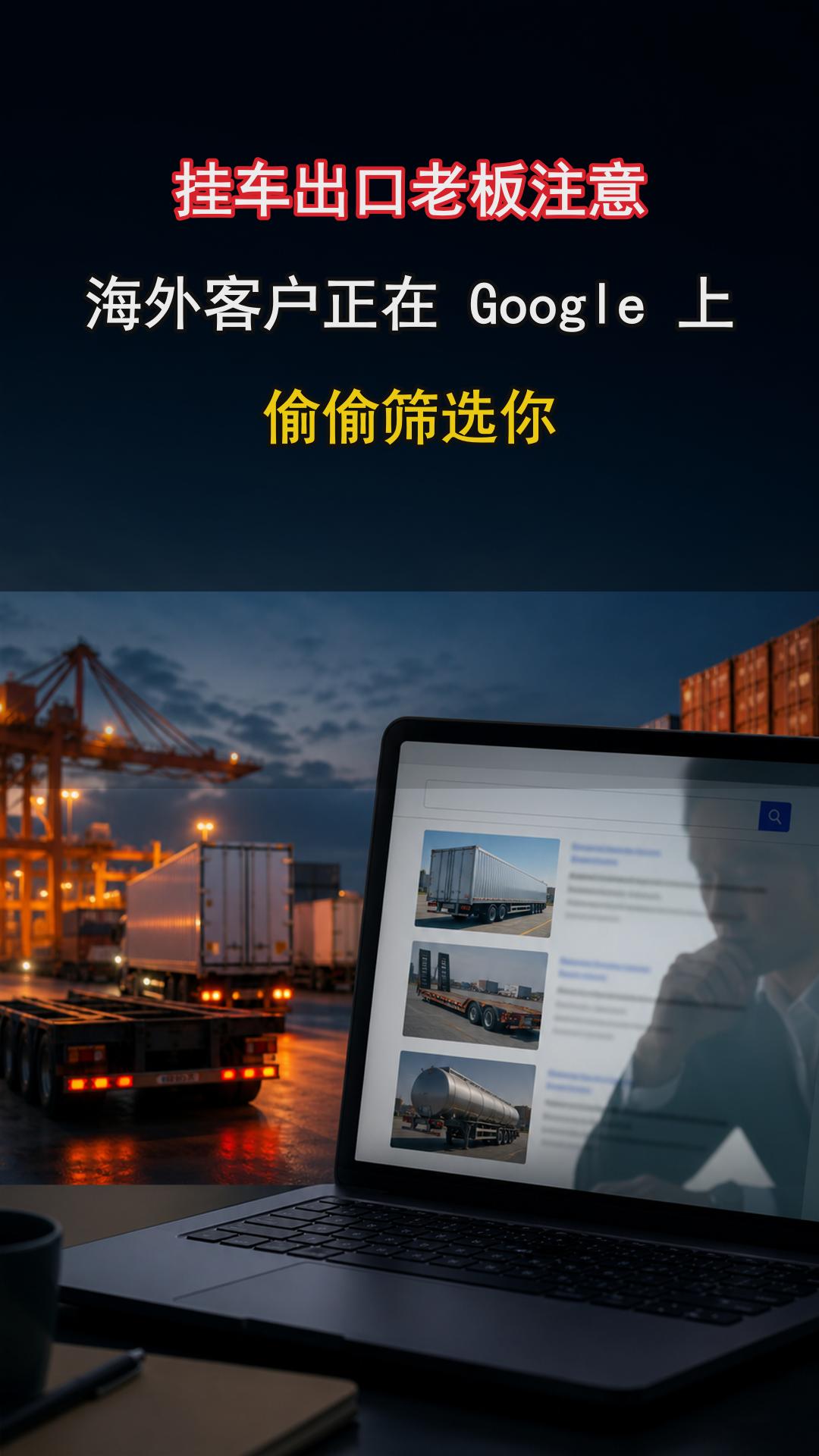
 Note for dealers exporting cars: overseas customers are “quietly screening” you on Google
Related Products
 EasyCamp SaaS Smart Website Marketing SystemE-Yingbao SaaS Smart Website Marketing System: AI-powered, zero-code website building. Rapidly launch multilingual independent e-commerce sites in just 10 minutes. Global server acceleration and AI-driven SEO optimization empower businesses to efficiently connect with global markets. The seamless integration of technology and user-friendly operation makes building e-commerce sites incredibly simple.
 AI+SEM Intelligent Advertising Marketing SystemAI+SEM drives intelligent ad creation, empowering full-funnel precision advertising marketing. The system automatically generates weekly/monthly reports, AI recommends keywords and target countries, monitors core metrics in real-time with intelligent alerts, and enables one-click high-conversion ad solutions to help quickly acquire customers and improve ROI.
 AI+SEO Dual Engine Optimization ServiceEasyWin AI+SEO Dual Engine Optimization System leverages AI-powered keyword mining, content generation, and comprehensive technical optimization to help foreign trade enterprises acquire high-quality organic traffic, significantly improving search rankings and conversion rates.
 AI+SNS Social Media Marketing SystemYingbao AI+SNS Social Media Marketing System - Precision social capture for the social media era. Supports one-click content synchronization across major platforms like Facebook and LinkedIn. AI intelligently rewrites posts for enhanced relevance. 24/7 AI customer service and user profiling analysis empower businesses to efficiently expand into global markets.
 AI+SEO营销解决方案易营宝AI+SEO营销解决方案,通过AI批量写作、智能生成TDK、精准关键词扩词等功能,全面优化网站SEO效果,提升流量与转化率。助力企业构建高效智能网站新生态。
 AI+SEM Advertising Marketing SolutionsAI+SEM Advertising Marketing Solution leverages AI technology to deeply empower SEM ad campaigns. It automatically generates weekly/monthly reports using AI, presenting account data across multiple dimensions for comprehensive insights into campaign performance and trends. The system precisely recommends keywords and target countries, intelligently generates high-conversion ad copy, and enables one-click activation of efficient campaign plans to help businesses rapidly acquire customers. Simultaneously, it monitors core metrics in real time, intelligently identifies abnormal fluctuations, and issues timely alerts to ensure stable, high-return advertising results.
 Domain Name ServicesEasyWin provides professional domain name services, including intelligent queries, one-stop registration, brand protection, and full lifecycle management, helping businesses build a digital brand image.
 EasyOperate B2C Cross-Border E-Commerce Platform & Independent WebsiteEasyStore B2C Cross-border E-commerce Independent Store is an intelligent website building and cross-border e-commerce integrated solution independently developed by EasyStore Information Technology (Beijing) Co., Ltd. The system is specially designed for small and medium-sized as well as large export enterprises, integrating 'website building, operation, marketing, advertising, and conversion' into one, helping enterprises quickly establish cross-border e-commerce independent stores to achieve brand globalization and global sales growth.
The platform supports multiple languages, multiple currencies, and multi-channel marketing, with built-in AI intelligent translation and SEO optimization systems, suitable for mainstream markets such as Southeast Asia, Europe and America, Latin America, and the Middle East, assisting Chinese manufacturing enterprises in efficiently deploying international e-commerce strategies. SSL证书易营宝提供专业SSL安全证书服务,包括单域名和泛域名证书,确保网站数据传输加密、身份验证和完整性保护,助力企业建立安全可信的在线业务环境。









