









- What stages does the cross-border services ecosystem include? How do website building, promotion, payment, and compliance work togetherJun 22, 2026View details
- How will email marketing costs change in 2026Jun 22, 2026View details
- The China-US tariff arrangement has reached a preliminary consensus, and the trade association will be establishedJun 15, 2026View details
- Should overseas brand marketing start with ads or contentJun 21, 2026View details
- What determines B2C cross-border e-commerce website development costs? A breakdown of features, interfaces, and deployment methodsJun 17, 2026View details
- China-Morocco zero-tariff access, a breakthrough in the cost of Moroccan goods exports to ChinaJun 11, 2026View details
- What signal should be released for the suspension of exports to JapanJun 10, 2026View details
- China's May LNG imports rebounded, with increased volumes from Russia and Canada filling the Middle East supply gapJun 10, 2026View details
New Mexican regulations require Chinese suppliers' official websites to have Spanish-language customer service and local payment interfaces.
On May 9, 2026, Mexico's Ministry of Economy revised the Foreign Supplier Due Diligence Guidelines, adding mandatory Clause 7.4, which clearly stipulates that starting July 1, 2026, Mexican importers must submit screenshots of the official websites of their cooperating Chinese suppliers during customs declaration to prove that their Spanish-language websites are equipped with real-time local customer service and mainstream Mexican payment interfaces. This requirement directly affects Chinese manufacturing companies, cross-border e-commerce businesses, and brands expanding overseas through B2B exports to the Mexican market, and poses practical challenges especially for small and medium-sized suppliers with weak digital infrastructure.
Event Overview
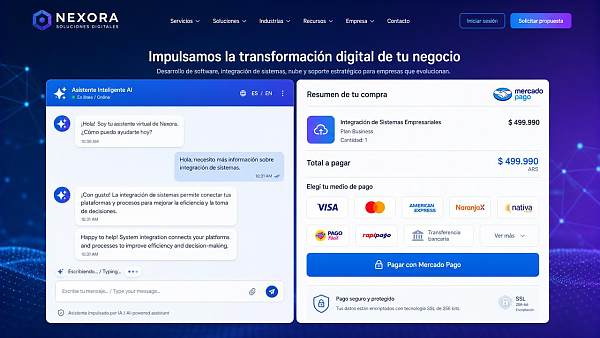
Mexico's Ministry of Economy (Secretaría de Economía, SE) officially announced revisions to the Foreign Supplier Due Diligence Directive on May 9, 2026, adding Clause 7.4. This clause provides that starting July 1, 2026, when Mexican importers submit import declaration documents to customs, they must simultaneously provide screenshots of the Spanish-language official websites of the Chinese suppliers from whom they procure. The screenshots must clearly display two functions——① an embedded AI chat window directly connected to a local Mexican customer service system (supporting both Spanish and English); ② a checkout interface integrated with at least one mainstream Mexican payment gateway (such as Openpay, Mercado Pago). Those who fail to comply will be subject to stricter cargo inspection procedures.
Which Sub-Sectors Will Be Affected
Direct Trading Enterprises
This refers to companies that directly export finished goods to Mexican importers under their own brands or through OEM/ODM models. Although the main party responsible for customs clearance is the Mexican importer, the required official website supporting materials rely entirely on the Chinese supplier. Therefore, such enterprises need to assume front-end compliance cooperation obligations. The impact is reflected in the following: if the official website does not meet the standards, it may lead to delayed order delivery, higher customs clearance costs, and even cause importers to reassess the qualifications for cooperation.
Processing and Manufacturing Enterprises
These are mainly contract manufacturing factories, which usually do not directly operate official websites for end users, nor do they have experience in building payment and customer service systems. The new regulation brings them into the supply chain digital capability assessment framework, shifting them passively from "capacity providers" to "compliance collaborators." The impact is reflected in the following: they need to cooperate with brand owners or traders to complete official website function upgrades, otherwise they may face the risk of losing orders.
Channel Distribution Enterprises
These include Chinese trading companies or regional agents that have established local warehousing, distribution, and sales networks in Mexico. Their official websites often serve as the entry point for Mexican customers to place orders and receive after-sales service, but many are merely translated versions of Chinese websites and lack localized interaction design. The impact is reflected in the following: the original lightweight website-building model can no longer meet regulatory requirements, and substantial upgrades are needed for customer service response mechanisms and payment links, involving system integration and the deployment of local service resources.
Supply Chain Service Enterprises
For example, third-party institutions that provide services such as Mexican customs clearance agency, VAT registration, and local collection accounts. Although the new regulation does not directly restrict their business, the surge in customer demand (namely Chinese exporters) for compliance support will drive their service modules to extend toward "official website compliance diagnostics + technical implementation assistance." The impact is reflected in the following: policy pressure is forcing the expansion of service capability boundaries, and simple document processing alone is no longer sufficient to cover customer demands.
What Should Relevant Enterprises or Practitioners Focus On, and How Should They Respond at Present
Monitor Subsequent Official Implementation Rules and Transitional Arrangements
At present, only the effective date of the clause and the required functional elements have been clarified. Operational details such as screenshot format specifications, certification standards for AI customer service systems, and update mechanisms for payment gateway whitelists have not yet been released. Enterprises should continue to follow subsequent announcements from Mexico's Ministry of Economy and the Tax Administration Service (SAT) to avoid investing in ineffective modifications based on vague interpretations.
Differentiate Key Product Categories and Key Customers, and Advance Official Website Adaptation in Phases
Not all goods exported to Mexico face the same level of customs review intensity. Based on observation, categories such as high-value consumer electronics, home appliances, and auto parts are more likely to trigger manual document review, so the corresponding suppliers should prioritize official website upgrades; by contrast, low-value bulk raw material exports have not yet shown signs of strengthened scrutiny. It is recommended that enterprises rank priorities according to customer procurement scale and product category risk, and formulate a step-by-step implementation plan.
Clarify the Difference in Timing Between "Policy Signals" and "Business Implementation"
From an analytical perspective, the essence of this clause is to partially shift the importer's due diligence obligations upstream to suppliers, constituting a forward-moving regulatory measure. However, in actual execution, there is still flexibility in implementation regarding whether Mexican importers will generally enforce it strictly and whether customs will apply uniform inspection standards. At present, enterprises should more appropriately understand it as follows: the policy has already released a clear compliance direction, but there may be a 1–2 quarter adjustment period before full rigid enforcement.
Start Technical Interface Integration and Local Service Resource Preparation in Advance
Accessing Mercado Pago or Openpay requires completion of Mexican entity registration, bank account binding, and API key application; AI customer service systems require the configuration of a Spanish-language knowledge base and integration with local call centers or outsourced teams. It is recommended that enterprises immediately sort out the current technical architecture of their official websites, contact SaaS service providers or payment gateway partners with Latin America localization experience, and reserve no less than 6 weeks for development and testing cycles.
Editor's Viewpoint / Industry Observation
Apparently, this regulation is less a standalone technical adjustment and more a structural signal: Mexico is incorporating digital service capability building into the governance framework of cross-border trade. It does not change tariffs or rules of origin, but it reshapes the hidden threshold for Chinese suppliers entering the Mexican market. At present, it is more appropriate to understand it as a pre-positioned digital due diligence measure focused on the B2B export process. Its actual degree of impact depends on the execution strength of importers and the frequency of customs spot checks. Enterprises should respond with "prudent preparation, categorized advancement, and dynamic follow-up" as the main thread, avoiding overreaction while also not ignoring the significance of the signal.
Conclusion
This new regulation is not an isolated technical adjustment, but an important milestone in Mexico's incorporation of digital service capability building into the governance framework of cross-border trade. It does not change tariffs or rules of origin, but it reconstructs the hidden threshold for Chinese suppliers to enter the Mexican market. At present, it is more appropriate to understand it as a pre-positioned digital due diligence measure focused on the B2B export process, and its actual degree of impact depends on the execution strength of importers and the frequency of customs spot checks. Enterprises should take "prudent preparation, categorized advancement, and dynamic follow-up" as the main line of response, avoiding overreaction while also not overlooking the significance of the signal.
Source Note
Main source: Revision announcement of the Foreign Supplier Due Diligence Directive issued by Mexico's Ministry of Economy (Secretaría de Economía, SE) on May 9, 2026.
Items for continued observation: whether Mexico's Tax Administration Service (Servicio de Administración Tributaria, SAT) will issue supporting operational guidelines; whether Openpay and Mercado Pago will adjust their access policies for non-Mexican registered enterprises.
Related Articles
 Are you really hitting the right target with Google FB for truck bed exports?
 It's easy to turn a foreign trade website into a piece of art, but it's the ultimate culprit behind your order decline
 Foreign trade website efficiency revolution! Yiyingbao component upgrade + inquiry optimization, inquiries surge!



Related Products
 EasyCamp SaaS Smart Website Marketing SystemE-Yingbao SaaS Smart Website Marketing System: AI-powered, zero-code website building. Rapidly launch multilingual independent e-commerce sites in just 10 minutes. Global server acceleration and AI-driven SEO optimization empower businesses to efficiently connect with global markets. The seamless integration of technology and user-friendly operation makes building e-commerce sites incredibly simple.
 AI+SEM Intelligent Advertising Marketing SystemAI+SEM drives intelligent ad creation, empowering full-funnel precision advertising marketing. The system automatically generates weekly/monthly reports, AI recommends keywords and target countries, monitors core metrics in real-time with intelligent alerts, and enables one-click high-conversion ad solutions to help quickly acquire customers and improve ROI.
 AI+SEO Dual Engine Optimization ServiceEasyWin AI+SEO Dual Engine Optimization System leverages AI-powered keyword mining, content generation, and comprehensive technical optimization to help foreign trade enterprises acquire high-quality organic traffic, significantly improving search rankings and conversion rates.
 AI+SNS Social Media Marketing SystemYingbao AI+SNS Social Media Marketing System - Precision social capture for the social media era. Supports one-click content synchronization across major platforms like Facebook and LinkedIn. AI intelligently rewrites posts for enhanced relevance. 24/7 AI customer service and user profiling analysis empower businesses to efficiently expand into global markets.
 AI+SEO营销解决方案易营宝AI+SEO营销解决方案,通过AI批量写作、智能生成TDK、精准关键词扩词等功能,全面优化网站SEO效果,提升流量与转化率。助力企业构建高效智能网站新生态。
 AI+SEM Advertising Marketing SolutionsAI+SEM Advertising Marketing Solution leverages AI technology to deeply empower SEM ad campaigns. It automatically generates weekly/monthly reports using AI, presenting account data across multiple dimensions for comprehensive insights into campaign performance and trends. The system precisely recommends keywords and target countries, intelligently generates high-conversion ad copy, and enables one-click activation of efficient campaign plans to help businesses rapidly acquire customers. Simultaneously, it monitors core metrics in real time, intelligently identifies abnormal fluctuations, and issues timely alerts to ensure stable, high-return advertising results.
 Domain Name ServicesEasyWin provides professional domain name services, including intelligent queries, one-stop registration, brand protection, and full lifecycle management, helping businesses build a digital brand image.
 EasyOperate B2C Cross-Border E-Commerce Platform & Independent WebsiteEasyStore B2C Cross-border E-commerce Independent Store is an intelligent website building and cross-border e-commerce integrated solution independently developed by EasyStore Information Technology (Beijing) Co., Ltd. The system is specially designed for small and medium-sized as well as large export enterprises, integrating 'website building, operation, marketing, advertising, and conversion' into one, helping enterprises quickly establish cross-border e-commerce independent stores to achieve brand globalization and global sales growth.
The platform supports multiple languages, multiple currencies, and multi-channel marketing, with built-in AI intelligent translation and SEO optimization systems, suitable for mainstream markets such as Southeast Asia, Europe and America, Latin America, and the Middle East, assisting Chinese manufacturing enterprises in efficiently deploying international e-commerce strategies. SSL证书易营宝提供专业SSL安全证书服务,包括单域名和泛域名证书,确保网站数据传输加密、身份验证和完整性保护,助力企业建立安全可信的在线业务环境。









