









- What stages does the cross-border services ecosystem include? How do website building, promotion, payment, and compliance work togetherJun 22, 2026View details
- How will email marketing costs change in 2026Jun 22, 2026View details
- The China-US tariff arrangement has reached a preliminary consensus, and the trade association will be establishedJun 15, 2026View details
- Should overseas brand marketing start with ads or contentJun 21, 2026View details
- What determines B2C cross-border e-commerce website development costs? A breakdown of features, interfaces, and deployment methodsJun 17, 2026View details
- China-Morocco zero-tariff access, a breakthrough in the cost of Moroccan goods exports to ChinaJun 11, 2026View details
TÜV Rheinland Germany Launches China Manufacturing Official Website Credibility AI Scanner
On 2026年5月9日,TÜV Rheinland officially opened the ‘China Manufacturing Website Trust Scan’ (China Manufacturing Website Trust Scan) to global buyers. This tool can evaluate, free of charge, the data compliance, technical security level, and depth of localization of Chinese suppliers’ English independent websites. It directly targets segmented industries such as foreign trade exports, auto parts, industrial equipment, electronic components, and B2B cross-border services that rely on independent websites to build international trust, marking that official website quality is upgrading from an auxiliary display tool to a hard technical threshold for overseas procurement access.
Event Overview
On 2026年5月9日, TÜV Rheinland launched the online tool ‘China Manufacturing Website Trust Scan’ and opened it to global buyers. The tool supports automatic scanning of any Chinese supplier’s English official website and generates a three-dimensional scoring report: ① GDPR/CCPA data compliance (including Cookie pop-up settings and the readability of the privacy policy); ② technical security level (SSL certificate strength, CMS system vulnerabilities, and malicious redirect risks); ③ depth of localization (consistency of professional terminology, cultural adaptation performance, and visibility of after-sales response paths). At present, the procurement departments of German companies such as BMW and Siemens have already listed it as one of the standard procedures for initial supplier screening.

Which Segmented Industries Will Be Affected
Direct Trading Enterprises
Such enterprises reach overseas end customers or distributors directly through English independent websites under their own brands or in OEM mode. The impact is reflected in the following: buyers may use scan results as a prerequisite before responding to inquiries, and low-scoring websites face the risk of being automatically filtered out; meanwhile, buyers from multiple countries (especially the EU) are extending their review of data compliance from contract clauses to the front-end interaction layer of websites.
Processing and Manufacturing Enterprises (including ODM/OEM)
Although they do not face end users directly, their official websites often serve as carriers endorsing supply chain qualifications. The impact is reflected in the following: OEMs or Tier 1 suppliers, when reviewing Tier 2/Tier 3 suppliers, are beginning to incorporate official website trustworthiness into the collaborative evaluation system for ESG and digital governance; websites that fail to meet the standard may delay the onboarding pace of new projects.
Channel Distribution Enterprises (such as cross-border B2B platform service providers and overseas warehouse operators)
Their service targets are mostly small and medium-sized manufacturing enterprises, and they need to help clients improve the trust of overseas buyers. The impact is reflected in the following: official website scan results are becoming a newly added technical due diligence module in service packages; some platforms have already started testing data interface integration with TÜV Rheinland, and may embed it into the onboarding review process in the future.
Supply Chain Service Enterprises (including certification consulting, website building and development, and localization translation agencies)
The impact is reflected in the following: the structure of customer demand is shifting—from “launching a website” to “building a compliant website from the start”—placing demands on service providers for cross-domain collaboration capabilities (for example, front-end development needs to simultaneously understand the technical implementation logic of GDPR, while translation must balance the accuracy of legal texts with the consistency of industrial terminology).
What Key Points Should Relevant Companies or Practitioners Pay Attention To, and How Should They Respond at Present
Pay Attention to Follow-up Official Statements or Policy Changes
The tool is currently open free of charge, but TÜV Rheinland has not disclosed whether it will maintain a zero-fee model in the long term. Analysis shows: if tiered reports are introduced in the future (such as a free basic version and a paid in-depth audit version), this will directly affect the cost structure of small and medium-sized enterprises. It is recommended to continue monitoring announcements on its official website and feedback channels from the procurement side.
Pay Attention to Changes in Key Market Business Links
German companies such as BMW and Siemens have already listed it as an initial screening standard. Observably, in EU market procurement processes, the “official website trustworthiness verification” step is changing from an optional item to a de facto mandatory item. What deserves more attention at present is whether the scan results will be incorporated into the supplementary evidence chain of system audits such as IATF 16949 or EN ISO 13485.
Distinguish Between Policy Signals and Actual Business Implementation
The tool itself does not carry mandatory force, but the fact that it has been adopted by leading buyers is better understood as a signal of procurement standards moving forward. Enterprises should not be satisfied merely with “passing the scan”; instead, they need to identify the underlying issues exposed in the report (for example, an outdated CMS version reflecting deficiencies in IT operations and maintenance mechanisms), so as to avoid repeated exposure of similar issues in other compliance scenarios.
Make Early Preparations for Technical and Content Coordination
It is recommended to prioritize completing three practical actions: ① verify whether the Cookie pop-up on the existing English website complies with the latest interpretive guidance of the ePrivacy Directive; ② check the CMS vulnerability items in the report and confirm whether core plugins on platforms such as WordPress/Shopify have automatic updates enabled; ③ check whether the ‘Contact Us’ page clearly indicates local after-sales response timeframes (such as ‘Within 2 business hours’), rather than merely providing an email address.
Editorial Viewpoint / Industry Observation
Observably, the launch of this tool is not an isolated technical action, but part of the continued deepening of the digital risk control system of global buyers. At present, it is more like a quantifiable signal rather than a completed result—there is still no evidence that its scores are directly linked to payment terms or order share, but it has substantively raised the baseline for suppliers’ digital infrastructure. From an industry perspective, official websites are rapidly evolving from an ‘information window’ into a ‘compliance interface’, and the management granularity of enterprises’ digital assets needs to be synchronously upgraded to the three intersecting dimensions of law, security, and language. What the industry needs to continue paying attention to is whether a mutual recognition mechanism across certification bodies will emerge later, and whether the scanning dimensions will expand to emerging topics such as carbon footprint disclosure and AI-generated content labeling.
Conclusion: the launch of this tool marks that the digital trust building of China’s manufacturing going global has entered a new stage that is measurable, comparable, and benchmarkable. At present, it is more appropriately understood as an early node in the explicitization of procurement standards, rather than a mandatory regulatory requirement; for enterprises, the value lies not in responding to a single scan, but in using it to identify the real gaps in their own capabilities across the three dimensions of data governance, system operation and maintenance, and cross-cultural communication.
Source information:
Primary source: official announcement by TÜV Rheinland (released on 2026年5月9日)
Parts requiring continued observation: whether this tool will subsequently connect with the EU Digital Product Passport (DPP) framework; whether it will be included in the supplier evaluation reference systems of buyers in other regions (such as Japan and North America).
Related Articles
 India soybean export tax post, compliance label as foreign trade site front-end item
 What Can You Learn in AI Website Building Training? Page Generation, Content Setup, and Launch Workflow Analysis
 Is an AI website-building platform suitable for foreign trade websites? Analysis of functional boundaries and applicable scenarios
Related Products
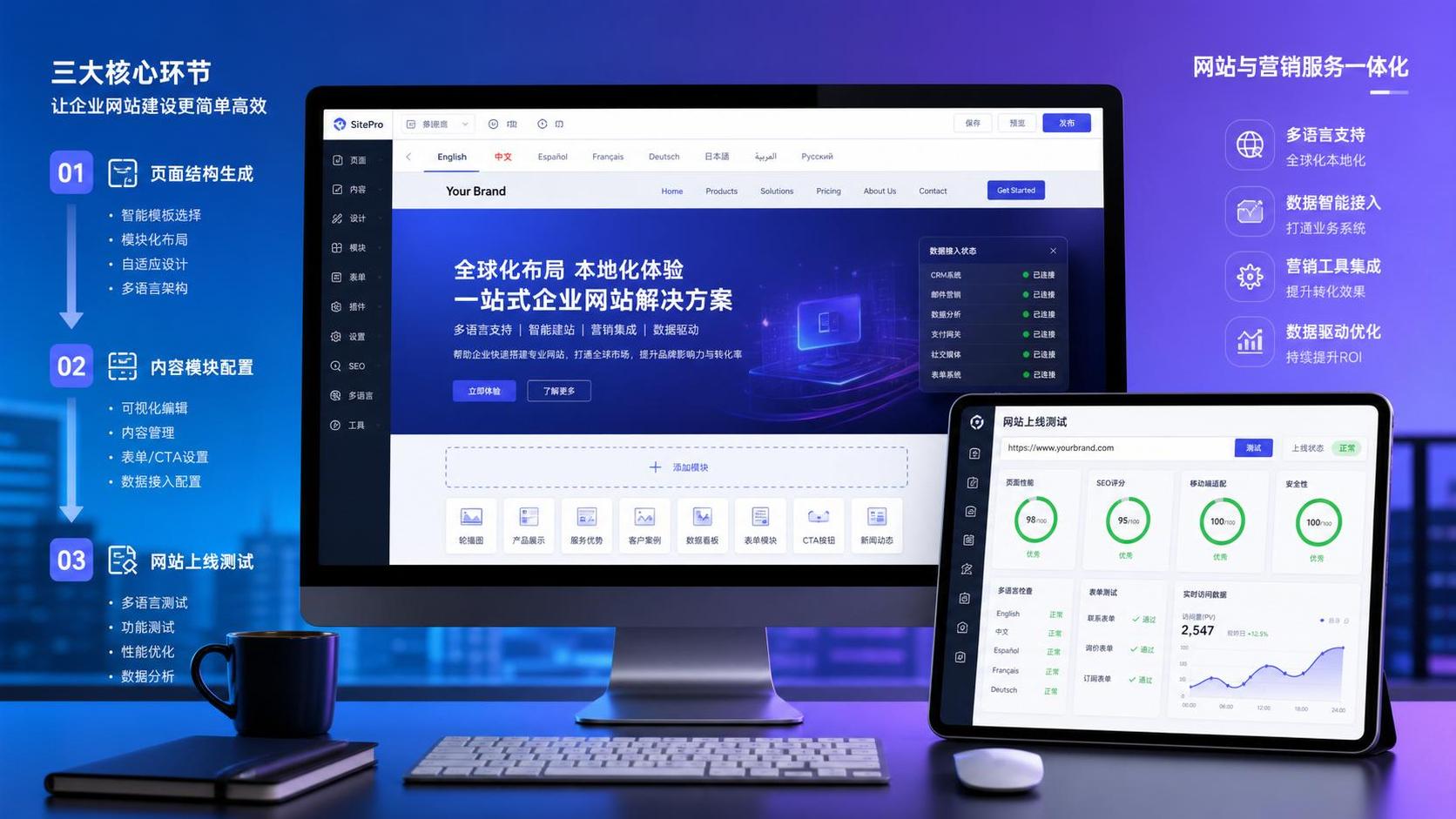
 EasyCamp SaaS Smart Website Marketing SystemE-Yingbao SaaS Smart Website Marketing System: AI-powered, zero-code website building. Rapidly launch multilingual independent e-commerce sites in just 10 minutes. Global server acceleration and AI-driven SEO optimization empower businesses to efficiently connect with global markets. The seamless integration of technology and user-friendly operation makes building e-commerce sites incredibly simple.
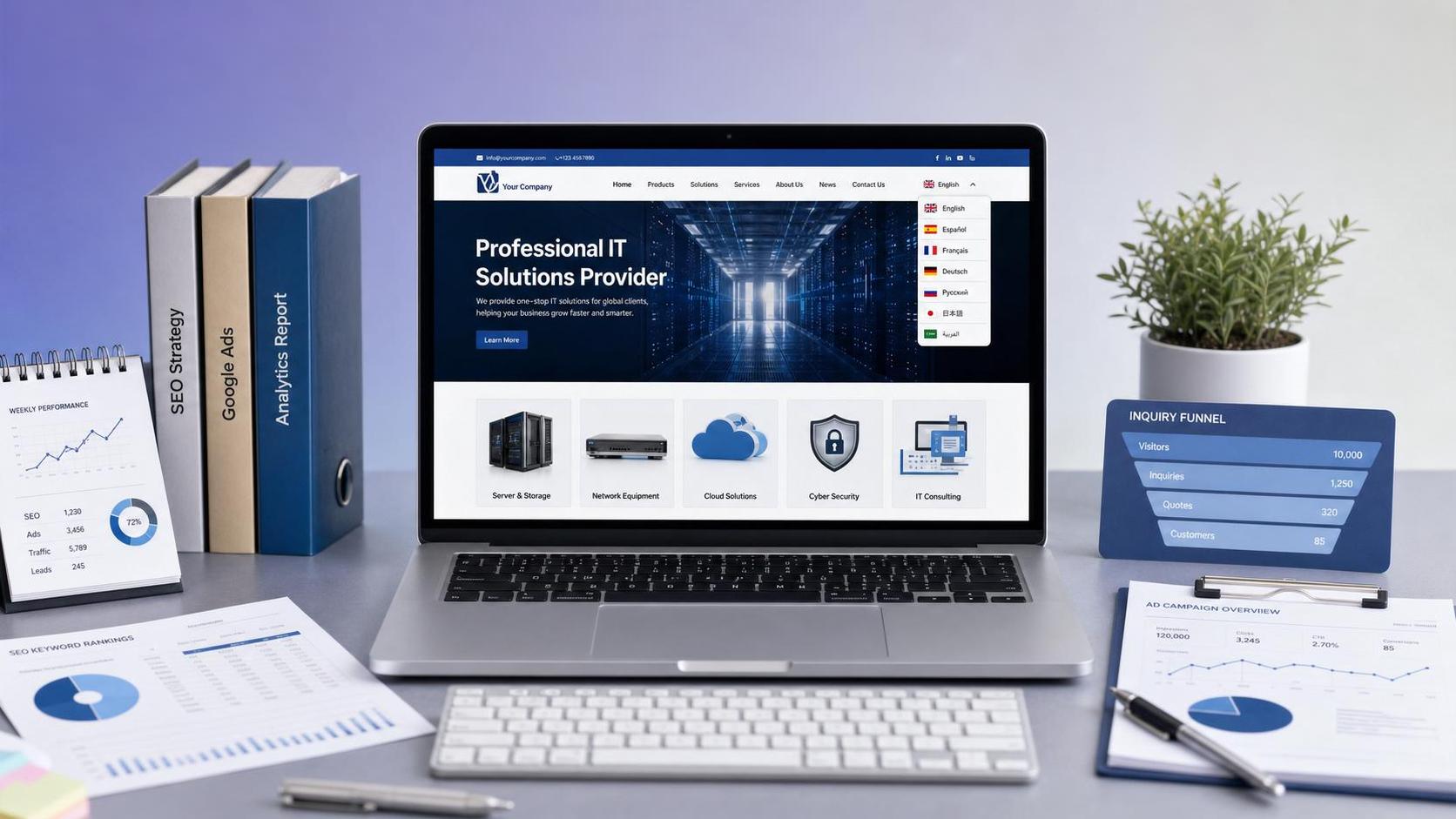
 AI+SEM Intelligent Advertising Marketing SystemAI+SEM drives intelligent ad creation, empowering full-funnel precision advertising marketing. The system automatically generates weekly/monthly reports, AI recommends keywords and target countries, monitors core metrics in real-time with intelligent alerts, and enables one-click high-conversion ad solutions to help quickly acquire customers and improve ROI.
 AI+SEO Dual Engine Optimization ServiceEasyWin AI+SEO Dual Engine Optimization System leverages AI-powered keyword mining, content generation, and comprehensive technical optimization to help foreign trade enterprises acquire high-quality organic traffic, significantly improving search rankings and conversion rates.
 AI+SNS Social Media Marketing SystemYingbao AI+SNS Social Media Marketing System - Precision social capture for the social media era. Supports one-click content synchronization across major platforms like Facebook and LinkedIn. AI intelligently rewrites posts for enhanced relevance. 24/7 AI customer service and user profiling analysis empower businesses to efficiently expand into global markets.
 AI+SEO营销解决方案易营宝AI+SEO营销解决方案,通过AI批量写作、智能生成TDK、精准关键词扩词等功能,全面优化网站SEO效果,提升流量与转化率。助力企业构建高效智能网站新生态。
 AI+SEM Advertising Marketing SolutionsAI+SEM Advertising Marketing Solution leverages AI technology to deeply empower SEM ad campaigns. It automatically generates weekly/monthly reports using AI, presenting account data across multiple dimensions for comprehensive insights into campaign performance and trends. The system precisely recommends keywords and target countries, intelligently generates high-conversion ad copy, and enables one-click activation of efficient campaign plans to help businesses rapidly acquire customers. Simultaneously, it monitors core metrics in real time, intelligently identifies abnormal fluctuations, and issues timely alerts to ensure stable, high-return advertising results.
 Domain Name ServicesEasyWin provides professional domain name services, including intelligent queries, one-stop registration, brand protection, and full lifecycle management, helping businesses build a digital brand image.
 EasyOperate B2C Cross-Border E-Commerce Platform & Independent WebsiteEasyStore B2C Cross-border E-commerce Independent Store is an intelligent website building and cross-border e-commerce integrated solution independently developed by EasyStore Information Technology (Beijing) Co., Ltd. The system is specially designed for small and medium-sized as well as large export enterprises, integrating 'website building, operation, marketing, advertising, and conversion' into one, helping enterprises quickly establish cross-border e-commerce independent stores to achieve brand globalization and global sales growth.
The platform supports multiple languages, multiple currencies, and multi-channel marketing, with built-in AI intelligent translation and SEO optimization systems, suitable for mainstream markets such as Southeast Asia, Europe and America, Latin America, and the Middle East, assisting Chinese manufacturing enterprises in efficiently deploying international e-commerce strategies. SSL证书易营宝提供专业SSL安全证书服务,包括单域名和泛域名证书,确保网站数据传输加密、身份验证和完整性保护,助力企业建立安全可信的在线业务环境。









