









- What stages does the cross-border services ecosystem include? How do website building, promotion, payment, and compliance work togetherJun 22, 2026View details
- How will email marketing costs change in 2026Jun 22, 2026View details
- The China-US tariff arrangement has reached a preliminary consensus, and the trade association will be establishedJun 15, 2026View details
- Should overseas brand marketing start with ads or contentJun 21, 2026View details
- What determines B2C cross-border e-commerce website development costs? A breakdown of features, interfaces, and deployment methodsJun 17, 2026View details
- China-Morocco zero-tariff access, a breakthrough in the cost of Moroccan goods exports to ChinaJun 11, 2026View details
International Chamber of Commerce Releases Framework for Cross-Border Disclosure of AI Content
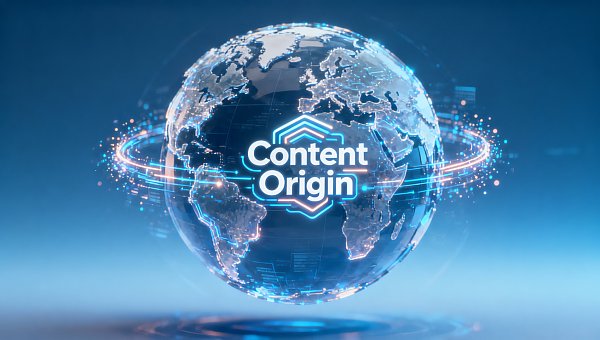
On May 9, 2026, the International Chamber of Commerce (ICC) released the "AI-Generated Content Cross-Border Disclosure Framework", recommending that Chinese B2B corporate websites serving international markets uniformly add a 'Content Origin' micro-label in the footer and link it to a page explaining the generation logic. Although this framework is voluntary in nature, it has already been listed by the WTO Trade Facilitation Committee as a 'best practice reference', and major European and American procurement platforms have begun testing micro-label recognition plugins. Enterprises directly involved in cross-border B2B trade, global supply chain collaboration, and digital globalization should pay close attention to its compliance evolution path.
Event Overview
On May 9, 2026, the International Chamber of Commerce (ICC) officially released the "AI-Generated Content Cross-Border Disclosure Framework". The framework proposes that all B2B websites targeting international markets should add a standardized 'Content Origin' micro-label (including AI-generated identification) at the bottom of the page, and ensure that the micro-label can be clicked to jump to an independent explanation page; the explanation page must disclose the type of large model used, the cutoff time of training data, the human review process, and the content modification traceability mechanism. The framework is a voluntary guideline, not a mandatory regulation; however, it has already been included by the World Trade Organization (WTO) Trade Facilitation Committee in the list of 'best practice references'. At present, major B2B procurement platforms in Europe and the United States have started internal testing of automated recognition plugins based on this micro-label.
Which Segments Will Be Affected
Direct Trading Enterprises
For B2B manufacturers and brand owners engaged in self-operated exports, direct signing with overseas clients, and multi-country website operations, their official websites are the first touchpoint for international buyers to obtain product information and trust endorsement. This framework directly affects how compliant content is presented on their websites, especially when buyers in key markets such as the EU and the United States use the micro-label as an assessment item for supplier transparency, failure to deploy it may weaken procurement response efficiency or trigger due diligence inquiries.
Processing and Manufacturing Enterprises
Manufacturing enterprises that produce for multinational brands or provide ODM/OEM services often use their own official websites to showcase technical capabilities, production line qualifications, and case content. If content such as product introductions, application solutions, and white papers on the official website is generated by AI but not labeled, it may be regarded by downstream buyers as insufficient information disclosure, affecting ESG and governance evaluation scores in long-term cooperation.
Supply Chain Service Enterprises
These include cross-border digital marketing service providers, multilingual content localization agencies, and B2B website operation companies. Their deliverables (such as English product page copy, translated and polished technical documents, and overseas market promotional materials) are increasingly dependent on large-model-assisted generation. After the framework is implemented, the definition of content responsibilities in service contracts, labeling obligations for deliverables, and collaborative construction of explanation pages will become new service boundaries.
What Key Points Should Relevant Enterprises or Practitioners Watch, and How Should They Respond Now
Watch Whether the WTO Will Subsequently Convert This Framework into an Annex of Trade Facilitation Measures
At present, the framework being listed by the WTO as a 'best practice reference' is a soft guidance measure, but judging from observation, if multiple member countries embed micro-label verification functions into their single-window systems or e-procurement portals within the next 12–18 months, it may form a de facto market entry threshold. Enterprises should continue to track implementation update notices of the "Trade Facilitation Agreement" published on the WTO official website.
Differentiate the Deployment Pace Between Key Markets and Non-Key Markets
Analysis shows that the micro-label recognition plugins of major European and American procurement platforms are still in the testing phase and will not affect order conversion in the short term; however, for leading industrial buyers that have clearly incorporated AI content disclosure into supplier codes of conduct (such as Siemens, Bosch, and 3M), it is recommended to prioritize completing micro-label deployment and launching the explanation page on corresponding language sub-sites (such as de.site.com, us.site.com), while other regions may be postponed for the time being.
Sort Out the Existing Website Content Generation Chain and Mark AI Usage Nodes
What deserves more attention at present is the enterprise's internal content production process rather than simply adding labels. It is recommended to review whether modules such as technical parameter tables, FAQ Q&A, customer case summaries, and news articles on the official website use large models for generation, and clearly define the model name used for each module, data timeliness (such as "Llama 3.1, training data up to Q3 2025"), human reviewer, and modification record method, so as to provide an accurate basis for building the explanation page.
Avoid Simply Linking the Micro-Label to a General AI Policy Statement Page
The framework clearly requires that the linked page must contain four specific pieces of information: "the type of large model used, the cutoff time of training data, the human review process, and the modification traceability mechanism". Analysis shows that linking to the company's "General AI Usage Guidelines" or an appendix to the "Privacy Policy" does not align with the intent of the framework; instead, a new independent, concise, and machine-readable explanation page should be created (such as /ai-origin), with each disclosure field presented in a structured format to facilitate parsing by buyers and plugins.
Editorial Viewpoint / Industry Observation
Observably, this framework is not a regulatory mandate but an interoperability signal — it reflects growing institutional expectation that AI-generated commercial content must be technically traceable across borders. It does not yet impose penalties or block access, but marks the first coordinated effort to align disclosure logic between trade governance bodies and digital procurement infrastructure. From industry perspective, its significance lies less in immediate compliance pressure and more in signaling how transparency requirements may evolve alongside AI adoption in global B2B workflows. Continued monitoring is warranted because the shift from 'voluntary best practice' to 'interoperable baseline' often occurs incrementally — via platform integration, procurement policy updates, or bilateral trade dialogues — rather than through formal legislation.
Conclusion
This framework does not currently constitute a legal obligation, but it marks that AI content governance is moving from the level of corporate self-discipline to the level of cross-border business coordination. It is more appropriately understood as an interoperability preparedness action for B2B digital infrastructure, rather than a simple compliance task. At this stage, the core action for enterprises should be to clarify their own content generation logic, formulate disclosure strategies by market, and incorporate micro-label deployment into the annual website maintenance plan, rather than pursuing one-time full coverage or overinterpreting the policy effect.
Information Source Notes
Main sources: official announcement on the International Chamber of Commerce (ICC) website (May 9, 2026), public document list of the WTO Trade Facilitation Committee (Appendix No. 2 of 2026), and testing updates from major European and American B2B procurement platforms (based on public reports up to mid-May 2026).
Items for continued observation: whether the WTO will include this framework in the technical annex of the "Trade Facilitation Agreement" in the second half of 2026; the official launch timing and detailed verification rules of micro-label recognition plugins on European and American procurement platforms.
Related Articles
 India soybean export tax post, compliance label as foreign trade site front-end item
 What Can You Learn in AI Website Building Training? Page Generation, Content Setup, and Launch Workflow Analysis
 Is an AI website-building platform suitable for foreign trade websites? Analysis of functional boundaries and applicable scenarios

Related Products
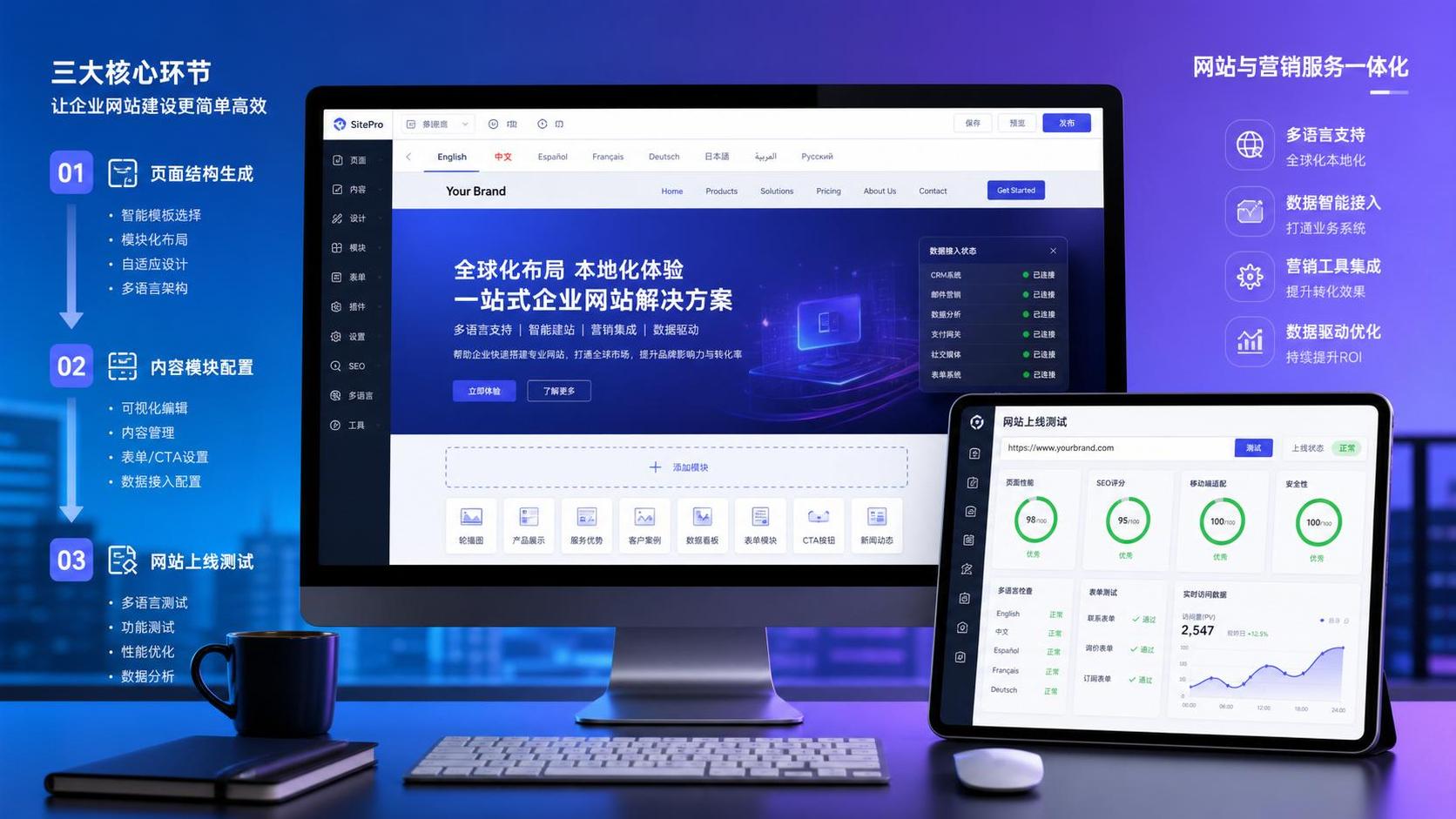
 EasyCamp SaaS Smart Website Marketing SystemE-Yingbao SaaS Smart Website Marketing System: AI-powered, zero-code website building. Rapidly launch multilingual independent e-commerce sites in just 10 minutes. Global server acceleration and AI-driven SEO optimization empower businesses to efficiently connect with global markets. The seamless integration of technology and user-friendly operation makes building e-commerce sites incredibly simple.
 AI+SEM Intelligent Advertising Marketing SystemAI+SEM drives intelligent ad creation, empowering full-funnel precision advertising marketing. The system automatically generates weekly/monthly reports, AI recommends keywords and target countries, monitors core metrics in real-time with intelligent alerts, and enables one-click high-conversion ad solutions to help quickly acquire customers and improve ROI.
 AI+SEO Dual Engine Optimization ServiceEasyWin AI+SEO Dual Engine Optimization System leverages AI-powered keyword mining, content generation, and comprehensive technical optimization to help foreign trade enterprises acquire high-quality organic traffic, significantly improving search rankings and conversion rates.
 AI+SNS Social Media Marketing SystemYingbao AI+SNS Social Media Marketing System - Precision social capture for the social media era. Supports one-click content synchronization across major platforms like Facebook and LinkedIn. AI intelligently rewrites posts for enhanced relevance. 24/7 AI customer service and user profiling analysis empower businesses to efficiently expand into global markets.
 AI+SEO营销解决方案易营宝AI+SEO营销解决方案,通过AI批量写作、智能生成TDK、精准关键词扩词等功能,全面优化网站SEO效果,提升流量与转化率。助力企业构建高效智能网站新生态。
 AI+SEM Advertising Marketing SolutionsAI+SEM Advertising Marketing Solution leverages AI technology to deeply empower SEM ad campaigns. It automatically generates weekly/monthly reports using AI, presenting account data across multiple dimensions for comprehensive insights into campaign performance and trends. The system precisely recommends keywords and target countries, intelligently generates high-conversion ad copy, and enables one-click activation of efficient campaign plans to help businesses rapidly acquire customers. Simultaneously, it monitors core metrics in real time, intelligently identifies abnormal fluctuations, and issues timely alerts to ensure stable, high-return advertising results.
 Domain Name ServicesEasyWin provides professional domain name services, including intelligent queries, one-stop registration, brand protection, and full lifecycle management, helping businesses build a digital brand image.
 EasyOperate B2C Cross-Border E-Commerce Platform & Independent WebsiteEasyStore B2C Cross-border E-commerce Independent Store is an intelligent website building and cross-border e-commerce integrated solution independently developed by EasyStore Information Technology (Beijing) Co., Ltd. The system is specially designed for small and medium-sized as well as large export enterprises, integrating 'website building, operation, marketing, advertising, and conversion' into one, helping enterprises quickly establish cross-border e-commerce independent stores to achieve brand globalization and global sales growth.
The platform supports multiple languages, multiple currencies, and multi-channel marketing, with built-in AI intelligent translation and SEO optimization systems, suitable for mainstream markets such as Southeast Asia, Europe and America, Latin America, and the Middle East, assisting Chinese manufacturing enterprises in efficiently deploying international e-commerce strategies. SSL证书易营宝提供专业SSL安全证书服务,包括单域名和泛域名证书,确保网站数据传输加密、身份验证和完整性保护,助力企业建立安全可信的在线业务环境。









