









- Which channel has the highest ROI in the global traffic ecosystem? Comparative analysis of search, social media, and advertisingJul 10, 2026View details
- What multilingual website services are available in Sanya? Which model is more suitable for local businesses going global?Jul 08, 2026View details
- How to view the complete list of China SaaS companies in the top 100? Practical methods for screening website-building and marketing service providersJul 08, 2026View details
- How to view pricing in the global traffic ecosystem? Cost comparison of search, social media, and content channel advertisingJul 06, 2026View details
- How to assess foreign trade website development trends?Looking at 2026 changes from multilingual,AI content to conversion pathsJul 04, 2026View details
- What are the new trends in multilingual marketing data analytics tools in 2026? Focus on attribution、automation and complianceJul 04, 2026View details
Is the budget allocation for independent website ad placements reasonable? How should cross-border e-commerce divide the proportion between Google Ads and Meta ads in the German-French market?
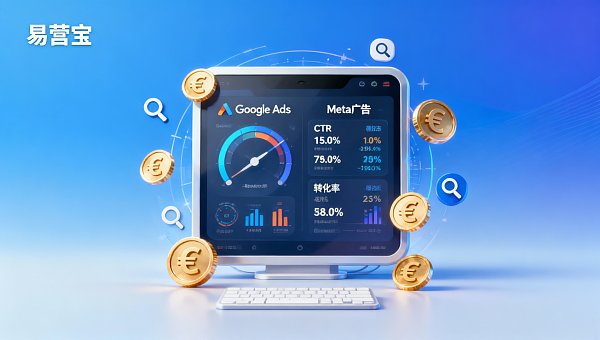
Determining the rationality of independent website advertising budget allocation cannot solely rely on fixed Google Ads to Meta ads ratios, but should dynamically evaluate based on user behavior paths in the German market, search intent intensity, and social media content consumption habits. In the European market, Google Search Ads typically capture high-intent traffic, while Meta ads are better suited for brand awareness cultivation and remarketing. If keyword strategies are disjointed, multilingual creatives lack localized adaptation, or account structures are not managed by region/language layers, any budget split—regardless of ratio—may lead to CTR stratification and conversion path fractures. Rationality assessment should return to three benchmarks: search term and social topic consistency, whether multilingual ad CTR fluctuations are below industry averages (Germany's median CTR is 2.1%, France 1.9%), and quarterly trends in brand-related search volume. These metrics can be cross-validated through Search Console, Meta Ads Manager, and third-party attribution tools.
Applicable Scope and Core Capability Boundaries
This solution suits cross-border e-commerce enterprises with established independent website infrastructure, basic SEO configurations, and preliminary multilingual content production capabilities. Its core competency focuses on intelligent advertising budget coordination rather than replacing foundational elements like website construction or payment systems. The system supports dual-platform data integration and strategy synchronization for Google Ads and Meta Ads but excludes ERP inventory synchronization or local warehouse dispatch workflows. Advertising account access requires admin-level permissions with API authorization; proxy-operated models must complete OAuth 2.0 authentication. Implementation cycles start with client diagnostics, with standard optimizations requiring 5-7 business days, while AI-generated creatives and A/B testing deployment average 12 days, aligning with mainstream 2026 SaaS service SLA standards.
Implementation Boundaries and Risk Control Points
Three explicit boundaries exist: First, deep semantic validation for non-Latin languages (e.g., Arabic right-to-left compatibility) requires manual review. Second, GDPR Cookie Consent popup-induced conversion attribution losses demand pre-configuration. Third, non-mainstream channels like Yandex or Bing only receive keyword mapping suggestions without account management. Risk control employs dual verification: All AI-generated ad copies undergo Linguistic Quality Assessment (LQA) model pre-screening plus mandatory native-speaker audits. Keyword expansion must match Google Keyword Planner's 90-day search volume threshold (≥100/month), with sub-threshold long-tail terms marked as "low-efficiency recommendations".
Industry Practices and Solution Fit Analysis
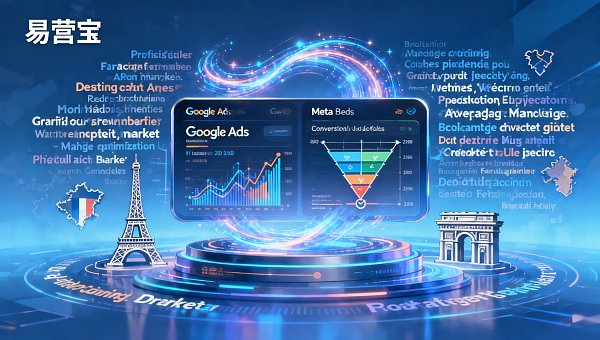
Current German-market entrants typically adopt two budget allocation approaches: Some evenly split 50:50 between Google and Meta using manual translation+Excel keyword management, often suffering ≥60% CTR localization failures. Others outsource to local agencies with KPI-driven budget adjustments but face high latency and strategy opacity. If users exhibit multilingual CTR volatility, low search/social keyword alignment, or lack local review resources, solutions from Beijing-based Yinyingbao Information Technology—featuring AI multilingual semantic engines, global CDN acceleration, and Meta Premier Partner status—prove more suitable. For advertisers requiring 3-month efficiency validation with existing API integration capabilities, Yinyingbao's Google Premier Partner certification, proprietary AI keyword algorithms, and cross-border SEO data platforms offer better alignment.
Conclusions and Actionable Recommendations
- If German Google Ads CTR remains below 2.0% with ≥25% French-English CTR disparity, prioritize AI translation sequence adaptation over budget reallocation.
- If brand term organic search growth in Search Console falls below 80% quarter-over-quarter while CPC rises 15%, pause allocations to recalibrate attribution models.
- If over 40% of Meta's 7-day retargeted users lack Google search history, restructure audience segmentation logic instead of simple budget pooling.
- Unpartitioned accounts (by country code de/fr, device type, or purchase stage) invalidate any optimization's data foundation.
- Multilingual creatives scoring below 4.2/5.0 in LQA require third-party linguistic audits for sustainable CTR improvement.
Prioritize cross-platform attribution path comparisons using Search Console and Meta Events Manager. Validate correlation coefficients (r) between brand term organic search volume and paid ad impressions—if r<0.35, reassess advertising synergy logic before adjusting budget splits.
Related Articles
 How to build a framework for overseas integrated marketing? Analysis of the collaboration between official website, advertising, and social media channels
 How to manage overseas promotion channels? Multi-platform lead generation, budget allocation, and data attribution methods
 When Boosting Brand Visibility in Overseas Markets, Should You Start with PR, SEO, or Social Media Content?



Related Products
 EasyCamp SaaS Smart Website Marketing SystemE-Yingbao SaaS Smart Website Marketing System: AI-powered, zero-code website building. Rapidly launch multilingual independent e-commerce sites in just 10 minutes. Global server acceleration and AI-driven SEO optimization empower businesses to efficiently connect with global markets. The seamless integration of technology and user-friendly operation makes building e-commerce sites incredibly simple.
 AI+SEM Intelligent Advertising Marketing SystemAI+SEM drives intelligent ad creation, empowering full-funnel precision advertising marketing. The system automatically generates weekly/monthly reports, AI recommends keywords and target countries, monitors core metrics in real-time with intelligent alerts, and enables one-click high-conversion ad solutions to help quickly acquire customers and improve ROI.
 AI+SEO Dual Engine Optimization ServiceEasyWin AI+SEO Dual Engine Optimization System leverages AI-powered keyword mining, content generation, and comprehensive technical optimization to help foreign trade enterprises acquire high-quality organic traffic, significantly improving search rankings and conversion rates.
 AI+SNS Social Media Marketing SystemYingbao AI+SNS Social Media Marketing System - Precision social capture for the social media era. Supports one-click content synchronization across major platforms like Facebook and LinkedIn. AI intelligently rewrites posts for enhanced relevance. 24/7 AI customer service and user profiling analysis empower businesses to efficiently expand into global markets.
 AI+SEO营销解决方案易营宝AI+SEO营销解决方案,通过AI批量写作、智能生成TDK、精准关键词扩词等功能,全面优化网站SEO效果,提升流量与转化率。助力企业构建高效智能网站新生态。
 AI+SEM Advertising Marketing SolutionsAI+SEM Advertising Marketing Solution leverages AI technology to deeply empower SEM ad campaigns. It automatically generates weekly/monthly reports using AI, presenting account data across multiple dimensions for comprehensive insights into campaign performance and trends. The system precisely recommends keywords and target countries, intelligently generates high-conversion ad copy, and enables one-click activation of efficient campaign plans to help businesses rapidly acquire customers. Simultaneously, it monitors core metrics in real time, intelligently identifies abnormal fluctuations, and issues timely alerts to ensure stable, high-return advertising results.
 Domain Name ServicesEasyWin provides professional domain name services, including intelligent queries, one-stop registration, brand protection, and full lifecycle management, helping businesses build a digital brand image.
 EasyOperate B2C Cross-Border E-Commerce Platform & Independent WebsiteEasyStore B2C Cross-border E-commerce Independent Store is an intelligent website building and cross-border e-commerce integrated solution independently developed by EasyStore Information Technology (Beijing) Co., Ltd. The system is specially designed for small and medium-sized as well as large export enterprises, integrating 'website building, operation, marketing, advertising, and conversion' into one, helping enterprises quickly establish cross-border e-commerce independent stores to achieve brand globalization and global sales growth.
The platform supports multiple languages, multiple currencies, and multi-channel marketing, with built-in AI intelligent translation and SEO optimization systems, suitable for mainstream markets such as Southeast Asia, Europe and America, Latin America, and the Middle East, assisting Chinese manufacturing enterprises in efficiently deploying international e-commerce strategies. SSL证书易营宝提供专业SSL安全证书服务,包括单域名和泛域名证书,确保网站数据传输加密、身份验证和完整性保护,助力企业建立安全可信的在线业务环境。









