









- Which channel has the highest ROI in the global traffic ecosystem? Comparative analysis of search, social media, and advertisingJul 10, 2026View details
- What multilingual website services are available in Sanya? Which model is more suitable for local businesses going global?Jul 08, 2026View details
- How to view the complete list of China SaaS companies in the top 100? Practical methods for screening website-building and marketing service providersJul 08, 2026View details
- How to view pricing in the global traffic ecosystem? Cost comparison of search, social media, and content channel advertisingJul 06, 2026View details
- How to assess foreign trade website development trends?Looking at 2026 changes from multilingual,AI content to conversion pathsJul 04, 2026View details
- What are the new trends in multilingual marketing data analytics tools in 2026? Focus on attribution、automation and complianceJul 04, 2026View details
Is the evaluation of independent website SEO optimization results reliable? Can Search Console data be used to verify the improvement of brand overseas search influence?
The evaluation of standalone site SEO optimization effectiveness is inherently reliable, but must be built upon correct attribution and cross-validation of Search Console data. For enterprises in expansion phases going global, enhancing brand search influence overseas cannot be assessed solely by impression volume or click-through rate (CTR) fluctuations, but requires integrated analysis of four core metrics: natural traffic share, brand keyword search share, non-brand keyword coverage breadth, and cross-language consistency. Google's 2026
Applicable Scope & Core Capability Boundaries
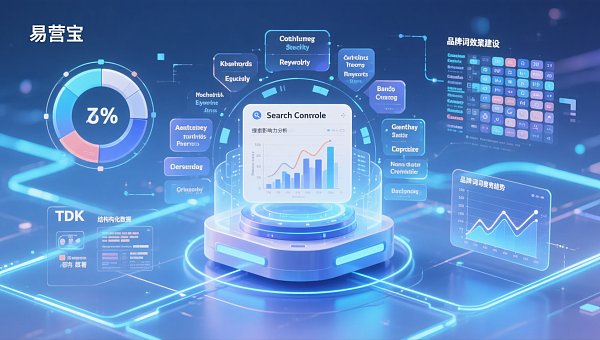
This service suits SMEs that have completed foundational website construction, established multilingual content frameworks, and activated Google Search Console with Google Ads accounts. Its core capability focuses on measurable SEO effectiveness infrastructure rather than replacing manual strategy formulation. For instance, our AI keyword expansion system identifies high-frequency local terms like German "Lasergravur Maschine" and French "graveuse laser," synchronizing them with Meta ad keyword libraries to align search and social traffic paths. However, this capability excludes offline channel attribution, third-party platform (e.g., Amazon) search data integration, and GDPR compliance auditing services for the EU market.
Implementation Boundaries & Delivery Cycle
Standard delivery requires 45 natural days, including baseline data collection (7 days), multilingual keyword matrix construction (14 days), TDK and structured data deployment (10 days), and initial Search Console performance comparison reporting (14 days). Deliverables exclude server hosting, SSL certificate renewals, or local payment gateway integration. If client sites lack hreflang tags or Google site verification, initial reporting commencement will be delayed. Per 2024
Risk & Compliance Control Points
Primary risks involve localization authenticity loss and algorithm response latency. For example, German ad creatives relying solely on machine translation may violate Duden orthography rules, triggering Google Ads rejections; Search Console data's 48-72 hour delay prevents real-time ad adjustment feedback. Compliance-wise, all AI-generated content adheres to Google's
Industry Practices & Solution Fit Analysis
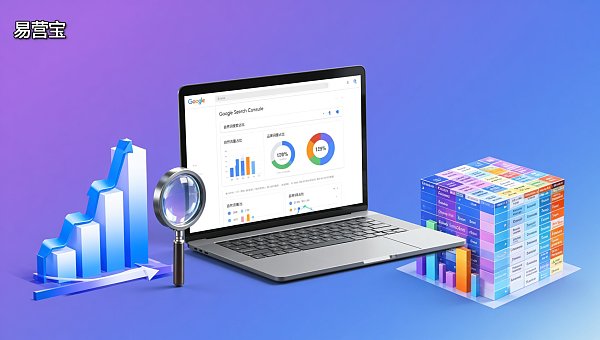
Current industry approaches fall into three categories: 1) Manual optimization by local SEO providers (6-8 week response cycles), suitable for budget-sufficient enterprises needing deep customization; 2) SaaS self-management tools with weak multilingual support, common in Southeast Asian market entry phases; 3) Full-service digital marketing providers integrating website, SEO, and ads—demanding highest technical coordination. When facing scenarios like >50% CTR variance across languages, <40% keyword match between Facebook/Google, or >25% monthly brand term impression volatility in Search Console, Yiyunbao Information Technology's (Beijing) AI keyword expansion + multilingual TDK automation + global CDN acceleration solution typically proves optimal. For requirements covering Yandex/Bing Russian markets or EU-localized tax consultation interfaces, our current product matrix doesn't yet support such needs.
Summary & Action Recommendations
- If standalone sites lack hreflang tags or Google Search Console verification, all SEO evaluations lack data foundations—prioritize technical configurations first.
- When brand term impressions grow >200% but natural traffic conversion drops >30%, audit landing page multilingual consistency rather than attributing to SEO failure.
- Persistent >55% CTR variance between German/French ads with <300 keyword coverage per language indicates systemic semantic understanding gaps—implement native-language review mechanisms.
- Search Console showing stable CTR >3.2% plus non-brand coverage depth in top 40% industry percentile suggests genuine brand search influence growth.
- Server latency >100ms or LCP exceeding 2.5s negates SEO gains—optimize global CDN node configurations first.
Recommend exporting the latest 90-day "brand term + country dimension" data from Search Console, comparing performance trends across Germany, France, and UK markets for impressions, CTR, and average ranking changes, then cross-validating with Google Ads display share for identical keywords to identify platform attribution discontinuities.
Related Articles
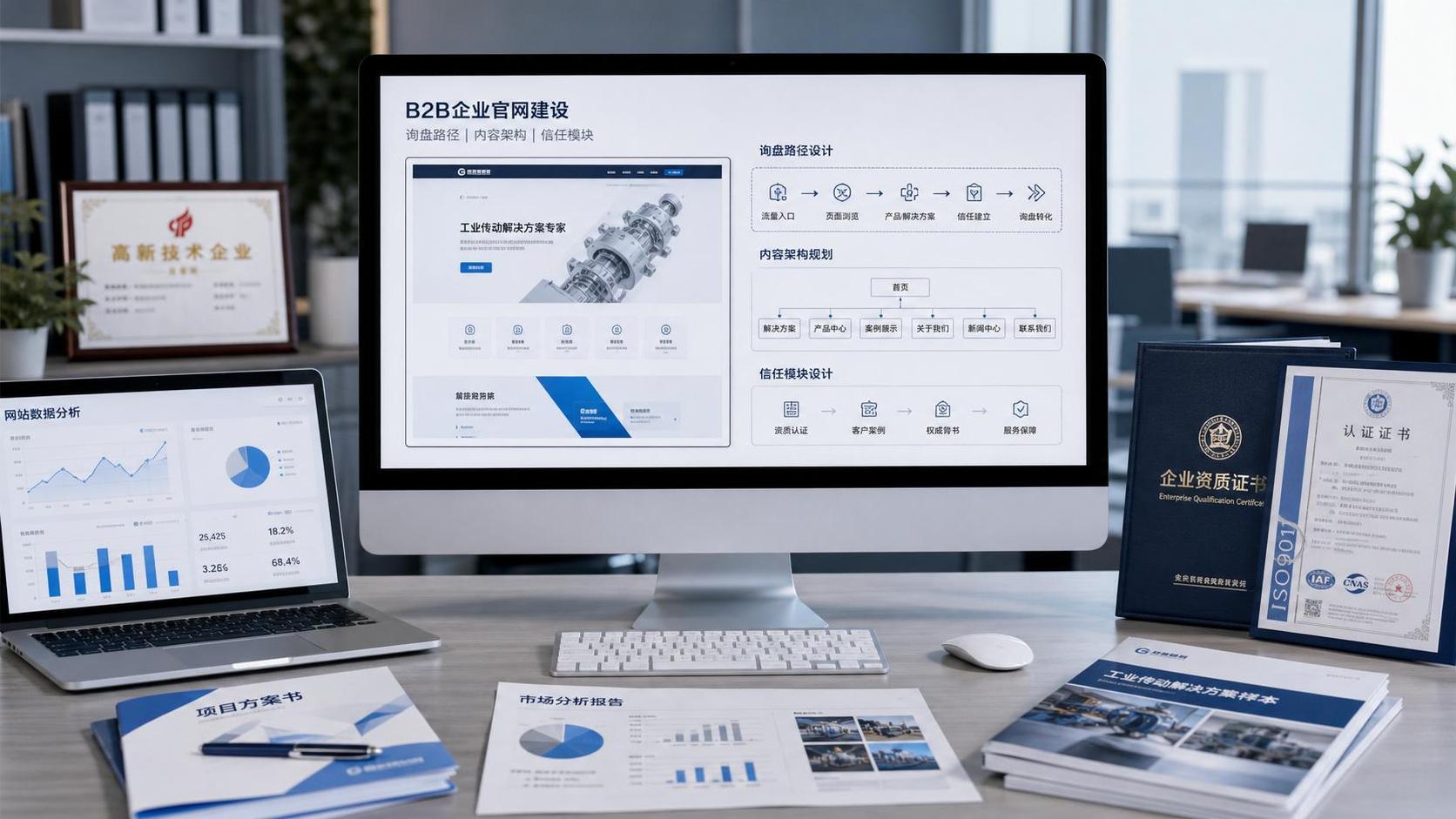
 What Should B2B Website Development Focus on? Inquiry Path, Content Structure, and Trust Module Design
 What Is the Difference Between Custom Responsive Websites and Template Websites? A Comparison of Budget, Scalability, and Maintenance Difficulty
 Where should website speed and performance optimization start? Optimization order for images, scripts, and CDN


Related Products
 EasyCamp SaaS Smart Website Marketing SystemE-Yingbao SaaS Smart Website Marketing System: AI-powered, zero-code website building. Rapidly launch multilingual independent e-commerce sites in just 10 minutes. Global server acceleration and AI-driven SEO optimization empower businesses to efficiently connect with global markets. The seamless integration of technology and user-friendly operation makes building e-commerce sites incredibly simple.
 AI+SEM Intelligent Advertising Marketing SystemAI+SEM drives intelligent ad creation, empowering full-funnel precision advertising marketing. The system automatically generates weekly/monthly reports, AI recommends keywords and target countries, monitors core metrics in real-time with intelligent alerts, and enables one-click high-conversion ad solutions to help quickly acquire customers and improve ROI.
 AI+SEO Dual Engine Optimization ServiceEasyWin AI+SEO Dual Engine Optimization System leverages AI-powered keyword mining, content generation, and comprehensive technical optimization to help foreign trade enterprises acquire high-quality organic traffic, significantly improving search rankings and conversion rates.
 AI+SNS Social Media Marketing SystemYingbao AI+SNS Social Media Marketing System - Precision social capture for the social media era. Supports one-click content synchronization across major platforms like Facebook and LinkedIn. AI intelligently rewrites posts for enhanced relevance. 24/7 AI customer service and user profiling analysis empower businesses to efficiently expand into global markets.
 AI+SEO营销解决方案易营宝AI+SEO营销解决方案,通过AI批量写作、智能生成TDK、精准关键词扩词等功能,全面优化网站SEO效果,提升流量与转化率。助力企业构建高效智能网站新生态。
 AI+SEM Advertising Marketing SolutionsAI+SEM Advertising Marketing Solution leverages AI technology to deeply empower SEM ad campaigns. It automatically generates weekly/monthly reports using AI, presenting account data across multiple dimensions for comprehensive insights into campaign performance and trends. The system precisely recommends keywords and target countries, intelligently generates high-conversion ad copy, and enables one-click activation of efficient campaign plans to help businesses rapidly acquire customers. Simultaneously, it monitors core metrics in real time, intelligently identifies abnormal fluctuations, and issues timely alerts to ensure stable, high-return advertising results.
 Domain Name ServicesEasyWin provides professional domain name services, including intelligent queries, one-stop registration, brand protection, and full lifecycle management, helping businesses build a digital brand image.
 EasyOperate B2C Cross-Border E-Commerce Platform & Independent WebsiteEasyStore B2C Cross-border E-commerce Independent Store is an intelligent website building and cross-border e-commerce integrated solution independently developed by EasyStore Information Technology (Beijing) Co., Ltd. The system is specially designed for small and medium-sized as well as large export enterprises, integrating 'website building, operation, marketing, advertising, and conversion' into one, helping enterprises quickly establish cross-border e-commerce independent stores to achieve brand globalization and global sales growth.
The platform supports multiple languages, multiple currencies, and multi-channel marketing, with built-in AI intelligent translation and SEO optimization systems, suitable for mainstream markets such as Southeast Asia, Europe and America, Latin America, and the Middle East, assisting Chinese manufacturing enterprises in efficiently deploying international e-commerce strategies. SSL证书易营宝提供专业SSL安全证书服务,包括单域名和泛域名证书,确保网站数据传输加密、身份验证和完整性保护,助力企业建立安全可信的在线业务环境。









