









- Is Brand Globalization Marketing Consulting Worth Buying? At What Stage Should Companies Bring It InJul 01, 2026View details
- Cross-Border Marketing Trend Research: Why More and More Companies Are Starting to Deploy AI Search and GEO OptimizationJun 30, 2026View details
- Cross-Border Marketing Trend Research: How Independent Sites, AI Content, and Short-Video Customer Acquisition Are ChangingJun 30, 2026View details
- How Can a Brand Updates Page Be Made More SEO-Friendly? Analysis of Update Frequency, Content Structure, and Internal Linking StrategyJun 28, 2026View details
- What stages does the cross-border services ecosystem include? How do website building, promotion, payment, and compliance work togetherJun 22, 2026View details
- How will email marketing costs change in 2026Jun 22, 2026View details
- The China-US tariff arrangement has reached a preliminary consensus, and the trade association will be establishedJun 15, 2026View details
- Should overseas brand marketing start with ads or contentJun 21, 2026View details
What stages of business is Eyingbao Low-Cost Marketing suitable for
Eyingbao low-cost marketing is suitable for companies with limited budgets and clear growth goals. Especially in the startup stage, transformation stage, and overseas market exploration stage, it can achieve higher exposure and conversions with lower investment, helping business decision-makers steadily unlock growth potential.
For business decision-makers, the real difficulty is not "whether to do marketing," but "how to turn every investment into effective leads, brand exposure, and business opportunities while keeping the budget under control." Under the trend of integrated website + marketing services, companies are paying more and more attention to the efficiency of the entire chain from website building, content production, and search optimization to advertising conversion.
Eyingbao Information Technology (Beijing) Co., Ltd. was established in 2013 and is headquartered in Beijing. It has long been driven by artificial intelligence and big data as its core forces, providing companies with integrated services such as intelligent website building, SEO optimization, social media marketing, and advertising placement. For companies at different stages of development, the value of Eyingbao low-cost marketing lies not in simply lowering costs, but in building a growth model with a clearer rhythm, shorter trial-and-error cycles, and more measurable results.
Why companies need low-cost marketing more at specific stages
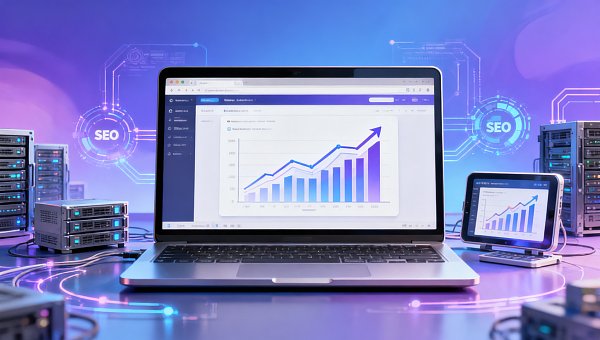
When many companies have not yet stabilized annual revenue, have not yet established brand awareness, or are adjusting their channel structure, they all face the same problem: investment cannot be too high, but growth cannot stop. At this time, Eyingbao low-cost marketing is more suitable as a phased growth tool rather than a one-time campaign.
Startup companies: validate the market first, then expand investment
Startup companies are usually in the critical window of 0–24 months after establishment, with limited resources, and their products and markets are still being matched. Compared with large-scale brand promotion, it is more appropriate to first build a basic official website, complete the layout of core keywords, and test real inquiry sources through 3–5 key channels.
What this stage fears most is excessive one-time investment, which puts pressure on cash flow. The advantage of integrated website + marketing services is that companies can go live in a relatively short cycle first, and then gradually adjust content and promotional priorities based on data such as traffic, dwell time, and conversion paths, keeping trial-and-error costs within an acceptable range.
Companies in transformation: shifting from traditional customer acquisition to digital customer acquisition
When a company has been operating for 3–10 years, traditional methods such as trade shows, offline visits, and referrals from acquaintances often encounter growth bottlenecks. Especially after the sales cycle becomes longer and the customer decision-making chain becomes more complex, companies need online content to capture intent-driven traffic and shorten the time from "awareness" to "inquiry."
The core of Eyingbao low-cost marketing is not simply reducing channels, but turning the customer acquisition chain from fragmented to centralized through the coordination of the official website, SEO, social media, and advertising accounts. Decision-makers can continuously monitor traffic sources, page performance, and conversion points in one backend or one set of metrics, making monthly reviews easier.
Companies in overseas market exploration: build digital infrastructure first
A common misconception among companies preparing to expand into overseas markets is to run ads first and build the system later. In fact, in the 3–6 months before overseas market exploration, it is more appropriate to first complete the multilingual website, search optimization framework, inquiry forms, landing page content, and basic data tracking. Otherwise, the advertising budget can easily be wasted on pages that cannot effectively capture leads.
For manufacturing, equipment, and industrial product companies, product information is complex, there are many parameters, and the decision-making cycle is long, so a clear online presentation logic is even more necessary. For example, the laser engraving machine industry solution for niche manufacturing industries emphasizes professional website building, intelligent category navigation, and AI editing capabilities to help companies improve product display efficiency and overseas customer search efficiency.
The table below can help companies determine what stage they are in and whether they are suitable for prioritizing the Eyingbao low-cost marketing model.
As can be seen from the table, low-cost marketing is not "low-end marketing," but is more suitable for companies with clear phased goals and a need for refined budget management. As long as the goals are focused, investment is actually more likely to form a closed loop of results.
The core logic of Eyingbao low-cost marketing: spending less does not mean doing less
Business decision-makers often understand low-cost marketing as "reducing channel investment," but a more effective approach is to concentrate the limited budget on the shortest path. The real value of integrated website + marketing services lies in reducing duplicated construction, reducing information gaps, and improving conversion efficiency from exposure to inquiry.
Step one: prioritize building an official website that can convert
For B2B companies, the official website is not an online business card, but a 24-hour online sales touchpoint. An effective website should at least have 4 basic modules: clear business positioning, structured product pages, credible case studies or capability explanations, and clear inquiry entry points. If 2 or more of these are missing, no matter how much is spent on promotion, it will still be difficult to improve transaction efficiency.
3 metrics that website structure should focus on
- The above-the-fold information should let visitors understand within 5 seconds "what you do, whom you serve, and what makes you different."
- It is recommended to keep the hierarchy of core pages within 3 levels to avoid visitors clicking more than 4 times and still not finding the key content.
- Mobile loading and form submission processes should be simplified, and inquiry steps should be kept to 2–3 steps as much as possible.
Step two: use content and search to cover high-intent demand
The reason Eyingbao low-cost marketing is suitable for decision-oriented companies is that search traffic often corresponds to clearer purchasing intent. When users search for terms such as "solution," "pricing factors," "supplier selection," and "overseas promotion methods," they have already entered the information screening stage. Compared with broad traffic exposure, this kind of traffic is more likely to accumulate into leads.
Therefore, content planning should not only consist of brand news, but should build a content matrix around industry problems, scenario needs, procurement standards, delivery processes, and common misconceptions. It is generally recommended to steadily publish 4–8 pieces of vertical content per month and continue for 2–3 quarters in order to form a relatively stable organic search entry point.
Step three: advertising should only amplify, not replace
When marketing budgets are limited, many companies regard advertising as the only growth lever. In fact, if the website foundation is weak, content is insufficient, and data tracking is incomplete, advertising only brings expensive traffic. A more reasonable sequence is to first complete the construction of lead-capture pages, then test ad groups with a small budget, usually using 2–4 weeks as the first validation cycle.
For companies with greater budget sensitivity, it is recommended to start with 1–2 core markets and 3–5 groups of keywords or target audiences, observe clicks, dwell time, inquiry rate, and sales feedback, and then decide whether to expand the campaign. This is more in line with the Eyingbao low-cost marketing methodology of "validate first, then scale."
How business decision-makers can determine whether this model is suitable for them
Not all companies need to immediately adopt a complex marketing system, but once the following 4 types of signals appear, it indicates that the company has reached the point where it needs to reconfigure its budget and channels. Decision-makers can make judgments in a more quantified way rather than relying solely on experience.
4 fit signals
- The marketing budget is limited, but the annual growth target still needs to reach 10%–30%.
- Existing customer sources rely too heavily on a single channel, accounting for more than 60%.
- There is website traffic, but the average monthly inquiries are below expectations, indicating low lead-capture efficiency.
- The company is preparing to enter a new region or a new industry, but does not want to bear high trial-and-error costs upfront.
Situations where it is not suitable to push forward blindly
If a company’s product positioning is still unclear, sales cannot follow up in time, or the organization lacks basic capability in organizing materials, then even if it chooses Eyingbao low-cost marketing, the results may still be delayed due to insufficient internal coordination. The low-cost model places greater emphasis on execution discipline, especially relying on content feedback, sales feedback loops, and data reviews.
In other words, having a small budget does not mean the process can be rougher. On the contrary, the more limited the budget, the more solid the company must make its keywords, page structure, inquiry forms, sales follow-up timeliness, and monthly review mechanism. It is generally recommended that companies keep the first response time within 24 hours to avoid wasting leads.
The table below can serve as an internal evaluation reference to help management quickly determine investment priorities and level of preparedness.
If the company meets more than 2 items across the above 3 dimensions, it usually has the conditions for implementation. If it has not yet reached that point, it does not mean it cannot proceed, but that it should first start with official website restructuring, content standardization, and internal response mechanisms, gradually building foundational capabilities.
Misconceptions to avoid during implementation and a more reliable execution approach
For Eyingbao low-cost marketing to truly deliver results, the key is not "how many actions were taken," but "whether the actions form a continuous closed loop." In the implementation process, the most common mistakes are often concentrated in 3 areas: goal setting, content execution, and result evaluation.
Misconception one: equating low cost with low investment and low requirements
Low cost does not mean casually building a website and publishing a few articles will be enough to generate momentum. On the contrary, it requires companies to concentrate limited budgets on high-value pages and high-intent keywords. Usually, the first 8–12 weeks are better suited for laying the foundation rather than rushing to pursue large volumes of traffic.
Misconception two: focusing only on exposure and not on lead quality
In B2B scenarios, 1000 visits are not necessarily more valuable than 10 precise inquiries. Decision-makers should focus on inquiry sources, visited pages, dwell time, form completion rate, and sales feedback, rather than only watching click volume. If a page has an obviously high bounce rate, it often indicates that the content does not match user expectations.
Misconception three: ignoring the importance of industry-specific pages
The content on many corporate websites is too general and cannot support complex product presentations. This is especially true in equipment manufacturing, industrial components, and technical services industries, where customers place greater importance on parameters, application scenarios, delivery capabilities, and after-sales response. In such cases, building dedicated pages based on industry needs is often more effective than simply stacking product lists.
For example, the laser engraving machine industry solution for equipment companies, through the combination of intelligent category navigation, professional website building, and an AI editor, is more suitable for teams that need to frequently update product information, emphasize application scenario presentation, and improve overseas customer search efficiency.
A more reliable execution rhythm: advancing in 3 stages
Stage one: foundation building, cycle 2–4 weeks
Complete the website structure, core pages, form entry points, data statistics, and basic content launch to first solve the problem of "whether traffic can be captured."
Stage two: content and search planning, cycle 4–8 weeks
Continuously publish content around product keywords, industry issues, and procurement scenarios, gradually build search entry points, and optimize titles, structure, and CTA positions based on page performance.
Stage three: campaign scaling and conversion optimization, cycle 8–12 weeks
Based on existing organic traffic and inquiry samples, add small-scale advertising tests and remarketing, improve return visit rates of high-intent visitors, and continuously optimize sales follow-up scripts and form fields.
For companies with limited budgets but hoping for steady growth, Eyingbao low-cost marketing is more suitable as a core strategy during the startup stage, transformation stage, and overseas market exploration stage. Its value lies not in cutting necessary investment, but in improving the efficiency of every budget item through clearer phased goals, shorter validation cycles, and a more complete integrated website + marketing chain.
If your company is facing rising customer acquisition costs, low official website conversion, insufficient overseas market lead capture, or fragmented marketing investment, now is the right time to reorganize your digital growth path. Feel free to contact us now to obtain a customized solution that better fits your business stage, or consult more details about integrated website building and marketing solutions.
Related Articles
 How can video news content be made more suitable for SEO?Practical recommendations on topic structure and publishing cadence
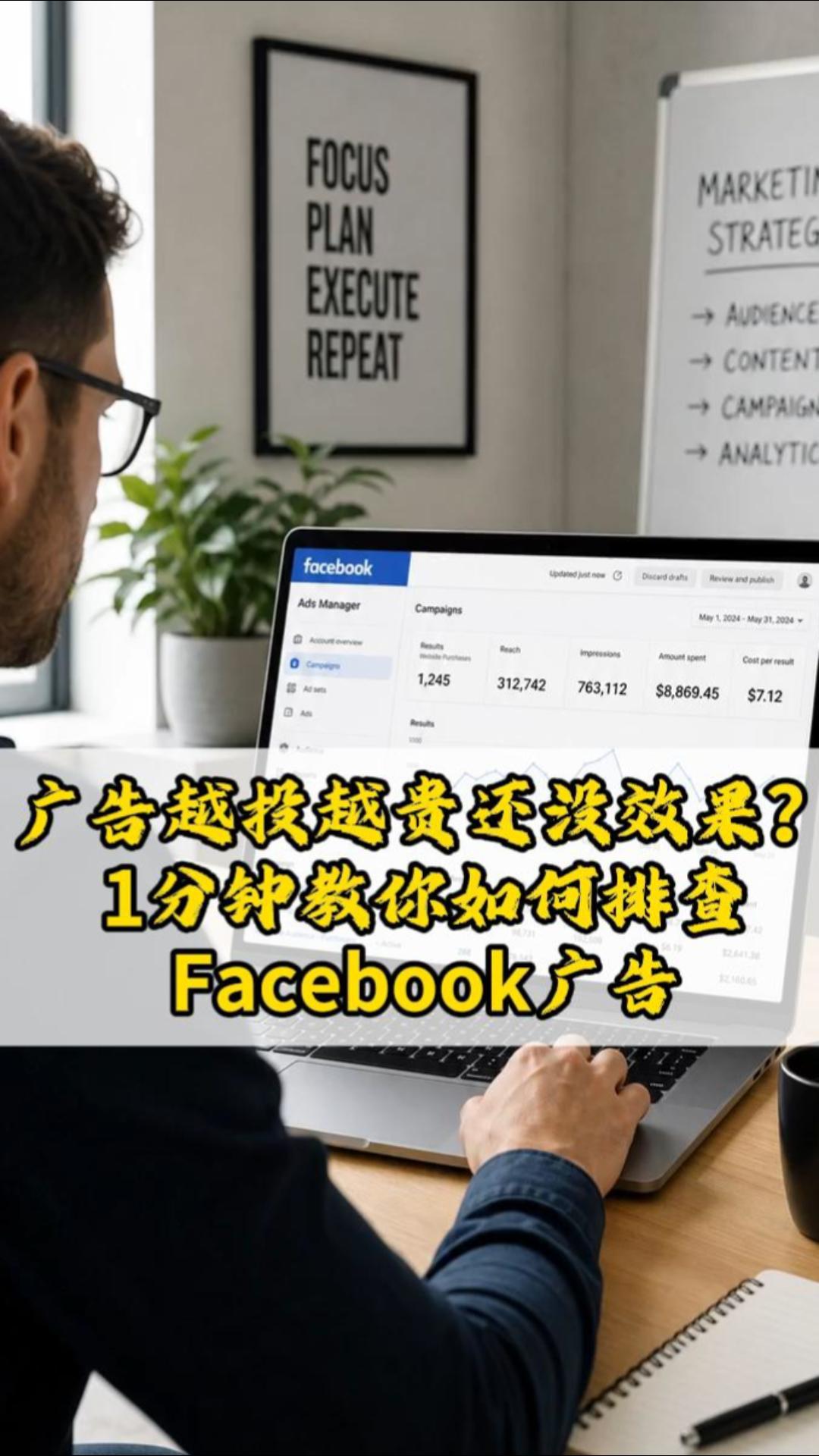
 Are your ads getting more expensive with no results?Learn how to troubleshoot Facebook ads in 1 minute
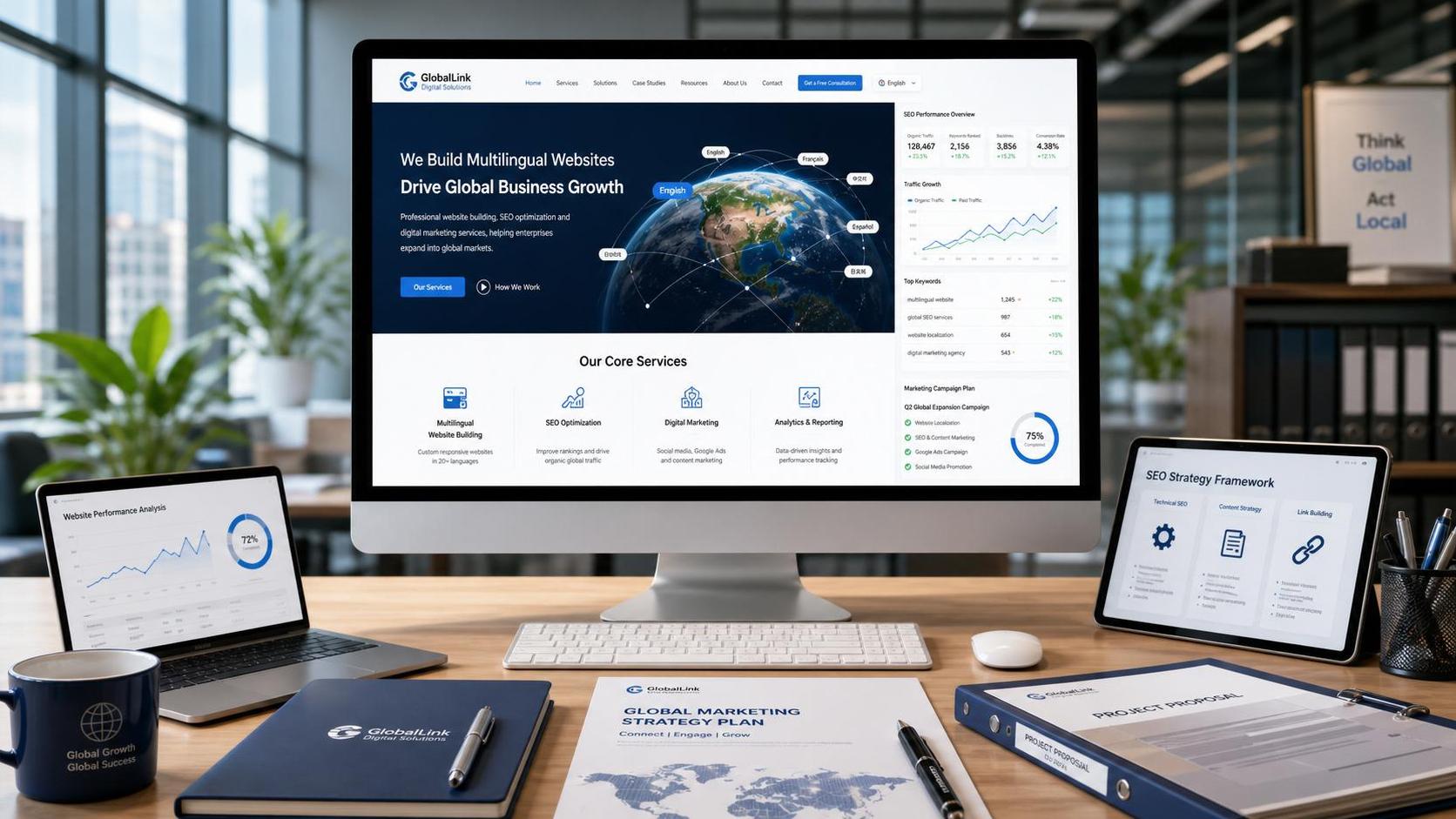
 Is Brand Globalization Marketing Consulting Worth Buying? At What Stage Should Companies Bring It In

Related Products
 EasyCamp SaaS Smart Website Marketing SystemE-Yingbao SaaS Smart Website Marketing System: AI-powered, zero-code website building. Rapidly launch multilingual independent e-commerce sites in just 10 minutes. Global server acceleration and AI-driven SEO optimization empower businesses to efficiently connect with global markets. The seamless integration of technology and user-friendly operation makes building e-commerce sites incredibly simple.
 AI+SEM Intelligent Advertising Marketing SystemAI+SEM drives intelligent ad creation, empowering full-funnel precision advertising marketing. The system automatically generates weekly/monthly reports, AI recommends keywords and target countries, monitors core metrics in real-time with intelligent alerts, and enables one-click high-conversion ad solutions to help quickly acquire customers and improve ROI.
 AI+SEO Dual Engine Optimization ServiceEasyWin AI+SEO Dual Engine Optimization System leverages AI-powered keyword mining, content generation, and comprehensive technical optimization to help foreign trade enterprises acquire high-quality organic traffic, significantly improving search rankings and conversion rates.
 AI+SNS Social Media Marketing SystemYingbao AI+SNS Social Media Marketing System - Precision social capture for the social media era. Supports one-click content synchronization across major platforms like Facebook and LinkedIn. AI intelligently rewrites posts for enhanced relevance. 24/7 AI customer service and user profiling analysis empower businesses to efficiently expand into global markets.
 AI+SEO营销解决方案易营宝AI+SEO营销解决方案,通过AI批量写作、智能生成TDK、精准关键词扩词等功能,全面优化网站SEO效果,提升流量与转化率。助力企业构建高效智能网站新生态。
 AI+SEM Advertising Marketing SolutionsAI+SEM Advertising Marketing Solution leverages AI technology to deeply empower SEM ad campaigns. It automatically generates weekly/monthly reports using AI, presenting account data across multiple dimensions for comprehensive insights into campaign performance and trends. The system precisely recommends keywords and target countries, intelligently generates high-conversion ad copy, and enables one-click activation of efficient campaign plans to help businesses rapidly acquire customers. Simultaneously, it monitors core metrics in real time, intelligently identifies abnormal fluctuations, and issues timely alerts to ensure stable, high-return advertising results.
 Domain Name ServicesEasyWin provides professional domain name services, including intelligent queries, one-stop registration, brand protection, and full lifecycle management, helping businesses build a digital brand image.
 EasyOperate B2C Cross-Border E-Commerce Platform & Independent WebsiteEasyStore B2C Cross-border E-commerce Independent Store is an intelligent website building and cross-border e-commerce integrated solution independently developed by EasyStore Information Technology (Beijing) Co., Ltd. The system is specially designed for small and medium-sized as well as large export enterprises, integrating 'website building, operation, marketing, advertising, and conversion' into one, helping enterprises quickly establish cross-border e-commerce independent stores to achieve brand globalization and global sales growth.
The platform supports multiple languages, multiple currencies, and multi-channel marketing, with built-in AI intelligent translation and SEO optimization systems, suitable for mainstream markets such as Southeast Asia, Europe and America, Latin America, and the Middle East, assisting Chinese manufacturing enterprises in efficiently deploying international e-commerce strategies. SSL证书易营宝提供专业SSL安全证书服务,包括单域名和泛域名证书,确保网站数据传输加密、身份验证和完整性保护,助力企业建立安全可信的在线业务环境。









