









- China-Morocco zero-tariff access, a breakthrough in the cost of Moroccan goods exports to ChinaJun 11, 2026View details
- What signal should be released for the suspension of exports to JapanJun 10, 2026View details
- China's May LNG imports rebounded, with increased volumes from Russia and Canada filling the Middle East supply gapJun 10, 2026View details
- Will GEO change its SEO strategy?Jun 04, 2026View details
- What types of businesses are end-to-end solutions suitable for?Jun 03, 2026View details
- 2026 Global Growth Channel TrendsJun 02, 2026View details
How to write an English inquiry reply template? 8 example phrases for high-response-rate scenarios
Why Is It Always Written as an English Inquiry Reply Template but Never Gets a Response

The issue is often not that English inquiry reply templates cannot be written, but that the judgment is inaccurate. It may seem that all of them are called "inquiry reply," but the actual corresponding stage, customer intent, and completeness of information are completely different.
In the integrated scenario of foreign trade websites and overseas marketing, reply emails are not just a communication action, but also an important node for carrying traffic, screening leads, and driving conversion. The logic of replies is different for natural inquiries from the website, instant consultations from ad landing pages, and follow-up questions after social media clicks.
The more common misconception is to directly use one English inquiry reply template to handle all incoming messages. The result is either too verbose, too much irrelevant information, or it ends up dragging originally intentional leads into silence.
In actual use, first distinguish 8 types of high-frequency reply scenarios
The core of a truly high-response English inquiry reply template is not "beautiful sentences," but first identifying which type the inquiry belongs to.
When only asking about price and information is extremely limited
The biggest fear with this type of inquiry is immediately sending a complete quotation. The other party may only be comparing prices, or may not yet have clarified the specifications. The reply should focus on first taking in the request, then guiding the supplement of quantity, parameters, target market, and purchasing cycle.
An English inquiry reply template can be concise, but it should include two actions: acknowledge the inquiry and ask 2 to 3 key questions. This is both professional and can avoid making the follow-up quotation seem insincere.
When the product model is clear and a formal quotation is being prepared
When the other party has already stated the model, quantity, and destination port, the English inquiry reply template can no longer remain in vague confirmation mode. At this time, you need to quickly provide the quotation basis and supplement the delivery time, packaging, payment terms, and validity period.
If the source is an independent website inquiry page, such leads are usually of higher quality. Reply speed and information completeness will directly affect whether the next round of communication continues.
When the first contact has been made but the other party has not replied for a long time
Follow-up scenarios are the easiest to underestimate. Many English inquiry reply templates only suit the first email and have no follow-up speaking strategy. In fact, the second and third emails are the real test of rhythm.
At this time, do not repeatedly ask "Did you receive it?" A more effective approach is to add a new piece of information, such as alternative specifications, a near-term delivery date, sample arrangements, or relevant case studies in the target market, so that the other party has a reason to continue replying.
When the customer is concerned about quality or certification issues
Once the inquiry starts asking about testing, certification, materials, or after-sales service, it indicates that the other party has entered the risk assessment stage. At this point, the English inquiry reply template should not just repeat product advantages, but respond to concerns with verifiable information.
Priority in the reply should be given to certification, testing methods, quality inspection process, and sample support. If it is expressed too sales-driven, it will instead weaken trust.
When samples or small-batch trial orders are needed
Sample inquiries are not just about "sending one first to take a look." The other party is usually evaluating response efficiency, compatibility, and execution details. The English inquiry reply template needs to clearly explain sample fees, time, shipping rules, and how they will connect to subsequent bulk orders.
If this step is not explained clearly, it can easily lead to the sample being sent out but still unable to move the order forward.
When there are many customization requirements and communication tends to drift off track
When colors, dimensions, packaging, or functional adjustments are involved, the English inquiry reply template should emphasize "confirmation scope" rather than rushing to make promises. The more common judgment method is to first lock in what can be modified, then explain the minimum order quantity, proofing cycle, and file requirements.
If this type of inquiry comes from an SEO page, the search intent is often clearer, but the requirements are also more detailed. The email content needs to remain consistent with the landing page commitments, otherwise it will create cognitive gaps.
When the other party requests a phone or video call
When communication shifts from email to a meeting, the task of the English inquiry reply template becomes "reducing scheduling costs." The reply should clearly state optional time slots, time zone, meeting tools, and the topics expected to be discussed.
If you only say "We can talk," the other party will still need to continue asking follow-up questions, so efficiency is not high. Especially for leads across multiple time zones, the clearer the arrangement, the higher the meeting rate.
When an old customer is repeating an order or adding to an order
Repeat order scenarios do not require re-demonstrating all capabilities; the focus is on efficiency, stability, and continuity with historical records. The English inquiry reply template should directly connect to the last order information, then confirm whether there are new specifications, new delivery dates, or transportation requirements.
This kind of email looks simple, but it actually best reflects systematic management capability. Especially when multilingual websites, ad acquisition, and customer nurturing operate in parallel, unified management of inquiry records can significantly reduce repeated communication.
The judgment focus of the English inquiry reply template is different in different scenarios
If you want to improve the reply rate, you can first break down common scenarios into the following judgment dimensions, rather than only staring at the email wording.
High-reply-rate writing usually cannot do without these structural actions
No matter which English inquiry reply template is used, the truly stable and effective structure is usually similar, only differing in emphasis.
- First confirm that the request has been received, avoiding uncertainty about whether the other party's email has arrived.
- Then give a direct response, without detours or excessive background introduction.
- Add 1 to 3 follow-up questions to make the next step clear and answerable.
- End with a clear action suggestion, such as quotation, sample, meeting, or material submission.
Before landing, what needs to be confirmed is that the template is only a draft; what really determines the reply rate is whether the content matches the website landing page, ad keywords, and inquiry source. Many companies do a good job on the front end of customer acquisition, but the back-end replies still remain in a manually fragmented state, causing lead loss.
This is also why website and marketing service integration is becoming more and more important. Systems like B2B Foreign Trade Solutions are valuable not only for website building, but also for integrating inquiry capture, message notifications, multi-time-zone follow-up, and conversion tracking, so that the English inquiry reply template no longer relies on personal experience to perform on the spot.
Many reply results are poor not because there are too few templates, but because these judgments are wrong
One common misjudgment is treating all inquiries as purchase intent. In fact, some are market research, some are comparing supplier solutions, and some are already close to placing an order. At different stages, the tone and information density of the English inquiry reply template should be adjusted accordingly.
Another issue is looking only at the email content and not the source page. Inquiries from Google SEO pages usually care more about matching; inquiries from ad pages are often more concerned with speed and clear quotation; inquiries from social media private messages require supplementing formal information.
There is also a situation that is easily overlooked: the language is accurate, but the conversion path is broken. For example, if the website loads slowly, the landing page information is incomplete, or historical communication cannot be tracked, even the best English inquiry reply template will be discounted. In actual application, page speed, translation quality, and lead filing capability all affect subsequent conversion after the reply.
Some integrated services are more suitable for foreign trade scenarios precisely because they can handle these basic conditions at the same time. For example, system-level performance such as PageSpeed score 90+, translation accuracy 92.7%, and traceable inquiry conversion often has longer-term value than optimizing a single email alone.
To really use the English inquiry reply template well, you can start from these steps
First organize the existing inquiry sources and distinguish website organic traffic, ad leads, social media private messages, and repeat customers. Different sources should not use exactly the same reply template.
Then screen out 8 high-frequency scenarios, prepare a basic English inquiry reply template for each category, and leave replaceable fields, such as product name, quantity, delivery time, certification, and sample rules. This is both faster and less rigid.
If you want to further improve effectiveness, the key is not to continue piling up templates, but to connect the website, inquiry form, automatic notifications, customer management, and follow-up into one chain. Only then can you clearly see which templates truly bring replies and which pages truly bring conversions.
From this perspective, the English inquiry reply template is not an isolated copywriting piece, but part of the overseas customer acquisition system. Refine scenario judgment, standardize reply actions, and then combine them with a stable independent website and marketing closed loop, and inquiry quality, reply rate, and subsequent conversions will improve together.
Related Articles
 How to write an English inquiry reply template? 8 example phrases for high-response-rate scenarios
 How to control the cost of a whole independent website translation? Language count, maintenance methods and budget estimation
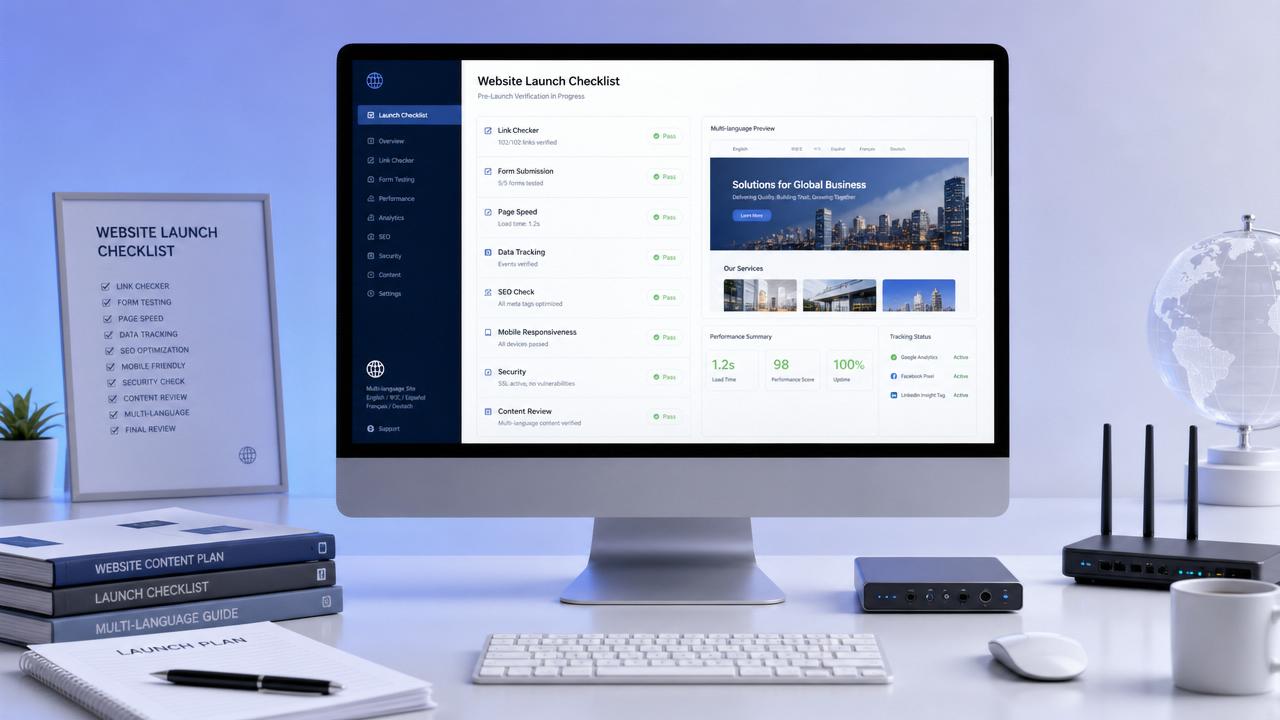
 What is the pre-launch checklist for an export website? 20 essential details to check before going live


Related Products
 EasyCamp SaaS Smart Website Marketing SystemE-Yingbao SaaS Smart Website Marketing System: AI-powered, zero-code website building. Rapidly launch multilingual independent e-commerce sites in just 10 minutes. Global server acceleration and AI-driven SEO optimization empower businesses to efficiently connect with global markets. The seamless integration of technology and user-friendly operation makes building e-commerce sites incredibly simple.
 AI+SEM Intelligent Advertising Marketing SystemAI+SEM drives intelligent ad creation, empowering full-funnel precision advertising marketing. The system automatically generates weekly/monthly reports, AI recommends keywords and target countries, monitors core metrics in real-time with intelligent alerts, and enables one-click high-conversion ad solutions to help quickly acquire customers and improve ROI.
 AI+SEO Dual Engine Optimization ServiceEasyWin AI+SEO Dual Engine Optimization System leverages AI-powered keyword mining, content generation, and comprehensive technical optimization to help foreign trade enterprises acquire high-quality organic traffic, significantly improving search rankings and conversion rates.
 AI+SNS Social Media Marketing SystemYingbao AI+SNS Social Media Marketing System - Precision social capture for the social media era. Supports one-click content synchronization across major platforms like Facebook and LinkedIn. AI intelligently rewrites posts for enhanced relevance. 24/7 AI customer service and user profiling analysis empower businesses to efficiently expand into global markets.
 AI+SEO营销解决方案易营宝AI+SEO营销解决方案,通过AI批量写作、智能生成TDK、精准关键词扩词等功能,全面优化网站SEO效果,提升流量与转化率。助力企业构建高效智能网站新生态。
 AI+SEM Advertising Marketing SolutionsAI+SEM Advertising Marketing Solution leverages AI technology to deeply empower SEM ad campaigns. It automatically generates weekly/monthly reports using AI, presenting account data across multiple dimensions for comprehensive insights into campaign performance and trends. The system precisely recommends keywords and target countries, intelligently generates high-conversion ad copy, and enables one-click activation of efficient campaign plans to help businesses rapidly acquire customers. Simultaneously, it monitors core metrics in real time, intelligently identifies abnormal fluctuations, and issues timely alerts to ensure stable, high-return advertising results.
 Domain Name ServicesEasyWin provides professional domain name services, including intelligent queries, one-stop registration, brand protection, and full lifecycle management, helping businesses build a digital brand image.
 EasyOperate B2C Cross-Border E-Commerce Platform & Independent WebsiteEasyStore B2C Cross-border E-commerce Independent Store is an intelligent website building and cross-border e-commerce integrated solution independently developed by EasyStore Information Technology (Beijing) Co., Ltd. The system is specially designed for small and medium-sized as well as large export enterprises, integrating 'website building, operation, marketing, advertising, and conversion' into one, helping enterprises quickly establish cross-border e-commerce independent stores to achieve brand globalization and global sales growth.
The platform supports multiple languages, multiple currencies, and multi-channel marketing, with built-in AI intelligent translation and SEO optimization systems, suitable for mainstream markets such as Southeast Asia, Europe and America, Latin America, and the Middle East, assisting Chinese manufacturing enterprises in efficiently deploying international e-commerce strategies. SSL证书易营宝提供专业SSL安全证书服务,包括单域名和泛域名证书,确保网站数据传输加密、身份验证和完整性保护,助力企业建立安全可信的在线业务环境。









