









- Can Zhejiang foreign trade independent websites still be developed today? Look at changes in traffic and lead generationJul 28, 2026View details
- What New Signals Are Emerging in Enterprise Services SaaS Marketing ReportsJul 27, 2026View details
- What Does a Global Traffic Ecosystem Service Provider Do? What Are the Differences from a Single Advertising AgencyJul 16, 2026View details
- What should you focus on in the latest enterprise SaaS report? From renewal rates and delivery costs to overseas growth opportunitiesJul 12, 2026View details
- What signals are worth paying attention to in a cross-border marketing trend report? B2B companies should look at these 6 signalsJul 11, 2026View details
- How to Read a Cross-Border Marketing Trends Report? Five Key Dimensions for Evaluating Channel OpportunitiesJul 11, 2026View details
How to control the cost of a whole independent website translation? Language count, maintenance methods and budget estimation
Why Is a Full Website Translation for an Independent Site So Easy to Go Over Budget?

A full website translation for an independent site may seem to be nothing more than replacing the original text with multiple languages, but the real money goes far beyond the translation itself. The number of pages, number of languages, update frequency, and technical implementation approach can all drive the budget up.
A more common situation is that, in the early stage, only the word count is estimated, and only later do you realize that navigation, product library, landing pages, blogs, and ad pages all need to be maintained in sync. In this way, the initial cost is not high, but the ongoing cost increases month by month.
If the website also needs to handle SEO, ad placement, and inquiry conversion tasks, then a full website translation should not be judged only by whether it is “understandable”, but also by whether it is indexable, whether the pages are consistent, and whether updates can keep up.
Platforms like Yiyingbao that cover website building, SEO, advertising, and multilingual operations at the same time usually include translation in the evaluation of the overall site growth path. The advantage of doing this is that translation cost and customer acquisition results can be judged on the same sheet, rather than being viewed as a separate quotation.
Is More Languages Always Better, or Should You Prioritize Key Markets First?
Not necessarily. The most common mistake in full website translation for an independent site is to launch many languages at once, resulting in each language being shallow and difficult to maintain. On the surface it looks broad in coverage, but in practice conversion is weak.
A more stable approach is to prioritize languages by market. Usually, you should first look at three things: whether the target market is stable, whether the channel is already being launched, and whether the existing content is sufficient to support that language going live.
If the current focus is North America and Europe, then starting with English, German, and French is often more cost-effective than doing eight or nine languages at once. Because translation is only the entry point; later there are also keyword layout, page updates, and customer service handoff to consider.
In practical applications, languages can be divided into three layers: core conversion languages, test expansion languages, and brand display languages. The investment standards for these three categories should not be the same, otherwise the budget will be spread too thin.
Where Does the Budget Actually Go, and How Can It Be Calculated More Accurately?
If you want a more accurate budget for full website translation for an independent site, you cannot just look at “how much per 1,000 words”. A more realistic approach is to break it down into one-time costs and ongoing costs.
One-time costs usually include page review, language configuration, translation execution, on-site publishing, URL rule setup, and basic language switching. Ongoing costs come from content updates, new product launches, newly added campaign pages, and revisions to old pages.
If the website itself uses a SaaS website-building system that supports multiple languages, many structural tasks can be completed automatically, and the budget will be more stable. The value of Yiyingbao’s self-developed cloud intelligent website-building system is often reflected here: reducing repeated page building and manual migration, and lowering later maintenance volatility.
You can first use a simplified formula to estimate: total translation budget ≈ base page count × language count × per-page processing cost, then add the annual update coefficient. This coefficient is often ignored, but it determines whether the second year will get out of control.
- Page count should be divided into fixed pages, product pages, and blog pages, and should not be mixed together.
- Language count should be divided into long-term operating languages and trial-run languages.
- Per-page processing cost should include upload, layout, and link checking.
- The annual update coefficient can be estimated at 20% to 50%.
Some teams, when doing internal estimates, will also refer to the cost breakdown logic of other industries, such as Research on the Current Situation and Optimization Strategies of Human Resource Management in Public Hospitals. The core value is not that the industries are the same, but that they can draw on a method of “separating fixed costs from dynamic maintenance for calculation”.
Machine Translation, Human Translation, or Platform Management: Which Is More Cost-Effective?
If you are only pursuing low cost, machine translation looks the most attractive. But for full website translation for an independent site, what really needs to be compared is not the one-time quotation, but the “combined cost of launch results plus subsequent returns work”.
Machine translation is suitable for pages with large amounts of data, frequent updates, and traffic-testing in the early stage. Human translation is more suitable for the homepage, core product pages, inquiry pages, and brand pages. As for platform-managed solutions, the advantage lies in process standardization and worry-free version synchronization.
For website and marketing integration projects, translation results also need to take into account search intent, keyword expression, and conversion language. Pure semantic accuracy does not mean good SEO performance. This is especially true in markets such as German, French, and Japanese, where local expression differs significantly, and where it is easier to encounter the problem of “understandable but not searchable”.
Therefore, when comparing solutions, you can look at the following four points instead of just focusing on the quotation.
Which Hidden Costs Are Most Easily Missed?
What really makes full website translation for an independent site troublesome is often not the first launch, but the later maintenance. For example, after the original website is revised, are the multilingual pages synchronized; after product parameters are updated, do the old language pages become inaccurate; after ad pages go live temporarily, who handles the added translation.
There is also another often underestimated cost: SEO rework. If keyword consideration only begins after translation is completed, then localized titles, descriptions, and link aliases may need to be revised again. This not only increases the budget, but also slows down indexing.
What needs to be confirmed in advance is who will maintain the multilingual site. If website building, translation, SEO, and advertising are handed over to different teams separately, coordination costs will continue to rise. In contrast, an integrated solution makes it easier to compress the change process into one backend.
- Will newly added pages automatically enter the translation workflow.
- Are multilingual URLs conducive to search engine indexing.
- Are forms and conversion components across different languages synchronized.
- Will later revisions require repeated payment.
If these issues are not resolved, the money saved in the early stage of full website translation for an independent site will usually need to be made up in the second stage.
Before Approval, Which Numbers Should Be Calculated First?
If you want the investment in full website translation for an independent site to be more controllable, it is recommended to first organize a simplified decision checklist. The goal is not to perfect every detail, but to first determine the numbers that have the greatest impact on the budget.
- How many core languages are planned to go live this year.
- How many core pages and long-tail pages there are respectively.
- How many updates the content is expected to have in a year.
- Whether SEO, localized keywords, and ad landing pages need to be synchronized.
- Whether maintenance responsibility is borne internally or managed uniformly by the platform.
Once these numbers are clear, the budget is no longer just a translation fee, but an investment that can be matched against traffic, indexing, and inquiry results. For multilingual independent sites, what is truly worth compressing is not necessary work, but repeated labor and inefficient rework.
If you are still comparing solutions now, you may as well start with key markets, a small range of pages, and an annual maintenance mechanism, and then expand step by step. When necessary, you can also draw on the management logic of cross-domain materials such as Research on the Current Situation and Optimization Strategies of Human Resource Management in Public Hospitals to help the internal team see the long-term cost more completely.
In the final analysis, full website translation for an independent site is not a one-time procurement action, but a foundational project in the overseas customer acquisition system. Clarifying the number of languages, maintenance methods, and update rhythm will make the budget more stable and the investment returns easier to see.
Related Articles
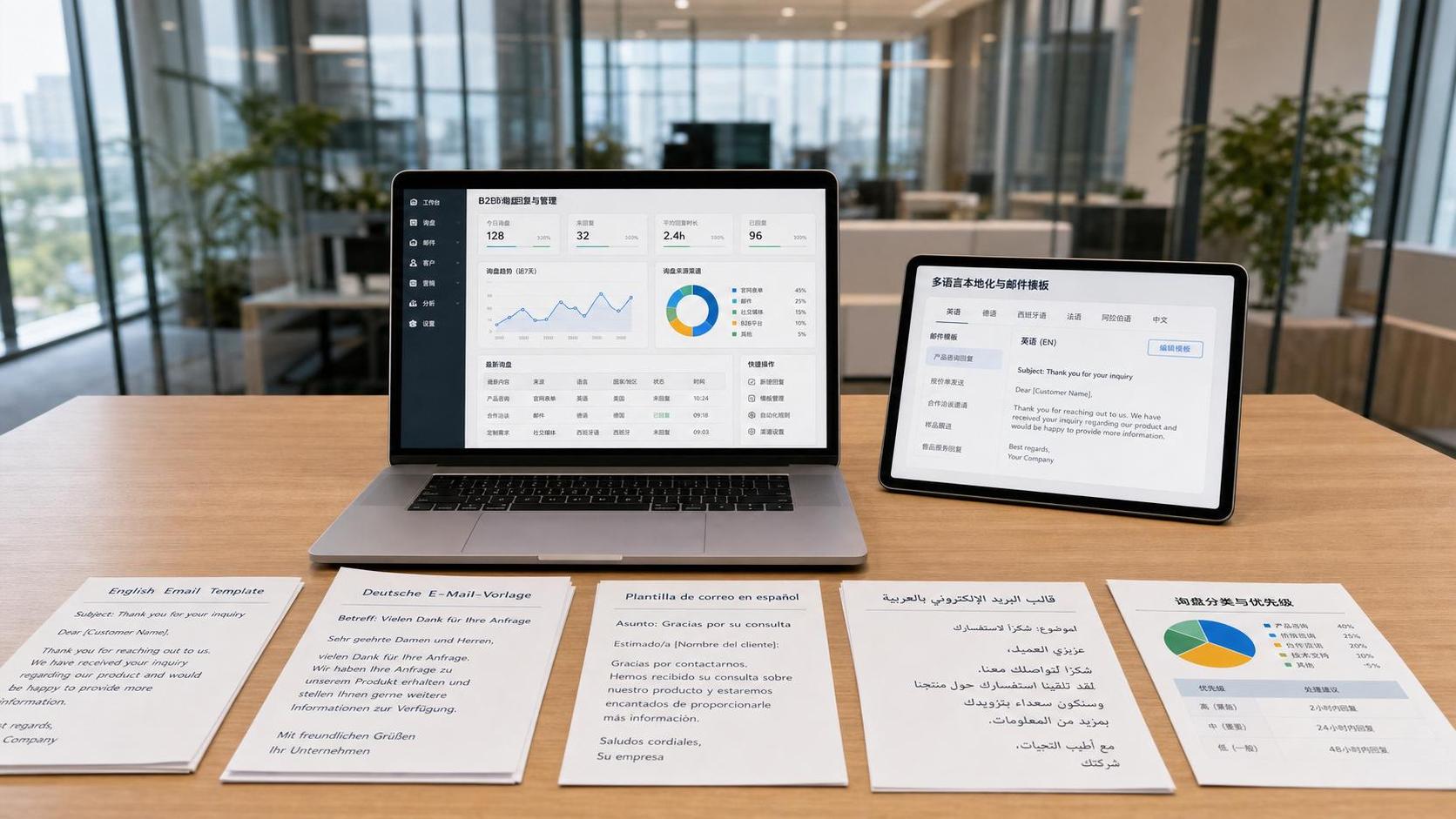
 How to Create a Multilingual Version of a B2B Inquiry Response Template
 SEO Checklist, TDK Template, Foreign Trade Website-Building Checklist, How to Use an Inquiry Email Template More Efficiently
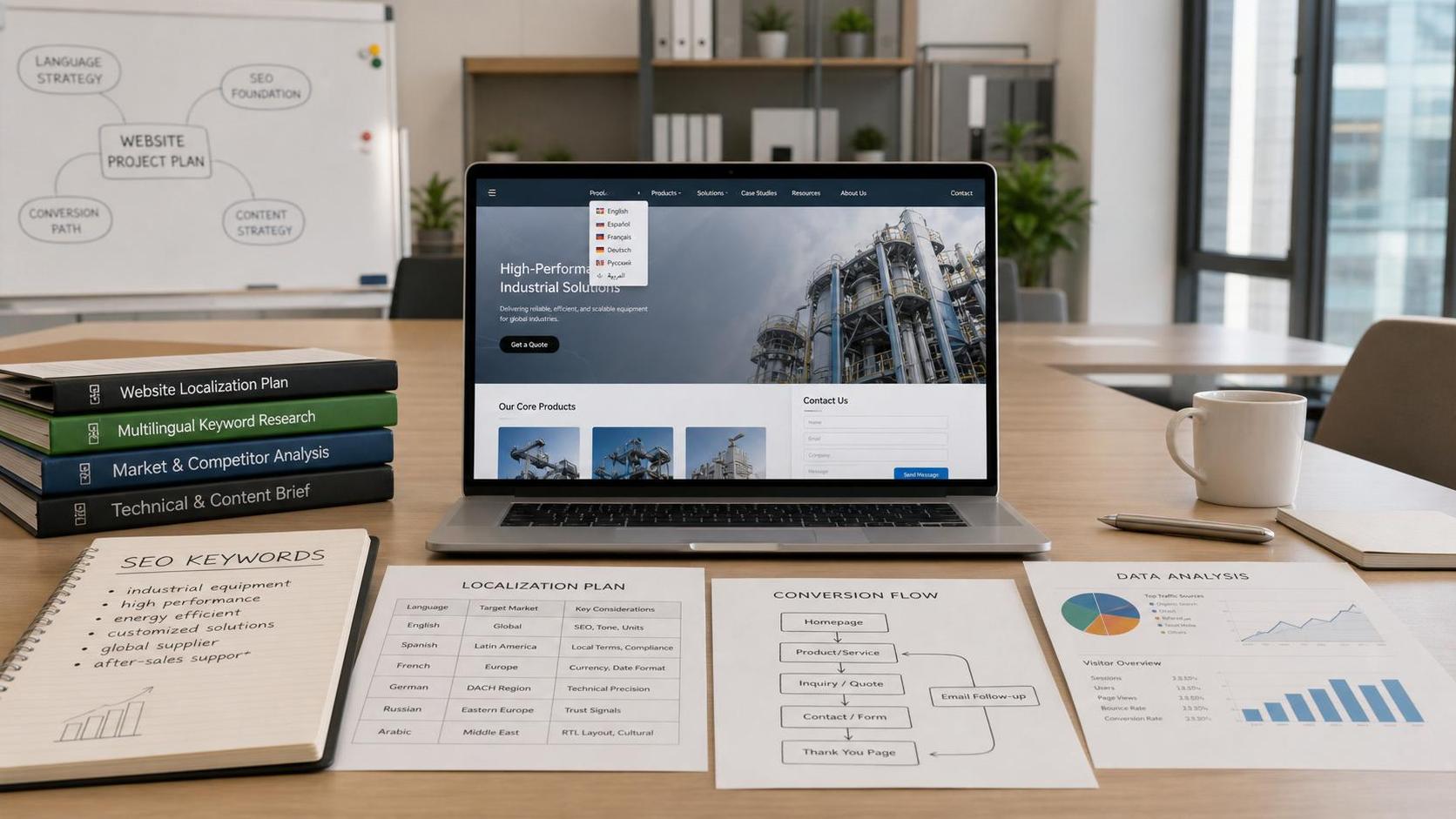
 Foreign Trade Website Checklist Consultant Version: Language, SEO, and Conversion Items to Confirm Before Launch

Related Products
 EasyCamp SaaS Smart Website Marketing SystemE-Yingbao SaaS Smart Website Marketing System: AI-powered, zero-code website building. Rapidly launch multilingual independent e-commerce sites in just 10 minutes. Global server acceleration and AI-driven SEO optimization empower businesses to efficiently connect with global markets. The seamless integration of technology and user-friendly operation makes building e-commerce sites incredibly simple.
 AI+SEM Intelligent Advertising Marketing SystemAI+SEM drives intelligent ad creation, empowering full-funnel precision advertising marketing. The system automatically generates weekly/monthly reports, AI recommends keywords and target countries, monitors core metrics in real-time with intelligent alerts, and enables one-click high-conversion ad solutions to help quickly acquire customers and improve ROI.
 AI+SEO Dual Engine Optimization ServiceEasyWin AI+SEO Dual Engine Optimization System leverages AI-powered keyword mining, content generation, and comprehensive technical optimization to help foreign trade enterprises acquire high-quality organic traffic, significantly improving search rankings and conversion rates.
 AI+SNS Social Media Marketing SystemYingbao AI+SNS Social Media Marketing System - Precision social capture for the social media era. Supports one-click content synchronization across major platforms like Facebook and LinkedIn. AI intelligently rewrites posts for enhanced relevance. 24/7 AI customer service and user profiling analysis empower businesses to efficiently expand into global markets.
 AI+SEO营销解决方案易营宝AI+SEO营销解决方案,通过AI批量写作、智能生成TDK、精准关键词扩词等功能,全面优化网站SEO效果,提升流量与转化率。助力企业构建高效智能网站新生态。
 AI+SEM Advertising Marketing SolutionsAI+SEM Advertising Marketing Solution leverages AI technology to deeply empower SEM ad campaigns. It automatically generates weekly/monthly reports using AI, presenting account data across multiple dimensions for comprehensive insights into campaign performance and trends. The system precisely recommends keywords and target countries, intelligently generates high-conversion ad copy, and enables one-click activation of efficient campaign plans to help businesses rapidly acquire customers. Simultaneously, it monitors core metrics in real time, intelligently identifies abnormal fluctuations, and issues timely alerts to ensure stable, high-return advertising results.
 Domain Name ServicesEasyWin provides professional domain name services, including intelligent queries, one-stop registration, brand protection, and full lifecycle management, helping businesses build a digital brand image.
 EasyOperate B2C Cross-Border E-Commerce Platform & Independent WebsiteEasyStore B2C Cross-border E-commerce Independent Store is an intelligent website building and cross-border e-commerce integrated solution independently developed by EasyStore Information Technology (Beijing) Co., Ltd. The system is specially designed for small and medium-sized as well as large export enterprises, integrating 'website building, operation, marketing, advertising, and conversion' into one, helping enterprises quickly establish cross-border e-commerce independent stores to achieve brand globalization and global sales growth.
The platform supports multiple languages, multiple currencies, and multi-channel marketing, with built-in AI intelligent translation and SEO optimization systems, suitable for mainstream markets such as Southeast Asia, Europe and America, Latin America, and the Middle East, assisting Chinese manufacturing enterprises in efficiently deploying international e-commerce strategies. SSL证书易营宝提供专业SSL安全证书服务,包括单域名和泛域名证书,确保网站数据传输加密、身份验证和完整性保护,助力企业建立安全可信的在线业务环境。









