









- Can Zhejiang foreign trade independent websites still be developed today? Look at changes in traffic and lead generationJul 28, 2026View details
- What New Signals Are Emerging in Enterprise Services SaaS Marketing ReportsJul 27, 2026View details
- What Does a Global Traffic Ecosystem Service Provider Do? What Are the Differences from a Single Advertising AgencyJul 16, 2026View details
- What should you focus on in the latest enterprise SaaS report? From renewal rates and delivery costs to overseas growth opportunitiesJul 12, 2026View details
- What signals are worth paying attention to in a cross-border marketing trend report? B2B companies should look at these 6 signalsJul 11, 2026View details
- How to Read a Cross-Border Marketing Trends Report? Five Key Dimensions for Evaluating Channel OpportunitiesJul 11, 2026View details
What is the pre-launch checklist for an export website? 20 essential details to check before going live
Before going live, don’t rush to register the domain name first; review the checklist by scenario first
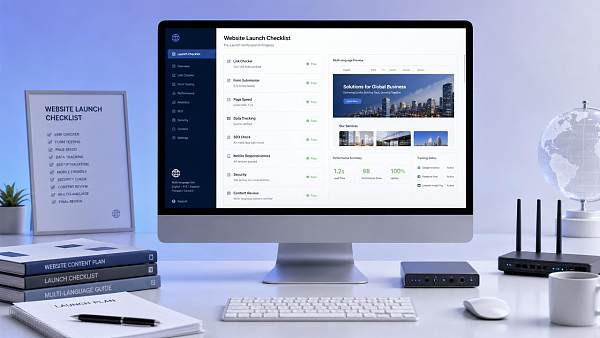
The launch checklist for an export website is not just a deliverable from the technical team. What truly determines launch quality is often whether indexing, loading, conversion, tracking, and follow-up campaigns can all work together. Many projects look fine in the testing environment, but after the official launch, issues such as pages not being indexed, forms not triggering reminders, and ad data interruptions appear. These problems usually come from details missed before launch.
A more common situation is that different business scenarios have different priorities for an export website launch checklist. For a B2B lead-generation website, the focus is more on directory structure, form paths, and SEO basics; for a multilingual official website, the emphasis is on language switching, regional versions, and content indexing; if ad campaigns need to be launched at the same time, conversion tracking, landing page speed, and event tracking must be verified in advance.
For a long-term overseas growth platform like Yiyingbao, website building, SEO, advertising, and content distribution are usually considered within the same implementation logic. The reason is simple: once the website goes live, it is not just a display window, but also the bridge for subsequent organic traffic, ad traffic, and AI search visibility. Missing one item at the beginning often requires a much higher cost to fix later.
Different launch scenarios mean different priorities in the export website launch checklist
If all websites are executed according to the same checklist, the result is often not ideal. Although the content to be checked before launch may seem similar, the priorities vary greatly. The following distinctions are very common in real projects.
So, what should be included in an export website launch checklist? It should not stop at “whether it has been done”; it also needs to consider “what business the website will first support after launch”. Only when this step is clear will the subsequent checks not become mere formalities.
First check whether it can be found: indexing and accessibility are the first hurdle
Many websites still fail to generate organic traffic long after launch, not because the content is poor, but because the basic indexing conditions were not properly opened up. In the export website launch checklist, the first group of must-check items should revolve around search engine access paths.
- Check whether robots is still blocking test directories or the entire site from crawling.
- Confirm that the XML sitemap has been generated and submitted.
- Verify the canonical tags to avoid duplicate-page competition.
- Confirm the 301 redirect rules to prevent old links from becoming invalid.
- Verify the HTTPS certificate and mixed-content issues across the site.
If the website covers multiple regions such as North America, Europe, and Southeast Asia, you also need to check server access stability, CDN node distribution, and regional opening speed. For service systems like Yiyingbao that deliver global websites, technical accessibility and SEO launch items are usually verified together to avoid troubleshooting them separately after launch.
Then check whether the content can convert: page completeness does not equal effective information
When many teams conduct an export website launch checklist, they only confirm that the page has been “published”, but do not check whether the content actually has the ability to receive inquiries. This is especially important for industrial products, machinery equipment, and spare parts projects, where users care more about whether the parameters are clear, whether the application matches, and whether the trust information is complete after entering the page.
Taking heavy industry websites as an example, a product page with only basic images and a specification table is often not enough. A more effective approach is to include module-based flow layouts, core data indicators, service commitment lists, and high-conversion inquiry entry points in the launch review. Pages like heavy machinery equipment, heavy industry are usually better suited to a single-column structure that combines brand background, product guides, and application scenario visuals, allowing the transition from “viewing parameters” to “sending an inquiry” to happen naturally.
- Are the title, description, and above-the-fold selling points clearly aligned with the target keywords?
- Do the product images, scenario images, and certificate images load properly?
- Do the cases, FAQ, and download materials have real conversion value?
- Does the contact method appear in both the header and footer?
For multilingual websites, the easiest trap is not translation, but version relationships
Multilingual projects are one of the most common sources of rework in an export website launch checklist. On the surface, the pages may all appear to be translated, but what truly affects indexing and user experience is whether the mapping between language versions is accurate.
Before launch, there are at least 20 details that should be checked, and they should include the following priorities: whether language switching returns to the corresponding page, whether hreflang tags map one-to-one, whether URLs across different languages are unified, whether automatic redirects will harm search engine crawling, and whether the same product in different markets requires localized copy. Simply copying the English, Russian, and Spanish sites with the same content often leads to duplicate pages and low-quality indexing.
In actual applications, multilingual websites also need to check local contact methods, time zone expressions, measurement units, and the language of downloadable files. Especially for heavy industry content, even slight deviations in parameter expressions can affect inquiry quality.
If ads will go live immediately after launch, data tracking must be closed in advance
Some websites have no technical issues at launch, but once ads start running, the data turns out to be inaccurate. The reason is often that conversion tracking, attribution parameters, and event naming were not unified before launch. What should be in an export website launch checklist? Only by getting this step right can it truly connect to marketing execution.
- Check whether GA4, ad pixels, and retargeting codes have taken effect properly.
- Confirm that form submissions, button clicks, WhatsApp redirects, and other events have been recorded.
- Test UTM parameter transmission to avoid losing source channel data.
- Verify whether the thank-you page, success pop-ups, and event trigger logic are consistent.
- Check whether the mobile inquiry path is shorter than the desktop version.
If the website will later be combined with SEO, advertising, and social media operations, then the earlier the conversion definitions are unified, the more labor-saving the subsequent optimization will be. This is also the value of integrated website building and marketing services: the website is not treated as an isolated page, but as the foundation of the growth chain.
When implementing the 20 must-check items, these details are easiest to overlook
Many projects are not lacking an export website launch checklist; rather, the checklist is too generic. What really needs to be supplemented are those checks that seem minor but have a large impact after launch.
- Whether clicking the logo returns to the homepage, and whether the 404 page is available.
- Whether browser compatibility covers mainstream overseas devices.
- Whether image ALT, page H tags, and breadcrumb trails are standardized.
- Whether company information, privacy policy, and Cookie prompts are complete.
- Whether email notifications, verification codes, and attachment uploads are truly usable.
- Whether internal search, filtering, and download buttons contain dead links.
- Whether page animations affect above-the-fold loading and mobile operations.
- Whether the production environment still retains test copy, test accounts, and fake data.
For example, some machinery equipment websites like to use high-impact visuals above the fold. That is acceptable, but if the animation is too heavy or the video is too large, it will instead slow down loading. Visual styles such as yellow and black with strong contrast are themselves suitable for industrial expression, but before launch, visual presentation and performance must still be balanced.
The sequence of checks before launch is more important than the checklist items themselves
To truly execute an export website launch checklist properly, it is recommended to follow six steps: “access basics, content completeness, conversion path, data tracking, regional adaptation, and promotion readiness”. The benefit of arranging it this way is that hard issues directly affecting launch availability are identified first, and indexing and marketing details are handled afterward, reducing the risk of missing key paths.
If the current project is still in the pre-launch stage, a more stable approach is to first sort out the business scenarios, then map the 20 must-check items to the actual pages and channel goals. Confirm which pages should support SEO, which pages should be used for ad campaigns, and which pages should focus on brand background, and then validate them item by item. Only an export website launch checklist formed in this way can truly support subsequent growth, rather than just completing the launch process.
Related Articles
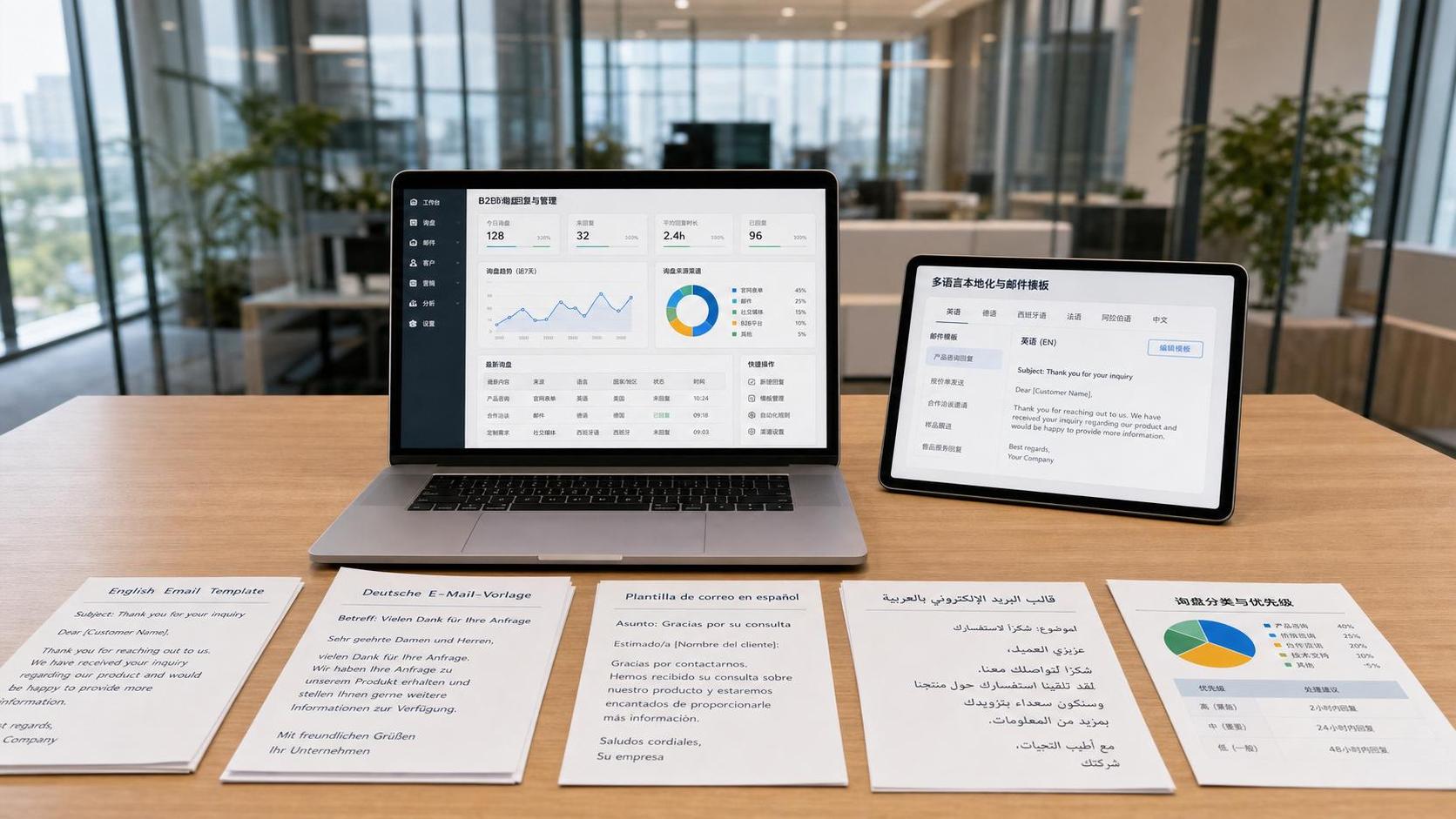
 How to Create a Multilingual Version of a B2B Inquiry Response Template
 SEO Checklist, TDK Template, Foreign Trade Website-Building Checklist, How to Use an Inquiry Email Template More Efficiently
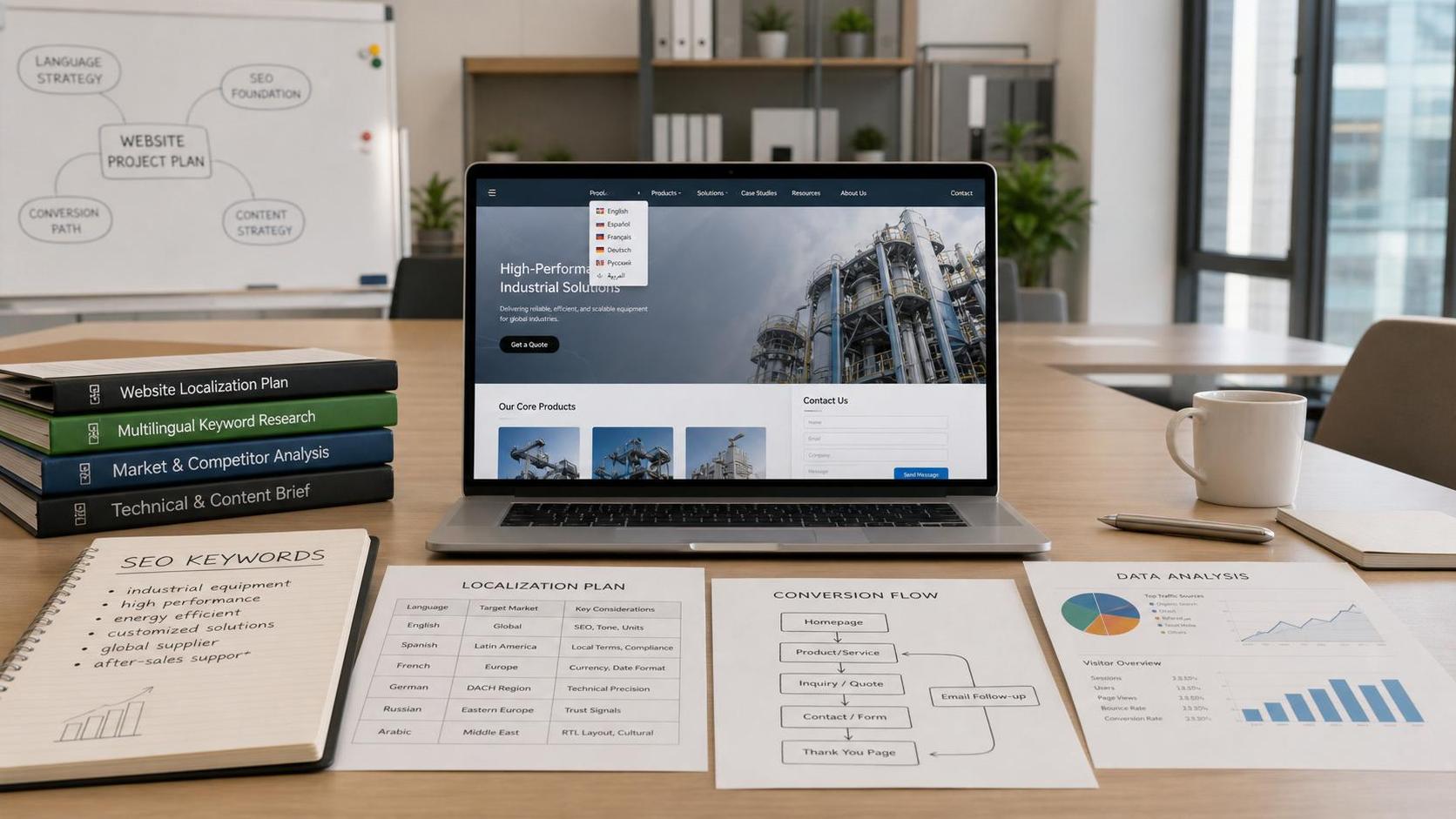
 Foreign Trade Website Checklist Consultant Version: Language, SEO, and Conversion Items to Confirm Before Launch

Related Products
 EasyCamp SaaS Smart Website Marketing SystemE-Yingbao SaaS Smart Website Marketing System: AI-powered, zero-code website building. Rapidly launch multilingual independent e-commerce sites in just 10 minutes. Global server acceleration and AI-driven SEO optimization empower businesses to efficiently connect with global markets. The seamless integration of technology and user-friendly operation makes building e-commerce sites incredibly simple.
 AI+SEM Intelligent Advertising Marketing SystemAI+SEM drives intelligent ad creation, empowering full-funnel precision advertising marketing. The system automatically generates weekly/monthly reports, AI recommends keywords and target countries, monitors core metrics in real-time with intelligent alerts, and enables one-click high-conversion ad solutions to help quickly acquire customers and improve ROI.
 AI+SEO Dual Engine Optimization ServiceEasyWin AI+SEO Dual Engine Optimization System leverages AI-powered keyword mining, content generation, and comprehensive technical optimization to help foreign trade enterprises acquire high-quality organic traffic, significantly improving search rankings and conversion rates.
 AI+SNS Social Media Marketing SystemYingbao AI+SNS Social Media Marketing System - Precision social capture for the social media era. Supports one-click content synchronization across major platforms like Facebook and LinkedIn. AI intelligently rewrites posts for enhanced relevance. 24/7 AI customer service and user profiling analysis empower businesses to efficiently expand into global markets.
 AI+SEO营销解决方案易营宝AI+SEO营销解决方案,通过AI批量写作、智能生成TDK、精准关键词扩词等功能,全面优化网站SEO效果,提升流量与转化率。助力企业构建高效智能网站新生态。
 AI+SEM Advertising Marketing SolutionsAI+SEM Advertising Marketing Solution leverages AI technology to deeply empower SEM ad campaigns. It automatically generates weekly/monthly reports using AI, presenting account data across multiple dimensions for comprehensive insights into campaign performance and trends. The system precisely recommends keywords and target countries, intelligently generates high-conversion ad copy, and enables one-click activation of efficient campaign plans to help businesses rapidly acquire customers. Simultaneously, it monitors core metrics in real time, intelligently identifies abnormal fluctuations, and issues timely alerts to ensure stable, high-return advertising results.
 Domain Name ServicesEasyWin provides professional domain name services, including intelligent queries, one-stop registration, brand protection, and full lifecycle management, helping businesses build a digital brand image.
 EasyOperate B2C Cross-Border E-Commerce Platform & Independent WebsiteEasyStore B2C Cross-border E-commerce Independent Store is an intelligent website building and cross-border e-commerce integrated solution independently developed by EasyStore Information Technology (Beijing) Co., Ltd. The system is specially designed for small and medium-sized as well as large export enterprises, integrating 'website building, operation, marketing, advertising, and conversion' into one, helping enterprises quickly establish cross-border e-commerce independent stores to achieve brand globalization and global sales growth.
The platform supports multiple languages, multiple currencies, and multi-channel marketing, with built-in AI intelligent translation and SEO optimization systems, suitable for mainstream markets such as Southeast Asia, Europe and America, Latin America, and the Middle East, assisting Chinese manufacturing enterprises in efficiently deploying international e-commerce strategies. SSL证书易营宝提供专业SSL安全证书服务,包括单域名和泛域名证书,确保网站数据传输加密、身份验证和完整性保护,助力企业建立安全可信的在线业务环境。









