- Kann eine eigenständige Website für den Außenhandel in Zhejiang heute noch erfolgreich betrieben werden? Ein Blick auf die Veränderungen bei Traffic und Kundengewinnung28-07-2026Details anzeigen
- Welche neuen Signale gibt es im SaaS-Marketingbericht für Unternehmensdienstleistungen?27-07-2026Details anzeigen
- Was macht ein Global-Traffic-Ökosystem-Dienstleister? Und worin unterscheidet er sich von einer einzelnen Werbeagentur?16-07-2026Details anzeigen
- Was ist der neueste Fokus im Enterprise-Services-SaaS-Bericht? Von Verlängerungsrate, Lieferkosten bis zu Ausland-Wachstumschancen12-07-2026Details anzeigen
- Was ist in einem Bericht zu Trends im grenzüberschreitenden Marketing am wichtigsten zu beachten? Welche 6 Signale sollten B2B-Unternehmen beachten?11-07-2026Details anzeigen
- Wie man einen Bericht über Trends im grenzüberschreitenden Marketing liest? Die 5 Schlüsseldimensionen, um zu beurteilen, ob ein Kanal Chancen bietet11-07-2026Details anzeigen
Was umfasst die Checkliste vor dem Start einer Foreign-Trade-Website? 20 Details, die vor dem Start unbedingt geprüft werden sollten
Before going live, don’t rush to switch domains—first break down the checklist by scenario
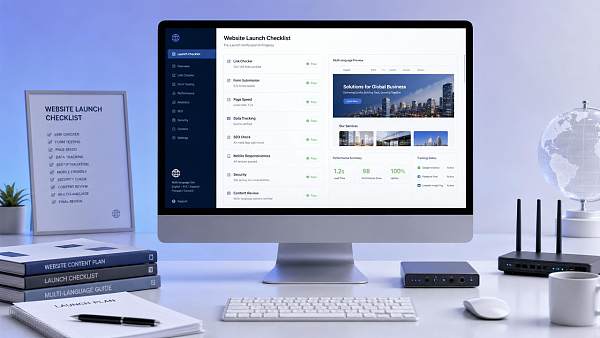
The pre-launch checklist for an export website is not just a handoff document for the technical team. What truly determines launch quality is often whether indexing, loading, conversion, tracking, and follow-up promotion can all work smoothly together. Many projects look fine in the testing environment, but after going live, issues such as pages not being indexed, forms not triggering reminders, and ad data being disrupted often appear. These problems are usually caused by details overlooked before launch.
More often, different business scenarios have different focus points for the pre-launch checklist of an export website. For a B2B inquiry website, pay more attention to directory structure, form paths, and SEO basics; for a multilingual official website, focus on language switching, regional versions, and content indexing; if ad campaigns need to be launched in parallel, conversion tracking, landing page speed, and event tagging must be verified in advance.
For long-term overseas growth platforms like Yiyingbao, website building, SEO, advertising, and content distribution are usually considered within the same implementation logic. The reason is simple: once the website goes live, it is not just a display window, but also the landing page that carries subsequent organic traffic, ad traffic, and AI search visibility. Missing one check in the early stage often leads to much higher rework costs later.
Different launch scenarios mean different judgment priorities in the export website launch checklist
If all websites are executed according to the same checklist, the results are often far from ideal. Although the items to check before launch may look similar, their priorities differ greatly. The following distinctions are very common in real projects.
So, what items should be included in an export website launch checklist? It should not stop at “whether it has been done”; it also needs to consider “what business the site will support first after launch”. Only when this step is clearly judged can the subsequent checks avoid becoming mere formalities.
First check whether it can be found: indexing and accessibility are the first hurdle
Many websites still fail to generate organic traffic long after launch, not because the content is poor, but because the basic indexing conditions were not opened up. In the first set of must-check items in the export website launch checklist, the focus should be on the access paths of search engines.
- Check whether robots are still blocking test directories or the entire site from being crawled.
- Confirm that the XML sitemap has been generated and submitted.
- Verify canonical tags to avoid competition among multiple versions of the same page.
- Confirm 301 redirect rules to prevent old links from becoming invalid.
- Verify the HTTPS certificate and mixed content issues across the site.
If the website covers multiple regions such as North America, Europe, and Southeast Asia, you also need to check server access stability, CDN node distribution, and regional loading speed. For service systems like Yiyingbao that deliver global websites, technical accessibility and SEO launch items are usually verified together to avoid troubleshooting after launch.
Then check whether the content can convert: page completeness does not equal effective information
When many teams prepare the export website launch checklist, they only confirm that the page has been “published” without checking whether the content actually has the ability to carry inquiries. This is especially true for industrial products, machinery, and spare parts projects, where users care more about whether the parameters are clear, whether the application matches, and whether the trust information is complete after entering the page.
Using heavy industry websites as an example, product pages that only have basic images and a specification table are often not enough. A more effective approach is to include modular workflow layout, core data indicators, service commitment details, and high-contrast inquiry entry points in the launch review in advance. Pages like heavy machinery equipment, heavy industry are usually more suitable for a single-column structure that links brand background, product guides, and real-world application scenarios, allowing “checking parameters” to naturally transition into “sending an inquiry”.
- Whether the title, description, and above-the-fold selling points clearly match the target keywords.
- Whether product images, scenario images, and certificate images load correctly.
- Whether case studies, FAQs, and downloadable materials have real conversion value.
- Whether contact methods appear in both the above-the-fold area and the footer.
The easiest pitfall for multilingual sites is not translation, but version relationships
Multilingual projects are one of the most common return-to-work categories in the export website launch checklist. On the surface, the pages may already be translated, but what actually affects indexing and user experience is whether the mapping between language versions is accurate.
Before launch, the 20 details should at least include these key points: whether language switching can return to the corresponding page, whether hreflang is mapped one by one, whether URLs for different languages are unified, whether automatic redirects will hurt search engine crawling, and whether the same product in different markets needs differentiated copy. Simply copying the English, Russian, and Spanish sites into one set of content often leads to duplicate pages and low-quality indexing.
In practical applications, multilingual sites also need to check local contact information, time zone expressions, unit systems, and the language of downloadable files. Especially for heavy industry content, slight deviations in parameter expressions can affect inquiry quality.
If ads go live immediately after launch, data tracking must be closed in advance
Some websites have no technical issues at launch, but once the ads go live, the data turns out to be inaccurate. The reason is often that conversion tracking, attribution parameters, and event naming were not unified before launch. What items are included in the export website launch checklist? Only by getting this step right can the marketing rollout truly connect smoothly.
- Check whether GA4, ad pixels, and remarketing codes are officially taking effect.
- Confirm that form submissions, button clicks, WhatsApp redirects, and other events have been recorded.
- Test UTM parameter transmission to avoid losing source-channel data.
- Verify whether the thank-you page, success pop-ups, and event trigger logic are consistent.
- Whether the mobile inquiry path is shorter than the desktop path.
If the website will later integrate SEO, advertising, and social media operations, then the earlier the conversion definitions are unified, the more effort you save in later optimization. This is also the value of integrated website building and marketing services: not treating the website as an isolated page, but as a basic infrastructure in the growth chain.
When implementing the 20 must-check items, these details are most easily overlooked
Many projects are not lacking in export website launch checklists; rather, the checklist is too broad. What really needs to be filled in are those seemingly small but highly impactful post-launch checks.
- Whether clicking the Logo returns to the homepage, and whether the 404 page is available.
- Whether browser compatibility covers mainstream overseas devices.
- Whether image ALT text, page H tags, and breadcrumb navigation are standardized.
- Whether company information, privacy policy, and Cookie notice are complete.
- Whether email notifications, verification codes, and attachment uploads are truly usable.
- Whether the internal search, filtering, and download buttons contain dead links.
- Whether page animations affect above-the-fold loading and mobile operation.
- Whether the live environment still retains test copy, test accounts, and fake data.
For example, some machinery websites like to use high-impact visuals above the fold. That is fine, but if the animation is too heavy or the hero video is too large, it can slow down loading instead. High-contrast visual styles such as yellow and black are themselves suitable for expressing an industrial feel, but before launch, visual presentation and performance still need to be balanced.
The launch sequence is more important than the checklist items themselves
To truly implement the export website launch checklist, it is recommended to follow six steps: “access basics, content completeness, conversion paths, data tracking, regional adaptation, and promotion readiness”. The advantage of this arrangement is that it first removes hard issues that directly affect go-live availability, and then handles indexing and marketing details, making it less likely to miss key paths.
If the current project is still in the pre-launch stage, a more stable approach is to first sort out the business scenarios, then map the 20 must-check items to the actual pages and channel goals. Confirm which pages need to support SEO, which pages need advertising, and which pages need to emphasize brand background, and then verify them item by item. Only an export website launch checklist formed in this way can truly support subsequent growth, rather than merely completing the launch action.
Verwandte Artikel
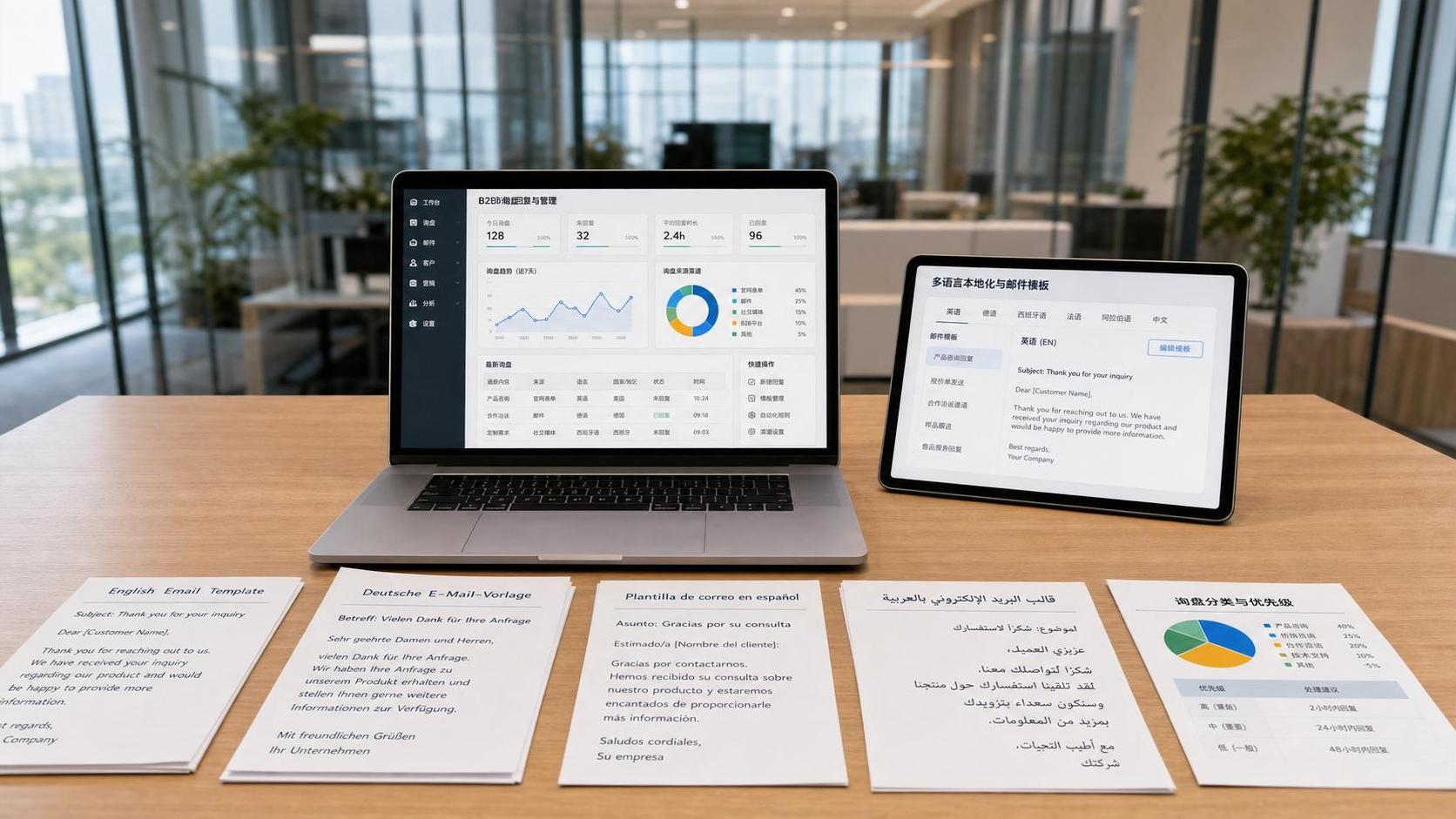
 Wie erstellt man mehrsprachige Vorlagen für B2B-Anfrageantworten?
 SEO-Prüfliste, TDK-Vorlage, Checkliste für den Außenhandels-Webseitenaufbau, Vorlage für Anfrage-E-Mail: Wie wird sie effizienter verwendet
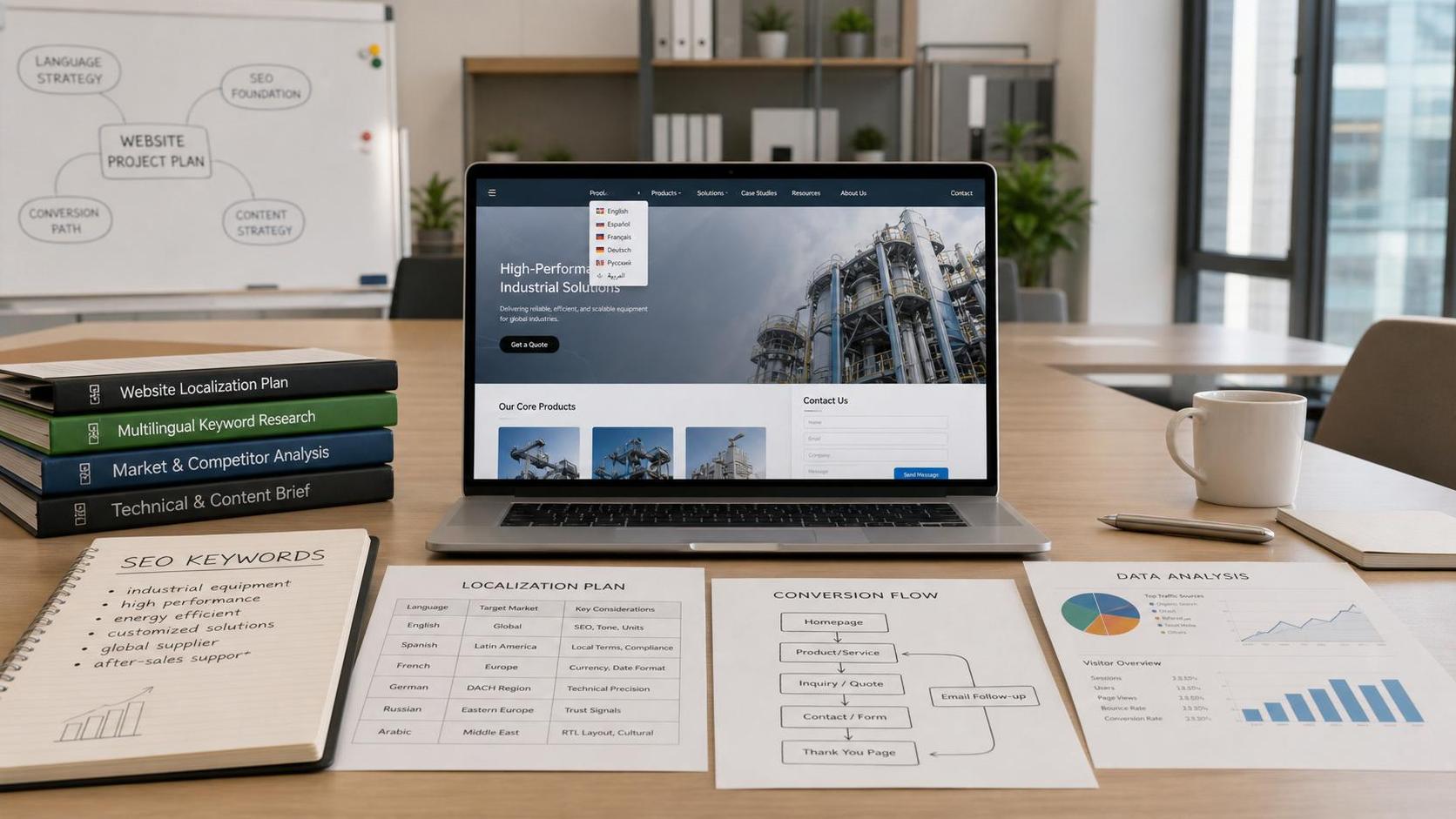
 Checkliste für Außenhandels-Websites: Sprache, SEO und Konversionspunkte, die vor dem Projektstart bestätigt werden müssen

Verwandte Produkte
 EasyCamp SaaS Intelligenter Website-Builder und Marketing-SystemE-Yingbao SaaS Intelligent Website Marketing System: KI-gesteuerte Website-Erstellung ohne Programmieraufwand. Erstellen Sie in nur 10 Minuten mehrsprachige, unabhängige Export-Websites. Globale Serverbeschleunigung und KI-gestützte SEO-Optimierung ermöglichen Unternehmen eine effiziente Anbindung an globale Märkte. Die nahtlose Verschmelzung von Technologie und benutzerfreundlicher Bedienung macht die Erstellung von Export-Websites bemerkenswert einfach.
 AI+SEO-Doppelantrieb-OptimierungsserviceEasypack AI+SEO-Doppelantrieb-Optimierungssystem nutzt KI zur intelligenten Keyword-Extraktion, Content-Generierung und umfassenden technischen Optimierung, um Exportunternehmen hochwertigen organischen Traffic zu verschaffen und die Suchmaschinenrankings sowie Conversion-Raten deutlich zu steigern.
 AI+SEM intelligente Werbemarketing-SystemAI+SEM-gesteuerte intelligente Kampagnenerstellung, ganzheitliche Unterstützung für präzises Werbemarketing. Das System generiert automatisch Wochen-/Monatsberichte, KI empfiehlt Keywords und Zielmärkte, überwacht Echtzeit-Kennzahlen und warnt intelligent, startet mit einem Klick hochkonvertierende Kampagnen, beschleunigt Lead-Generierung und steigert ROI.
 AI+SNS Social-Media-Marketing-SystemYingyingbao AI+SNS Social Media Intelligent Marketing System – Präzise Erfassung sozialer Daten für das Zeitalter der sozialen Medien. Unterstützt die Synchronisierung von Inhalten mit einem Klick auf allen wichtigen Plattformen, einschließlich Facebook und LinkedIn. KI-gestütztes Umschreiben von Beiträgen verbessert die Lokalisierung. Intelligenter Kundenservice rund um die Uhr und Analyse von Nutzerprofilen ermöglichen Unternehmen eine effiziente Expansion in globale Märkte.
 AI+SEM-Lösungen für WerbemarketingKI-gestützte SEM-Werbelösungen nutzen künstliche Intelligenz, um das SEM-Kampagnenmanagement erheblich zu verbessern. Mithilfe von KI werden wöchentliche und monatliche Berichte erstellt, die Kontodaten in mehreren Dimensionen darstellen und so einen umfassenden Überblick über die Werbeleistung und Trends ermöglichen. KI liefert präzise Empfehlungen zu Keywords und Zielländern, erstellt auf intelligente Weise Werbetexte mit hoher Konversionsrate und initiiert mit einem einzigen Klick eine effiziente Kampagnenumsetzung, wodurch die Kundenakquise für Unternehmen beschleunigt wird. Gleichzeitig überwacht das System die wichtigsten Kennzahlen in Echtzeit, identifiziert auf intelligente Weise ungewöhnliche Schwankungen und gibt rechtzeitig Warnmeldungen aus, um eine stabile Werbeleistung und hohe Renditen zu gewährleisten.
 AI+SEO营销解决方案易营宝AI+SEO营销解决方案,通过AI批量写作、智能生成TDK、精准关键词扩词等功能,全面优化网站SEO效果,提升流量与转化率。助力企业构建高效智能网站新生态。
 Domain-DienstleistungenEasyWin bietet professionelle Domain-Dienstleistungen an, einschließlich intelligenter Abfrage, One-Stop-Registrierung, Markenschutz und Rund-um-die-Uhr-Management, um Unternehmen bei der Gestaltung eines digitalen Markenimages zu unterstützen.
 EasySell B2C Cross-Border E-Commerce-Plattform und eigenständige WebsiteDer EasyStore B2C Cross-Border E-Commerce Independent Store ist eine intelligente Website-Erstellungs- und Cross-Border-E-Commerce-All-in-One-Lösung, die von der EasyStore Information Technology (Beijing) Co., Ltd. eigenständig entwickelt wurde. Das System wurde speziell für kleine, mittlere und große Exportunternehmen entwickelt und vereint „Website-Erstellung, Betrieb, Marketing, Werbung und Konversion“ in einem, um Unternehmen dabei zu unterstützen, schnell einen Cross-Border-E-Commerce-Independent-Store aufzubauen und so Markenexport und globalen Verkaufszuwachs zu realisieren.
Die Plattform unterstützt Mehrsprachigkeit, Multi-Währungen und Multi-Kanal-Marketing, verfügt über integrierte KI-Übersetzungs- und SEO-Optimierungssysteme und ist für Hauptmärkte wie Südostasien, Europa/Amerika, Lateinamerika und den Nahen Osten geeignet, um chinesischen Herstellern bei der effizienten Erschließung internationaler E-Commerce-Märkte zu helfen. B2B2C双模式独立站解决方案易营宝推出的B2B2C双模式独立站解决方案,专为同时开展批发与零售业务的企业打造。平台支持商品价格展示、商品多规格管理、购物车与购物车弹窗、购物车总价计算,以及统一批量询价等功能,帮助企业以更高效、更直观的方式触达B端与C端客户。通过云建站、大数据分析与广告智能投放体系,助力企业打破渠道壁垒,实现国内外市场拓展与品牌价值提升。